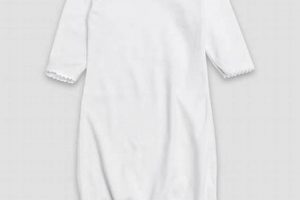
Infant sleep garments designed for thermal regulation during rest represent a significant advancement in pediatric sleepwear. These wearable blankets, often fabricated from materials like fleece or quilted cotton, provide a safe and consistent level of warmth for young children, particularly during colder months. The enclosed design eliminates the need for loose blankets, addressing potential suffocation hazards.
The utilization of such garments offers several key advantages. Consistent warmth promotes more restful sleep, potentially reducing nighttime awakenings. This, in turn, benefits both the infant’s development and the caregiver’s well-being. Historically, concerns surrounding Sudden Infant Death Syndrome (SIDS) have driven the development and adoption of safer sleep practices, with wearable blankets emerging as a recommended alternative to traditional bedding.
The following sections will delve into specific considerations regarding material selection, appropriate sizing, safety features, and optimal usage practices for these specialized infant sleep products. Understanding these elements is crucial for ensuring the safe and effective application of these tools in promoting healthy infant sleep.
Optimizing Warm Sleep Sack Usage for Infants
The following guidelines offer insights into the effective and safe integration of insulated infant sleep garments into a child’s sleep routine.
Tip 1: Material Selection: Opt for breathable, natural fabrics like cotton or merino wool. These materials allow for moisture wicking and prevent overheating, mitigating the risk of thermal stress during sleep.
Tip 2: Proper Sizing: Ensure the sleep sack fits appropriately. A sack that is too large can pose a suffocation hazard, while one that is too small may restrict movement and cause discomfort. Consult the manufacturer’s sizing chart and consider the infant’s weight and length.
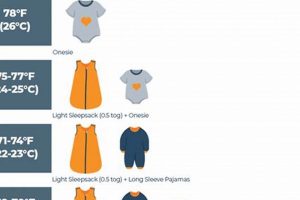
Tip 3: TOG Rating Consideration: Select a sleep sack with an appropriate TOG (Thermal Overall Grade) rating based on the ambient room temperature. Higher TOG ratings are suitable for colder environments, while lower ratings are preferable for warmer settings. Overheating should be avoided at all costs.
Tip 4: Arms-Free Design: Until the infant exhibits signs of rolling over, consider sleep sacks with arms-free designs. This promotes freedom of movement and reduces the risk of the infant becoming trapped in a prone position.
Tip 5: Regular Inspection: Routinely inspect the sleep sack for signs of wear and tear, such as loose seams, detached zippers, or damaged fabric. Discontinue use immediately if any damage is detected.
Tip 6: Washing Practices: Adhere to the manufacturer’s recommended washing instructions. Use a mild, hypoallergenic detergent and avoid fabric softeners, which can irritate the infant’s sensitive skin.
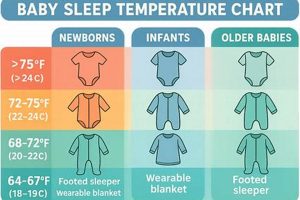
Tip 7: Room Temperature Monitoring: Continuously monitor the infant’s room temperature to ensure it remains within a safe and comfortable range (typically between 68-72F or 20-22C). Adjust the TOG rating of the sleep sack accordingly.
By adhering to these recommendations, caregivers can maximize the safety and effectiveness of insulated infant sleep garments, fostering a more restful and secure sleep environment for their child.
The subsequent sections will address potential safety concerns and explore advanced features in infant sleep sack design.
1. Fabric breathability

Fabric breathability in infant sleep garments, specifically insulated sleep sacks, directly impacts thermal regulation and safety. The capacity of a fabric to permit moisture vapor transmission is paramount in mitigating the risk of overheating, a known factor associated with Sudden Infant Death Syndrome (SIDS).
- Fiber Composition and Air Permeability
Natural fibers, such as cotton, merino wool, and bamboo, exhibit superior air permeability compared to synthetic alternatives like polyester or acrylic. Open weaves and knit structures further enhance breathability by facilitating airflow across the fabric surface. Fabrics with low air permeability trap heat and moisture, creating a microclimate that can elevate an infant’s core temperature.
- Moisture-Wicking Properties
Breathable fabrics possess the ability to wick moisture away from the skin, promoting evaporation and cooling. Hydrophilic fibers absorb moisture, while the fabric structure allows for its subsequent release into the surrounding environment. The absence of moisture-wicking can lead to increased humidity within the sleep sack, contributing to discomfort and potential skin irritation.
- TOG Rating and Fabric Selection
The Thermal Overall Grade (TOG) rating of a sleep sack should be considered in conjunction with fabric breathability. A high TOG rating indicates greater insulation, necessitating a more breathable fabric to prevent overheating. The combination of a high TOG rating and a poorly breathable fabric creates a significant risk of thermal stress.
- Impact on Infant Comfort and Sleep Quality
Fabric breathability directly influences infant comfort and sleep quality. Sleep sacks made from breathable materials minimize the risk of overheating and sweating, contributing to a more stable and comfortable sleep environment. Conversely, fabrics with poor breathability can disrupt sleep patterns and lead to increased nighttime awakenings.
In conclusion, fabric breathability is a critical determinant of the safety and efficacy of insulated sleep sacks. Selecting garments constructed from breathable materials, considering TOG ratings, and monitoring room temperature are essential steps in creating a safe and comfortable sleep environment for infants. The interplay between these factors significantly impacts infant well-being and reduces the potential for adverse thermal events.
2. TOG rating accuracy
The Thermal Overall Grade (TOG) rating serves as a standardized measure of thermal resistance for textiles, specifically quantifying the insulation provided by infant sleep sacks. Accuracy in TOG ratings is paramount to ensure appropriate thermal management for infants, mitigating the risks of overheating and hypothermia.
- Standardization and Testing Methodologies
Accurate TOG ratings necessitate adherence to recognized testing standards, such as BS 8510:2009. These standards outline rigorous procedures for measuring thermal resistance under controlled laboratory conditions. Independent testing and certification by accredited bodies enhance the reliability of TOG ratings, providing consumers with verifiable data regarding the insulation properties of sleep sacks.
- Variability in Manufacturing Processes
Inconsistencies in manufacturing processes can introduce variations in TOG ratings. Factors such as fabric density, layering techniques, and quilting patterns influence the thermal performance of sleep sacks. Stringent quality control measures are essential to minimize variability and ensure that TOG ratings accurately reflect the actual insulation provided by each product.
- Impact of Fabric Composition on TOG Values
The type and composition of fabrics used in sleep sacks significantly affect their TOG ratings. Natural fibers, such as merino wool and cotton, exhibit different thermal properties compared to synthetic alternatives like polyester. Manufacturers must carefully consider the thermal characteristics of each fabric component and accurately assess its contribution to the overall TOG rating.
- Environmental Factors and User Interpretation
The effectiveness of a sleep sack’s TOG rating is contingent upon environmental factors, including room temperature and the infant’s clothing. Caregivers must interpret TOG ratings in the context of these variables, adjusting the infant’s attire and room climate accordingly. Overreliance on TOG ratings without considering external factors can lead to inappropriate thermal management and potential health risks.
In summary, the accuracy of TOG ratings is a critical determinant of the safety and efficacy of insulated infant sleep garments. Adherence to testing standards, consistent manufacturing processes, careful fabric selection, and informed user interpretation are essential for ensuring that TOG ratings accurately reflect the thermal performance of sleep sacks and promote optimal infant thermal regulation.
3. Proper sizing crucial

The dimensioning of infant sleep sacks is not merely a matter of convenience; it constitutes a fundamental safety and efficacy parameter. An improperly sized sleep sack, particularly an insulated one, can undermine its intended benefits and introduce significant hazards.
- Suffocation Risk
An oversized sleep sack presents a tangible suffocation risk. Excess fabric can bunch around the infant’s face, obstructing airways and potentially leading to asphyxiation. The infant’s limited motor control precludes the reliable removal of the obstructing material. Real-world incidents underscore the critical need for size adherence, as oversized garments have been implicated in infant suffocation cases.
- Entrapment Hazards
A sleep sack that is too large can permit the infant to slip down inside, leading to entrapment. The infant may become confined within the sack, restricting movement and potentially compromising breathing. This risk is exacerbated in insulated sacks due to their increased bulk. Emergency medical reports frequently cite cases of infants becoming entrapped in inappropriately sized bedding.
- Thermal Dysregulation
Improper sizing can disrupt thermal regulation. An undersized sack may restrict movement and impede circulation, leading to hypothermia. Conversely, an oversized sack may create pockets of trapped air, causing localized overheating. Premature infants, particularly vulnerable to thermal instability, are at heightened risk from poorly fitted sleep sacks.
- Hindered Motor Development
A sleep sack that is either too large or too small can hinder the infant’s natural motor development. A restrictive garment may limit movement, impeding the development of gross motor skills. An oversized sack can introduce unnecessary bulk and weight, also hindering movement and potentially delaying developmental milestones. Pediatric physical therapists emphasize the importance of unrestricted movement for optimal motor development.
The dimensions of insulated infant sleep sacks must therefore be carefully matched to the infant’s measurements. Reliance on manufacturer sizing charts and consistent monitoring of the infant’s growth are essential safeguards. Prioritizing proper sizing is not merely a recommendation but a critical element in ensuring the safe and effective use of these garments.
4. Seam integrity

Seam integrity in insulated infant sleep garments directly correlates with both product safety and durability. Compromised seams represent a potential failure point, leading to a cascade of negative consequences. Weak or poorly constructed seams can unravel, creating openings that pose entanglement and choking hazards. Loose threads or detached components can be ingested by the infant. The structural integrity of the garment is thus directly compromised by seam defects, rendering it unsuitable for its intended purpose.
Furthermore, seam integrity affects the thermal performance of the sleep sack. Gaps created by faulty seams allow for heat loss, diminishing the garment’s insulation capabilities. This is particularly critical in insulated sleep sacks, where maintaining a consistent and regulated temperature is paramount. A compromised seam can negate the carefully calculated TOG rating, exposing the infant to fluctuations in temperature and potentially increasing the risk of hypothermia. Incidents involving infants experiencing temperature instability due to defective sleep sacks underscore the practical significance of robust seam construction.
In conclusion, seam integrity is a non-negotiable attribute of safe and effective insulated infant sleep garments. Deficiencies in seam construction directly translate into compromised safety and thermal performance. Rigorous quality control measures, including strength testing and visual inspections, are essential throughout the manufacturing process to ensure seam integrity and minimize the risks associated with defective sleep sacks. Failure to prioritize seam integrity represents a significant product defect with potentially severe consequences.
5. Fastener security
Fastener security in insulated infant sleep garments constitutes a critical safety parameter. The functionality and integrity of zippers, snaps, or hook-and-loop closures directly affect the garment’s ability to safely contain the infant while maintaining a consistent thermal environment. Failure of these fasteners can lead to hazardous situations, including entanglement, choking, and compromised thermal regulation. The connection between fastener security and infant well-being is thus immediate and undeniable.
A primary concern is the potential for fastener detachment. Small parts, such as zipper pulls or snap components, can detach from the garment and become choking hazards for infants. Loose fasteners may also snag on other objects, creating entanglement risks. Real-world examples include product recalls initiated due to fastener failures resulting in infant injury. Securely attached and appropriately sized fasteners mitigate these risks. Furthermore, the chosen closure mechanism must resist unintentional opening. Infants are capable of surprisingly coordinated movements, and easily manipulated fasteners can allow the child to escape the sleep sack, potentially exposing them to unsafe sleep environments or temperature fluctuations. Designs incorporating safety flaps over zipper pulls or reinforced snap closures address this concern. The quality of materials and construction techniques are paramount in ensuring long-term fastener reliability. Inferior materials can degrade with repeated use and washing, leading to premature fastener failure.
In summary, fastener security is an indispensable component of safe and effective insulated infant sleep sacks. Robust fastener designs, durable materials, and stringent quality control measures are essential to minimize the risks of detachment, entanglement, and compromised thermal regulation. Prioritizing fastener security is a direct investment in infant safety and well-being.
6. Movement allowance

Movement allowance, in the context of insulated infant sleep garments, constitutes a critical design parameter influencing both safety and developmental appropriateness. The degree to which a sleep sack permits or restricts an infant’s natural movements directly impacts musculoskeletal development, thermal regulation, and overall comfort. Insufficient movement allowance can lead to developmental delays and increased risk of overheating, while excessive allowance compromises the garment’s primary function of maintaining a consistent thermal environment.
- Impact on Gross Motor Development
Infant motor development relies on opportunities for unrestricted movement. Sleep sacks that excessively restrict hip abduction or leg extension can impede the development of crawling, rolling, and eventual walking. Clinical studies demonstrate a correlation between restricted movement during infancy and delayed achievement of gross motor milestones. Sleep sack designs should therefore prioritize ample room for lower limb movement.
- Influence on Self-Soothing Behaviors
Infants employ a range of self-soothing techniques, including limb movements and positional adjustments, to regulate their sleep and arousal levels. Sleep sacks that overly restrict these movements can disrupt the infant’s natural ability to self-soothe, leading to increased crying and disrupted sleep patterns. Designs incorporating generous arm and leg openings, while maintaining secure containment, promote self-soothing behaviors.
- Relationship to Thermal Regulation
Movement contributes to thermal regulation by facilitating air circulation within the sleep sack and allowing the infant to adjust their position to maintain a comfortable temperature. Restricted movement can hinder this process, increasing the risk of overheating in warm environments or hypothermia in cold environments. Sleep sack designs should allow for sufficient movement to enable effective thermal regulation.
- Considerations for Safe Sleep Practices
Movement allowance must be balanced against the need for safe sleep practices. While unrestricted movement is beneficial, the sleep sack must also provide secure containment to prevent the infant from rolling into unsafe positions or becoming entangled in loose bedding. Designs incorporating appropriately sized armholes and neck openings, along with secure closures, optimize both movement allowance and safety.
Therefore, the design of insulated infant sleep garments must carefully balance the competing demands of movement allowance, thermal regulation, and safe sleep practices. A well-designed sleep sack provides ample room for natural movement while maintaining secure containment and a consistent thermal environment, supporting healthy infant development and promoting restful sleep.
7. Temperature regulation
Temperature regulation represents a critical physiological function, particularly salient in infants due to their immature thermoregulatory systems. Insulated infant sleep garments directly impact this function, influencing the maintenance of core body temperature during sleep. The design, materials, and usage of these garments must therefore prioritize optimal thermal balance to minimize the risks of both overheating and hypothermia.
- TOG Rating and Environmental Adaptation
The Thermal Overall Grade (TOG) rating of a sleep sack quantifies its thermal resistance. Selecting an appropriate TOG rating, contingent upon ambient room temperature and the infant’s attire, is crucial for preventing thermal stress. For example, a high TOG rating in a warm environment predisposes the infant to overheating, while a low TOG rating in a cold environment increases the risk of hypothermia. Accurate TOG rating selection necessitates careful assessment of environmental conditions.
- Fabric Breathability and Moisture Management
Fabric breathability directly impacts the dissipation of heat and moisture. Materials with low air permeability impede evaporative cooling, increasing the risk of overheating. Conversely, highly breathable materials facilitate heat loss, potentially leading to hypothermia in cold environments. Natural fibers, such as merino wool and cotton, generally exhibit superior breathability compared to synthetic alternatives, promoting optimal moisture management and thermal balance.
- Layering Strategies and Individual Variability
Individual infants exhibit variability in their thermoregulatory needs. Layering strategies, involving the addition or removal of clothing beneath the sleep sack, allow for fine-tuning of thermal insulation. Careful monitoring of the infant’s temperature and adjustment of layering accordingly are essential. Factors such as prematurity, illness, and individual metabolic rate influence thermal requirements and necessitate personalized layering approaches.
- Monitoring for Signs of Thermal Stress
Proactive monitoring for signs of thermal stress is paramount. Symptoms of overheating include sweating, flushed skin, and rapid breathing, while signs of hypothermia include shivering, cold skin, and lethargy. Prompt intervention, involving adjustment of the sleep sack’s TOG rating or the infant’s attire, is crucial to prevent adverse health outcomes. Vigilance and responsiveness are therefore key components of safe and effective temperature regulation when using insulated sleep garments.
The multifaceted nature of temperature regulation necessitates a comprehensive approach involving careful TOG rating selection, consideration of fabric breathability, individualized layering strategies, and vigilant monitoring for signs of thermal stress. The design and usage of insulated infant sleep garments must therefore prioritize these factors to promote optimal thermal balance and minimize the risks of overheating and hypothermia.
Frequently Asked Questions
The following addresses commonly encountered inquiries regarding the selection, use, and safety of insulated infant sleep garments, commonly referred to as “warm sleep sacks for babies”.
Question 1: At what age is an insulated sleep garment appropriate for infant use?
Insulated sleep garments are generally deemed suitable for infants from birth, contingent upon proper sizing and design considerations. Prior to independent rolling, designs that allow free arm movement are generally recommended.
Question 2: How does one determine the appropriate TOG rating for an insulated sleep garment?
TOG rating selection is dependent on ambient room temperature and the infant’s attire. Higher TOG ratings are appropriate for colder environments, while lower ratings are suitable for warmer conditions. Consult manufacturer guidelines and monitor the infant for signs of overheating or hypothermia.
Question 3: Are insulated sleep garments effective in preventing Sudden Infant Death Syndrome (SIDS)?
Insulated sleep garments, when used in conjunction with recommended safe sleep practices (e.g., supine positioning, firm sleep surface), can reduce the risk of SIDS by eliminating the need for loose bedding, which poses a suffocation hazard.
Question 4: How frequently should insulated sleep garments be washed?
Insulated sleep garments should be washed regularly, adhering to manufacturer instructions. Frequency depends on usage and potential soiling. Hypoallergenic detergents are recommended to minimize skin irritation.
Question 5: Can an insulated sleep garment be used in conjunction with a swaddle?
The concurrent use of an insulated sleep garment and a swaddle is generally not recommended. Overheating can result from the combined insulation. Swaddling should be discontinued when the infant exhibits signs of rolling over.
Question 6: What are the key safety features to consider when selecting an insulated sleep garment?
Key safety features include secure fasteners, appropriate neck and armhole sizing to prevent slippage, and absence of loose strings or embellishments that pose a choking hazard. Products certified by recognized safety organizations are preferred.
Adherence to these guidelines promotes the safe and effective utilization of insulated sleep garments, contributing to enhanced infant well-being and reduced risk of sleep-related incidents.
The subsequent section will provide information on advanced design features and emerging trends in infant sleep garment technology.
Conclusion
The preceding exploration has elucidated the critical factors governing the safe and effective use of warm sleep sacks for babies. Material selection, TOG rating accuracy, proper sizing, seam integrity, fastener security, movement allowance, and temperature regulation each represent essential considerations in safeguarding infant well-being during sleep.
Consistent application of these principles remains paramount. Continued vigilance and informed decision-making regarding infant sleep environments are necessary to mitigate potential risks and promote optimal developmental outcomes. Prioritizing these elements is not merely a recommendation, but a fundamental responsibility in ensuring infant safety and fostering healthy sleep practices.