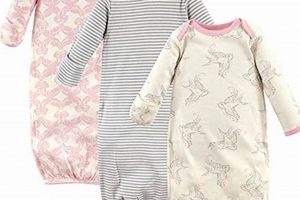
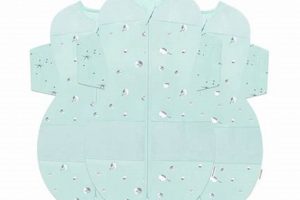
A specialized garment designed for infants and young children, this wearable blanket provides a safe and comfortable alternative to loose bedding. It encloses the baby’s body, typically from the shoulders down, allowing freedom of movement in the legs while preventing the risk of entanglement or suffocation associated with traditional blankets. For instance, a parent seeking to maintain a consistent temperature for their child throughout the night might utilize this type of sleeping attire, especially during colder seasons.
The importance of this item lies in its contribution to safe sleep practices, mitigating risks associated with Sudden Infant Death Syndrome (SIDS). Its design helps regulate the baby’s body temperature, preventing overheating or chilling. Historically, concerns about loose blankets in cribs led to the development and increased popularity of these secure sleeping solutions. The garment offers peace of mind for caregivers and promotes restful sleep for the infant.
The following sections will delve into the materials commonly used in these products, considerations for selecting the appropriate size and tog rating, and care instructions to ensure longevity and continued safety. We will also explore the various styles and features available to meet individual needs and preferences.
Essential Guidance on Selection and Usage
The following recommendations aim to provide caregivers with practical advice when choosing and utilizing a sleep garment designed to maintain a comfortable thermal environment for infants. Adherence to these suggestions can contribute to enhanced safety and improved sleep quality.
Tip 1: Select an Appropriate Tog Rating: Consider the ambient temperature of the baby’s sleeping environment when determining the appropriate thermal resistance (tog) rating. Higher tog ratings are suitable for colder rooms, while lower ratings are preferable for warmer conditions to prevent overheating.
Tip 2: Ensure Correct Sizing: The garment should fit snugly around the chest and arms to prevent the infant from slipping down inside. However, ample room should be provided for leg movement. Consult the manufacturer’s sizing chart and weight guidelines for accurate selection.
Tip 3: Prioritize Breathable Materials: Opt for natural, breathable fabrics such as cotton or merino wool. These materials promote air circulation and reduce the risk of overheating by wicking away moisture. Avoid synthetic fabrics that may trap heat and perspiration.
Tip 4: Regularly Monitor the Baby’s Temperature: Routinely check the baby’s chest or back to assess their temperature. Signs of overheating include sweating, flushed skin, and rapid breathing. Adjust the tog rating or clothing layers accordingly.
Tip 5: Inspect for Damage: Before each use, thoroughly examine the garment for any signs of wear and tear, such as loose seams, broken zippers, or detached fasteners. Discard any damaged items to prevent potential hazards.
Tip 6: Follow Washing Instructions: Adhere to the manufacturer’s washing and drying instructions to maintain the garment’s integrity and prevent shrinkage or damage to the insulation. Use a gentle detergent and avoid harsh chemicals or bleach.
Tip 7: Avoid Over-Bundling: Dress the baby lightly underneath the garment. One layer of breathable clothing, such as a cotton onesie, is generally sufficient. Avoid excessive layering that could lead to overheating.
Careful consideration of these factors when selecting and using an infant sleep garment will help ensure optimal comfort, safety, and thermal regulation for the child.
The next section will address different styles and features that cater to diverse requirements, including those with wearable blanket specific design adaptations.
1. Safety

The paramount concern in infant sleepwear design is safety. This principle dictates the construction and features incorporated into garments intended for nighttime use, directly influencing the mitigation of risks associated with Sudden Infant Death Syndrome (SIDS) and other potential hazards.
- Neck and Armhole Dimensions
The sizing of the neck and armholes are critical. A neck opening that is too large presents a risk of the infant slipping down into the garment, potentially obstructing breathing. Conversely, armholes that are excessively large can allow the infant’s arms to become trapped within the sack. Strict adherence to industry safety standards and rigorous testing are necessary to ensure appropriate dimensions.
- Zipper and Fastener Security
Zipper closures and other fasteners must be designed and implemented to prevent accidental opening by the infant. Zippers should include fabric coverings to protect the skin from irritation and prevent the baby from accessing the zipper pull. Buttons and snaps should be securely attached to avoid becoming choking hazards. Regular inspection for wear and tear is essential.
- Fabric Breathability and Overheating Prevention
The fabric’s breathability is crucial to preventing overheating. Fabrics that restrict airflow can cause the infant’s body temperature to rise to dangerous levels, increasing the risk of SIDS. Manufacturers should prioritize natural, breathable materials like cotton or merino wool, and clearly label garments with appropriate tog ratings to guide parents in selecting the correct warmth level for the ambient room temperature.
- Absence of Loose Parts and Cords
Any embellishments, decorative elements, or cords on the garment present potential entanglement or choking hazards. Sleep sacks should be designed without any loose parts that could detach and be ingested by the infant. Strings, ribbons, or drawstrings should be strictly avoided.
These safety considerations collectively emphasize the importance of meticulous design and manufacturing processes. Consistent adherence to established safety guidelines and ongoing vigilance in product testing are essential for ensuring that these sleep garments provide a secure sleep environment for infants.
2. Warmth
Maintaining a consistent and appropriate thermal environment is a primary function of specialized infant sleepwear. This aspect directly relates to the design, materials, and usage of such garments, influencing the infant’s comfort and safety during sleep.
- Material Insulation Properties
The selection of fabrics significantly affects the garment’s ability to retain heat. Materials like merino wool and fleece provide superior insulation compared to lighter fabrics such as cotton. The thermal resistance of a material, quantified by its tog rating, dictates its suitability for different ambient temperatures. A higher tog rating indicates greater insulation, appropriate for colder environments.
- Layering Considerations
The effectiveness of a sleep garment in maintaining thermal comfort is contingent upon appropriate layering. Over-bundling can lead to overheating, while insufficient layering may result in chilling. Caregivers must consider the garment’s tog rating in conjunction with the infant’s underlying clothing to achieve optimal thermal regulation.
- Moisture Management
While insulation is crucial, the ability of the fabric to manage moisture is equally important. Fabrics with poor moisture-wicking properties can trap perspiration, leading to discomfort and potential chilling. Breathable materials that allow moisture to evaporate contribute to a stable and comfortable thermal environment.
- Consistent Temperature Maintenance
The primary objective is to ensure that the infants body temperature remains within a safe and comfortable range throughout the duration of sleep. Fluctuations in temperature can disrupt sleep and potentially compromise health. The design and materials of the garment must contribute to a consistent and stable thermal environment.
These facets collectively underscore the critical role of specialized infant sleepwear in regulating an infant’s body temperature. Strategic material selection, mindful layering practices, and consideration of environmental factors are all integral to maximizing the garment’s thermal performance and promoting a safe and comfortable sleep experience.
3. Comfort

The perceived comfort of an infant sleep garment directly influences sleep quality and duration. The connection between material texture, garment design, and the infant’s sensory experience is paramount. Abrasive or stiff fabrics can disrupt sleep, causing restlessness and frequent awakenings. Conversely, soft, breathable materials like cotton or merino wool contribute to a calming tactile experience, facilitating longer and more restful sleep periods. For example, a sleep garment constructed with tightly woven synthetic fibers may cause skin irritation and overheating, leading to discomfort and disrupted sleep. In contrast, a sleep garment made from loosely woven organic cotton allows for optimal airflow and gentle contact with the skin, promoting a sense of security and relaxation.
Beyond material properties, the design of the garment plays a crucial role in comfort. A properly sized garment allows for freedom of movement without being excessively loose, which could pose a safety risk. Features such as a smooth, covered zipper and tagless construction minimize potential sources of irritation. The garment’s overall shape should conform to the infant’s body without constricting movement or placing undue pressure on any specific area. An improperly designed or ill-fitting garment can lead to discomfort and limit the infant’s ability to achieve a comfortable sleep position. A garment that is too tight around the chest or hips, for instance, may restrict breathing and impede natural movement.
Ultimately, the comfort provided by the sleep garment contributes significantly to the infant’s overall well-being. A comfortable sleep environment reduces stress and promotes healthy sleep patterns, which are essential for physical and cognitive development. Prioritizing comfort in the selection of these garments translates to improved sleep quality, reduced parental stress, and enhanced infant health. Challenges remain in consistently achieving optimal comfort due to individual infant sensitivities and preferences, emphasizing the importance of careful observation and parental judgment in selecting the most suitable option.
4. Materials

The selection of materials constitutes a critical determinant of the efficacy and safety of a “warm baby sleep sack.” The properties inherent in the chosen fabric directly influence thermal retention, breathability, and tactile comfort, thereby impacting the infant’s sleep quality and overall well-being. For instance, a sleep sack constructed from synthetic, non-breathable materials may impede moisture evaporation, leading to overheating and discomfort. Conversely, a sack fashioned from natural fibers, such as merino wool or organic cotton, provides superior breathability and temperature regulation, mitigating the risk of overheating while maintaining adequate warmth in cooler environments. The presence of harmful chemicals or dyes in the fabric also presents a potential risk of skin irritation or allergic reaction, underscoring the importance of selecting materials certified as safe for infant use.
Furthermore, the structural characteristics of the material influence the durability and maintenance requirements of the sleep sack. Tightly woven fabrics, while potentially offering increased durability, may exhibit reduced breathability compared to loosely woven alternatives. The ease with which the material can be cleaned and dried, without compromising its thermal properties or structural integrity, represents another crucial consideration. For example, a sleep sack employing a blend of synthetic and natural fibers may offer a balance of durability, breathability, and ease of care. Specific material choices, such as the use of flame-retardant chemicals, often dictate specific washing instructions to maintain their effectiveness. Understanding these material-specific properties enables informed decision-making regarding appropriate usage and care, prolonging the lifespan of the product and ensuring continued safety.
In summation, the selection of materials represents a pivotal aspect in the design and functionality of a “warm baby sleep sack.” The intrinsic properties of the chosen fabric directly impact thermal regulation, breathability, durability, and safety. Awareness of these material-specific attributes empowers caregivers to make informed purchasing decisions, promoting optimal sleep conditions and mitigating potential risks associated with inappropriate material choices. Challenges persist in balancing competing material characteristics, such as durability versus breathability, necessitating careful consideration of the intended usage environment and individual infant sensitivities.
5. Sizing

Appropriate sizing is a critical component of safe and effective utilization of infant sleep garments. Incorrect sizing directly impacts both safety and thermal regulation. A sleep sack that is too large creates a risk of the infant sliding down inside, potentially obstructing airways. Conversely, a sleep sack that is too small restricts movement and can impede proper circulation. For example, an infant placed in a sleep sack exceeding their height by several inches may become entangled, negating the intended safety benefits of the garment. A sleep sack that is excessively tight, conversely, may cause discomfort and hinder natural sleep positions.
Manufacturers typically provide sizing charts based on infant weight and height. These charts serve as a guide, but variations in infant body proportions necessitate careful consideration. It is advisable to select a size that allows for some growth without compromising a secure fit around the shoulders and neck. Regular monitoring of the infant’s fit within the garment is essential to ensure continued appropriateness as the child grows. Real-world examples highlight the consequences of neglecting proper sizing: infants found with sleep sacks pulled over their faces, or infants exhibiting signs of discomfort due to restricted movement within undersized garments. These instances underscore the practical significance of adhering to sizing guidelines.
In summary, accurate sizing of infant sleep garments is paramount for safety and optimal thermal comfort. The connection between sizing and these outcomes necessitates diligent attention to manufacturer guidelines, consideration of individual infant proportions, and routine monitoring of fit. Overcoming challenges associated with variable sizing standards across manufacturers requires careful comparison and a commitment to prioritizing the infant’s well-being through informed selection. The impact of proper sizing extends beyond mere convenience, directly influencing the safety and quality of infant sleep.
6. Care

The longevity, safety, and continued effectiveness of an infant sleep garment are directly contingent upon adherence to appropriate care instructions. Neglecting recommended cleaning procedures or employing harsh treatments can compromise the fabric’s integrity, diminish its thermal properties, and potentially introduce harmful residues that irritate sensitive skin. For example, washing a merino wool sleep sack with conventional detergents containing enzymes can degrade the fibers, reducing its insulating capacity and shortening its lifespan. Conversely, employing gentle, hypoallergenic detergents and following specific drying recommendations preserves the fabric’s intended characteristics.
Beyond the choice of cleaning agents, the frequency and method of washing also contribute to the garment’s overall condition. Over-frequent washing can lead to premature wear and tear, while infrequent cleaning may allow for the accumulation of allergens and bacteria. Specific care instructions often dictate the appropriate water temperature, the use of a delicate wash cycle, and avoidance of high-heat drying. Ignoring these guidelines can result in shrinkage, distortion, or damage to zippers and fasteners, rendering the garment unsafe or ineffective. Real-world scenarios illustrate the practical consequences: instances of zippers malfunctioning after aggressive washing, or fabrics losing their shape and elasticity due to improper drying techniques. These examples emphasize the importance of consistent adherence to manufacturer-provided care labels.
In conclusion, the sustained performance and safety of an infant sleep garment are inextricably linked to proper care. Diligent adherence to recommended cleaning protocols, including the selection of appropriate detergents, washing methods, and drying techniques, is essential for preserving the fabric’s integrity, maintaining its thermal properties, and minimizing the risk of skin irritation. Challenges in interpreting and consistently following complex care instructions can be mitigated through increased awareness and a commitment to prioritizing the infant’s well-being. The practical significance of this understanding lies in extending the lifespan of the garment, ensuring its continued effectiveness in promoting safe and comfortable infant sleep.
Frequently Asked Questions Regarding Infant Sleep Garments
The following questions address common inquiries and concerns pertaining to the selection, usage, and maintenance of specialized sleep attire designed for infants. The information provided aims to offer clarity and guidance based on current understanding and established safety recommendations.
Question 1: At what age is it appropriate to begin using this type of garment?
Infant sleep garments are generally considered suitable from birth, provided the garment is properly sized and meets all relevant safety standards. Consultation with a pediatrician is advisable for infants with specific medical conditions or developmental concerns.
Question 2: How does one determine the appropriate tog rating for a given environment?
The tog rating, indicating thermal resistance, should be selected based on the ambient temperature of the infant’s sleep environment. Consult the manufacturer’s guidelines, which typically provide temperature ranges corresponding to specific tog values. Regularly monitor the infant’s temperature to ensure appropriate warmth without overheating.
Question 3: What are the potential risks associated with using an improperly sized sleep garment?
An improperly sized sleep garment presents a risk of airway obstruction if the infant slips down inside. A garment that is too small can restrict movement and potentially impede circulation. Careful adherence to sizing charts and routine monitoring of fit are essential to mitigate these risks.
Question 4: How frequently should this type of garment be washed?
Washing frequency depends on usage and soiling. Regular washing is recommended to remove allergens and bacteria. Follow the manufacturer’s care instructions to maintain the fabric’s integrity and thermal properties. Avoid over-frequent washing, which can contribute to premature wear.
Question 5: Are there specific materials that should be avoided in the construction of these garments?
Materials that restrict airflow or contain potentially harmful chemicals should be avoided. Prioritize natural, breathable fabrics, such as cotton or merino wool, and ensure that the garment is free from flame-retardant chemicals or dyes that could irritate sensitive skin.
Question 6: What are the key safety features to look for when selecting an infant sleep garment?
Key safety features include a secure neck opening, appropriate armhole size, a reliable zipper closure, and the absence of loose parts or cords that could present entanglement or choking hazards. Certifications from recognized safety organizations provide additional assurance of product compliance.
These questions and answers provide a foundation for understanding key aspects of specialized infant sleepwear. Careful consideration of these factors promotes informed decision-making and contributes to a safer and more comfortable sleep environment.
The following section will delve into emerging trends and innovations in infant sleep garment design, including advancements in material technology and smart features that enhance monitoring and comfort.
Conclusion
The preceding examination of the “warm baby sleep sack” elucidates its critical role in infant care, emphasizing safety, thermal regulation, comfort, material composition, appropriate sizing, and diligent care. This analysis underscores the significance of informed decision-making when selecting and maintaining such garments, prioritizing the infant’s well-being through adherence to established safety guidelines and manufacturer recommendations. A comprehensive understanding of these factors is paramount for caregivers seeking to provide a secure and comfortable sleep environment.
The pursuit of improved infant sleep safety and comfort remains an ongoing endeavor. Further research into innovative materials and design features is warranted to optimize these essential garments. Continued vigilance in product testing and adherence to evolving safety standards are crucial to ensure the well-being of infants. Caregivers are encouraged to remain informed and actively engage in the selection and maintenance of “warm baby sleep sack” options, contributing to a safer and healthier sleep experience for their children.