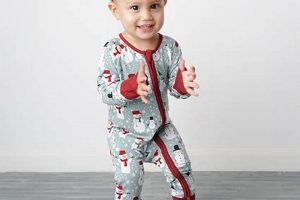
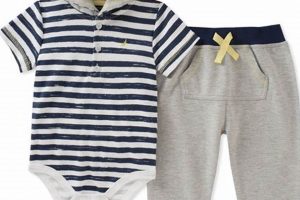
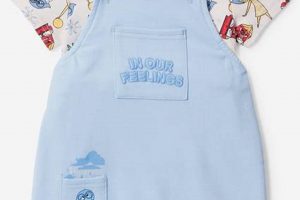
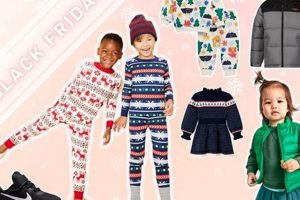
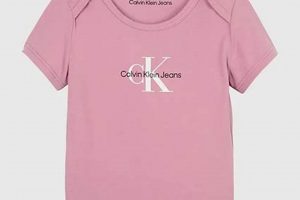
Garments designed to be suitable for any infant, regardless of gender, constitute a specific category within the broader apparel market. These items are typically characterized by neutral colors, simple patterns, and a lack of overt gender-specific detailing. For example, a plain white onesie or a gray knitted sweater are representative examples of such items.
The growing popularity of these items reflects a shift in societal attitudes towards gender norms and a desire for greater flexibility in dressing infants. Such apparel offers several advantages, including cost-effectiveness (as items can be reused for subsequent children regardless of sex), convenience (simplifying purchasing decisions and minimizing wardrobe clutter), and the promotion of inclusivity by avoiding the reinforcement of traditional gender stereotypes. Historically, baby clothing was less differentiated by gender, with the trend towards heavily gendered clothing emerging later in the 20th century. This represents a return to a more neutral approach.
Subsequent sections will delve into the material composition of these garments, exploring fabrics suitable for delicate infant skin. Further analysis will consider the sustainability and ethical sourcing of these textiles, alongside a review of available styles and purchasing considerations for parents and caregivers.
Purchasing Guidance
Careful consideration of several factors can optimize the selection process for garments suitable for all infants.
Tip 1: Prioritize Fabric Composition: Opt for natural, breathable fabrics such as organic cotton, bamboo, or merino wool. These materials minimize the risk of skin irritation and are gentle on delicate infant skin.
Tip 2: Assess Dye and Treatment Processes: Ensure that dyes used are low-impact and free from harmful chemicals. Look for certifications such as Oeko-Tex Standard 100, which verifies that the fabric has been tested for harmful substances.
Tip 3: Evaluate Closure Mechanisms: Snap closures are generally preferable to zippers or buttons, as they are less likely to pinch or irritate the infant. Ensure snaps are securely fastened to prevent detachment.
Tip 4: Consider Size and Fit: Choose garments that allow for freedom of movement and accommodate growth. Avoid overly tight or restrictive clothing.
Tip 5: Opt for Simple Designs: Garments with minimal embellishments, such as appliqus or ribbons, reduce the risk of choking hazards. Focus on functionality and comfort over elaborate aesthetics.
Tip 6: Review Care Instructions: Select items that are easy to care for and can withstand frequent washing. Machine-washable options are generally more practical for busy caregivers.
Tip 7: Explore Versatile Styles: Onesies, rompers, and leggings in neutral colors offer versatility and can be easily mixed and matched. These staples form the foundation of a practical infant wardrobe.
Adhering to these guidelines promotes the selection of safe, comfortable, and practical items, supporting the well-being of the infant and simplifying the caregiving process.
The subsequent conclusion will summarize the core principles outlined within this discourse.
1. Fabric Composition

The selection of appropriate fabric is paramount in the context of infant apparel, particularly when considering garments designed without specific gender assignment. Fabric choice directly impacts comfort, safety, and durability, three crucial factors for infant well-being. For example, organic cotton, characterized by the absence of harmful pesticides and chemicals in its cultivation, minimizes the risk of skin irritation, a common concern given infants’ sensitive epidermis. Conversely, synthetic fabrics, such as polyester, while often more durable and wrinkle-resistant, may lack breathability, potentially leading to overheating and discomfort, thereby rendering them less suitable for garments intended for universal use.
Furthermore, fabric composition significantly influences the longevity of infant clothing. Garments designed for multiple uses, whether across siblings or for extended wear within a single child’s growth stages, necessitate robust materials capable of withstanding frequent washing and wear. Natural fibers, while often requiring more delicate care, can be effectively maintained with appropriate washing techniques. Blends incorporating durable synthetics may offer a compromise, balancing comfort with resilience. It’s important to note that some dyes and treatments applied to fabrics can pose risks to infant health. Therefore, verifying certifications, such as Oeko-Tex Standard 100, ensures that fabrics are free from harmful substances.
In summary, the careful consideration of fabric composition is essential when selecting clothing intended for infants, irrespective of gender. The chosen material should prioritize safety, comfort, and durability. Opting for natural, breathable fabrics with minimal chemical treatments mitigates potential health risks and promotes optimal infant well-being. A thorough understanding of fabric characteristics empowers informed purchasing decisions, supporting the functionality and practicality of apparel designed for universal infant use.
2. Color Palette

The strategic selection of a color palette is a defining characteristic of garments intended for universal infant use. In this context, color functions as a primary visual cue, either reinforcing or mitigating perceived gender associations. A palette leaning towards traditionally gendered hues (e.g., pastel pink or light blue) undermines the goal of neutrality, whereas a carefully chosen range of colors actively promotes inclusivity. This has a direct effect on the perceived versatility and marketability of the item. For example, clothing collections featuring primarily beige, gray, or muted green onesies are more readily accepted as suitable for any infant, irrespective of assigned sex at birth.
The importance of a neutral color palette extends beyond simple aesthetics. It directly impacts the practicality and cost-effectiveness of infant apparel. Garments in non-gendered colors can be easily repurposed for subsequent children, regardless of gender. This not only reduces overall clothing expenses for families but also promotes sustainability by extending the lifespan of individual items. Consider the contrast: A wardrobe exclusively composed of gender-specific colors limits reuse potential, while a wardrobe composed of neutral colors allows for effortless mixing, matching, and subsequent use. The practical significance of this understanding is particularly relevant for families planning for multiple children, or those seeking to minimize waste and embrace a more sustainable consumption model.
In summary, the color palette holds a critical role in defining and reinforcing the intent behind garments intended for universal infant use. The judicious selection of non-gendered colors enhances versatility, promotes inclusivity, and increases the practicality and sustainability of infant apparel. While challenges may arise in overcoming deeply ingrained color associations, a conscious effort to embrace neutrality in color choices is essential for achieving the objectives of a truly universal garment design. This understanding is pivotal for designers, manufacturers, and consumers alike, ensuring that infant clothing reflects evolving societal values and promotes inclusivity from the earliest stages of life.
3. Design Simplicity

Design simplicity is a core tenet in the creation of garments intended for all infants. This element transcends mere aesthetic preference; it is intrinsically linked to practicality, safety, and the overarching goal of minimizing gendered associations. The less visual information embedded within a garment (e.g., ruffles, bows, character embellishments), the more readily it can be perceived as appropriate for any infant. The removal of specific details traditionally associated with either male or female infants allows for wider acceptance and reuse, increasing the garment’s utility. For example, a plain, solid-colored romper with minimal seams embodies design simplicity, while a romper with cartoon characters or frilly details deviates from this principle. The former allows for broader application, while the latter is constrained by cultural interpretations.
The practical implications of design simplicity extend to safety considerations. Garments laden with small, detachable embellishments pose potential choking hazards. Removing unnecessary components minimizes this risk, aligning with best practices for infant care. Furthermore, simplified designs often translate to increased durability and ease of care. Complex constructions frequently require specialized cleaning procedures or are more susceptible to damage, negating the practicality essential for infant apparel. Consider two distinct designs: a simple, one-piece garment with reinforced seams versus a garment featuring delicate lace and multiple layers. The former is more likely to withstand repeated washing and wear, while the latter may require more careful handling, reducing its suitability for everyday use.
In summary, design simplicity is not merely an aesthetic choice in the context of garments for all infants; it is a functional imperative. By minimizing gendered visual cues, mitigating safety hazards, and enhancing durability, simplified designs contribute directly to the practicality, cost-effectiveness, and overall suitability of these garments. Challenges may arise in balancing simplicity with aesthetic appeal, but the core principle remains: prioritize functionality and safety over elaborate ornamentation. This understanding is crucial for designers, manufacturers, and consumers aiming to create and select garments that genuinely serve the needs of all infants.
4. Practical Functionality
Practical functionality is a key consideration in the design and selection of garments intended for universal infant use. The inherent purpose of infant attire is to provide comfort, protection, and ease of care, and these criteria are particularly pertinent when considering clothing intended to be suitable for any infant, regardless of gender.
- Ease of Dressing and Undressing
This aspect focuses on simplifying the process for caregivers. Garments with wide openings, snap closures, or envelope necklines facilitate quick and effortless changes, minimizing stress for both the infant and caregiver. Side snaps on onesies, for example, eliminate the need to pull the garment over the infant’s head, a design feature that is particularly beneficial for newborns with sensitive neck muscles. The presence of easily accessible closures, located in convenient positions, promotes efficiency and minimizes disruption during diaper changes or clothing adjustments.
- Durability and Washability
Infant clothing is subject to frequent washing due to spills and messes. Therefore, garments must be constructed from durable materials capable of withstanding repeated laundering without significant degradation. Reinforced seams, fade-resistant dyes, and shrink-resistant fabrics are essential attributes. The ability to machine wash and tumble dry items contributes significantly to the practicality and convenience for caregivers, reducing the time and effort required for garment maintenance. Garments which can be washed at high temperatures, without damage, are best to ensure sanitisation.
- Comfort and Range of Motion
Infant garments should allow for unrestricted movement, enabling infants to explore their surroundings and develop motor skills. Soft, breathable fabrics and loose-fitting designs promote comfort and prevent overheating. Avoidance of constricting elastic bands or restrictive seams is essential to ensure the infant’s well-being. The inclusion of features such as gussets in the crotch area can enhance flexibility and accommodate diaper bulk without hindering movement.
- Adaptability to Different Environments
Garments designed for universal use should be adaptable to various climates and environments. Layering options, such as long-sleeved onesies paired with lightweight sweaters, provide flexibility in adjusting the infant’s attire to changing temperatures. Fabrics with moisture-wicking properties can help regulate body temperature and prevent discomfort in warmer conditions. The ability to easily add or remove layers allows caregivers to maintain the infant’s comfort level throughout the day, regardless of external factors.
These facets of practical functionality directly contribute to the value and appeal of garments intended for universal infant use. By prioritizing ease of care, comfort, and adaptability, manufacturers and designers can create clothing that meets the needs of both infants and caregivers, transcending gender stereotypes and promoting practicality in infant apparel. The combination of well-chosen materials, designs that aid easy dressing and durability, ensures that “unisex baby clothing” is not just a fashion choice but a practical one.
5. Durability

The concept of durability is intrinsically linked to the value proposition of apparel designed for universal infant use. Specifically, the design of “unisex baby clothing” anticipates extended use, either across multiple children within a family or through prolonged periods of an individual infant’s growth. The expectation of longevity necessitates a focus on material selection, construction techniques, and design features that maximize resistance to wear and tear. The correlation between durability and this specific category of apparel stems from economic considerations: if items are intended for repeat use, they must withstand the associated demands of frequent washing, abrasion, and general use typical of infant clothing. For example, garments constructed from reinforced cotton blends and featuring double-stitched seams exhibit increased resilience compared to items made from delicate fabrics and employing less robust construction methods.
The pursuit of durability impacts purchasing decisions and manufacturing processes. Consumers seeking such apparel often prioritize brands known for producing high-quality items capable of enduring repeated use. Manufacturers, in turn, are incentivized to employ stricter quality control measures, utilize durable materials (e.g., thicker fabrics, robust closures), and implement construction techniques designed to enhance garment lifespan. The implementation of these measures has practical implications for the consumer: a higher initial investment in durable items can yield long-term cost savings by reducing the need for frequent replacements. Furthermore, the prolonged lifespan of durable clothing reduces textile waste, contributing to more sustainable consumption patterns.
In conclusion, the emphasis on durability in “unisex baby clothing” is not merely a matter of preference; it is a pragmatic necessity driven by economic and environmental factors. While challenges may arise in balancing durability with other desirable attributes, such as softness and breathability, the core principle remains: apparel intended for universal infant use must possess the capacity to withstand the rigors of extended use without compromising functionality or safety. This understanding is vital for both consumers and manufacturers aiming to maximize the value and sustainability of infant clothing choices.
Frequently Asked Questions
This section addresses common inquiries and concerns regarding apparel designed to be suitable for all infants, irrespective of gender. The intent is to provide clarity and factual information to assist informed decision-making.
Question 1: What defines clothing as falling within the category of ‘unisex baby clothing?’
The designation applies to garments designed without specific gender markers. Key characteristics include neutral color palettes, simple designs devoid of overt gendered embellishments, and functional features suitable for any infant.
Question 2: Why is there an increasing emphasis on clothing of this nature?
The trend reflects evolving societal attitudes towards gender norms, a desire for greater flexibility and convenience in infant apparel, and a growing awareness of the potential limitations associated with heavily gendered clothing.
Question 3: Are such items less expensive than specifically gendered options?
Cost savings can arise from the ability to reuse these garments for subsequent children, regardless of sex. However, pricing varies widely based on brand, materials, and quality, rather than solely on gender neutrality.
Question 4: Are there any safety considerations unique to these items?
No. Standard safety considerations for infant apparel apply, irrespective of gender neutrality. These include ensuring secure closures, avoiding small detachable parts, and selecting flame-retardant or tightly woven fabrics.
Question 5: Do retailers typically segregate these items within dedicated sections?
Retail practices vary. Some stores may offer dedicated “unisex” sections, while others integrate these items within broader infant apparel categories. Online retailers often provide filtering options to facilitate searching for gender-neutral items.
Question 6: How does the environmental impact of such apparel compare to conventional items?
The environmental impact hinges primarily on material sourcing and manufacturing practices. Items crafted from sustainable materials, such as organic cotton, and produced using eco-friendly processes offer a reduced environmental footprint. The durability of “unisex baby clothing” also contributes to environmental sustainability.
The responses presented herein are intended to provide general guidance. Specific circumstances may warrant consultation with relevant experts or authorities.
The subsequent section will address the sustainability considerations associated with the production and disposal of baby clothing.
Conclusion
The preceding discourse has explored the multifaceted aspects of unisex baby clothing, encompassing design principles, practical considerations, economic implications, and environmental ramifications. The analysis has underscored the shift towards apparel intended for all infants, driven by evolving societal values and a heightened awareness of sustainability. This approach necessitates a careful balance between functionality, safety, and aesthetic neutrality, placing a premium on durable materials, simplified designs, and non-gendered color palettes. The aim is to provide cost-effective and practical options that transcend traditional gender roles, benefiting both caregivers and infants.
The continued adoption of unisex baby clothing represents a conscious move toward responsible consumption, challenging conventional market norms and prioritizing long-term value. As consumer awareness grows, and manufacturers adapt to meet the demand for sustainable and inclusive options, this trend is poised to gain further momentum, potentially reshaping the landscape of infant apparel and promoting a more equitable approach to early childhood expression.