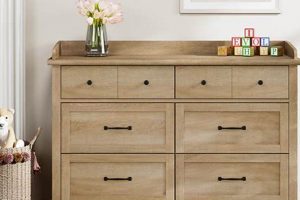
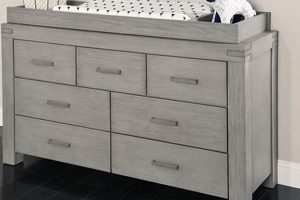
A piece of furniture designed for storing a baby’s clothing and accessories, constructed primarily from untreated or minimally treated lumber, constitutes a significant element in nursery design. These units are characterized by their use of materials such as solid oak, maple, or pine, often finished with non-toxic stains or sealants to showcase the inherent grain and color variations of the wood. One might picture a three-drawer chest, crafted from knot-free pine and sealed with a water-based finish, providing ample space for onesies, blankets, and diapers.
The utilization of unmodified timber in infant furniture offers several advantages. The absence of volatile organic compounds (VOCs) associated with synthetic finishes contributes to a healthier indoor environment for the child. Moreover, the durability and longevity of solid wood construction ensure the item’s sustained use, often transitioning from nursery essential to family heirloom. Historically, wooden furnishings have been valued for their strength, aesthetic appeal, and connection to natural resources, reflecting a tradition of craftsmanship and sustainable living.
The following sections will delve into specific considerations for selecting a suitable unit, examining factors such as wood type, finish options, safety standards, and design features. The intent is to provide a comprehensive guide for discerning consumers seeking to furnish a safe and aesthetically pleasing nursery environment.
Selection and Maintenance Guidance
The selection and proper care of nursery storage are paramount to ensuring the health and safety of infants and children. The following guidelines outline crucial considerations for acquisition and upkeep.
Tip 1: Prioritize Non-Toxic Finishes: Ensure any stains, sealants, or paints used on the furniture are certified as low-VOC or non-toxic. Look for certifications like Greenguard Gold, which indicates rigorous testing for chemical emissions. Consider unfinished options, allowing for application of a personally selected, child-safe finish.
Tip 2: Inspect Construction Quality: Examine the unit for structural integrity. Drawers should operate smoothly without sticking or wobbling. Joints should be securely fastened with screws or dowels, not merely glued. A well-constructed piece will resist wear and tear, providing long-term value.
Tip 3: Anchor to the Wall: Prevent tip-over accidents by securely anchoring the storage unit to the wall using anti-tip hardware. This is especially critical as children begin to crawl and climb. Follow the manufacturer’s instructions for proper installation.
Tip 4: Regularly Clean and Dust: Maintain the cleanliness by regularly dusting with a soft cloth. For spills, use a damp cloth and mild soap, avoiding harsh chemicals or abrasive cleaners that could damage the finish. Prompt cleaning prevents stains and bacterial growth.
Tip 5: Monitor for Damage: Periodically inspect the unit for signs of damage, such as splinters, cracks, or loose hardware. Repair or replace damaged components immediately to prevent injury. Address any issues promptly to extend the lifespan of the furniture.
Tip 6: Consider Drawer Depth and Configuration: Evaluate the internal dimensions of the drawers to ensure they accommodate the clothing and supplies intended for storage. Opt for a configuration that allows for efficient organization and easy access to items.
Adhering to these suggestions promotes a secure and healthy nursery environment, while safeguarding the longevity of the chosen furnishings.
The subsequent section will address specific design considerations and aesthetic integration within a nursery setting.
1. Material Sourcing

The origin of wood used in a baby’s storage unit significantly impacts both the environmental footprint and the product’s intrinsic qualities. Responsible material sourcing necessitates verification of sustainable forestry practices, ensuring that the wood is harvested from managed forests where regeneration and biodiversity are prioritized. For example, lumber certified by the Forest Stewardship Council (FSC) indicates adherence to rigorous environmental and social standards throughout the supply chain. The type of wood also dictates the unit’s durability and aesthetic. Hardwoods like maple and oak offer superior strength and resistance to wear, while softwoods such as pine provide a lighter weight and more affordable option.
The specific geographic origin of the wood can influence its properties. Wood grown in colder climates, for instance, tends to have tighter growth rings, resulting in greater density and stability. Additionally, local sourcing minimizes transportation distances, thereby reducing carbon emissions associated with the product’s lifecycle. Instances of fraudulent labeling and unsustainable logging practices underscore the need for transparency and traceability in material sourcing. Consumers can request information about the wood’s origin and chain of custody documentation from manufacturers to ensure ethical and environmental responsibility.
In summary, the provenance of timber used in constructing infant storage units is not merely a technical detail; it is a crucial determinant of environmental impact, structural integrity, and long-term value. Choosing a unit made from responsibly sourced wood supports sustainable forestry practices, minimizes environmental harm, and provides a durable, aesthetically pleasing product for the nursery. Verification of certifications and a commitment to transparency are essential for navigating the complexities of material sourcing and ensuring ethical consumption.
2. Finish Safety
The safety of finishes applied to infant furniture, particularly those constructed from unmodified timber, constitutes a critical consideration due to the potential for direct and prolonged exposure to infants. Conventional finishes often contain volatile organic compounds (VOCs) that off-gas over time, contributing to indoor air pollution and posing potential respiratory risks to susceptible individuals. This concern is amplified in the context of infants, whose developing respiratory systems and heightened sensitivity to environmental toxins render them particularly vulnerable to adverse health effects. Therefore, the selection of low- or zero-VOC finishes is paramount in mitigating these risks.
The connection between finish safety and wooden infant storage is directly causal: unsafe finishes directly lead to potential health hazards. Finishes containing formaldehyde, phthalates, or heavy metals, while potentially offering desirable aesthetic or functional properties such as durability or color saturation, present significant risks to infant health. For example, a storage unit finished with a solvent-based polyurethane could release VOCs for months or even years, impacting the air quality within the nursery. Conversely, a unit finished with a water-based acrylic or plant-based oil offers a significantly reduced risk of off-gassing harmful chemicals. The practical significance of this understanding is that it informs purchasing decisions, leading consumers to prioritize products with certifications such as Greenguard Gold or those explicitly labeled as low- or zero-VOC.
In summary, finish safety is an indispensable component of quality. The selection of appropriate finishes, prioritizing low- or zero-VOC formulations, is a crucial step in safeguarding the health of infants. Challenges remain in identifying and verifying the safety of specific finishes, given the complexity of chemical formulations and the potential for misleading marketing claims. However, a commitment to informed consumerism, guided by reputable certifications and a thorough understanding of potential health risks, is essential for creating a safe and healthy nursery environment.
3. Construction Integrity

Construction integrity, in the context of a baby’s storage unit, is paramount to ensuring both safety and longevity. A well-constructed unit minimizes the risk of structural failure, prevents potential hazards to the child, and extends the lifespan of the furniture. Several facets contribute to overall construction quality, each playing a critical role in the unit’s performance.
- Joint Strength and Stability
The method by which individual components are joined significantly impacts the overall stability of the storage unit. Dovetail joints, mortise and tenon joints, and secure screw fastenings offer superior strength compared to simple glue-only connections. For example, drawers constructed with dovetail joints are less prone to separating under repeated use. Poorly constructed joints can weaken over time, leading to instability and potential collapse, posing a direct safety risk.
- Material Thickness and Quality
The thickness and grade of the chosen lumber directly influence the load-bearing capacity and resistance to warping or cracking. Thicker panels provide greater stability and can withstand greater weight without deformation. Knots, imperfections, and inconsistencies in wood density can weaken structural integrity. Selecting high-grade timber with minimal imperfections ensures a more durable and stable end product.
- Hardware Selection and Installation
The quality of hardware, including drawer slides, hinges, and fasteners, affects the functionality and longevity of the unit. Durable metal hardware is preferable to plastic components, which are prone to breakage. Properly installed drawer slides ensure smooth operation and prevent drawers from sticking or falling out. Securely fastened hinges prevent doors from sagging or becoming misaligned. Inadequate hardware can compromise the unit’s usability and safety.
- Surface Finishing and Edge Treatment
A smooth, consistent surface finish is essential to prevent splinters and ensure a safe touch surface. Rounded edges and corners minimize the risk of injury from accidental bumps or scrapes. Poorly finished surfaces or sharp edges can pose a hazard, particularly for young children who are exploring their environment. Attention to detail in surface finishing enhances both the aesthetic appeal and the safety of the furniture.
These elements collectively contribute to the overall structural integrity. The use of high-quality wood, combined with strong joinery techniques and durable hardware, ensures a storage unit that is both safe and long-lasting. Conversely, substandard materials and poor construction practices compromise both safety and longevity. Therefore, a thorough evaluation of construction integrity is essential when selecting a storage unit, ensuring that the furniture is capable of withstanding the rigors of daily use while providing a safe and secure environment for the child.
4. Stability Features
The integration of stability features into a wooden storage unit designed for infant use is not merely an aesthetic consideration; it is a fundamental safety imperative. These features directly mitigate the risk of tip-over accidents, a significant hazard in nursery environments where young children are prone to climbing and exploring. The implementation of appropriate stabilization mechanisms transforms the unit from a potential danger into a secure and functional piece of furniture.
- Anti-Tip Hardware and Anchoring Systems
The inclusion of anti-tip hardware, such as brackets and straps designed to secure the storage unit to the wall, constitutes a primary defense against tip-over incidents. These systems effectively transfer the center of gravity, preventing the unit from toppling forward even when subjected to significant force. For example, a storage unit equipped with a properly installed anchoring system will remain stable even if a child attempts to climb on its drawers. Without such systems, the risk of a serious injury from a falling unit is substantially elevated.
- Weighted Base and Low Center of Gravity
The design of the unit’s base and overall center of gravity contribute significantly to its stability. A weighted base increases the unit’s resistance to tipping, while a lower center of gravity minimizes the leverage that a child could exert when climbing or pulling on the drawers. For instance, units with wider bases and lower profiles are inherently more stable than those with narrow bases and tall structures. This design consideration is crucial in mitigating the risk of accidental tip-overs.
- Drawer Interlock Mechanisms
Drawer interlock mechanisms prevent multiple drawers from being opened simultaneously, thus reducing the potential for weight imbalance and subsequent tipping. These mechanisms function by physically restricting the opening of one drawer when another is already extended. A scenario where a child opens multiple drawers, shifting the weight distribution, is effectively prevented by such a system. The absence of interlock mechanisms increases the likelihood of tip-over incidents, especially in units with multiple drawers.
- Robust Leg or Base Construction
The design and construction of the legs or base directly affect the unit’s overall stability. Wide, sturdy legs provide a stable foundation and prevent wobbling. The use of durable materials and secure joinery techniques ensures that the legs can withstand significant weight and pressure without collapsing or buckling. Weak or poorly constructed legs compromise the unit’s stability and increase the risk of tip-over accidents. A well-designed base provides a solid anchor and minimizes the potential for instability.
These integrated features are essential for the structural integrity and overall safety of wooden baby storage units. Their implementation transforms the item from a potential hazard into a reliable and secure component of the nursery. Prioritizing these elements in the selection of infant furniture is critical for ensuring a safe environment and mitigating the risk of preventable accidents.
5. Storage Capacity
Storage capacity, in the context of a unmodified timber baby dresser, denotes the total volume available for stowing a childs clothing, diapers, blankets, and related necessities. Its adequacy directly influences the functionality and organizational efficiency of the nursery. An insufficient capacity necessitates the use of auxiliary storage solutions, potentially cluttering the space and reducing its overall usability. Conversely, an appropriate capacity streamlines organization, providing readily accessible items while maintaining a tidy and functional environment. For instance, a dresser with shallow drawers might prove inadequate for storing bulky winter clothing, while one with deep drawers and adjustable dividers can accommodate a wider range of items and organizational preferences. In effect, the storage capacity of a wooden baby dresser is a critical factor determining its practical value and contribution to an organized and efficient nursery.
The determination of suitable storage capacity requires careful consideration of several factors. The age of the child influences the quantity and type of items requiring storage. Newborns, for example, necessitate a substantial supply of diapers and frequent clothing changes, whereas older infants may require more space for toys and larger clothing items. Available space within the nursery also dictates the feasible dimensions of the dresser, creating a trade-off between storage volume and spatial constraints. Design elements such as drawer depth, width, and configuration further impact the usable storage volume. Dressers with multiple small drawers may be better suited for organizing small items, while those with fewer, larger drawers are more appropriate for storing bulky items. Therefore, a thorough assessment of storage needs and spatial limitations is essential for selecting a unit with an appropriate capacity. Failure to account for these considerations may result in a mismatch between storage needs and available volume, diminishing the functionality of the dresser.
The practical implication of understanding the interplay between these factors is significant. Selecting a solid wood baby dresser with adequate storage capacity, tailored to the specific needs of the child and the spatial constraints of the nursery, promotes an organized and efficient environment. This enhances the functionality of the space, facilitating easy access to essential items and minimizing clutter. The challenge lies in accurately anticipating future storage needs and selecting a unit that provides both immediate utility and long-term adaptability. However, a careful assessment of storage requirements and spatial limitations, coupled with a thorough evaluation of design elements, enables informed decision-making and ensures that the chosen dresser effectively meets the evolving needs of the child and the nursery.
6. Design Aesthetics

Design aesthetics, in the realm of nursery furnishings, transcends mere visual appeal, representing a deliberate integration of form and function to create a harmonious and nurturing environment. When applied to a solid wood baby dresser, design aesthetics encompasses a range of considerations that influence the unit’s visual impact, its integration within the nursery’s overall design scheme, and its long-term appeal.
- Wood Grain and Finish Variations
The inherent grain patterns and color variations of a storage unit significantly contribute to its aesthetic character. Different wood species exhibit distinct grain patterns, ranging from the tight, uniform grain of maple to the more pronounced and rustic grain of oak. The choice of finish, whether a clear sealant that accentuates the natural wood tone or a tinted stain that alters the color, further influences the unit’s visual appearance. A dresser finished with a clear coat may evoke a sense of natural simplicity, while one stained a deep mahogany may convey a more traditional and formal aesthetic.
- Hardware and Detailing
The selection of hardware, including drawer pulls, knobs, and hinges, serves as a crucial element in defining the unit’s style. Simple, minimalist hardware can complement a contemporary aesthetic, while ornate or vintage-inspired hardware can enhance a more traditional design. The shape, material, and finish of the hardware contribute to the overall visual impression. Similarly, detailing such as beveled edges, carved accents, or decorative moldings can add visual interest and reinforce the desired aesthetic style. For example, a dresser with brushed nickel hardware and clean lines may project a modern and sophisticated look, while one with antique brass pulls and ornate carvings may evoke a sense of vintage charm.
- Form and Proportion
The overall shape and proportions dictate its visual balance and relationship to other elements within the nursery. A dresser with clean, rectilinear forms may align with a contemporary design, while one with curved lines and softer edges may suit a more traditional or whimsical style. The height, width, and depth of the unit, as well as the proportions of the drawers, influence its visual impact. A tall, narrow dresser may create a sense of verticality, while a low, wide dresser may emphasize horizontality. Careful consideration of form and proportion is essential for creating a harmonious and visually appealing nursery environment.
- Integration with Nursery Theme
A unit should complement the overall theme and color palette of the nursery. Whether the theme is nautical, woodland, or minimalist, the dresser should align with the chosen aesthetic. The color of the wood, the style of the hardware, and the overall design should harmonize with the other furniture, bedding, and decor elements within the space. Cohesive integration contributes to a unified and visually appealing nursery environment. A storage unit that clashes with the overall theme can detract from the aesthetic harmony of the space.
These elements collectively determine the aesthetic impact of the wooden baby dresser, influencing its visual appeal and its integration within the nursery’s overall design. Prioritizing thoughtful aesthetic considerations ensures that the unit not only fulfills its functional purpose but also contributes to creating a nurturing and visually pleasing environment for the child.
Frequently Asked Questions
This section addresses common inquiries regarding the selection, safety, and maintenance of furnishings constructed primarily from unadulterated timber.
Question 1: What constitutes “natural wood” in the context of nursery furniture?
The designation “natural wood” typically refers to lumber that has undergone minimal processing and retains its inherent characteristics. It implies the absence of synthetic veneers or laminates. However, it does not necessarily guarantee the absence of finishes or sealants. Discerning buyers should inquire specifically about the types of finishes employed and their associated chemical composition.
Question 2: Are all wooden infant dressers inherently safe?
No, not all wooden infant dressers are inherently safe. Safety depends on several factors, including the type of wood used, the finish applied, the construction methods employed, and the presence of stability features. Units constructed from untreated lumber and finished with low-VOC sealants are generally considered safer than those containing formaldehyde-based adhesives or lead-based paints.
Question 3: How can one verify the safety of the finish on a particular storage unit?
Verification of finish safety involves examining product labels and certifications. Look for certifications from reputable organizations such as Greenguard or Forest Stewardship Council (FSC). These certifications indicate that the product has undergone testing for chemical emissions and meets established safety standards. Contacting the manufacturer directly to request detailed information about the finish’s composition and VOC content is also advisable.
Question 4: What are the primary advantages of selecting a wooden unit over one constructed from composite materials?
The principal advantages of furnishings include enhanced durability, reduced off-gassing of harmful chemicals, and increased aesthetic appeal. Solid wood tends to be more structurally sound and resistant to wear than composite materials. Furthermore, it offers a more natural aesthetic and can be refinished or repaired more readily than veneered or laminated alternatives.
Question 5: How should a newly purchased piece of furniture be prepared for use in a nursery?
Prior to introducing it to the nursery environment, the unit should be thoroughly ventilated to allow any residual odors or volatile compounds to dissipate. Wiping down all surfaces with a damp cloth and a mild, non-toxic cleaner is also recommended. Securely anchoring the unit to the wall using anti-tip hardware is essential to prevent tip-over accidents.
Question 6: What maintenance procedures are recommended to ensure the longevity and safety?
Regular maintenance should include dusting with a soft cloth and promptly cleaning any spills with a damp cloth and mild soap. Harsh chemicals or abrasive cleaners should be avoided. Periodically inspect the unit for loose hardware, splinters, or cracks. Address any issues promptly to prevent injury and maintain the unit’s structural integrity. Reapplication of a non-toxic sealant may be necessary over time to protect the wood’s surface.
In summary, careful consideration of material sourcing, finish safety, construction integrity, and maintenance practices is essential for selecting and maintaining a nursery furnishing that is both safe and functional.
The subsequent section will provide information on sourcing reliable suppliers and assessing the overall value proposition.
Conclusion
The foregoing analysis has illuminated the multifaceted considerations inherent in the selection of a natural wood baby dresser. From material sourcing and finish safety to construction integrity, stability features, storage capacity, and design aesthetics, a comprehensive understanding of these factors is essential for informed decision-making. The selection of such an item transcends mere procurement; it represents a commitment to infant safety, environmental responsibility, and enduring quality.
The information provided serves as a foundation for discerning consumers. Further research and careful evaluation of individual product specifications are strongly encouraged. The long-term benefits of a well-chosen and properly maintained natural wood baby dresser extend beyond mere functionality, contributing to a safer, healthier, and more aesthetically pleasing environment for the child and the family.