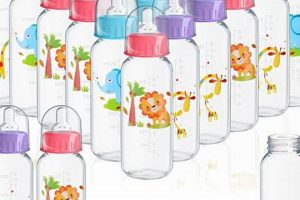
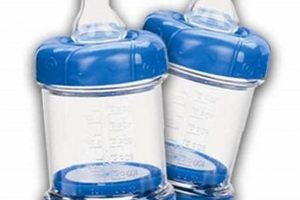
The process involves cleaning infant feeding containers using an automated dishwashing appliance. This method seeks to sanitize these items, removing milk residue and potential contaminants that could harm a baby’s health. This cleaning technique can accommodate various types of bottles, including those made of plastic, glass, and silicone, and often extends to related components such as nipples, collars, and caps.
Employing a dishwasher offers considerable convenience compared to manual washing. It saves time and labor, especially for parents dealing with frequent feeding schedules. Moreover, the high temperatures reached during the wash and sanitize cycles can effectively eliminate bacteria and viruses, providing a higher level of hygiene. Historically, handwashing was the standard practice, but the advent of dishwashers has presented a more efficient and reliable alternative for many caregivers.
The subsequent sections will delve into the specific steps for preparing bottles, proper loading techniques, recommended dishwasher settings, and essential safety considerations to ensure optimal cleaning and the well-being of the infant. Adhering to these guidelines will maximize the effectiveness of the automatic cleaning process.
Washing Infant Feeding Containers in an Automated Dishwasher
Optimizing the process for cleaning infant feeding containers within a dishwasher requires adherence to specific protocols. These recommendations enhance sanitation and maintain the integrity of the feeding equipment.
Tip 1: Pre-Rinse Thoroughly: Before loading, rinse bottles and components under running water to remove excess milk residue. This action prevents clogging of the dishwasher and improves cleaning efficiency.
Tip 2: Disassemble Completely: Separate all components including bottles, nipples, collars, caps, and valves. Individual separation ensures thorough exposure to the cleaning action and water circulation.
Tip 3: Utilize Upper Rack: Position smaller items like nipples and valves in a designated dishwasher basket or secured area on the upper rack. This placement prevents them from falling through and melting on the heating element.
Tip 4: Ensure Proper Orientation: Place bottles upside down on the tines of the lower rack to allow for effective water drainage and prevent water accumulation.
Tip 5: Select Appropriate Detergent: Opt for a mild, fragrance-free dishwasher detergent specifically formulated for baby items. Avoid detergents containing bleach or strong chemicals that could leave harmful residue.
Tip 6: Employ Hot Water and Sanitize Cycle: Select the highest water temperature setting and activate the sanitize cycle. These settings maximize the elimination of bacteria and provide a more thorough level of disinfection.
Tip 7: Air Dry Completely: After the cycle, allow all components to air dry completely on a clean drying rack or with a dedicated bottle drying rack. Avoid using a cloth towel, as it can reintroduce bacteria.
Tip 8: Regular Inspection: Routinely examine bottles and nipples for any signs of damage, wear, or discoloration. Replace any compromised items to ensure safety and prevent potential hazards.
By incorporating these tips into a regular cleaning routine, parents and caregivers can confidently utilize a dishwasher to effectively sanitize infant feeding equipment, promoting the health and well-being of the child.
The following section will address frequently asked questions and potential concerns regarding the practice of using an automated dishwasher for cleaning infant feeding containers.
1. Pre-cleaning Necessary

The effectiveness of cleaning infant feeding containers in an automated dishwashing appliance is significantly enhanced by pre-cleaning. This preliminary step involves rinsing bottles and their components, such as nipples, collars, and caps, under running water to remove residual milk or formula. Failure to perform this pre-cleaning can result in several adverse outcomes, reducing the efficacy of the automated cleaning process.
Firstly, accumulated milk residue can solidify within the dishwasher, potentially clogging spray arms and filters. This impedes water circulation, decreasing the appliance’s ability to thoroughly clean the items. Secondly, dried milk solids can serve as a breeding ground for bacteria, negating the sanitizing effects of the dishwasher’s high-temperature cycle. For instance, if a bottle is loaded with a thick layer of dried formula, the dishwasher may not be able to completely penetrate and eliminate the bacteria embedded within the residue. A real-life example could be a parent who consistently skips pre-rinsing and finds that bottles still have a milky film even after a full dishwasher cycle. The importance of pre-cleaning also extends to preventing staining of the bottles and components, ensuring they remain visually clean over time. Furthermore, in cases where specialized detergents designed for baby bottles are used, pre-cleaning enhances their efficacy by allowing the active cleaning agents to directly interact with the surfaces, unhindered by heavy residue.
In summary, pre-cleaning is not merely an optional step but an integral part of the cleaning infant feeding containers with a dishwasher procedure. It addresses potential mechanical issues within the dishwasher, safeguards the sanitizing effectiveness of the process, and ensures that the bottles and components emerge genuinely clean and free from harmful contaminants. Therefore, integrating pre-cleaning into the cleaning routine maximizes the benefits of using an automated dishwasher for infant feeding equipment and contributes to the health and safety of the infant.
2. Placement Critical

The effectiveness of utilizing an automated dishwasher to sanitize infant feeding containers hinges significantly on proper placement within the appliance. This aspect, often overlooked, directly influences water circulation, detergent exposure, and ultimately, the cleanliness of bottles and their components. Incorrect positioning can lead to inadequate sanitation, posing a potential health risk to the infant. The internal configuration of a dishwasher is designed for optimal cleaning under specific conditions. Obstructing water jets or overcrowding racks compromises this functionality, resulting in some items receiving insufficient cleaning while others may be exposed to excessive force.
Consider the scenario where bottles are placed face down on the lower rack without proper spacing. This can prevent water from reaching the interior surfaces, leaving milk residue untouched. Similarly, small components like nipples and valves, if not secured in a designated basket, may fall through the racks and melt on the heating element, rendering them unusable and potentially releasing harmful chemicals. A further example is stacking items, a common mistake. It creates shadows and blocks water flow, ensuring that the covered areas remain uncleaned. Therefore, adherence to recommended placement guidelines, such as using the upper rack for smaller items and orienting bottles for proper drainage, is not merely a matter of convenience, but a critical determinant of the washing process. A mother of twins might find that if they simply throw the bottles into the dishwasher after each feeding, many bottles will not be cleaned due to poor placement and overfilling.
In conclusion, the significance of proper placement in the context of cleaning infant feeding containers in an automated dishwasher cannot be overstated. It ensures optimal exposure to water and detergent, prevents damage to components, and ultimately contributes to the thorough sanitation of feeding equipment. Addressing this aspect thoughtfully is imperative for safeguarding infant health and maximizing the benefits of the automated cleaning process. By prioritizing careful and correct placement, one can effectively harness the capabilities of the dishwasher, achieving consistently sanitized and safe feeding containers for the infant.
3. Heat Essential

The effectiveness of sanitizing infant feeding containers within a dishwasher is intrinsically linked to the application of high temperatures. Dishwashers equipped with a sanitizing cycle elevate water temperatures to levels that exceed those achievable through manual handwashing. This elevated thermal exposure is crucial for eliminating bacteria, viruses, and other pathogens that may adhere to bottle surfaces. The primary mechanism through which heat achieves this sanitation is by denaturing microbial proteins and disrupting cellular structures, rendering the microorganisms inactive. A dishwasher that fails to reach and sustain adequate temperatures will not provide the degree of sanitation necessary for infant feeding equipment. For example, a malfunctioning heating element or a dishwasher setting that does not include a sanitizing cycle would undermine the entire process, potentially leaving harmful contaminants on the bottles.
Specific dishwasher models often specify a minimum temperature threshold for their sanitize cycles, typically around 160-180 degrees Fahrenheit (71-82 degrees Celsius). This heat level must be maintained for a sufficient duration to ensure effective disinfection. Furthermore, the thermal conductivity of the bottle material itself (glass, plastic, or silicone) influences the rate at which the contents reach sanitizing temperatures. For instance, thick-walled bottles may require longer cycle times to ensure complete heat penetration. To verify heat efficacy, some parents employ dishwasher-safe thermometers to monitor water temperatures during the cycle. An additional example is to check the dishwasher’s manual or the manufacturers website for the certified sanitization standards it adheres to, like NSF/ANSI 184.
In conclusion, the role of heat is paramount in the dishwashing process for infant feeding containers. Without sufficient thermal exposure, the dishwasher serves merely as a washing apparatus, failing to achieve the required level of sanitation. Maintaining appropriate temperatures, ensuring adequate cycle times, and verifying operational effectiveness through testing are vital steps. Overlooking this “Heat Essential” aspect compromises the intended purpose of using a dishwasher, potentially exposing the infant to preventable health risks. Therefore, diligent attention to temperature control is a prerequisite for a reliable cleaning process.
4. Detergent Selection
The process of effectively washing infant feeding containers in an automated dishwasher is inextricably linked to detergent selection. The detergent’s chemical composition directly impacts the removal of milk residue and the elimination of potential contaminants. While dishwashers offer high-temperature cleaning, they rely on the detergent’s surfactants and enzymes to break down proteins and fats present in breast milk or formula. Inadequate detergent selection can result in residual film on bottle surfaces, fostering bacterial growth and negating the intended sanitizing effect. The cause-and-effect relationship is clear: choosing the wrong detergent results in insufficiently cleaned bottles, increasing the risk of infant illness. The importance of selecting appropriate detergents as a component of this process is thus paramount, as it ensures the desired outcome of thorough cleaning and sanitization is achieved.
Real-life examples underscore this point. Standard household dishwashing detergents often contain fragrances, dyes, and phosphates that, while effective for general dishware, may leave harmful residues on baby bottles. Infants, with their developing immune systems, are more susceptible to the adverse effects of these chemicals. Consequently, specialized detergents formulated specifically for infant feeding equipment are recommended. These detergents are typically fragrance-free, dye-free, and hypoallergenic, minimizing the risk of allergic reactions or chemical exposure. Furthermore, some specialized detergents incorporate plant-derived enzymes designed to target milk proteins effectively. The practical significance of this understanding is that it empowers caregivers to make informed choices, prioritizing the infant’s health and safety. For instance, a parent might switch from a conventional detergent to a baby-safe option after noticing persistent cloudiness on bottles after dishwashing cycles, indicating residue buildup. This switch demonstrates the immediate and tangible benefits of informed detergent selection.
In conclusion, detergent selection is not a peripheral consideration but a critical determinant of the success of cleaning infant feeding containers in an automated dishwasher. The selection process hinges on carefully evaluating ingredients to ensure they are safe and effective for infant use. Challenges remain, particularly in navigating the wide array of products and marketing claims. However, by prioritizing fragrance-free, dye-free, and hypoallergenic options, caregivers can significantly enhance the safety and efficacy of the dishwashing process, contributing to the overall health and well-being of the infant. Linking this back to the broader theme, the proper cleaning of feeding equipment exemplifies the dedication required for responsible infant care, emphasizing informed decision-making throughout the process.
5. Complete Drying
The process of sanitizing infant feeding containers within an automated dishwasher necessitates a final step of thorough drying. This is a critical component of the overall procedure. While the dishwasher’s wash and sanitize cycles effectively eliminate bacteria and pathogens, residual moisture can create an environment conducive to renewed microbial growth. Therefore, the absence of complete drying can undermine the benefits achieved during the cleaning phase. The relationship is direct: incomplete drying increases the likelihood of re-contamination, potentially exposing the infant to health risks. This connection underscores the significance of including complete drying as an essential element within the automated cleaning process for infant feeding containers.
Practical application highlights the importance of this step. For instance, consider a scenario where bottles are removed from the dishwasher and immediately stored while still damp. The trapped moisture fosters bacterial proliferation, negating the effects of the high-temperature sanitization. A real-world example is a parent noticing a musty odor emanating from bottles stored in this manner, indicating microbial activity. Conversely, allowing bottles and components to air dry completely on a clean drying rack significantly reduces the risk of such re-contamination. Some caregivers utilize specialized bottle drying racks designed with adequate ventilation to facilitate this process. Furthermore, employing a clean, lint-free cloth to gently pat dry the exterior surfaces of bottles can expedite drying, although it is vital to ensure the cloth itself is sanitized regularly to avoid introducing contaminants. The common practice of simply placing recently washed bottles back on storage areas without allowing them to dry contributes significantly to the risk of re-contamination, regardless of how effective the initial cleaning process was.
In summary, complete drying is an indispensable aspect of using an automated dishwasher to clean infant feeding containers. It complements the sanitizing action of the dishwasher, preventing the resurgence of microbial growth and safeguarding the infant’s health. The challenges associated with ensuring complete dryness necessitate a proactive approach, including proper air circulation and, if necessary, the use of sanitized drying cloths. This process reinforces the understanding that infant care requires diligent attention to detail, with each step contributing to the overall well-being of the child. Overlooking this final, crucial stage compromises the integrity of the entire cleaning operation. Therefore, adherence to complete drying protocols ensures that the dishwashing process genuinely delivers the desired outcome: sanitized, safe feeding equipment for the infant.
Frequently Asked Questions
This section addresses common inquiries and clarifies misconceptions regarding the effective and safe use of automated dishwashers for cleaning infant feeding equipment.
Question 1: Is it safe to clean all types of baby bottles in a dishwasher?
Most modern baby bottles, whether plastic, glass, or silicone, are designed to withstand dishwasher cleaning. However, it is essential to consult the manufacturer’s instructions for specific recommendations and temperature limitations. Older bottles or those made from unknown materials should be hand-washed to avoid potential damage or chemical leaching.
Question 2: Can dishwashing detergents leave harmful residues on baby bottles?
Standard household detergents may contain fragrances, dyes, and phosphates that can leave residues considered harmful to infants. It is recommended to use detergents specifically formulated for baby bottles, which are typically fragrance-free, dye-free, and hypoallergenic.
Question 3: How important is the sanitize cycle on a dishwasher for cleaning baby bottles?
The sanitize cycle is highly recommended for ensuring proper disinfection of infant feeding equipment. This cycle raises the water temperature to levels sufficient to eliminate most bacteria and viruses, providing a higher level of hygiene compared to standard wash cycles.
Question 4: What is the best way to load baby bottles and their components into the dishwasher?
Bottles should be placed upside down on the tines of the lower rack to facilitate water drainage. Smaller components like nipples, valves, and caps should be secured in a dishwasher basket on the upper rack to prevent them from falling through and potentially melting. Avoid overcrowding to ensure adequate water circulation.
Question 5: Is pre-rinsing necessary if the dishwasher has a powerful cleaning action?
Pre-rinsing is generally recommended, even with dishwashers featuring powerful cleaning action. Pre-rinsing removes large particles of milk residue, preventing clogs in the dishwasher and improving overall cleaning efficiency. It also minimizes the potential for residue buildup on the bottles.
Question 6: How should baby bottles be dried after being washed in the dishwasher?
After the wash cycle, bottles and components should be allowed to air dry completely on a clean drying rack or dedicated bottle drying rack. Avoid using cloth towels, as they can reintroduce bacteria. Ensure adequate ventilation to facilitate thorough drying.
In summary, cleaning infant feeding containers in dishwashers requires adherence to specific guidelines to ensure safety and effectiveness. Proper detergent selection, loading techniques, and drying procedures are crucial for minimizing the risk of contamination.
The subsequent section will address troubleshooting common problems encountered when cleaning infant feeding containers with an automated dishwasher.
How to Wash Baby Bottles in Dishwasher
The detailed exploration of how to wash baby bottles in dishwasher establishes that the process is a viable sanitation method when executed with precision. Pre-cleaning, strategic placement within the appliance, rigorous temperature control, the application of specialized detergents, and complete drying are not optional considerations but essential steps. Each element contributes to minimizing microbial contamination and ensuring the infant’s safety.
Adopting the described protocol demands diligent adherence to best practices and ongoing vigilance. Caregivers must remain informed about bottle material compatibility and monitor detergent formulations to mitigate potential risks. The efficacy of automated dishwashing for infant feeding equipment is contingent upon responsible implementation, representing a critical facet of infant care. By treating this process with the necessary seriousness and knowledge, optimal hygiene can be maintained, supporting the infant’s health and well-being.