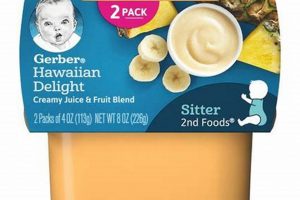
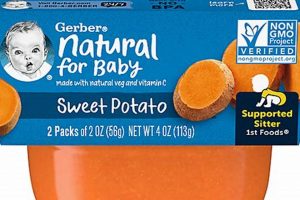
The duration for which commercially prepared infant nourishment remains safe and palatable is a critical consideration for caregivers. This period varies based on whether the product is unopened or has been opened and refrigerated. Unopened jars and containers generally have a “use by” date printed on the packaging; adhering to this date ensures optimal quality. Once opened, the food’s shelf life drastically reduces, typically requiring refrigeration and consumption within one to two days to prevent bacterial growth and spoilage.
Understanding these timelines is paramount for minimizing the risk of foodborne illnesses in infants, who are particularly vulnerable due to their developing immune systems. Proper storage and handling practices, including refrigeration at appropriate temperatures and using clean utensils, are essential in maintaining the integrity of the food. Discarding any remaining portion after the recommended timeframe contributes to a safe feeding environment.
The subsequent discussion will delve into specific guidelines for various Gerber baby food products, covering storage instructions, signs of spoilage, and best practices to ensure the health and well-being of infants.
Maximizing Freshness and Safety
Ensuring the safety and quality of infant nourishment requires diligent adherence to established guidelines. The following recommendations outline optimal practices for handling Gerber baby food products:
Tip 1: Prioritize “Use By” Dates: Always check the “use by” date on unopened containers. This date represents the manufacturer’s guarantee of peak quality and nutritional value. Discard products that have exceeded this date.
Tip 2: Refrigerate Promptly After Opening: Once a container is opened, refrigerate any unused portion immediately. Delaying refrigeration can promote bacterial growth, compromising the food’s safety.
Tip 3: Adhere to Refrigeration Timeframes: Opened containers of Gerber baby food typically remain safe for consumption within one to two days when refrigerated properly. Discard any remaining food after this period, regardless of appearance or smell.
Tip 4: Avoid Double Dipping: Use a clean spoon each time you feed your baby directly from the jar. Introducing saliva can contaminate the food, accelerating spoilage and potentially introducing harmful bacteria.
Tip 5: Store Open Jars Properly: After opening, transfer the remaining baby food to an airtight container before refrigerating. This reduces exposure to air and helps maintain freshness.
Tip 6: Recognize Signs of Spoilage: Before feeding, inspect the food for any signs of spoilage, such as an off-odor, discoloration, or a change in texture. If any of these signs are present, discard the food immediately.
Tip 7: Consider Freezing for Limited Extension: While not always recommended for all varieties, some Gerber baby foods can be frozen to extend their shelf life. However, freezing may alter the texture and flavor of the food. Consult the packaging for specific guidance.
By diligently following these guidelines, caregivers can significantly reduce the risk of foodborne illness and ensure that infants receive safe and nutritious nourishment.
The subsequent section will address common concerns and frequently asked questions regarding the storage and handling of Gerber baby food.
1. Unopened expiry dates

The expiration date printed on unopened jars of Gerber baby food represents a critical indicator of the product’s expected quality and safety. This date signifies the manufacturer’s guarantee that the food retains its intended nutritional value, texture, and flavor profile until that specified point, provided it is stored under appropriate conditions.
- Regulatory Compliance and Safety Standards
Food manufacturers adhere to stringent regulations regarding product dating. The expiration date indicates the period during which the food is deemed safe and of optimal quality for consumption, aligning with public health guidelines. Consuming products past this date may pose potential health risks due to degradation of ingredients or potential microbial growth, even if the product appears visually acceptable.
- Nutritional Integrity
The “use by” date reflects the period during which the food retains its intended nutritional content. Over time, vitamins and other nutrients may degrade, diminishing the nutritional value of the baby food. While the food may not necessarily be unsafe to consume immediately after the printed date, it may no longer provide the full nutritional benefits expected.
- Sensory Characteristics
Beyond safety and nutritional content, the expiration date also accounts for sensory attributes like taste, texture, and appearance. Baby food beyond the “use by” date may exhibit undesirable changes in these characteristics, potentially making it less palatable or acceptable to the infant.
- Storage Conditions Influence
While the expiry date provides a benchmark, proper storage is crucial. Exposing unopened jars to extreme temperatures or direct sunlight can accelerate degradation, potentially rendering the product unsafe or of diminished quality before the printed date. Maintaining appropriate storage conditions, such as a cool, dry place, maximizes the product’s shelf life within the specified timeframe.
The expiration date on unopened Gerber baby food serves as a key reference point for caregivers. Adherence to this date, in conjunction with proper storage practices, is essential to ensuring that the infant receives safe, nutritious, and palatable food. While exceeding the date does not automatically indicate spoilage, it signals a point beyond which the manufacturer can no longer guarantee optimal product quality, necessitating careful evaluation and consideration prior to use.
2. Refrigeration timelines

The duration Gerber baby food remains safe and suitable for consumption after opening is intrinsically linked to refrigeration timelines. Refrigeration significantly slows the growth of microorganisms, including bacteria, yeast, and mold, which can cause spoilage and potentially lead to foodborne illnesses in infants. Without refrigeration, these microorganisms proliferate rapidly, drastically reducing the period during which the food remains safe. For instance, opened jars of Gerber baby food, if left at room temperature, may spoil within a few hours, while refrigeration extends the safe consumption window to approximately one to two days. This stark difference underscores the pivotal role of refrigeration in preserving the food’s integrity and safeguarding infant health. The effectiveness of refrigeration is also dependent on maintaining a consistent temperature below 40F (4C); fluctuations above this threshold can compromise the food’s safety, even within the recommended timelines.
Further illustrating the practical application of understanding refrigeration timelines, consider the scenario of preparing multiple servings from a single jar. If only a portion of the jar is used for immediate feeding, the remaining contents must be promptly refrigerated. Delaying refrigeration, even for a short period, increases the risk of contamination and necessitates discarding the uneaten portion after the specified timeframe, regardless of visible signs of spoilage. Conversely, strict adherence to refrigeration timelines, combined with hygienic feeding practices such as using a clean spoon for each serving, minimizes the potential for bacterial introduction and extends the safe consumption period to the maximum recommended duration. Parents and caregivers can employ refrigerator thermometers to ensure consistent temperature maintenance, reinforcing the efficacy of refrigeration efforts.
In conclusion, refrigeration timelines constitute a critical component in determining the safety and usability of opened Gerber baby food. The practice of immediate and consistent refrigeration, coupled with proper handling and storage protocols, directly impacts the shelf life of the product and, consequently, the health and well-being of the infant. Failure to adhere to recommended refrigeration timelines negates any potential safety margins, significantly increasing the risk of foodborne illness and underscoring the importance of this practice in infant feeding routines.
3. Storage conditions
Storage conditions directly impact the duration for which Gerber baby food remains safe and of acceptable quality. Elevated temperatures, exposure to direct sunlight, and humidity accelerate degradation processes, reducing the product’s shelf life, both before and after opening. Conversely, maintaining consistent, cool, and dry storage environments optimizes preservation. For instance, unopened jars stored in a pantry at a stable temperature of 65-70F will generally maintain their quality until the “use by” date. In contrast, identical jars stored near a heat source or in direct sunlight may exhibit signs of spoilage well before the printed date. Therefore, selecting appropriate storage locations is a critical factor in ensuring product longevity.
After opening, the influence of storage conditions becomes even more pronounced. Refrigeration at or below 40F is essential to inhibit microbial growth, which can rapidly compromise the safety of the food. Improperly sealed containers or refrigerators with fluctuating temperatures can create conditions conducive to bacterial proliferation, diminishing the safe consumption window to less than the recommended one to two days. A practical illustration of this principle is the practice of storing opened jars on refrigerator doors, where temperatures are often higher and more variable than within the main compartment. This seemingly minor detail can significantly impact the food’s shelf life and increase the risk of spoilage. Utilizing airtight containers and verifying refrigerator temperature settings are measures that directly mitigate these risks.
In summary, storage conditions constitute a fundamental determinant of the safety and quality of Gerber baby food. Adherence to recommended storage practices, including maintaining appropriate temperatures, minimizing exposure to light and humidity, and utilizing airtight containers, directly influences the product’s shelf life and reduces the potential for spoilage. Conversely, deviations from these best practices can significantly shorten the safe consumption period, potentially leading to adverse health outcomes for infants. Therefore, careful consideration of storage conditions is paramount to ensuring the safety and nutritional integrity of this type of product.
4. Packaging integrity

The intactness of baby food packaging serves as a primary indicator of product safety and expected shelf life. Compromised packaging can introduce contaminants and accelerate spoilage, thereby impacting the period for which Gerber baby food remains safe for consumption.
- Seal Integrity and Tamper Evidence
The hermetic seal on a Gerber baby food jar or pouch prevents the ingress of microorganisms that can cause spoilage. A broken seal, bulging lid, or evidence of tampering indicates potential contamination. Such breaches directly reduce the safe consumption window, often rendering the product unsuitable for infant feeding, regardless of the “use by” date.
- Material Composition and Barrier Properties
The packaging materials used in Gerber baby food products are selected for their ability to prevent oxygen, moisture, and light from reaching the food. Damage to the packaging material, such as punctures or tears, compromises these barrier properties, potentially leading to oxidation, microbial growth, and nutrient degradation. This, in turn, diminishes the period the food remains safe and palatable.
- Impact of Physical Damage
Physical damage to the packaging, even without a visible breach, can affect the internal environment of the product. Dents, crushing, or rough handling can compromise the internal lining or seal, creating micro-tears that allow for air or microbial entry. These subtle damages can significantly shorten the shelf life of the baby food and increase the risk of spoilage.
- Storage Conditions and Package Interaction
Extreme temperature fluctuations, high humidity, or direct sunlight exposure can interact with the packaging material, leading to degradation and potential migration of packaging components into the food. This interaction not only affects the food’s taste and texture but also raises concerns about chemical contamination, further reducing the safe consumption period.
In essence, the integrity of the packaging serves as the initial line of defense against factors that can compromise the safety and quality of Gerber baby food. Maintaining the packaging’s integrity is paramount to preserving the product’s intended shelf life and ensuring it remains safe for infant consumption. Any compromise to the packaging should be regarded as a potential risk, and the product should be discarded.
5. Spoilage indicators
Spoilage indicators offer crucial insights into the safety and edibility timeframe of commercially prepared infant nourishment. The presence of any spoilage indicator directly diminishes the remaining safe consumption period. These indicators, including changes in odor, color, texture, or the presence of mold, signify microbial activity or chemical degradation rendering the product potentially harmful, irrespective of the printed expiration date. For example, if a jar of Gerber peas exhibits an unexpectedly sour smell, it should be discarded, even if the “use by” date has not been reached. The presence of this olfactory change indicates a degradation process has occurred, compromising the safety of the product.
Furthermore, bulging lids or compromised seals on jars and pouches serve as critical spoilage indicators. Such defects suggest the presence of gas-producing microorganisms, a clear sign that the contents are no longer safe for consumption. Similarly, a change in texture, such as excessive liquid separation or a slimy consistency, suggests microbial activity and the breakdown of the food’s structure. Employing a multi-sensory evaluation, encompassing smell, sight, and touch, is essential in identifying spoilage indicators. Parents or caregivers must be vigilant in observing and interpreting these indicators to mitigate potential health risks associated with consumption of spoiled food.
In summation, spoilage indicators act as direct determinants of whether infant sustenance remains safe for consumption. Their detection necessitates immediate discarding of the product, overriding any consideration of the printed “use by” date. Understanding these indicators and employing a vigilant assessment process is paramount to ensuring the safety and well-being of infants reliant on commercially prepared nourishment.
6. Ingredient types

The composition of Gerber baby food significantly influences its shelf life and safe consumption period. Ingredients with higher water content, such as fruits and vegetables, are generally more susceptible to microbial growth and enzymatic degradation, thereby reducing the period for which the product remains safe. Conversely, formulations containing preservatives or those that have undergone specific processing techniques (e.g., acidification) may exhibit extended shelf lives. Real-life examples include pureed fruits, which often require careful handling and adherence to refrigeration timelines due to their inherent susceptibility to spoilage, compared to grain-based products, which may exhibit a slightly longer safe consumption window post-opening.
The presence of specific ingredients can also affect the manifestation of spoilage indicators. For instance, iron-fortified baby food may undergo oxidation, resulting in discoloration that, while not necessarily indicative of spoilage, can be misinterpreted by caregivers. Likewise, certain fruits and vegetables may exhibit natural enzymatic browning upon exposure to air, which can be confused with spoilage. Understanding the characteristic behavior of different ingredient types aids in accurately interpreting signs of degradation and making informed decisions regarding product safety. Moreover, the combination of ingredients in a particular formulation can also impact the overall shelf life; complex mixtures may exhibit a different spoilage pattern than single-ingredient purees.
In conclusion, ingredient types constitute a critical determinant of Gerber baby food’s safe consumption period. Understanding the inherent properties of various components, their susceptibility to degradation, and their influence on spoilage indicators is essential for caregivers to make informed decisions regarding product safety and minimize the risk of foodborne illness. While adherence to “use by” dates and refrigeration guidelines remains paramount, a knowledge of ingredient-specific characteristics provides an additional layer of vigilance in ensuring the well-being of infants.
7. Preparation methods
Preparation methods wield considerable influence over the safe consumption window of Gerber baby food. The processes employed to manufacture and package these products are designed to minimize microbial contamination and enzymatic activity, thereby extending shelf life. Sterilization, pasteurization, and aseptic packaging are common techniques that eliminate or reduce harmful microorganisms, preventing spoilage. Deviations from established protocols during manufacturing, even minor ones, can compromise the product’s sterility and shorten the duration it remains safe. For instance, insufficient heating during pasteurization may fail to eliminate heat-resistant bacteria, resulting in faster spoilage post-opening. Therefore, adherence to stringent preparation methods is a critical prerequisite for ensuring a product’s longevity.
The specific methods used to prepare different types of baby food also affect their stability. Products containing highly perishable ingredients, such as certain fruits and vegetables, often undergo more intensive processing to extend their shelf life. Purees prepared using heat treatment to deactivate enzymes, for example, exhibit greater resistance to spoilage than those prepared without such treatment. Furthermore, the packaging materials and methods employed are integral to maintaining product integrity. Aseptic packaging, which involves sterilizing both the product and the packaging separately before combining them in a sterile environment, creates a highly effective barrier against microbial contamination. Compromised packaging can negate the benefits of rigorous preparation methods, leading to accelerated spoilage.
In conclusion, preparation methods serve as a cornerstone in determining how long Gerber baby food remains safe for consumption. The efficacy of these methods, including sterilization, pasteurization, and packaging techniques, directly impacts the product’s susceptibility to microbial contamination and enzymatic degradation. Adherence to established protocols is paramount in ensuring the extended shelf life and safety of these products, underscoring the critical link between preparation methods and infant health.
Frequently Asked Questions Regarding Gerber Baby Food Shelf Life
This section addresses common inquiries concerning the safe storage and consumption of Gerber baby food, aiming to provide clear and concise guidelines.
Question 1: What is the definitive timeframe for safe consumption of opened Gerber baby food jars?
The recommended period for consuming opened Gerber baby food jars is typically within one to two days, provided the product is refrigerated promptly after opening and maintained at a temperature below 40F (4C). This timeframe minimizes the risk of bacterial growth and spoilage.
Question 2: Can Gerber baby food be safely consumed beyond the ‘use by’ date printed on the packaging?
Consuming Gerber baby food beyond the ‘use by’ date is not recommended. While the product may not necessarily exhibit immediate signs of spoilage, the manufacturer cannot guarantee its optimal nutritional value or safety beyond that date.
Question 3: How does freezing impact the safety and quality of Gerber baby food?
Freezing Gerber baby food can extend its shelf life; however, it may alter the texture and consistency of the product. Thawed baby food should be used promptly and never refrozen. Consult the specific product packaging for guidance, as some varieties may not be suitable for freezing.
Question 4: What are the key indicators of spoilage in Gerber baby food?
Key indicators of spoilage include an unusual odor, discoloration, change in texture (e.g., excessive liquid separation or sliminess), or bulging of the jar lid. Any of these signs warrant immediate discarding of the product.
Question 5: Does using a clean spoon for each feeding significantly impact the shelf life of opened Gerber baby food?
Yes, employing a clean spoon for each feeding is crucial. Introducing saliva into the jar can introduce bacteria, accelerating spoilage and reducing the safe consumption period. Avoiding double-dipping is a fundamental hygiene practice.
Question 6: How should Gerber baby food be stored to maximize its shelf life, both before and after opening?
Unopened jars should be stored in a cool, dry place away from direct sunlight and extreme temperatures. Opened jars require immediate refrigeration at or below 40F (4C) in a tightly sealed container.
Adhering to these guidelines, combined with careful observation for any signs of spoilage, is essential in ensuring the safety and well-being of infants.
The subsequent section will explore specific product lines and any associated variations in storage and handling recommendations.
Determining Shelf Life and Ensuring Safety
This exploration of how long is Gerber baby food good for has underscored the critical parameters influencing the safety and usability of these products. These parameters include adherence to ‘use by’ dates, proper refrigeration techniques, appropriate storage conditions, the maintenance of packaging integrity, recognition of spoilage indicators, awareness of ingredient types, and the rigor of preparation methods. Each factor contributes significantly to the duration for which commercially prepared infant nourishment remains suitable for consumption.
Careful consideration of these variables is paramount in mitigating potential health risks and safeguarding infant well-being. Employing diligence in storage and handling practices, combined with vigilant observation for any signs of spoilage, is essential in ensuring that infants receive safe and nutritious nourishment. This information serves as a valuable resource for caregivers, promoting informed decision-making and responsible feeding practices, thereby contributing to the healthy development of infants.