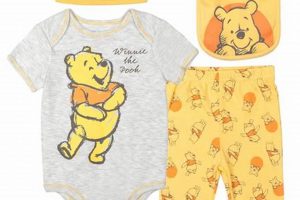
A newborn’s initial attire for the journey from hospital or birthing center to home is a carefully selected ensemble. This set of clothing typically includes a soft, comfortable onesie, a hat to maintain warmth, socks or booties to protect tiny feet, and potentially a blanket or outerwear depending on the climate. This first outfit often holds sentimental value for parents, marking the beginning of their child’s life outside of the medical facility.
The choice of this attire extends beyond mere functionality. It represents a symbolic transition and often serves as the subject of the first official photos of the newborn. Considerations such as safety, comfort, and ease of dressing are paramount. Selecting breathable, hypoallergenic fabrics minimizes the risk of skin irritation. The significance of this clothing selection has grown over time, evolving from purely practical necessity to a cherished element of the early parenting experience.
Subsequent sections will delve into the considerations for selecting the appropriate materials, styles, and safety features for this special garment set, ensuring the infant’s well-being and creating lasting memories.
Guidance on Selecting Infant Departure Attire
The selection of the infant’s going home apparel requires careful consideration. Prioritizing comfort, safety, and practicality ensures a positive experience for both the newborn and the caregivers. The following tips offer guidance in this process.
Tip 1: Prioritize Soft, Breathable Fabrics: Opt for materials such as cotton, bamboo, or muslin. These fabrics minimize the risk of skin irritation and promote airflow, crucial for temperature regulation in newborns.
Tip 2: Choose Simple Designs: Avoid outfits with excessive embellishments, ribbons, or ties that could pose a choking hazard. Simple designs facilitate ease of dressing and undressing, minimizing stress for the infant.
Tip 3: Consider the Season and Climate: Select apparel appropriate for the prevailing weather conditions. During colder months, layer clothing and ensure adequate head covering. In warmer months, prioritize lightweight, breathable materials.
Tip 4: Ensure Proper Fit: Clothing should fit snugly but not restrict movement. Ill-fitting garments can cause discomfort and impede circulation. Consult size charts and err on the side of slightly larger rather than smaller.
Tip 5: Opt for Easy Fastenings: Choose outfits with snaps or zippers that allow for quick diaper changes. Avoid complex closures that can prolong the process and cause distress to the infant.
Tip 6: Wash Before First Use: Launder all new clothing items in a gentle, hypoallergenic detergent prior to first use. This removes any potential irritants or residues from the manufacturing process.
Tip 7: Check for Loose Threads or Labels: Before dressing the infant, inspect the garment for any loose threads or labels that could become entangled or pose a hazard. Remove these carefully.
Adhering to these guidelines contributes to the infant’s comfort and safety during the transition home, alleviating potential anxieties for the new parents. Careful planning and consideration are paramount.
The subsequent section will address common mistakes to avoid when selecting these garments, further enhancing the decision-making process.
1. Fabric Composition

The selection of appropriate fabric for a newborn’s departure attire directly impacts the infant’s comfort and well-being. The delicate nature of newborn skin necessitates fabrics that minimize irritation and promote breathability. For example, synthetic materials like polyester, while durable, often lack the necessary ventilation, potentially leading to overheating and skin rashes. Conversely, natural fibers such as cotton, bamboo, and merino wool are recognized for their softness, absorbency, and hypoallergenic properties. The choice of fabric, therefore, represents a critical decision point in ensuring the infant’s physiological comfort during the transition to a new environment.
Consider the potential consequences of inappropriate fabric selection. An outfit constructed from rough or heavily processed material could trigger skin sensitivities, resulting in discomfort and potentially leading to prolonged crying or restlessness. Conversely, an outfit made from organic cotton minimizes exposure to chemical residues and dyes, mitigating the risk of allergic reactions. The practical significance of understanding fabric composition extends to ease of care as well; fabrics requiring specialized cleaning processes may prove inconvenient for new parents. Real-world examples frequently demonstrate the correlation between fabric choice and infant comfort levels, underscoring the importance of informed decision-making.
In summary, the relationship between fabric composition and infant comfort is direct and significant. Choosing natural, breathable, and hypoallergenic fabrics constitutes a proactive measure in safeguarding the newborn’s delicate skin. While factors such as style and design contribute to the aesthetic appeal of the garment, the fundamental consideration remains the fabric’s impact on the infant’s immediate well-being. Overlooking this crucial aspect can inadvertently lead to discomfort and potential skin complications. Thus, careful attention to fabric composition is an indispensable element in selecting the appropriate departure attire.
2. Safety Features

The selection of a newborn’s departure attire necessitates a stringent focus on inherent safety features. These elements mitigate potential hazards and promote the infant’s well-being during transport and initial settling into the home environment. Prioritizing safety transcends aesthetic considerations.
- Absence of Drawstrings or Ties
Drawstrings or elongated ties present a strangulation risk, particularly in infants. Garments should be devoid of such features around the neck or torso area. Real-life instances highlight the potential for accidental entanglement, reinforcing the importance of selecting designs that eliminate this hazard. This feature is paramount in protecting the newborn.
- Secure Fastenings
Snaps or zippers should be robust and securely attached to prevent detachment and potential choking hazards. Regularly inspect fastenings for signs of wear or loosening. Improperly secured fasteners can become dislodged and pose a significant threat. Choosing high-quality closures is essential.
- Hypoallergenic Materials
Newborns possess sensitive skin susceptible to irritation from certain dyes or chemicals present in fabrics. Opting for hypoallergenic materials reduces the likelihood of allergic reactions or skin rashes. Untreated natural fibers, like organic cotton, are preferable. This consideration is imperative for preventing discomfort.
- Flame Resistance (Where Applicable)
While not always mandatory, flame-resistant fabrics offer an added layer of safety, particularly if the infant will be near potential heat sources. Compliance with relevant safety standards is crucial. Understanding the specific regulations in the region is important for ensuring appropriate protection.
The integration of these safety features within the departure attire forms a critical component of responsible infant care. Neglecting these considerations can lead to preventable accidents or discomfort. A proactive approach towards safety ensures a smoother transition for the newborn into their new home. Emphasis on these precautions safeguards the well-being of the infant from the outset. Prioritization of safety features supports a secure and peaceful homecoming.
3. Seasonal Appropriateness

The selection of a “going home outfit baby” is significantly influenced by the prevailing seasonal conditions. The primary concern is maintaining the newborn’s body temperature within a safe range, as newborns are less capable of regulating their internal temperature compared to older infants or adults. This necessitates a careful selection of clothing materials and layers that correspond to the external environment. Failure to consider seasonal appropriateness can lead to hypothermia in colder months or hyperthermia in warmer months, both of which present significant health risks to the newborn. Real-life examples frequently demonstrate instances where inappropriately dressed infants experience discomfort, irritability, or, in more severe cases, require medical intervention to stabilize their body temperature. The practical significance of understanding seasonal variations cannot be overstated when preparing for the newborn’s departure from the birthing facility.
In colder seasons, layering is crucial. A long-sleeved onesie made of soft, breathable cotton can serve as a base layer, followed by a warmer layer such as a fleece or knitted sweater. A hat is essential to prevent heat loss from the head, and socks or booties are necessary to protect the feet. An outer layer, such as a bunting bag or a warm blanket, is often required for transport. Conversely, in warmer seasons, the focus shifts to lightweight, breathable materials. A single layer of cotton or muslin clothing may suffice, and excessive bundling should be avoided to prevent overheating. Sun protection, such as a wide-brimmed hat, is advisable if the infant will be exposed to direct sunlight. These practical applications highlight the need for adaptability and informed decision-making based on the specific climate and time of year.
In conclusion, seasonal appropriateness is an indispensable element in selecting the “going home outfit baby”. The challenges lie in accurately assessing the external environment and choosing garments that provide adequate insulation or ventilation, as needed. A lack of awareness or disregard for seasonal variations can have detrimental effects on the newborn’s health. By prioritizing seasonal appropriateness, caregivers can ensure a safe and comfortable transition from the birthing facility to the home environment, laying the foundation for a positive start to the newborn’s life.
4. Size and Fit

Appropriate size and fit are paramount considerations when selecting the initial attire for a newborn’s departure from a medical facility. Ill-fitting garments can compromise comfort, impede movement, and potentially pose safety risks. The ensuing details outline critical facets of size and fit in relation to this specific application.
- Accurate Measurement is Essential
Prior to selecting the outfit, accurately determining the newborn’s length and weight provides a baseline for size selection. Standardized sizing charts, though variable across manufacturers, offer a starting point. Real-world scenarios demonstrate that relying solely on gestational age can lead to inaccurate size selection, necessitating physical measurement. Failure to account for individual variations can result in a garment that is either too restrictive or excessively loose.
- Growth Allowance Considerations
Infant growth occurs rapidly; therefore, selecting a size that provides a small allowance for growth is advisable. Overly snug garments can restrict movement and cause discomfort. Conversely, excessively large outfits can present safety hazards, such as entanglement. Striking a balance between comfort and safety requires careful assessment of the garment’s design and the newborn’s measurements. Clothing should fit closely without being constrictive.
- Garment Design and Fit
Certain garment designs accommodate varying body shapes and sizes more effectively than others. Wrap-style onesies, for example, offer greater adjustability compared to those that must be pulled over the head. Elasticated waistbands should be gently elasticated to prevent undue pressure on the abdomen. Choosing designs that prioritize comfort and adjustability enhances the likelihood of a proper fit. Considerations are influenced by the newborn’s build.
- Material Properties and Fit
The elasticity and give of the fabric influence the overall fit of the garment. Knit fabrics, possessing inherent stretch, often provide a more accommodating fit compared to woven fabrics. Pre-washing garments prior to use is advisable, as shrinkage can occur, particularly with natural fibers. The textural properties of the material contributes directly to skin comfort.
The intersection of accurate measurement, growth allowance considerations, garment design, and material properties collectively determines the suitability of a “going home outfit baby”. A meticulous approach to size and fit ensures the newborn’s comfort and safety during this significant transition. These elements must be regarded with equal seriousness to promote a seamless adaptation to a new environment.
5. Ease of Dressing

The ease with which a “going home outfit baby” can be put on and taken off directly impacts the newborn’s comfort and the caregiver’s efficiency, particularly in the often-stressful environment of leaving a medical facility. Complex fastenings or restrictive designs can prolong the dressing process, leading to infant distress and caregiver frustration. The inverse is also true; a garment designed for straightforward application minimizes handling and reduces the potential for overstimulation or discomfort. Real-life scenarios often involve time constraints and the need for quick diaper changes, further emphasizing the practical significance of ease of dressing. Simple closures and designs are essential for streamlining this process, contributing to a calmer and more positive experience for both the infant and the caregiver. Garments that require excessive maneuvering to put on or take off can disrupt the newborn’s rest and increase the likelihood of agitation.
Practical application involves selecting outfits with features that facilitate quick and efficient dressing. These include wide neck openings, snap closures along the inseam for easy diaper access, and stretchy, soft fabrics that conform to the infant’s body without constricting movement. Avoiding garments with numerous buttons, zippers positioned in awkward locations, or stiff, inflexible materials is crucial. Furthermore, the ability to quickly remove the outfit in case of spills or diaper mishaps is a significant advantage. The design should consider not only the initial dressing but also the potential need for rapid changes. Practicality dictates prioritizing simplicity and functionality over purely aesthetic considerations, particularly in the context of a newborn’s sensitive needs.
In summary, ease of dressing is not merely a convenience but a fundamental aspect of a well-chosen “going home outfit baby.” Prioritizing garments designed for simple and efficient application minimizes infant distress, streamlines caregiver tasks, and contributes to a more positive overall experience. The challenge lies in balancing aesthetic preferences with practical needs, ensuring the selected outfit is both visually appealing and functionally appropriate. By prioritizing ease of dressing, caregivers can significantly enhance the newborn’s comfort and well-being during this critical transition.
6. Cleanliness

The condition of the “going home outfit baby” directly affects the newborn’s health and well-being. Newborns possess underdeveloped immune systems, rendering them more vulnerable to infections and skin irritations. Contact with unwashed or improperly cleaned clothing introduces potential pathogens, allergens, and chemical residues to the infant’s delicate skin. This exposure can trigger a range of adverse reactions, from mild rashes to more severe systemic infections. Real-world examples frequently demonstrate instances of newborns developing skin irritations or allergic reactions traced back to unwashed or poorly laundered clothing. The practical significance of cleanliness, therefore, stems from its direct impact on safeguarding the infant’s health during a critical period of adaptation.
Prior to the garment’s initial use, thorough laundering with a gentle, hypoallergenic detergent is essential. This process removes residual chemicals from manufacturing, dust particles accumulated during storage, and any potential contaminants acquired during transportation. Selecting a detergent specifically formulated for sensitive skin minimizes the risk of irritation. Furthermore, separating the newborn’s clothing from other laundry during washing reduces the potential for cross-contamination with harsher detergents or allergens. Double rinsing ensures the complete removal of detergent residues. Air-drying the garment, rather than using a dryer, further reduces the risk of residual chemical exposure and minimizes fabric wear. Practical applications include implementing a dedicated laundry routine for the newborn’s clothing, utilizing mesh laundry bags to protect delicate fabrics, and meticulously inspecting garments for any remaining stains or residues after washing. Strict hygiene practice extends into storage too, store this cloth properly.
In conclusion, the association between cleanliness and the “going home outfit baby” is a critical determinant of the newborn’s immediate health and comfort. A failure to prioritize cleanliness can result in preventable skin irritations, allergic reactions, or even infections. Implementing rigorous laundering practices and maintaining strict hygiene standards mitigates these risks, ensuring the garment serves its intended purpose of providing comfort and protection. The challenge lies in maintaining consistent adherence to these practices, recognizing that the well-being of the newborn is directly contingent upon the cleanliness of their immediate environment, starting with their first outfit worn outside the medical facility.
Frequently Asked Questions
The following section addresses common inquiries and concerns regarding the selection and preparation of a newborn’s initial outfit for the transition from a medical facility to the home environment.
Question 1: What constitutes an appropriate “going home outfit baby” in terms of material composition?
Optimal materials include natural fibers such as cotton, bamboo, or merino wool. These materials exhibit breathability and minimize the potential for skin irritation, a crucial factor for newborns with sensitive skin. Synthetic fabrics should generally be avoided due to their reduced breathability and increased risk of allergic reactions.
Question 2: Are specific design elements considered unsafe for a newborn’s departure attire?
Garments incorporating drawstrings, ribbons, or small, detachable embellishments pose potential choking or strangulation hazards. Simple designs with secure, non-detachable fastenings are preferable to ensure the infant’s safety.
Question 3: How should the seasonal climate influence the selection of a newborn’s departure attire?
In colder climates, layered clothing is essential to maintain the newborn’s body temperature. This may include a long-sleeved onesie, a sweater or jacket, a hat, and socks or booties. In warmer climates, lightweight, breathable materials such as cotton or muslin are recommended to prevent overheating.
Question 4: What size considerations are paramount when selecting a “going home outfit baby”?
Accurate measurement of the newborn’s length and weight is essential. Garments should fit snugly but not restrict movement. A small allowance for growth is advisable, but excessively large outfits should be avoided due to potential safety hazards.
Question 5: Is pre-washing the “going home outfit baby” necessary before initial use?
Pre-washing the garment with a gentle, hypoallergenic detergent is crucial to remove residual chemicals, dust particles, and potential contaminants. This practice minimizes the risk of skin irritation and allergic reactions.
Question 6: What fastening mechanisms are deemed most appropriate for a newborn’s departure attire?
Snap closures or zippers that facilitate quick and easy diaper changes are preferable. Complex or cumbersome fastenings should be avoided, as they can prolong the dressing process and cause distress to the infant.
These frequently asked questions underscore the importance of careful consideration and informed decision-making when selecting a newborn’s departure attire. Prioritizing safety, comfort, and practicality ensures a smooth and positive transition to the home environment.
The subsequent section will provide a conclusive summary, integrating critical insights into the topic.
Concluding Remarks
This exploration has underscored the multifaceted considerations inherent in selecting the “going home outfit baby”. The analysis encompassed material composition, safety features, seasonal appropriateness, size and fit, ease of dressing, and cleanliness. Each of these factors directly influences the newborn’s well-being during a critical transition. A failure to adequately address these elements can result in preventable discomfort, irritation, or, in more severe cases, compromised health.
Responsible caregivers must prioritize informed decision-making and meticulous preparation. The selection of this initial attire represents not merely a superficial act, but a significant responsibility to ensure the infant’s comfort and safety. Continued diligence in adhering to best practices promotes a positive start, laying the foundation for a secure and healthy future. A constant watchfulness and readiness to learn about better ways to care for the baby should be put in mind for future challenges.

![Shop Adorable Baby Coming Home Outfits | [Brand] | Baby Care 101: Essential Tips for Happy, Healthy Babies](https://singlebabies.com/wp-content/uploads/2026/05/th-206-300x200.jpg "Shop Adorable Baby Coming Home Outfits | [Brand] Baby Care 101: Essential Tips for Happy, Healthy Babies")