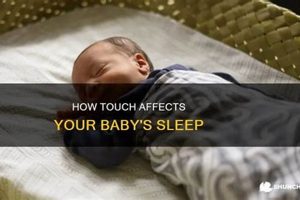
The phenomenon of infants appearing to slumber while their eyelids are not fully closed is a relatively common occurrence. This can manifest as partially open eyelids, revealing a glimpse of the eye, or even fully open eyes that do not blink or focus. This state differs significantly from the sleep patterns of older children and adults, where eyes are typically kept closed during sleep stages.
Understanding the causes of this behavior is important for parental reassurance and appropriate care. In most instances, this condition is benign and resolves with age as the infant’s facial muscles and neurological control mature. However, in rare instances, incomplete eyelid closure during sleep may indicate an underlying medical condition requiring evaluation.
Therefore, further exploration of the potential causes, typical duration, and differentiation from more serious conditions is warranted. The following sections will delve into the reasons behind this common infant trait, offering guidance on when professional medical advice may be necessary.
Guidance Regarding Infants with Partially Open Eyes During Sleep
The following recommendations offer practical steps for parents concerned about infants who may exhibit open eyes while sleeping. The focus is on observation, environmental adjustments, and knowing when professional medical advice is necessary.
Tip 1: Observe the Infant’s Overall Sleep Pattern: Closely monitor the duration and quality of the infant’s sleep. Note any signs of restlessness, frequent waking, or difficulty falling asleep, as these may indicate underlying discomfort or sleep disturbance beyond merely open eyes.
Tip 2: Assess Environmental Factors: Ensure the infant’s sleep environment is conducive to rest. Maintain a dark, quiet, and comfortably cool room temperature. Excessive light or noise can contribute to disrupted sleep patterns and potentially exacerbate the observation of open eyes during sleep.
Tip 3: Monitor for Dry Eye Symptoms: Observe the infant’s eyes for signs of dryness, such as redness, irritation, or excessive tearing. If dryness is suspected, consult a pediatrician or ophthalmologist about appropriate lubricating eye drops specifically formulated for infants.
Tip 4: Rule Out Physical Obstructions: Verify that the infant’s eyelids are not being physically obstructed by clothing, bedding, or any other object in the sleep environment. Remove any potential obstructions to ensure complete eyelid closure.
Tip 5: Consult a Pediatrician: If parental concern persists or the infant exhibits other concerning symptoms, such as labored breathing, feeding difficulties, or developmental delays, a consultation with a pediatrician is essential. A medical professional can assess the situation and determine if further evaluation is necessary.
The information provided is intended as general guidance and should not substitute professional medical advice. Prompt and appropriate action based on professional medical consultation is always recommended.
Following these tips should help to alleviate concerns, and ensure appropriate action is taken if any underlying cause is found.
1. Prevalence

The frequency of infants exhibiting open eyes during sleep represents a notable aspect of infant physiology, prompting examination of its typical occurrence and associated factors. Understanding the prevalence aids in distinguishing normal developmental variations from potentially concerning deviations.
- Age-Related Decline
The occurrence is most frequent in newborns and very young infants, decreasing significantly as the infant matures. Muscle control and neurological development contribute to improved eyelid closure with age. Studies indicate a marked reduction within the first year of life.
- Variations Among Infants
Prevalence differs among infants, influenced by factors such as prematurity and underlying neurological conditions. Premature infants often exhibit a higher prevalence due to underdeveloped muscle tone and neurological immaturity.
- Impact on Parental Perception
The observed occurrence can be a source of parental concern, prompting queries about its normality and potential implications for the infant’s well-being. Accurate information regarding the prevalence can alleviate unnecessary anxiety.
- Relationship to Sleep Stage
Prevalence is correlated with the stage of sleep, with a higher likelihood during active or REM sleep. During these phases, muscle tone is reduced, potentially leading to incomplete eyelid closure.
The prevalence is a key indicator for evaluating the normality of this phenomenon. Its age-related decline and association with sleep stage provide a framework for understanding its typical course. Accurate assessment and parental education are essential for appropriate management.
2. Muscle development

The degree of muscular development, particularly concerning the orbicularis oculi muscle responsible for eyelid closure, is intrinsically linked to the incidence of infants sleeping with their eyes partially or fully open. Immature muscular tone and incomplete neurological control over these muscles can lead to an inability to fully close the eyelids during sleep. This lack of complete closure is more pronounced in younger infants and typically diminishes as they mature and gain greater muscular control. For example, a newborn’s facial muscles are still developing strength, resulting in less forceful eyelid closure compared to an older infant with more developed muscle tone.
The significance of muscular development as a component of this phenomenon extends beyond mere eyelid closure. The incomplete closure may lead to increased exposure of the ocular surface, potentially causing dryness or irritation. Proper muscle function is also vital for coordinated eye movements during sleep, and underdeveloped muscles may contribute to uncoordinated or jerky eye movements observed in some infants. Therefore, monitoring muscular development and addressing any related concerns becomes a crucial aspect of infant care.
In summary, the development of the orbicularis oculi muscle plays a pivotal role in determining whether an infant sleeps with their eyes closed. Addressing any potential muscular deficits or delayed development is essential for promoting healthy sleep patterns and preventing ocular complications. The gradual maturation of these muscles typically resolves the issue over time, aligning with overall infant development. Continued monitoring of muscular development coupled with addressing potential ocular surface dryness forms the foundation of managing this common infant trait.
3. Sleep stages

The various phases of sleep significantly influence the occurrence of infants sleeping with their eyes partially or fully open. Infant sleep cycles differ substantially from those of adults, characterized by shorter cycles and a greater proportion of active sleep, also known as Rapid Eye Movement (REM) sleep. During active sleep, muscle tone is reduced, and the likelihood of eyelids relaxing and opening increases. This is contrasted by quiet sleep, or Non-REM sleep, where muscle tone is generally higher, and the eyelids are more likely to remain closed. An example is an infant transitioning from quiet sleep to active sleep; the eyes may gradually open as the infant enters REM, exhibiting rapid eye movements beneath the partially open lids.
The practical significance of understanding this connection lies in recognizing that open eyes during sleep may be a normal manifestation of an infant’s sleep cycle, particularly during active sleep. Parents observing this phenomenon may be reassured that it does not necessarily indicate a sleep disorder or underlying medical condition. However, it is also important to note that prolonged or excessive exposure of the ocular surface due to open eyes during sleep, irrespective of the sleep stage, can lead to dryness and irritation. If dryness is observed, gentle lubrication with artificial tears, specifically formulated for infants, may be warranted.
In summary, the specific stage of sleep significantly affects whether an infant’s eyes remain closed. A greater proportion of active sleep in infants contributes to the likelihood of partially open eyes during sleep. Understanding this relationship can alleviate parental concerns and guide appropriate management strategies, such as addressing potential dryness. Continuous monitoring, combined with a comprehensive understanding of infant sleep physiology, facilitates the differentiation of normal sleep patterns from potentially concerning abnormalities.
4. Underlying causes

The phenomenon of infants sleeping with their eyes partially or fully open may, in certain instances, indicate the presence of underlying medical conditions warranting further investigation. While often benign and related to developmental immaturity, a thorough assessment to rule out potential etiologies is crucial.
- Congenital Eyelid Abnormalities
Conditions such as coloboma, characterized by incomplete formation of the eyelid, or ectropion, involving the outward turning of the eyelid, can prevent complete closure during sleep. These anatomical defects, present at birth, physically impede the eyelid’s ability to fully cover the eye, leading to increased exposure and potential dryness. Diagnosis typically involves a physical examination, and management may range from lubricating ointments to surgical correction in severe cases.
- Neurological Impairments
Neurological conditions affecting muscle tone or nerve function can disrupt the normal mechanisms of eyelid closure. For example, facial nerve palsy, whether congenital or acquired, may weaken the orbicularis oculi muscle, responsible for closing the eyelid. Similarly, certain genetic syndromes with neurological components can manifest as incomplete eyelid closure during sleep. Evaluation often includes neurological assessments and imaging studies to identify the underlying cause.
- Thyroid Eye Disease
Though rare in infants, thyroid eye disease, specifically Grave’s ophthalmopathy, can cause proptosis (bulging of the eyes), which prevents complete eyelid closure. This autoimmune condition, typically associated with hyperthyroidism, can result in inflammation and swelling of the tissues surrounding the eyes, pushing them forward and hindering eyelid function. Diagnostic workup involves thyroid function tests and ophthalmological examination.
- Sleep Disorders
While not a direct cause, certain sleep disorders can contribute to the observation of open eyes during sleep. Conditions like nocturnal lagophthalmos, where individuals are unable to fully close their eyelids during sleep, can be associated with other sleep disturbances. The mechanism involves abnormal neurological control of eyelid muscles during specific sleep stages. Polysomnography (sleep study) can aid in diagnosing these conditions and differentiating them from normal infant sleep patterns.
In summary, while the majority of cases involving infants sleeping with their eyes open are attributable to developmental factors, it is essential to consider and rule out underlying medical conditions. Congenital anomalies, neurological impairments, and, less commonly, thyroid eye disease or sleep disorders can contribute to this phenomenon. A comprehensive evaluation involving physical examination, neurological assessment, and appropriate diagnostic testing is critical in identifying and managing these underlying causes, ensuring optimal care and minimizing potential complications.
5. Medical evaluation

A medical evaluation is a crucial step in addressing parental concerns regarding infants exhibiting open eyes during sleep. While often a benign manifestation of developmental immaturity, the possibility of underlying medical conditions necessitates a systematic approach to ensure appropriate diagnosis and management.
- Initial Assessment by a Pediatrician
The pediatrician serves as the primary point of contact for initial evaluation. The pediatrician will assess the infant’s overall health, developmental milestones, and sleep patterns. A detailed history, including gestational age, birth history, and any family history of relevant conditions, is essential. For instance, a premature infant with a history of neurological complications may warrant closer scrutiny. The pediatrician will also examine the infant’s eyes for any obvious structural abnormalities or signs of dryness or irritation.
- Ophthalmological Examination
Referral to an ophthalmologist is indicated if the pediatrician identifies any abnormalities or if parental concern persists despite reassurance. The ophthalmologist conducts a comprehensive eye examination, including assessment of visual acuity, pupillary response, and ocular motility. The ophthalmologist also evaluates the structure and function of the eyelids, looking for conditions such as congenital ptosis or ectropion. Furthermore, the ophthalmologist can assess for signs of corneal exposure or dryness, which may require specific treatment. For example, an ophthalmologist can diagnose and manage congenital ptosis, a condition where the upper eyelid droops, preventing complete closure of the eye during sleep.
- Neurological Evaluation
In cases where neurological involvement is suspected, a neurological evaluation may be warranted. This evaluation may include assessment of cranial nerve function, motor skills, and reflexes. Neuroimaging studies, such as MRI or CT scans, may be considered to rule out structural abnormalities or lesions in the brain. For instance, if the infant exhibits facial asymmetry or weakness, facial nerve palsy should be considered, and neurological evaluation is essential.
- Polysomnography (Sleep Study)
In rare cases where a sleep disorder is suspected as a contributing factor, polysomnography, also known as a sleep study, may be recommended. Polysomnography involves monitoring various physiological parameters during sleep, including brain waves, eye movements, muscle activity, and respiratory effort. This can help identify specific sleep disorders, such as nocturnal lagophthalmos, where the individual is unable to fully close their eyelids during sleep. For example, polysomnography can differentiate nocturnal lagophthalmos from normal infant sleep patterns characterized by frequent awakenings and periods of active sleep with partially open eyes.
The medical evaluation serves as a critical process in differentiating benign instances of infants sleeping with their eyes open from those indicative of underlying medical conditions. A stepwise approach involving pediatrician assessment, ophthalmological examination, neurological evaluation, and, in select cases, polysomnography ensures appropriate diagnosis and management, optimizing infant health and alleviating parental concerns. The integrated approach promotes a higher quality of care.
6. Dryness concerns

The clinical significance of infants sleeping with their eyes partially or fully open lies substantially in the potential for ocular surface desiccation. Incomplete eyelid closure compromises the natural tear film distribution across the cornea and conjunctiva. The tear film, a complex fluid layer composed of water, lipids, and mucins, lubricates, nourishes, and protects the ocular surface. Exposure resulting from incomplete closure leads to increased tear evaporation, resulting in dryness and potential irritation. For example, an infant consistently sleeping with partially open eyes may exhibit signs of conjunctival redness, increased tear production as a compensatory mechanism, or, paradoxically, decreased tear production over time due to chronic gland dysfunction.
The practical importance of addressing dryness concerns stems from the potential long-term consequences of chronic ocular surface damage. Untreated dryness can lead to corneal epithelial breakdown, increasing the risk of infection and inflammation. Furthermore, persistent dryness can disrupt the infant’s sleep, contributing to irritability and feeding difficulties. Simple interventions, such as the application of preservative-free lubricating eye drops or ointments specifically formulated for infants, can mitigate these risks. In instances where significant dryness is observed, further evaluation by an ophthalmologist is warranted to rule out underlying conditions contributing to tear film deficiency. A common scenario involves an infant with mild lagophthalmos (inability to close eyelids completely), where the consistent use of ocular lubricants at nighttime prevents corneal abrasions from developing.
In summary, dryness concerns represent a critical consideration in infants exhibiting open eyes during sleep. The compromised tear film integrity due to incomplete eyelid closure poses a risk of ocular surface damage and discomfort. Proactive management, including ocular lubrication and ophthalmological evaluation when necessary, is essential to prevent complications and optimize infant well-being. The vigilance of caregivers in recognizing and addressing dryness symptoms forms the cornerstone of effective management, ensuring the long-term health of the infant’s eyes.
7. Resolution timeline

The resolution timeline regarding instances of infants sleeping with their eyes partially or fully open is a variable factor directly influenced by the underlying etiology. While many cases resolve spontaneously with maturation, persistent or worsening occurrences necessitate careful monitoring and potential intervention.
- Spontaneous Resolution with Age
In a substantial proportion of cases, particularly those related to developmental immaturity of the orbicularis oculi muscle, the phenomenon resolves spontaneously within the first year of life. As the infant’s neuromuscular control improves, the ability to fully close the eyelids during sleep develops, and the incidence of open eyes diminishes. For example, an infant at three months of age may frequently sleep with partially open eyes, while by nine months, complete eyelid closure is consistently observed. This progression aligns with overall developmental milestones.
- Impact of Underlying Medical Conditions
When underlying medical conditions, such as congenital eyelid abnormalities or neurological impairments, contribute to the phenomenon, the resolution timeline is significantly extended. In such cases, spontaneous resolution is less likely, and specific medical or surgical intervention may be required. For instance, an infant with congenital ptosis may require surgical correction to improve eyelid closure, and the timeline for achieving complete closure is dependent on the timing and success of the intervention.
- Influence of Environmental Factors
Environmental factors, such as humidity and exposure to irritants, can affect the resolution timeline. A dry environment may exacerbate ocular surface dryness, prolonging discomfort and potentially hindering complete eyelid closure. Conversely, maintaining adequate humidity and avoiding irritants can promote corneal health and facilitate resolution. As an example, consistently using a humidifier in the infant’s room, particularly during dry seasons, can improve the tear film and promote eyelid closure.
- Monitoring and Intervention Strategies
The resolution timeline is also influenced by the implementation of appropriate monitoring and intervention strategies. Regular observation of the infant’s sleep patterns, coupled with prompt intervention for dryness or irritation, can positively impact the outcome. For example, consistently applying lubricating eye drops at bedtime can prevent corneal damage and improve comfort, potentially accelerating the resolution timeline. Conversely, neglecting to address dryness concerns can lead to chronic irritation and a prolonged timeline.
In summary, the resolution timeline is a dynamic process influenced by developmental factors, underlying medical conditions, environmental conditions, and intervention strategies. While spontaneous resolution is common, vigilant monitoring, coupled with appropriate medical or environmental interventions, is essential to optimize outcomes and minimize potential complications. The early identification of concerning signs and consistent attention to ocular health are vital for a favorable resolution.
Frequently Asked Questions Regarding Infants Sleeping With Their Eyes Open
The following section addresses common inquiries surrounding the phenomenon of infants sleeping with their eyes partially or fully open. The information provided aims to clarify misconceptions and offer evidence-based guidance.
Question 1: Is it normal for infants to sleep with their eyes open?
The observation of infants sleeping with their eyes partially or fully open is a relatively common occurrence, particularly within the first few months of life. This phenomenon is often attributed to the immaturity of the orbicularis oculi muscle, responsible for eyelid closure, and the greater proportion of active (REM) sleep in infants.
Question 2: What are the potential causes of this behavior?
Potential causes encompass developmental factors, such as incomplete muscle development, and, in rare instances, underlying medical conditions. These may include congenital eyelid abnormalities, neurological impairments, or, less commonly, thyroid eye disease. A comprehensive medical evaluation is warranted if concerns persist.
Question 3: When should a medical professional be consulted?
A medical professional should be consulted if parental concern persists, if the infant exhibits other concerning symptoms such as labored breathing or feeding difficulties, or if there are signs of ocular surface dryness, such as redness or excessive tearing. Early intervention can prevent potential complications.
Question 4: How can dryness of the eyes be managed?
Dryness of the eyes can be managed through the use of preservative-free lubricating eye drops or ointments specifically formulated for infants. Regular application, particularly before sleep, can help maintain ocular surface hydration and prevent irritation. Consultation with a pediatrician or ophthalmologist is recommended to determine the most appropriate course of treatment.
Question 5: Does sleeping with eyes open affect vision?
Prolonged and untreated dryness resulting from incomplete eyelid closure can potentially lead to corneal damage, which, in severe cases, may affect vision. However, with prompt recognition and appropriate management, the risk of significant visual impairment is low. Consistent monitoring and intervention are key.
Question 6: Is there a timeline for when infants outgrow this behavior?
In many cases, infants outgrow this behavior spontaneously within the first year of life as their neuromuscular control improves. However, if underlying medical conditions are present, the resolution timeline may be extended and dependent on specific interventions.
The information provided aims to address common concerns and offer guidance regarding infants sleeping with their eyes open. It is essential to recognize that this phenomenon is often benign, but appropriate evaluation and management are crucial for ensuring infant well-being.
The subsequent section will address potential complications.
Do Babies Sleep With Their Eyes Open
This exploration has detailed the multifaceted nature of infants sleeping with eyes partially or fully open. This trait, often a benign consequence of physiological immaturity, necessitates a comprehensive understanding to differentiate typical development from potentially concerning conditions. Factors ranging from muscular development and sleep stages to underlying medical etiologies play a significant role. Dryness represents a primary concern, requiring diligent monitoring and, when necessary, intervention. The resolution timeline is variable, influenced by the etiology and proactive management.
Ultimately, the identification and proper management of this infant characteristic underscores the importance of informed observation and timely medical consultation. Vigilance and proactive care can ensure the health and well-being of the infant’s ocular surface, preventing potential long-term complications. Continuous research in this area is vital to improve our ability to differentiate benign occurrences from significant underlying etiologies.