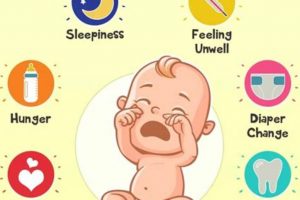
Lip sounds produced by an infant during slumber often involve soft, repetitive movements of the mouth and tongue. These sounds may resemble the actions of suckling or feeding, despite the infant being asleep. Such occurrences are frequently observed during periods of lighter sleep, and can manifest as quiet, rhythmic noises.
These behaviors are generally considered normal and are often related to neurological development and the persistence of innate reflexes. They can also be connected to the digestive process or the infant’s attempt to self-soothe. Monitoring these sounds in conjunction with other indicators of infant well-being, such as breathing patterns and overall sleep quality, can offer insight into the infant’s overall health and development.
The subsequent discussion will delve into the potential causes, typical duration, and appropriate responses to these audible sleep-related actions, providing a framework for understanding their significance in early infancy.
Guidance Regarding Infant Oral Sounds During Sleep
The following information offers guidance on understanding and addressing instances of infant lip sounds during sleep. These tips aim to provide clarity and support for caregivers.
Tip 1: Observe the Frequency: Note how often the sounds occur. Infrequent occurrences are generally not a cause for concern; however, consistent nightly sounds warrant closer observation.
Tip 2: Monitor for Other Signs: Assess for accompanying symptoms such as restlessness, difficulty breathing, or signs of discomfort. These indicators may suggest an underlying issue.
Tip 3: Evaluate Feeding Patterns: Consider whether the infant is adequately fed during waking hours. Insufficient feeding could lead to the manifestation of these behaviors in their sleep.
Tip 4: Review Sleep Environment: Ensure a comfortable and safe sleep environment. Overly warm or cold temperatures, as well as disruptive noise levels, could contribute to the behavior.
Tip 5: Consult a Healthcare Professional: If concerns persist or the sounds are accompanied by other troubling symptoms, seek advice from a pediatrician or other qualified healthcare provider.
Tip 6: Avoid Over-Intervention: Refrain from unnecessary intervention unless the sounds are clearly indicative of distress. Overly frequent disturbances can disrupt the infant’s sleep cycle.
Tip 7: Document Observations: Maintain a record of the frequency, duration, and any accompanying symptoms observed. This documentation can be valuable during consultations with healthcare providers.
Implementing these tips can facilitate a better understanding of these sleep behaviors, enabling caregivers to address them appropriately and promote infant well-being.
The subsequent section will explore potential causes of such behaviors, offering further insight into their underlying mechanisms.
1. Neurological Development

Neurological development significantly influences the manifestation of oral sounds during infant sleep. The infant brain undergoes rapid maturation in the first months of life, with primitive reflexes gradually integrating into more complex motor patterns. The “smacking” sounds often observed can be a residual manifestation of the suckling reflex, which is neurologically hardwired to ensure successful feeding. This reflex, controlled by primitive brainstem structures, may be expressed even in the absence of conscious intent, particularly during periods of active sleep. The presence and intensity of these sounds can serve as indicators, albeit indirect, of the infant’s neurological maturation. For example, a premature infant might exhibit more pronounced sucking or smacking sounds due to an incompletely developed neurological system compared to a full-term infant.
Furthermore, the neurological processes involved in self-soothing also contribute to these oral behaviors. As the infant’s nervous system matures, they develop strategies to regulate their internal state. The repetitive, rhythmic action of lip smacking could be a rudimentary form of self-soothing, driven by underlying neurological pathways. In instances of neurological impairment or developmental delays, the persistence or exaggeration of these reflexes might warrant further investigation. Clinical observation of these behaviors, alongside other developmental milestones, provides valuable insights into the infant’s neurological progress. These sounds also could be related with the signals from neurological system that baby needs nutrition.
In summary, the connection between neurological development and the sounds observed during sleep highlights the intricate interplay between brain maturation and reflexive behaviors. Understanding this relationship is essential for distinguishing between normal physiological processes and potential developmental concerns. Continued research in this area may offer more refined methods for assessing infant neurological health through the analysis of sleep-related motor behaviors.
2. Feeding Reflex

The feeding reflex, a series of innate responses crucial for infant survival, frequently manifests as oral motor activity during sleep. This activity, often characterized by sounds, is a subconscious expression of the mechanisms facilitating nutrient intake during wakefulness. Its presence in sleep is not necessarily indicative of hunger but rather a lingering neurological pathway.
- Rooting Reflex Integration
The rooting reflex, where the infant turns the head toward stimuli near the mouth, is closely linked to the feeding reflex. During sleep, residual neural activity from this reflex can trigger involuntary mouth movements, including lip smacking. This is often seen in younger infants as the reflex becomes integrated into voluntary actions.
- Suckling and Swallowing Coordination
The coordinated actions of suckling and swallowing are fundamental components of the feeding reflex. These actions involve complex muscle movements of the mouth, tongue, and throat. During sleep, the remnants of these coordinated movements can manifest as rhythmic oral activity, leading to audible sounds.
- Gastric Emptying and Vagal Nerve Activity
Gastric emptying and the subsequent activation of the vagal nerve can influence oral motor activity during sleep. The vagal nerve, responsible for regulating digestion, can trigger signals that stimulate the feeding reflex, even in the absence of active feeding. This stimulation may result in lip smacking or other related sounds.
- Neuromuscular Memory
The repetitive nature of feeding establishes a form of neuromuscular memory. This memory can lead to the automatic activation of motor pathways associated with feeding, even during sleep. The “smacking” sounds observed may be a consequence of this subconscious activation, reflecting the infant’s developing motor skills.
In summary, the sounds observed during infant sleep, often attributed to the feeding reflex, are complex manifestations of neurological and physiological processes. These sounds are typically benign, reflecting the infant’s ongoing development and integration of essential reflexes. However, persistent or concerning instances should be evaluated in conjunction with other indicators of infant health.
3. Self-Soothing Mechanisms

Self-soothing mechanisms are intrinsic behaviors employed by infants to regulate their internal states and manage arousal levels without external assistance. These mechanisms, which develop rapidly in early infancy, often manifest physically and can be directly associated with audible sounds during sleep.
- Rhythmic Oral Motor Activity
Rhythmic oral motor activity, such as sucking on fingers, pacifiers, or engaging in lip movements, serves as a foundational self-soothing technique. The repetitive nature of these actions can induce a calming effect, reducing stress hormones and promoting relaxation. During sleep, these patterns may continue subconsciously, resulting in lip sounds as a vestigial manifestation of self-regulation.
- Vestibular Stimulation through Body Movement
Subtle body movements, including rocking or gentle limb motions, provide vestibular stimulation that aids in self-soothing. These movements, often initiated during sleep, can accompany or trigger related oral actions. The coordination between body movement and oral motor activity may contribute to a more profound state of relaxation, reinforcing the infant’s ability to self-regulate.
- Attachment to Transitional Objects
Transitional objects, such as blankets or soft toys, can serve as psychological anchors that facilitate self-soothing. The tactile sensation and familiar scent of these objects provide comfort and security. While not directly involving lip movements, the presence of these objects can indirectly influence the infant’s overall state, potentially reducing the need for other self-soothing behaviors and consequently, the frequency of related sounds during sleep.
- Vocalization and Sound Production
While often subtle during sleep, certain vocalizations or soft sound production can be employed as a means of self-soothing. This may include humming, gentle sighs, or other quiet noises that the infant uses to regulate their emotional state. The lip sounds in question might, in some instances, be associated with these broader vocal patterns, representing a component of the infant’s overall self-soothing repertoire.
The relationship between self-soothing mechanisms and the sounds produced during infant sleep underscores the complex interplay between neurological development, behavioral patterns, and environmental factors. Understanding these mechanisms provides valuable insight into infant behavior and promotes informed caregiving strategies.
4. Sleep Stage

The stage of sleep directly influences the occurrence and characteristics of oral sounds in infants. Varying levels of muscle tone, brain activity, and physiological processes during different sleep stages impact the likelihood and nature of these sounds.
- Rapid Eye Movement (REM) Sleep
During REM sleep, brain activity increases, often resulting in more frequent and pronounced muscle twitches and movements. The likelihood of sounds emanating from lip movements or reflexive sucking actions is heightened during this stage. The atonia, or lack of muscle tone, present in many muscles during REM doesn’t typically extend to the facial muscles, allowing for these activities. The presence of these sounds during REM sleep may reflect the brain’s processing of sensory information or the consolidation of motor skills.
- Non-Rapid Eye Movement (NREM) Sleep – Stage 1
NREM stage 1 marks the transition from wakefulness to sleep. Muscle tone is reduced, and heart rate slows. Oral sounds are less frequent than in REM sleep, but may still occur as the infant drifts further into sleep. These sounds could be related to lingering wakeful behaviors or the initial relaxation of facial muscles.
- Non-Rapid Eye Movement (NREM) Sleep – Stage 2
NREM stage 2 is characterized by deeper relaxation and decreased sensitivity to external stimuli. Oral sounds are generally less common as the infant enters a more stable state of sleep. The suppression of reflexive movements reduces the likelihood of sound production from oral activity.
- Non-Rapid Eye Movement (NREM) Sleep – Stages 3 and 4
NREM stages 3 and 4, often referred to as slow-wave sleep or deep sleep, are the deepest and most restorative phases of sleep. Muscle tone is at its lowest, and the infant is least responsive to external stimuli. Oral sounds related to reflexive movements are infrequent during these stages. The primary focus is on physiological restoration and energy conservation.
In summary, an infant’s sleep stage significantly impacts the presence and nature of associated sounds. Understanding these stage-related variations allows for a more nuanced interpretation of the significance of audible phenomena during sleep. This correlation between sleep stage and audible actions highlights the need to assess such behaviors in conjunction with other sleep indicators for comprehensive infant evaluation.
5. Gastrointestinal Factors
Gastrointestinal factors can influence various infant behaviors, including oral movements observed during sleep. The digestive system’s activity and its associated sensations may contribute to subconscious actions such as lip sounds, thus warranting careful consideration.
- Gastric Reflux and Irritation
Infant reflux, characterized by the backward flow of stomach contents into the esophagus, can cause irritation and discomfort. This irritation might stimulate oral motor activity, manifesting as lip smacking or sucking motions, as the infant attempts to alleviate the discomfort. The relationship between reflux episodes and these oral sounds suggests a direct link between gastrointestinal distress and observed sleep behavior.
- Intestinal Gas and Distension
The presence of intestinal gas or abdominal distension can also contribute to oral motor activity during sleep. Discomfort resulting from gas buildup may trigger subconscious movements, including lip smacking, as the infant attempts to find a comfortable position or alleviate the pressure. The timing of these sounds relative to feeding times can offer insight into their potential association with gas accumulation.
- Digestive Enzyme Activity
The activity of digestive enzymes during sleep can influence gut motility and sensation. Increased enzyme activity may lead to heightened awareness of digestive processes, potentially triggering oral movements. While not directly causing lip sounds, heightened gut activity can contribute to the overall level of subconscious activity observed during sleep.
- Gut Microbiome Composition
The composition of the infant gut microbiome can affect digestive comfort and gas production. Imbalances in the gut microbiome may lead to increased gas or digestive upset, indirectly contributing to oral motor activity during sleep. The presence of certain bacterial strains can influence the production of gases, such as methane or hydrogen, which may then lead to discomfort.
In conclusion, various gastrointestinal factors, ranging from reflux to gut microbiome composition, can contribute to sounds observed during infant sleep. These associations underscore the importance of considering digestive health when evaluating infant sleep behaviors. Monitoring feeding patterns, observing for signs of digestive distress, and consulting with healthcare professionals can aid in a more comprehensive understanding of the sounds emanating during an infant’s slumber.
Frequently Asked Questions
This section addresses common inquiries regarding infant oral sounds during sleep, providing clarity based on current understanding.
Question 1: Are such sounds considered a normal part of infant sleep?
In many instances, yes. Repetitive lip movements and sounds during sleep are frequently observed in infants and often related to neurological development, the persistence of reflexes, or self-soothing behaviors.
Question 2: When should concern arise regarding the presence of these sounds?
Concern should arise if the sounds are accompanied by other symptoms such as labored breathing, frequent awakenings, signs of discomfort, or failure to gain weight appropriately. These concurrent symptoms may indicate an underlying medical issue.
Question 3: Do specific sleep positions influence the occurrence of oral sounds?
While no definitive evidence directly links sleep position to the sounds, certain positions may indirectly affect breathing patterns or gastrointestinal comfort, thereby influencing observable behaviors.
Question 4: Can overfeeding contribute to increased oral sounds during sleep?
Potentially. Overfeeding can lead to digestive discomfort or reflux, which may then manifest as increased oral activity, including lip sounds, during sleep.
Question 5: Are there any measures that can be taken to minimize or eliminate these sounds?
Ensuring proper feeding practices, maintaining a comfortable sleep environment, and addressing any underlying medical conditions are primary measures. Unnecessary interventions should be avoided unless warranted by specific medical advice.
Question 6: How does neurological maturity relate to the persistence of these sounds?
As neurological pathways mature and reflexes integrate, the frequency and intensity of such sounds may decrease. However, this timeline varies considerably among individual infants.
In summary, while oral sounds during infant sleep are often benign, contextual awareness and observation of accompanying symptoms are essential for informed assessment.
The subsequent section will offer practical tips for parents and caregivers dealing with such occurrences.
Conclusion
The exploration of infant oral sounds during sleep, specifically baby smacking lips in sleep, reveals a complex interplay of neurological, physiological, and environmental factors. The observed actions often reflect normal developmental processes, including reflex integration and self-soothing mechanisms. However, these behaviors must be assessed within the context of the infant’s overall health and well-being.
Continued vigilance, informed assessment, and collaboration with healthcare professionals remain paramount. Recognizing the potential significance of seemingly innocuous infant behaviors enables proactive care and timely intervention when necessary, ensuring optimal developmental outcomes. Future research should continue to investigate the nuanced connections between sleep-related actions and infant health.