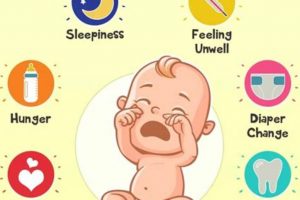
The inclination of an infant to position their face downward during sleep is a phenomenon characterized by the infant’s preference for prone sleeping. This behavior, though seemingly straightforward, carries significant implications for infant health and safety. Instances of infants adopting this sleeping posture have prompted considerable investigation and public health recommendations.
Historical context reveals a period where prone sleeping was considered beneficial for infants, particularly those with respiratory issues. However, subsequent research definitively linked this sleep position to an elevated risk of Sudden Infant Death Syndrome (SIDS). Consequently, public health campaigns strongly advocate for supine (back-sleeping) positioning to mitigate this risk and promote infant well-being. The understanding of this risk has led to a significant decrease in SIDS rates in regions where back-sleeping is widely practiced.
Given the inherent dangers associated with infants sleeping face down, the following information addresses preventative measures, safe sleep practices, and strategies for creating a secure sleep environment. This includes guidance on crib setup, bedding choices, and parental awareness, all aimed at minimizing the risk factors associated with infant sleep positioning and promoting a safe and healthy sleep experience.
Recommendations Regarding Infant Prone Sleeping
The following recommendations are presented to mitigate the risks associated with infants exhibiting a preference for prone sleep positioning, thereby promoting a safer sleep environment.
Tip 1: Advocate for Supine Positioning: Consistently place the infant on their back for every sleep period, including naps and nighttime sleep. This position is demonstrated to significantly reduce the risk of Sudden Infant Death Syndrome (SIDS).
Tip 2: Ensure a Firm Sleep Surface: Utilize a firm mattress in a safety-approved crib. Avoid soft bedding, such as pillows, comforters, and loose blankets, which can pose a suffocation hazard.
Tip 3: Maintain a Clear Sleep Environment: The crib should be free of toys, bumpers, and other objects. These items can obstruct the infant’s breathing or create a risk of entrapment.
Tip 4: Supervise During Tummy Time: While supine sleeping is crucial, supervised tummy time is essential for development. Ensure the infant is awake and closely monitored during these periods to strengthen neck and shoulder muscles.
Tip 5: Consider a Pacifier: Offering a pacifier at naptime and bedtime may further reduce the risk of SIDS, according to some studies. If breastfeeding, delay pacifier introduction until breastfeeding is well-established.
Tip 6: Regulate Room Temperature: Maintain a comfortable room temperature to prevent overheating. Overheating is a potential risk factor for SIDS. Dress the infant appropriately for the temperature, avoiding excessive layering.
The consistent application of these guidelines contributes significantly to a safer sleep environment for infants, minimizing the potential dangers associated with prone sleep positioning.
The following sections will elaborate on potential underlying causes for an infant’s preference for face-down sleep and offer strategies for addressing these concerns while maintaining safe sleep practices.
1. Prone Position Dangers

The inclination of an infant to sleep face down, a situation often described by the phrase “baby wants to sleep on face,” inherently amplifies several significant dangers associated with the prone position. Physiologically, when an infant is placed face down, the potential for rebreathing exhaled air increases, leading to a reduction in oxygen intake and a concurrent rise in carbon dioxide levels. This physiological stressor can be particularly detrimental, as infants possess underdeveloped respiratory control mechanisms and may struggle to effectively compensate for the altered air composition. Furthermore, the prone position can obstruct the infant’s airway, especially if the sleep surface is soft or yielding, further compromising respiratory function. The correlation is direct: the desire for prone sleep increases the exposure to these physiological hazards.
Real-world examples highlight the severe consequences of this correlation. Historically, before widespread awareness campaigns promoting supine (back) sleeping, SIDS rates were significantly higher. Studies have consistently demonstrated a causal link between prone sleep positioning and an increased risk of SIDS. The practical significance of understanding these dangers lies in implementing preventative measures. Educating caregivers about the risks associated with prone sleeping and promoting adherence to safe sleep guidelines are paramount. These guidelines include ensuring a firm sleep surface, avoiding soft bedding, and consistently placing infants on their backs for sleep. Moreover, understanding the potential causes for an infants preference for prone sleeping, such as gastroesophageal reflux or neck muscle weakness, allows for targeted interventions and support.
In summary, the dangers inherent in the prone position are significantly magnified when an infant exhibits a preference for face-down sleep. The reduction of oxygen intake and increased carbon dioxide levels, coupled with potential airway obstruction, create a high-risk environment. Addressing this situation requires a multi-faceted approach: increased awareness, adherence to safe sleep guidelines, and investigation into potential underlying causes for the infant’s preference. This understanding underscores the importance of vigilant monitoring and proactive intervention to protect infant health and well-being, despite the challenges that may arise in altering an infant’s preferred sleep position.
2. SIDS Risk Elevation

The inclination of an infant to sleep with their face down is directly correlated with an elevated risk of Sudden Infant Death Syndrome (SIDS). This connection is not merely an association, but a demonstrable causal relationship supported by extensive epidemiological and physiological research. When an infant prefers prone sleeping, anatomical and physiological factors contribute to an increased vulnerability. The infant’s immature airway control, combined with the potential for rebreathing exhaled air trapped against the sleep surface, results in hypoxemia and hypercapnia. This is compounded by the reduced capacity for arousal from sleep, which impairs the infant’s ability to respond to respiratory distress. The practical consequence of this elevated risk is a heightened need for adherence to safe sleep practices.
Historical data provides stark examples. Before the widespread adoption of the “Back to Sleep” campaign, which promoted supine positioning, SIDS rates were significantly higher. Following the implementation of these guidelines, there was a dramatic decrease in SIDS incidence. This reduction serves as empirical evidence of the direct link between sleep position and infant mortality. Moreover, studies have shown that infants placed prone exhibit altered autonomic nervous system function and impaired thermoregulation, further increasing their susceptibility to adverse events. Therefore, acknowledging the increased SIDS risk associated with prone sleeping necessitates active intervention.
Understanding the gravity of this risk is paramount in promoting infant safety. Caregivers should be educated on the importance of supine positioning and provided with strategies to create a safe sleep environment. This includes using a firm mattress, avoiding loose bedding, and ensuring the crib is free of hazards. While some infants may exhibit a preference for prone sleeping, it is crucial to prioritize safety by consistently placing them on their backs. The benefits of this practice far outweigh any perceived inconvenience, as it directly addresses the life-threatening risk of SIDS. Ongoing research continues to refine our understanding of the underlying mechanisms and identify additional risk factors, emphasizing the need for vigilance and adherence to evidence-based recommendations.
3. Safe Sleep Practices

The intersection of safe sleep practices and the inclination of an infant to sleep face down presents a critical challenge in infant care. When an infant exhibits a preference to sleep on their stomach, adherence to established safe sleep guidelines becomes paramount. This preference directly contradicts the recommendation for supine (back) sleeping, recognized as the safest position to mitigate the risk of Sudden Infant Death Syndrome (SIDS). The causal link between prone sleeping and increased SIDS risk necessitates active intervention and strict adherence to safe sleep protocols. The importance of these practices is not merely advisory; it is a matter of life and death.
Real-life examples underscore the significance of understanding and implementing safe sleep measures. Instances where infants are routinely placed on their stomachs to sleep have demonstrated statistically higher rates of SIDS compared to those consistently placed on their backs. The practical application of safe sleep principles involves creating a safe sleep environment: a firm mattress, a crib free of soft bedding or toys, and consistent supine positioning. Furthermore, educating caregivers on the dangers of bed-sharing, overheating, and exposure to smoke is crucial. When an infant persistently attempts to turn onto their stomach, vigilant monitoring is required to reposition them onto their back, reinforcing the desired and safest sleep position.
In conclusion, the challenge presented by an infant who prefers to sleep on their face necessitates a proactive and informed approach. Consistent implementation of safe sleep practices, including supine positioning, a safe sleep environment, and caregiver education, is essential in mitigating the elevated SIDS risk. While an infants preference may create challenges, prioritizing safety and consistently adhering to evidence-based guidelines is the most effective strategy for ensuring infant well-being. Continual vigilance and reinforcement of safe sleep practices are vital in protecting vulnerable infants and minimizing the potential for tragic outcomes.
4. Supervised Tummy Time

Supervised tummy time is a developmental activity wherein an infant is placed on their stomach while awake and under close observation. This practice is recommended to strengthen neck and shoulder muscles, promoting motor skills such as rolling over, sitting up, and eventually crawling. The connection with an infant’s inclination towards prone sleep, characterized by “baby wants to sleep on face,” lies in the potential for muscular development to influence sleep preferences. Weak neck muscles may contribute to a preference for prone sleep, as this position can offer a sense of stability. Effective tummy time, therefore, can mitigate this preference by strengthening the muscles necessary for comfortable supine sleep.
The importance of supervised tummy time as a component in addressing the “baby wants to sleep on face” behavior is substantiated by observed developmental milestones. Infants who engage in regular tummy time often demonstrate earlier achievement of motor skills, potentially reducing their reliance on the prone position for stability and comfort during sleep. For example, an infant with well-developed neck muscles is more likely to maintain an open airway when placed on their back, thereby decreasing the likelihood of seeking a face-down position. The practical significance of this understanding lies in the implementation of a balanced approach: promoting supervised tummy time during waking hours to foster muscular development while consistently enforcing supine sleep positioning during sleep hours to minimize SIDS risk. This approach addresses the underlying developmental factors that may contribute to the infant’s inclination while prioritizing safety.
In conclusion, supervised tummy time is not merely an exercise; it is an integral component of a comprehensive strategy to address an infant’s preference for prone sleep. By strengthening neck and shoulder muscles, tummy time can reduce the reliance on the prone position for stability and comfort during sleep. This practice, combined with consistent adherence to safe sleep guidelines, including supine positioning, creates a balanced approach that promotes both development and safety. The challenge lies in consistently implementing both aspects, ensuring that supervised tummy time is incorporated into the infant’s daily routine while always prioritizing supine positioning during sleep periods.
5. Developmental Needs Balanced

The imperative to balance developmental needs is critical when addressing an infant’s inclination to sleep face down. This approach acknowledges that while safe sleep practices, particularly supine positioning, are paramount, an infant’s physical and neurological development must also be considered. Understanding and addressing this balance is essential for creating a care plan that supports both safety and healthy development.
- Motor Skill Development
An infant’s ability to develop motor skills is intrinsically linked to their physical positioning. While supine sleeping is safest, restricted movement can potentially hinder the development of certain motor skills. The integration of supervised tummy time addresses this by promoting the strengthening of neck, shoulder, and core muscles. This, in turn, supports the development of skills like rolling over, crawling, and eventually walking. However, this must be counterbalanced with consistent supine positioning during sleep to mitigate SIDS risk. One real-world scenario illustrates this: an infant who consistently engages in supervised tummy time demonstrates improved head control and upper body strength, potentially reducing any perceived need for the prone position during sleep, which could be sought due to muscular weakness or discomfort.
- Sensory Exploration
Infants explore the world through their senses, and positioning significantly influences sensory input. Prone positioning, while not recommended for sleep, can provide a different sensory experience, potentially influencing an infant’s preference. Balanced sensory input can be achieved through varied activities during waking hours, allowing the infant to experience different textures, sights, and sounds. For example, sensory play activities can engage the infant’s senses, potentially reducing their reliance on the prone position for sensory stimulation during sleep. The key is to provide diverse sensory experiences in a safe and controlled environment, rather than relying on the prone position during sleep.
- Gastrointestinal Comfort
Historically, prone positioning was sometimes recommended for infants with gastroesophageal reflux. However, this practice is now discouraged due to the elevated SIDS risk. Addressing gastrointestinal discomfort through other means, such as smaller, more frequent feedings, burping, and elevating the head of the crib (under medical supervision), is a safer alternative. If an infant seeks the prone position due to perceived gastrointestinal relief, it indicates a need to address the underlying issue through appropriate medical interventions. The balanced approach involves prioritizing safe sleep positioning while simultaneously managing the infant’s discomfort through evidence-based methods.
- Neurodevelopmental Considerations
Some infants may exhibit a preference for prone sleep due to underlying neurodevelopmental factors. This requires a careful assessment by a healthcare professional. Addressing these factors involves integrating appropriate interventions, such as physical therapy or occupational therapy, to support the infant’s neurological development. For instance, an infant with torticollis (tight neck muscles) may benefit from physical therapy to improve head control and reduce a preference for turning to one side, potentially affecting sleep positioning. The balanced approach involves identifying and addressing any underlying neurodevelopmental factors while consistently maintaining safe sleep practices.
Successfully balancing developmental needs with safe sleep practices requires a comprehensive and individualized approach. It is essential to remember that safety should always be the primary concern. While promoting motor skill development, sensory exploration, and gastrointestinal comfort is important, these efforts must never compromise the safe sleep environment. By understanding and addressing the underlying factors that may contribute to an infant’s preference for prone sleep, caregivers can create a care plan that supports both safety and healthy development.
Frequently Asked Questions
The following section addresses common inquiries and concerns regarding infant sleep positioning, specifically relating to situations where an infant exhibits a preference for sleeping on their stomach.
Question 1: Is it ever safe for an infant to sleep on their stomach?
Current medical recommendations advise against placing infants on their stomachs for sleep, whether for naps or nighttime. This positioning is associated with a significantly elevated risk of Sudden Infant Death Syndrome (SIDS). Supine (back) sleeping is considered the safest sleep position for infants.
Question 2: What if an infant rolls onto their stomach during sleep? Should they be repositioned?
Once an infant demonstrates the ability to consistently roll from their back to their stomach and back again independently, there is no longer a need to reposition them onto their back if they roll over during sleep. However, until this milestone is reached, consistently placing the infant on their back for sleep remains crucial.
Question 3: Why do some infants seem to prefer sleeping on their stomachs?
While the exact reasons are not fully understood, potential factors contributing to an infant’s preference for prone sleeping may include muscular imbalances, gastrointestinal discomfort, or a perceived sense of security. Regardless of the potential cause, supine sleeping should still be prioritized for safety.
Question 4: What can be done to discourage an infant from sleeping on their stomach?
Consistent adherence to safe sleep practices is paramount. Always place the infant on their back for sleep, ensure a firm sleep surface, and avoid soft bedding or other potential hazards in the crib. Supervised tummy time during waking hours can also help strengthen neck and shoulder muscles, potentially mitigating any preference for prone positioning.
Question 5: Does supervised tummy time prevent an infant from wanting to sleep on their stomach?
While supervised tummy time can strengthen neck and shoulder muscles and promote motor development, it does not guarantee that an infant will not exhibit a preference for prone sleeping. Tummy time is intended to support development, while supine positioning remains the recommended sleep position.
Question 6: Should medical advice be sought if an infant consistently attempts to sleep on their stomach?
Consultation with a healthcare professional is advisable if concerns persist regarding an infant’s sleep positioning or if there are underlying medical conditions, such as gastroesophageal reflux, that may be contributing to the preference. The healthcare provider can provide personalized recommendations based on the infant’s individual needs.
In summary, the consistent application of safe sleep guidelines, including supine positioning, is crucial for minimizing the risk of SIDS. While some infants may exhibit a preference for prone sleeping, safety should always be the priority. Healthcare professionals can offer valuable guidance in addressing any specific concerns or underlying medical conditions.
The subsequent section will provide resources for further information and support regarding safe sleep practices and infant care.
Conclusion
The preceding discussion has thoroughly explored the implications associated with the condition wherein “baby wants to sleep on face.” Emphasis has been placed on the inherent risks connected with prone sleep positioning, notably the elevated potential for Sudden Infant Death Syndrome (SIDS). The vital role of safe sleep practices, primarily advocating for supine positioning, has been underscored. Furthermore, the integration of supervised tummy time for developmental purposes, balanced with consistent adherence to safe sleep guidelines, was addressed.
Ultimately, safeguarding infant well-being necessitates a vigilant and informed approach. The demonstrated correlation between sleep positioning and infant mortality underscores the importance of caregiver education and adherence to evidence-based recommendations. Continued vigilance and a commitment to promoting safe sleep environments are essential in minimizing the potential for tragic outcomes. The health and safety of infants depend on the consistent application of this knowledge.