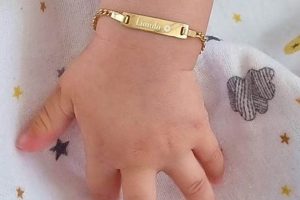
A small band, typically made of soft fabric, plastic, or metal, affixed to an infant’s wrist or ankle bearing identifying information serves as a crucial tool for accurate identification. This identification typically includes the newborn’s name, date and time of birth, and the mother’s name or hospital identification number. For example, after delivery, a newborn receives this form of identification to ensure proper matching with the correct parents.
This method of identification is paramount in hospital settings to prevent accidental misidentification or separation of newborns from their parents, promoting safety and peace of mind. The implementation of these safeguards has a long-standing history within hospitals, evolving from simple handwritten tags to more durable and technologically advanced options, all aimed at minimizing potential errors and ensuring accurate record-keeping and parental confirmation. The peace of mind offered to parents during a vulnerable time is also a significant benefit.
The following information will further explore the specific materials used in construction, the various types available, and the evolving technology integrated within these identification methods to enhance safety and accuracy.
Essential Considerations for Infant Identification Bands
The following guidance addresses crucial aspects related to the proper selection, application, and monitoring of identification bands for newborns, intended to maximize safety and efficacy.
Tip 1: Material Selection: The material of the band should be hypoallergenic and non-irritating to the infant’s delicate skin. Soft fabric or medical-grade silicone are preferable to minimize the risk of allergic reactions or chafing. Inspect the band regularly for any signs of wear or degradation that could compromise its integrity.
Tip 2: Secure Application: Ensure the band is snugly but not tightly fastened. Two fingers should be able to fit comfortably between the band and the infant’s wrist or ankle. Over-tightening can restrict circulation, while insufficient tightness could lead to accidental removal.
Tip 3: Information Accuracy: Verify the accuracy of all imprinted information, including the infant’s name, date and time of birth, and the mother’s name or medical record number, against official birth records. Discrepancies should be immediately reported and corrected.
Tip 4: Tamper-Evident Features: Opt for bands that incorporate tamper-evident features. These mechanisms provide a visual indication if the band has been removed or altered, enhancing security and deterring unauthorized access.
Tip 5: Regular Monitoring: Routinely monitor the bands condition and placement, particularly after bathing or changes of clothing. Any signs of damage, loosening, or skin irritation necessitate immediate attention and potential replacement.
Tip 6: Parental Verification: Engage parents in the verification process. Upon initial application, allow parents to confirm the accuracy of the information and the secure fastening of the band, fostering trust and shared responsibility.
Tip 7: Hospital Protocol Adherence: Strict adherence to established hospital protocols for infant identification band application and management is paramount. Staff training and consistent implementation are essential for minimizing errors and maintaining patient safety.
Effective use of these identification methods relies on careful attention to detail and adherence to best practices. The correct choice of material, secure application, and constant monitoring are critical. Accurate information and parent involvement strengthens this critical process.
The next section will examine emerging technologies impacting these crucial tools, including advanced identification methods and electronic tracking systems.
1. Material Composition

The material composition of an infant identification band is inextricably linked to its efficacy and safety. The selection of suitable materials directly influences biocompatibility, durability, and the overall comfort experienced by the newborn. An inappropriate material can lead to adverse skin reactions, compromising the infant’s health and potentially necessitating medical intervention. Conversely, a well-chosen material enhances the band’s function, minimizing irritation while maximizing its longevity in a demanding hospital environment. For example, phthalate-free, medical-grade silicone is increasingly preferred over traditional PVC due to its reduced allergenic potential and greater flexibility.
The importance of careful material selection extends beyond immediate patient comfort. The band must withstand repeated exposure to moisture, cleaning agents, and physical manipulation without degradation. Compromised legibility of the printed information due to material breakdown directly undermines the identification system’s purpose. Furthermore, the material must not leach potentially harmful chemicals that could be absorbed through the infant’s skin. Certain metallic compounds, even in trace amounts, can trigger allergic dermatitis or other adverse reactions. Therefore, rigorous testing and certification processes are essential to ensure compliance with established safety standards.
In conclusion, the correlation between material composition and identification band performance is paramount to infant welfare. The choice of materials is not merely a matter of convenience or cost, but a critical factor impacting safety, comfort, and the overall reliability of the identification process. A comprehensive understanding of material properties, combined with adherence to strict regulatory guidelines, is essential for minimizing risks and ensuring that these identification tools effectively fulfill their intended purpose. As technology and material science advance, ongoing evaluation and refinement of these standards remain crucial.
2. Closure Security

The integrity of an infant identification system hinges significantly on the security of its closure mechanism. A compromised closure directly negates the primary function of the identification band, potentially leading to misidentification, separation of infants from their parents, and associated medical errors. Cause and effect are plainly evident: a weak or easily manipulated closure allows for unauthorized removal or tampering, effectively nullifying the band’s intended purpose. The closure is not merely an attachment point; it is a critical component securing the vital link between the infant and their identity.
Examples of closure failures highlight the practical significance of this consideration. A simple snap closure, susceptible to accidental opening or deliberate removal, offers inadequate security compared to a more robust, tamper-evident design. The consequences of such failures can range from logistical confusion in the nursery to more severe situations where incorrect medication is administered based on a misidentified infant. Hospitals often employ barcoded or RFID-enabled bands with specialized locking mechanisms that require specific tools for removal, adding an additional layer of security and traceability. The understanding of closure mechanics and potential vulnerabilities is crucial for manufacturers and healthcare providers in selecting and implementing effective systems.
In conclusion, closure security constitutes an indispensable attribute of an effective infant identification system. Challenges remain in balancing security with comfort and ease of application. However, prioritizing robust, tamper-evident closure mechanisms, coupled with rigorous staff training and adherence to established protocols, is paramount in mitigating the risks associated with compromised infant identification. The ongoing refinement of closure technologies and the continued emphasis on security best practices are essential for safeguarding the well-being of newborns within healthcare facilities.
3. Information accuracy

The verity of data imprinted on a newborn’s identification band is not merely a procedural detail, but a cornerstone of infant safety and parental assurance. Accurate data safeguards against misidentification, a scenario potentially leading to severe medical errors or emotional distress. This discussion outlines critical facets underpinning data correctness on these vital identification tools.
- Data Transcription Integrity
The meticulous transcription of pertinent details, encompassing the infant’s full name, date and time of birth, and the mother’s identifying information, is fundamental. Errors arising during this initial entry can cascade through subsequent stages of medical care. For instance, transposed digits in a medical record number could result in an infant receiving incorrect medication, highlighting the potential for significant harm. Automated data entry systems, coupled with multi-factor verification protocols, are increasingly implemented to mitigate transcription errors.
- Barcode/RFID Encoding Precision
For identification systems employing barcode or RFID technology, the accuracy of encoded data is paramount. A discrepancy between the printed information and the encoded data can undermine the entire system. Consider a scenario where the printed name matches the infant, but the scanned barcode links to a different patient; this can lead to flawed medical charting and incorrect treatment plans. Regular audits and validation of barcode/RFID encoding procedures are crucial for ensuring data consistency.
- Legibility and Durability of Imprinted Data
The legibility and resilience of the imprinted data are critical for long-term data retention. If the ink fades or the printing becomes obscured due to environmental factors or physical wear, the identification band’s utility is compromised. For example, if the printed blood type becomes unreadable, healthcare providers may be forced to perform additional, potentially invasive, tests to determine the infant’s blood type in emergency situations. Durable printing methods and protective coatings are employed to ensure long-term legibility.
- Systemic Cross-Verification Protocols
The implementation of systemic cross-verification protocols at multiple points throughout the newborn’s hospital stay provides a vital safeguard against errors. Healthcare staff should routinely cross-reference the information on the identification band with the infant’s medical record and parental confirmation. For example, before administering medication, a nurse should verify the infant’s identity by comparing the details on the band with the medication order and confirming with the mother. This multi-layered verification approach minimizes the likelihood of errors slipping through the system.
The intersection of precise data and its reliable maintenance on a newborn identification band forms an unwavering line of defense against medical errors and ensures the correct care of these highly vulnerable patients. Diligence in data handling, encompassing accurate transcription, encoding, legibility, and systemic verification, guarantees the efficacy of this crucial identification tool.
4. Durability standards

Durability standards, in the context of infant identification bands, represent a critical framework dictating the longevity and functionality of these devices. These standards ensure that the information contained on the band remains legible and the band itself remains intact throughout its intended lifespan, despite exposure to environmental factors and physical stresses inherent in a hospital setting. Compromised durability can lead to inaccurate identification and potential harm.
- Material Resistance to Degradation
The core of durability standards lies in the selection of materials resistant to degradation from moisture, cleaning agents, and ultraviolet light. Infant identification bands are consistently exposed to fluids and cleaning solutions, and the materials must retain their structural integrity and not leach harmful substances upon contact. For example, a band made of low-grade plastic might become brittle and crack after repeated cleaning, rendering it unusable. Conversely, medical-grade silicone or polypropylene, certified for biocompatibility and chemical resistance, offer superior durability and maintain their properties over time. This resistance directly impacts the band’s ability to function as intended.
- Print and Encoding Persistence
Durability also encompasses the persistence of printed or encoded information on the band. The ink or laser-etched markings must resist fading, smudging, or abrasion. Consider a scenario where the ink used to print the infant’s name fades after a few days, making it difficult to verify the identity. Durability standards dictate the use of specialized inks and printing processes designed to withstand these challenges. Additionally, for bands utilizing barcodes or RFID chips, the encoding must remain intact and readable, even after exposure to radiation or magnetic fields generated by medical equipment.
- Tensile Strength and Tear Resistance
The physical strength of the band itself is a key component of durability standards. The band must possess adequate tensile strength to resist breakage or tearing under normal conditions of use. A band that is easily torn or detached poses a significant risk of misidentification. Standards often specify minimum tensile strength requirements and utilize tear-resistant materials to minimize this risk. For example, woven fabric bands with reinforced edges exhibit higher tear resistance compared to simple plastic bands.
- Adhesive Bond Integrity (if applicable)
For identification bands employing adhesive closures, the integrity of the adhesive bond is a critical factor in durability. The adhesive must maintain its bonding strength, even when exposed to moisture, temperature variations, and physical stress. A weak adhesive bond can result in premature detachment of the band, compromising its function. Standards often specify minimum peel strength requirements for adhesives and mandate the use of medical-grade adhesives that are biocompatible and resistant to degradation. This ensures the band remains securely attached throughout the infant’s stay.
These durability standards are not merely abstract requirements but are essential safeguards protecting newborns. They serve as a framework ensuring that identification bands function reliably and maintain their integrity throughout their intended lifespan, mitigating the risk of misidentification and promoting patient safety.
5. Allergen-free construction

Allergen-free construction, when applied to infant identification bands, directly addresses the inherent vulnerability of newborns to allergic reactions and skin sensitivities. The physiological immaturity of an infant’s skin renders it more susceptible to irritants and allergens present in the environment. Consequentially, the materials used in the production of these identification devices must be carefully selected to minimize the risk of adverse reactions. Examples of allergenic materials commonly avoided include latex, certain dyes, and specific plasticizers. The selection and use of hypoallergenic materials is not merely a preference, but a preventative measure to avoid contact dermatitis and other allergic responses that could compromise the infant’s health and well-being. These bands should not contribute to additional medical burdens.
The practical application of allergen-free construction involves rigorous testing and certification of materials used in the production of these bands. Manufacturers must adhere to strict guidelines to ensure that their products meet established safety standards. For instance, materials may be subjected to biocompatibility testing to assess their potential for causing skin irritation or allergic sensitization. The inclusion of a clear statement indicating the absence of common allergens on the band itself provides reassurance to parents and healthcare providers. Periodic auditing and certification programs are essential to maintain the integrity of this process.
In summary, the allergen-free construction of infant identification bands is not simply a desirable feature, but a critical safety imperative. While challenges remain in identifying and eliminating all potential allergens, adherence to stringent manufacturing practices and ongoing material evaluation are crucial. This approach ensures the safeguarding of newborns from unnecessary health risks and reinforces the overall safety profile of these essential identification devices, adding comfort to the parents.
6. Tamper evidence

Tamper evidence, in the context of infant identification bands, refers to features designed to visibly indicate if the band has been removed, altered, or otherwise compromised. The presence of tamper-evident mechanisms directly impacts the integrity of the identification system, providing a crucial safeguard against unauthorized access or manipulation. Its function is a failsafe designed to prevent improper handling and reduce potential safety hazards related to newborn care and misidentification.
The importance of tamper evidence is highlighted by real-life scenarios involving infant abduction or accidental switching of newborns. A readily removable band provides an opportunity for malicious actors to compromise infant security. Tamper-evident seals, unique identifiers, and irreversible locking mechanisms are examples of features that enhance security. The use of specialized tools for band removal, available only to authorized personnel, adds another layer of protection. If the infant identification system has been removed or tampered with, it sends an alert that prompts an investigation.
In conclusion, tamper evidence is an indispensable component of infant identification bands, contributing directly to newborn safety and security. Challenges persist in balancing robust security features with ease of application and infant comfort. However, the ongoing refinement of tamper-evident technologies and the stringent adherence to hospital protocols represent a vital commitment to preventing potential harm and ensuring accurate identification of newborns within healthcare facilities.
7. Hospital protocol adherence
Hospital protocol adherence is inextricably linked to the efficacy of infant identification systems, specifically those utilizing identification bands. Deviation from established protocols directly undermines the intended safety measures, creating opportunities for misidentification or security breaches. The very purpose of the identification band relies on consistent and standardized application, verification, and monitoring as defined by hospital policy. Failure to adhere to these protocols represents a systemic vulnerability, potentially leading to adverse patient outcomes.
The significance of adherence is illustrated by considering the various stages of band usage. Incorrect application of the band, due to staff negligence or insufficient training, could result in a loose or easily removable device, compromising security. Similarly, failing to verify the accuracy of the information on the band against the infant’s medical record introduces the risk of misidentification. Consider a scenario where a nurse, rushing to administer medication, neglects to confirm the details on the band, leading to a medication error. Regular audits and retraining programs are essential to reinforce adherence to protocols and identify areas for improvement. Additionally, hospitals frequently implement double-checks, requiring two staff members to independently verify the band information at critical junctures, such as medication administration or discharge.
In conclusion, hospital protocol adherence constitutes a foundational element of a reliable infant identification system. Consistent application, verification, and monitoring, as dictated by established policies, are essential for minimizing the risk of misidentification and ensuring patient safety. The ongoing reinforcement of these protocols through training, audits, and systemic checks remains a crucial responsibility for healthcare institutions. This approach reduces medical error, protects families, and increases the quality of newborn care in the hospital.
Frequently Asked Questions
This section addresses common inquiries and concerns regarding the use of infant identification bands in healthcare settings.
Question 1: What information is typically included on an infant identification band?
Typically, the band will include the newborn’s full name, date and time of birth, and the mother’s full name and/or unique hospital identification number. Some facilities also include the infant’s gender and medical record number.
Question 2: What materials are considered safest for infant identification bands, and why?
Medical-grade silicone and soft, hypoallergenic fabrics are generally regarded as the safest options. These materials are less likely to cause skin irritation or allergic reactions compared to latex or certain types of plastics. Biocompatibility testing is essential in material selection.
Question 3: How tightly should an infant identification band be fastened?
The band should be snugly but not tightly fastened. Two fingers should comfortably fit between the band and the infant’s wrist or ankle. Over-tightening can restrict circulation, while insufficient tightness increases the risk of accidental removal.
Question 4: How often should an infant identification band be checked and inspected?
The band should be checked and inspected regularly, ideally at least once per shift, and especially after bathing or dressing the infant. Inspection should include verification of information accuracy, closure security, and absence of skin irritation.
Question 5: What measures are in place to prevent tampering or unauthorized removal of an infant identification band?
Many hospitals utilize tamper-evident bands with irreversible locking mechanisms or unique serial numbers that are tracked within the hospital’s electronic records. Removal of these bands typically requires specialized tools accessible only to authorized personnel.
Question 6: What should be done if the information on an infant identification band is incorrect or illegible?
If any discrepancy or illegibility is noted, immediate action is required. The healthcare provider should promptly notify the appropriate personnel to verify the information and replace the band with a new one containing accurate data. Discrepancies should be documented in the infant’s medical record.
The use of properly implemented and monitored infant identification bands promotes infant safety. When followed with adherence to strict hospital protocol, proper implementation reduces the risk of errors in newborn care.
The next section will outline the future trends and innovations in infant identification technologies.
Conclusion
This exploration of the baby id bracelet underscores its vital role in newborn safety and security within hospital environments. Key aspects such as material selection, closure security, data accuracy, durability, allergen-free construction, tamper evidence, and strict adherence to hospital protocols are crucial for ensuring effective functionality and minimizing potential risks of misidentification or harm. The discussion highlighted the evolution of these identification methods, from simple tags to technologically advanced systems incorporating barcodes and RFID technology.
Continued innovation and vigilance remain paramount in advancing the reliability and safety of infant identification practices. As technology progresses, ongoing research and development are essential to address emerging challenges and enhance the effectiveness of the baby id bracelet. The implementation of rigorous standards, combined with ongoing education and training for healthcare professionals, is crucial for upholding the highest levels of patient safety and parental confidence in the care of newborns.