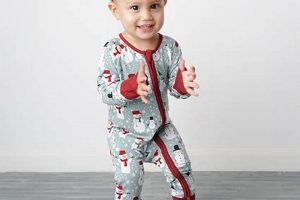
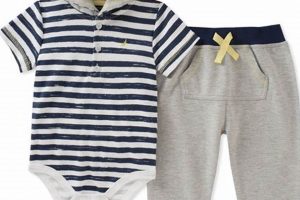
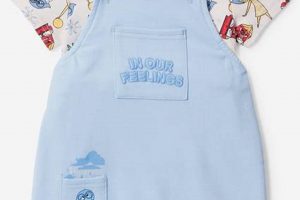
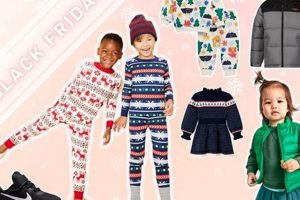
Apparel designed for infants and toddlers during the Christmas holiday season often incorporates festive colors, patterns, and embellishments. These garments can range from simple onesies with holiday-themed prints to more elaborate outfits resembling miniature versions of adult Christmas attire, such as velvet dresses or tiny suits.
Such specialized garments offer opportunities for families to create memorable holiday moments through photographs and celebrations. The tradition of dressing children in seasonal attire dates back centuries, reflecting a desire to imbue even the youngest members of society with the spirit of the season. Moreover, the availability of diverse designs allows caregivers to express their personal styles and cultural preferences during this festive period.
The subsequent sections will delve into the various types of festive outfits available, examining factors to consider when selecting suitable garments for young children, including material safety, comfort, and sizing considerations, and finally, explore current trends in holiday-themed infant wear.
Selection Guidance
The following recommendations aim to assist in choosing suitable attire for infants and toddlers during the Christmas season, prioritizing safety and comfort.
Tip 1: Prioritize Fabric Safety: Opt for garments constructed from hypoallergenic and breathable materials, such as 100% cotton or bamboo. These fabrics minimize the risk of skin irritation and allergic reactions in sensitive infants.
Tip 2: Check for Secure Embellishments: Carefully inspect any decorative elements, such as buttons, ribbons, or sequins, to ensure they are securely attached. Loose embellishments present a choking hazard.
Tip 3: Avoid Restrictive Designs: Select outfits that allow for unrestricted movement. Tight waistbands, stiff fabrics, or bulky decorations can impede a child’s ability to crawl, sit, or play comfortably.
Tip 4: Consider Layering Options: Choose versatile pieces that can be easily layered to accommodate varying indoor and outdoor temperatures. This allows for adjustments to the child’s comfort level throughout the day.
Tip 5: Verify Washing Instructions: Review the care label before purchase. Garments requiring specialized cleaning may not be practical for everyday use with infants, due to potential messes and frequent washing.
Tip 6: Pay Attention to Sizing: Refer to size charts and consider purchasing slightly larger sizes. Infants grow rapidly, and slightly larger attire provides more room for movement and extended wear.
Tip 7: Evaluate Closure Mechanisms: Opt for garments with easy-to-use closures, such as snaps or zippers, strategically placed for convenient diaper changes. Avoid outfits with complicated or cumbersome closures.
Adhering to these guidelines contributes to a safe and enjoyable experience when selecting holiday attire for young children, ensuring comfort and minimizing potential hazards.
The next section will explore current trends in holiday-themed apparel for infants and toddlers, highlighting popular styles and design features.
1. Fabric Composition

The selection of fabric for infant Christmas attire directly impacts safety, comfort, and overall suitability. Careful consideration of fiber type and construction is essential when choosing garments for young children during the holiday season.
- Natural Fibers
Natural fibers, such as cotton, bamboo, and merino wool, offer inherent breathability and softness. Cotton, particularly organic cotton, minimizes exposure to pesticides and chemicals. Bamboo is known for its moisture-wicking properties, while merino wool provides warmth without excessive bulk. For example, a cotton onesie with a Christmas print offers a comfortable and hypoallergenic option, reducing the risk of skin irritation.
- Synthetic Fibers
Synthetic fibers, including polyester and acrylic, are often used in blended fabrics for increased durability and wrinkle resistance. However, synthetic materials can be less breathable than natural fibers and may cause irritation to sensitive skin. Consider a velvet Christmas dress made with a polyester blend; while visually appealing, it may not be as comfortable as a 100% cotton alternative, especially for extended wear.
- Dye Selection and Safety
The dyes used to color fabrics can pose a risk to infants if they contain harmful chemicals. Opt for garments certified as using low-impact or non-toxic dyes. Babies tend to put clothes in their mouths. For example, brightly colored red and green outfits should be scrutinized for dye safety, as some dyes contain heavy metals or allergenic compounds.
- Fabric Weight and Weave
The weight and weave of a fabric influence its warmth, drape, and breathability. Lightweight fabrics with a loose weave, such as muslin or gauze, are suitable for warmer climates or layering. Heavier fabrics with a tighter weave, such as flannel or fleece, provide greater insulation. For instance, a lightweight cotton knit romper is ideal for indoor celebrations, while a fleece jacket offers additional warmth for outdoor activities.
The interplay between fiber type, dye safety, and fabric construction dictates the overall suitability of infant festive attire. Selecting breathable, non-irritating fabrics dyed with non-toxic substances ensures that the chosen garments prioritize the well-being of the child while maintaining the aesthetic appeal of the holiday season.
2. Safety certifications

The presence of safety certifications on infant Christmas apparel serves as a critical indicator of product compliance with established safety standards. Certifications, such as OEKO-TEX Standard 100 or GOTS (Global Organic Textile Standard), verify that the materials used in garment construction have been tested for harmful substances, including heavy metals, formaldehyde, and allergenic dyes. The absence of such certifications presents a potential risk of exposing infants to these detrimental chemicals, leading to skin irritation, allergic reactions, or, in extreme cases, more severe health consequences. For instance, a brightly colored holiday-themed onesie lacking OEKO-TEX certification could contain dyes that leach toxic chemicals upon contact with the infant’s skin.
Furthermore, safety certifications extend beyond material composition to encompass manufacturing processes. Certifications may indicate that the production facilities adhere to environmentally responsible practices and fair labor standards. Consequently, the selection of certified festive outfits contributes not only to the child’s immediate safety but also promotes ethical and sustainable manufacturing. Consider the practical example of a baby Christmas dress bearing the Fair Trade certification. This signifies that the artisans involved in its creation received fair wages and worked in safe conditions, in addition to confirming the garment’s compliance with material safety standards.
In summary, safety certifications function as a crucial safeguard in the selection of infant holiday attire. They provide consumers with assurance that the purchased garments meet defined safety benchmarks, minimizing potential health risks and promoting ethical production practices. The absence of verifiable safety certifications should prompt careful consideration and potential selection of alternative, certified products to prioritize the well-being of the child and support responsible manufacturing.
3. Sizing Accuracy

Sizing accuracy in the context of infant and toddler festive garments is of paramount importance, directly influencing comfort, safety, and overall satisfaction. Inaccurate sizing can lead to discomfort, restricted movement, and potential safety hazards, thereby diminishing the enjoyment of holiday celebrations.
- Growth Spurts and Seasonal Timing
Infants and toddlers experience rapid growth spurts, often unpredictable in timing and magnitude. The seasonal nature of Christmas attire necessitates purchasing garments weeks or months in advance. Therefore, relying solely on a child’s current size may result in selecting apparel that becomes too small by the holiday season. Purchasing slightly larger sizes, considering potential growth, mitigates this issue. For example, purchasing a 6-month-old outfit for a 3-month-old may provide a better fit by Christmas.
- Variations in Manufacturer Sizing Charts
Significant discrepancies exist between sizing charts provided by different manufacturers. A garment labeled as “12 months” from one brand may differ substantially in dimensions from a similarly labeled item from another brand. Therefore, referencing specific measurements (chest, length, etc.) rather than relying solely on age-based sizing is crucial. Checking individual brand size charts before purchasing helps ensure a more accurate fit.
- Impact on Comfort and Mobility
Incorrect sizing restricts an infant’s movement, impacting their ability to crawl, sit, or play comfortably. Overly tight garments can impede circulation and cause skin irritation, while excessively large outfits pose tripping hazards and restrict motor skills. Selecting apparel that allows for freedom of movement is vital. Consider a Christmas-themed romper; if too small, it can restrict leg movement, hindering crawling, and if too large, it may bunch up, creating discomfort when sitting.
- Layering Considerations
Festive attire is often worn with layers of undergarments, particularly in colder climates. Accurate sizing must accommodate these layers without causing constriction or overheating. Purchasing outerwear, such as sweaters or jackets, in a slightly larger size ensures sufficient room for layering. A snug-fitting winter coat may become uncomfortably tight when layered over a holiday dress, compromising the child’s warmth and mobility.
In conclusion, precise sizing is a critical determinant of comfort, safety, and practicality in baby Christmas apparel. Consideration of growth patterns, manufacturer variations, impact on mobility, and layering needs enables informed purchasing decisions, maximizing the likelihood of a well-fitting and enjoyable holiday outfit for the child.
4. Ease of Care
The practicality of maintaining infant holiday garments significantly impacts their suitability and longevity. Given the frequent messes associated with young children, easily cleaned and maintained festive attire becomes a crucial consideration for caregivers.
- Machine Washability and Dryability
The ability to machine wash and tumble dry fabrics simplifies the cleaning process and saves time. Garments requiring hand washing or specialized cleaning may prove impractical for everyday use with infants. For example, a velvet dress labeled “dry clean only” may be less desirable than a cotton dress that can be easily machine washed and dried after spills or accidents.
- Stain Resistance and Durability
Fabrics with inherent stain resistance or those treated with stain-repellent finishes offer added protection against common infant messes, such as food stains or spills. Durable fabrics withstand repeated washing and wear without significant fading or damage. A stain-resistant cotton blend onesie maintains its appearance after multiple washes, ensuring it remains presentable throughout the holiday season.
- Wrinkle Resistance and Ironing Requirements
Fabrics that resist wrinkling require minimal or no ironing, saving time and effort. Garments made from wrinkle-prone materials necessitate frequent ironing to maintain a neat appearance. A knit sweater that resists wrinkles is more practical than a linen dress that requires ironing after each wash.
- Closure Durability
The durability of closures, such as snaps, zippers, or buttons, directly affects the lifespan of infant garments. Weak or poorly attached closures may break or detach easily, rendering the garment unusable. Reinforced snaps or durable zippers ensure the garment remains functional after repeated use and washing. Replacing broken snaps on a Christmas-themed romper becomes a time-consuming task that can be avoided by selecting garments with reinforced closures.
The interplay of washability, stain resistance, wrinkle resistance, and closure durability significantly influences the long-term practicality of infant holiday attire. Selecting easily maintained garments reduces the burden on caregivers, ensures the garments remain presentable throughout the holiday season, and extends their useful lifespan.
5. Design appropriateness

Design appropriateness, concerning garments for infants during the Christmas season, extends beyond mere aesthetics. It encompasses considerations of developmental suitability, cultural sensitivity, and potential safety hazards. Attire that aligns with these parameters enhances the child’s experience and minimizes potential risks.
- Developmental Stage Considerations
Infant development varies significantly within the first year. Garment designs should reflect these stages. For example, restrictive waistbands or intricate embellishments are inappropriate for newborns, who require unrestricted movement. Simpler designs with soft fabrics and easy closures are better suited for this age group.
- Cultural and Religious Sensitivity
While Christmas is a widely celebrated holiday, design choices should respect diverse cultural and religious backgrounds. Avoidance of overtly religious symbols or potentially offensive imagery is prudent. Inclusive designs, featuring winter themes or general festive motifs, promote inclusivity and prevent alienation.
- Simplicity and Comfort
Overly complex designs, featuring numerous embellishments or intricate patterns, can be visually overwhelming for infants. Additionally, such features can pose potential hazards. Simpler designs, prioritizing comfort and ease of wear, are preferable. A comfortable cotton onesie with a simple snowflake pattern is more appropriate than a stiff, heavily adorned outfit.
- Gender Neutrality
Consideration of gender neutrality in design promotes inclusivity and avoids perpetuating stereotypes. While traditional gendered colors and motifs persist, offering alternative designs that are not explicitly gendered expands consumer choice and promotes acceptance. A simple red and green striped sweater, suitable for any infant, exemplifies a gender-neutral option.
The convergence of developmental stage, cultural sensitivity, simplicity, and gender neutrality informs design appropriateness in infant holiday apparel. By prioritizing these factors, manufacturers and consumers can ensure that the selected attire is both aesthetically pleasing and functionally suitable for the intended wearer.
6. Seasonal Warmth

The concept of seasonal warmth plays a critical role in the selection and design of festive garments for infants. Ensuring adequate protection from cold weather conditions during the Christmas season is paramount for maintaining infant health and well-being. This consideration influences fabric choices, garment construction, and layering strategies.
- Fabric Insulation Properties
The insulating capabilities of various fabrics dictate their suitability for providing warmth. Materials such as fleece, wool, and quilted cotton offer superior thermal retention compared to lighter-weight options like muslin or linen. For instance, a fleece-lined Christmas-themed bunting bag effectively traps body heat, preventing hypothermia in cold environments. This direct correlation between fabric insulation and warmth underscores the importance of selecting appropriate materials.
- Layering Systems for Temperature Regulation
The layering of garments allows for flexible temperature regulation, accommodating varying indoor and outdoor conditions. A base layer of moisture-wicking fabric, followed by an insulating mid-layer and a protective outer layer, provides optimal warmth and prevents overheating. A common example involves layering a cotton onesie under a knitted sweater and a waterproof jacket for outdoor excursions. This adaptability is crucial, as indoor environments during the holidays often maintain higher temperatures than the exterior climate.
- Extremity Protection: Hats, Mittens, and Booties
Infants are particularly susceptible to heat loss through their extremities. Therefore, adequate protection of the head, hands, and feet is essential for maintaining overall body temperature. Warm hats, mittens, and booties constructed from insulating materials like wool or fleece minimize heat loss and prevent frostbite in cold weather. A fleece-lined hat covering an infant’s ears offers tangible protection against frigid air, mitigating the risk of cold-related illnesses.
- Overheating Prevention Strategies
While maintaining warmth is critical, preventing overheating is equally important. Overly warm clothing can lead to discomfort, dehydration, and an increased risk of sudden infant death syndrome (SIDS). Caregivers must monitor infants for signs of overheating, such as sweating, flushed skin, or rapid breathing, and adjust clothing accordingly. A practical approach involves removing layers in warmer environments or opting for breathable fabrics to promote ventilation. For instance, avoiding excessive bundling indoors ensures that the infant remains comfortable and safe.
The aforementioned aspects of seasonal warmthfabric insulation, layering, extremity protection, and overheating preventioncollectively shape the design and selection of infant festive attire. These considerations, when implemented effectively, contribute to a comfortable and safe holiday experience for the child, mitigating potential risks associated with cold weather exposure and excessive heat.
7. Closure security
Closure security in infant holiday attire directly impacts safety and ease of use. Weak or poorly designed closures pose a risk of detachment, creating potential choking hazards if detached components are ingested. Conversely, secure closures prevent unintentional openings, maintaining garment integrity and preventing exposure to cold weather. The type and construction of closuressnaps, zippers, buttons, or tiesdetermine their reliability and ease of operation. As a primary component of festive baby garments, secure closures function to ensure that attire stays in place, keeping the infant comfortable and protected throughout the holiday season. For instance, a romper with securely fastened snaps prevents the garment from riding up, exposing the infants torso to cold air. In contrast, a dress with loosely sewn buttons presents both a choking risk and the potential for the garment to become undone. The practical significance lies in prioritizing closure mechanisms engineered for durability and safety to safeguard infants during celebratory events.
Consideration of closure placement further enhances functionality. Back closures may be aesthetically pleasing but present challenges during diaper changes. Front or crotch closures, while perhaps less visually appealing, offer convenient access for diapering, minimizing disruption to the infant and caregiver. Furthermore, closure material influences both security and comfort. Metal closures can pose allergic reactions in some infants; plastic alternatives or fabric-covered closures mitigate this risk. The strategic integration of secure and accessible closures enhances the overall usability of infant holiday attire. A well-designed snowsuit, for example, incorporates a robust zipper with a protective flap to prevent drafts, coupled with reinforced snaps at the legs for easy diaper access.
In summary, closure security represents a critical, though often overlooked, element in infant Christmas clothing design. Prioritizing durable, safe, and conveniently placed closures mitigates potential risks, enhances garment functionality, and contributes to the overall well-being of the infant. The challenge lies in balancing aesthetic appeal with practical safety considerations, ensuring that festive attire not only looks appealing but also performs reliably. The integration of stringent closure security standards aligns with the broader theme of providing safe, comfortable, and functional garments for infants during the holiday season.
Frequently Asked Questions
The following questions and answers address common concerns and misconceptions regarding the selection, safety, and care of festive attire for infants during the Christmas season.
Question 1: What fabrics are most suitable for infant Christmas clothing, considering potential allergens?
Fabrics composed of 100% organic cotton or bamboo are generally recommended. These materials are less likely to cause allergic reactions compared to synthetic fibers or conventionally grown cotton. Certification by organizations such as OEKO-TEX ensures the absence of harmful chemicals.
Question 2: How can caregivers ensure the safety of decorative elements, such as buttons or ribbons, on infant Christmas outfits?
Prior to use, inspect garments thoroughly for any loose or poorly attached embellishments. Remove or securely re-attach any questionable items to prevent choking hazards. Limit the use of attire with excessive decorative elements for infants prone to putting objects in their mouths.
Question 3: What are the potential risks associated with dyes used in brightly colored infant Christmas apparel?
Certain dyes contain heavy metals or allergenic compounds that can irritate sensitive skin or pose toxicity risks if ingested. Opt for garments certified as using low-impact or non-toxic dyes. Wash new items before the first use to remove excess dye residue.
Question 4: How should caregivers approach sizing for infant Christmas outfits, given unpredictable growth spurts?
Consult individual brand size charts, referencing specific measurements (chest, length) rather than relying solely on age-based sizing. Purchase slightly larger sizes to accommodate potential growth and layering requirements. Consider the garment’s design; styles that allow for adjustment (e.g., adjustable straps, elastic waistbands) provide greater flexibility.
Question 5: What washing instructions are recommended for maintaining the quality and safety of infant Christmas apparel?
Follow the care label instructions provided on the garment. In general, machine washing in cold water with a mild, fragrance-free detergent is recommended. Avoid using bleach or fabric softeners, as these can irritate sensitive skin. Tumble dry on low heat or air dry to prevent shrinkage.
Question 6: How can caregivers balance the desire for festive attire with the need for comfort and freedom of movement in infant Christmas clothing?
Prioritize comfort and practicality over elaborate designs. Select garments constructed from soft, breathable fabrics that allow for unrestricted movement. Avoid overly tight or restrictive styles. Consider versatile pieces that can be easily layered to accommodate varying temperatures.
The information above provides a foundation for making informed choices, contributing to a safe and enjoyable holiday season for infants.
The subsequent section will present a conclusion, summarizing key considerations when selecting baby Christmas attire.
Conclusion
This article explored various facets of baby christmas clothing, ranging from fabric composition and safety certifications to sizing accuracy, ease of care, design appropriateness, seasonal warmth, and closure security. Each aspect necessitates careful consideration to ensure the well-being and comfort of infants during the holiday season. The selection process should prioritize garments that minimize potential hazards, accommodate rapid growth, and facilitate convenient maintenance, reflecting a balance between festive aesthetics and practical requirements.
Given the potential risks associated with improperly chosen festive attire, informed decision-making is paramount. Caregivers are encouraged to apply the knowledge presented herein to prioritize safety and comfort when selecting baby christmas clothing. Further research and awareness of evolving safety standards remain essential for safeguarding infants and promoting responsible consumer practices within the dynamic market of infant apparel.