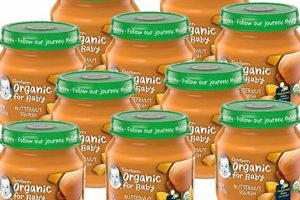
The duration for which commercially prepared infant meals, specifically those produced by Gerber, remains safe for consumption after initial breach of the airtight seal is a critical consideration for caregivers. This timeframe dictates the period during which the product retains its nutritional value and poses minimal risk of bacterial contamination.
Adhering to recommended storage guidelines is paramount to safeguarding an infant’s health. Deviation from these guidelines can result in spoilage, leading to potential gastrointestinal distress or, in severe cases, foodborne illness. Manufacturers establish these timelines based on rigorous testing to ensure product safety and efficacy.
Therefore, understanding the specified post-opening shelf life, proper refrigeration techniques, and visual indicators of spoilage are essential components of responsible infant feeding practices. The following sections will detail these critical aspects and offer practical guidance for the safe handling of opened containers of commercially prepared infant food.
Tips for Determining the Usability of Opened Gerber Baby Food
The following guidelines offer instruction on how to assess the safety and suitability of opened Gerber baby food for infant consumption.
Tip 1: Always Check the Label: Prior to initial opening, thoroughly examine the product label for specific storage instructions provided by the manufacturer. These instructions frequently outline the recommended refrigeration period after opening, which is a crucial piece of information.
Tip 2: Refrigerate Immediately After Opening: Once the container has been opened, promptly refrigerate any unused portion. Refrigeration retards the growth of bacteria and helps to preserve the integrity of the remaining food.
Tip 3: Adhere to the Recommended Timeframe: Generally, opened Gerber baby food is considered safe for consumption for up to 24-48 hours when properly refrigerated. Discard any remaining food that has exceeded this timeframe, regardless of appearance or smell.
Tip 4: Practice Proper Spoon Feeding Hygiene: Avoid feeding directly from the jar. This prevents the introduction of saliva and potential bacteria, which can accelerate spoilage. Instead, transfer a portion to a separate dish for feeding.
Tip 5: Observe for Visual Signs of Spoilage: Before each feeding, carefully inspect the baby food for any signs of discoloration, mold growth, or unusual texture. Discard immediately if any abnormalities are detected.
Tip 6: Assess for Odor: In addition to visual inspection, carefully smell the baby food before feeding. An off-putting or sour odor is a strong indication that the food has spoiled and should not be given to the infant.
Following these guidelines aids in mitigating the risk of bacterial contamination and ensures that the infant receives safe and nutritious food. Discarding food past the recommended timeframe is crucial, even if it appears to be in acceptable condition.
By consistently applying these practices, caregivers can confidently navigate the challenges of infant feeding and maintain a safe and healthy environment for the child.
1. Refrigeration Importance

Refrigeration plays a critical role in extending the usability and ensuring the safety of opened Gerber baby food. Maintaining a low temperature environment significantly inhibits the proliferation of bacteria that cause spoilage, directly impacting the duration for which the food remains suitable for infant consumption.
- Bacterial Growth Inhibition
Refrigeration temperatures slow down the metabolic activity of bacteria, impeding their ability to multiply rapidly. Without refrigeration, bacteria can reach dangerous levels within hours, rendering the food unsafe. Proper refrigeration prevents this rapid growth, thereby extending the window of safe consumption.
- Maintaining Nutritional Integrity
While primarily focused on safety, refrigeration also aids in preserving the nutritional value of the food. Certain vitamins and nutrients are susceptible to degradation at higher temperatures. By slowing down chemical reactions, refrigeration helps retain these essential components for a longer period.
- Extending Recommended Timeframe
The recommended 24-48 hour timeframe for opened Gerber baby food is predicated on consistent refrigeration. Failure to refrigerate promptly or maintaining a sufficiently low temperature voids this guideline and significantly reduces the safe consumption window, potentially to just a few hours.
- Reduction of Spoilage Rate
Refrigeration directly impacts the rate at which baby food spoils. Observable signs of spoilage, such as changes in color, odor, or texture, are indicative of bacterial activity. By significantly reducing this activity, refrigeration delays the onset of spoilage, providing a longer period during which the food remains acceptable.
These considerations highlight that adequate refrigeration is not merely a suggestion, but a fundamental requirement for adhering to recommended safety guidelines. Deviating from proper refrigeration protocols dramatically increases the risk of bacterial contamination and compromises the safety of the infant, emphasizing the intrinsic link between refrigeration practices and the duration of Gerber baby food’s usability after opening.
2. 24-48 Hours

The timeframe of 24-48 hours represents a critical safety parameter governing the usability of opened Gerber baby food. This duration, established through rigorous scientific testing, dictates the period within which the food is deemed safe for infant consumption post-breach of the original hermetic seal. Exceeding this window significantly elevates the risk of bacterial proliferation, potentially leading to adverse health consequences for the infant. The 24-48 hour limit serves as a practical guideline for caregivers to mitigate the risk of foodborne illness, providing a clearly defined endpoint for safe usage.
Consider, for example, a scenario where a jar of Gerber sweet potatoes is opened but only partially consumed. If the remaining portion is promptly refrigerated according to manufacturer instructions, it should be suitable for feeding within the subsequent 24-48 hour period. However, if the jar remains unrefrigerated for an extended period or if more than 48 hours elapse after opening, the food must be discarded, irrespective of its apparent condition. This practical application illustrates the direct impact of adhering to or disregarding the recommended timeframe.
In conclusion, the “24-48 hours” component is inextricably linked to the safe consumption of opened Gerber baby food. While visual inspection and olfactory assessment may offer supplementary indicators of spoilage, they cannot supersede the fundamental importance of adhering to the established time limit. Challenges arise when caregivers misinterpret or overlook the post-opening storage guidelines, underscoring the need for clear and readily accessible information regarding the safe handling and storage of commercially prepared infant foods. Strict adherence to this guideline represents a cornerstone of infant feeding safety practices.
3. Spoilage Indicators

Spoilage indicators provide crucial sensory information regarding the safety and suitability of opened Gerber baby food, acting as direct determinants of its edibility well within, or in contravention of, established timeframes. The presence of such indicators invariably necessitates immediate disposal, superseding general post-opening shelf life guidelines.
- Visual Discoloration
Alterations in the expected color profile of the baby food often signify microbial activity. For example, a change from a vibrant orange in carrot puree to a dull or brownish hue indicates potential degradation. Visual discoloration, irrespective of the remaining time within the 24-48 hour window, dictates immediate discard.
- Uncharacteristic Odor
An atypical or offensive smell represents a critical spoilage indicator. While fresh baby food possesses a mild and pleasant aroma, a sour, acidic, or otherwise unpleasant odor suggests bacterial fermentation or decomposition. Even subtle deviations from the expected scent should be regarded with caution, triggering immediate disposal regardless of time elapsed since opening.
- Textural Abnormalities
Changes in the consistency or texture of the baby food can denote spoilage. Separation of solids and liquids, curdling, or the presence of unexpected lumps may signal microbial growth or enzymatic activity. Any deviation from the smooth, uniform texture typical of Gerber products necessitates discarding the remaining contents.
- Visible Mold Growth
The presence of visible mold, irrespective of quantity, represents an unambiguous indicator of spoilage and poses a significant health risk. Mold growth signifies advanced microbial contamination and renders the baby food entirely unsuitable for consumption. Immediate and complete disposal is mandatory upon observation of mold, overriding any considerations of time or initial appearance.
These sensory indicators serve as primary safeguards, complementing the established time-based guidelines. While adherence to the 24-48 hour rule is crucial, the presence of any of these spoilage indicators preempts that rule, mandating immediate disposal. The informed and vigilant application of these sensory assessments constitutes a critical aspect of responsible infant feeding practices, directly mitigating the risk of foodborne illness.
4. Proper Storage

Proper storage techniques exert a direct and significant influence on the longevity and safety of opened Gerber baby food. Adherence to specified storage protocols is not merely a matter of convenience but a fundamental requirement for maintaining product integrity and minimizing the risk of bacterial contamination, thereby dictating its usability within the recommended timeframe.
- Refrigeration Temperature Control
Maintaining a consistent refrigeration temperature, typically below 40F (4C), is critical. Fluctuations in temperature can accelerate bacterial growth, even within the recommended 24-48 hour window. For example, repeatedly removing and returning the food to the refrigerator can compromise temperature stability, reducing the effective lifespan. Consistent temperature control ensures that bacterial proliferation remains within safe limits for the specified duration.
- Airtight Sealing
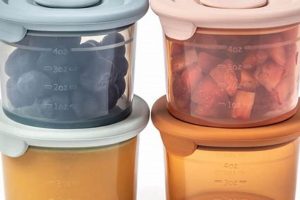
Proper sealing prevents the introduction of airborne contaminants and minimizes moisture absorption, both of which can accelerate spoilage. Resealing the opened jar with its original lid, or transferring the contents to an airtight container, creates a protective barrier. Conversely, leaving the jar open or loosely covered exposes the food to potential contaminants, shortening its safe consumption period. A secure seal is essential for preserving food quality and safety.
- Placement within the Refrigerator
The location of the baby food within the refrigerator can impact its storage temperature. Placing the opened jar on a door shelf, where temperatures fluctuate more dramatically, is less effective than storing it on a middle shelf, where temperatures remain more stable. Strategic placement helps maintain consistent refrigeration, prolonging the safe usability of the food. Optimal placement contributes to uniform temperature regulation.
- Avoiding Cross-Contamination
Preventing cross-contamination from other foods within the refrigerator is essential. Storing opened baby food near raw meats or unwashed produce increases the risk of introducing harmful bacteria. Maintaining separation between baby food and potentially contaminated items safeguards its integrity. Implementing separation protocols minimizes the potential for cross-contamination, thus extending the period of safe usability. Segregation of opened baby food is a cornerstone of proper storage.
In summary, these facets of proper storageconsistent refrigeration temperature, airtight sealing, strategic placement within the refrigerator, and avoidance of cross-contaminationcollectively determine the extent to which opened Gerber baby food remains safe for consumption. Deviation from these protocols can significantly reduce the effective lifespan, underscoring the direct relationship between storage practices and the duration of usability. Strict adherence to these measures minimizes the risk of bacterial contamination and ensures infant safety.
5. Hygiene Practices

Hygiene practices are intrinsically linked to the post-opening shelf life of commercially prepared infant foods, influencing the rate of bacterial contamination and, consequently, the duration for which such products remain safe for consumption. The introduction of microorganisms during handling and feeding directly impacts the spoilage process, thereby altering the consumable lifespan of the opened product.
Consider the scenario where a caregiver uses a contaminated spoon to feed an infant directly from a jar of Gerber baby food. This action introduces bacteria from the infant’s mouth and the surrounding environment into the remaining contents of the jar. These microorganisms can then proliferate, accelerating the spoilage process and reducing the period within which the food remains safe, potentially well below the generally recommended 24-48 hour window. Conversely, meticulous adherence to hygiene protocolssuch as utilizing clean utensils, avoiding direct feeding from the container, and properly washing hands before handling the foodminimizes the introduction of contaminants, thereby extending the consumable timeframe. Neglecting such precautions, like reusing a partially licked spoon, shortens the effective lifespan of the opened product, despite adhering to refrigeration guidelines.
In conclusion, the application of stringent hygiene practices represents a critical determinant of the post-opening usability of Gerber baby food. While refrigeration and adherence to time-based guidelines are essential, they are rendered less effective in the absence of proper hygiene. The consistency and rigor with which caregivers implement these practices directly correlate with the safety and longevity of opened infant food products, mitigating the risk of bacterial contamination and safeguarding infant health. The confluence of proper handling, refrigeration, and time awareness defines best practices for preserving infant food and ensuring its safety.
6. Label Instructions

The information provided on product labels constitutes a primary determinant of the consumable period following the opening of commercially prepared infant foods. Gerber, like other manufacturers, conducts extensive testing to establish the safe post-opening timeframe. These findings are then concisely communicated via label instructions, representing the most authoritative source on the specific product’s usability. Deviations from label instructions increase the risk of bacterial contamination and potential adverse health effects.
For instance, a Gerber product label might specify “Refrigerate after opening and use within 24 hours.” This statement overrides any general assumptions about the post-opening shelf life of similar products. A caregiver disregarding this instruction, perhaps assuming a 48-hour window based on other experiences, increases the risk of serving spoiled food to the infant. Moreover, label instructions frequently include additional guidance, such as recommended storage temperatures or warnings against using the product if the seal is broken, further influencing usability decisions. Ignoring these specifics can lead to unintentional compromise of product safety.
In conclusion, label instructions are inextricably linked to the duration for which opened Gerber baby food remains safe for consumption. They serve as a critical communication tool, conveying manufacturer-specific guidelines that should supersede general assumptions. A thorough understanding and consistent adherence to these instructions are paramount to responsible infant feeding practices, mitigating the potential for foodborne illness and ensuring the infant’s well-being. The label, therefore, represents the first and most important point of reference in determining the usability of opened infant food products.
Frequently Asked Questions
The following addresses common inquiries regarding the safe handling and storage of Gerber baby food after the initial opening of the container.
Question 1: Is it safe to feed an infant Gerber baby food that has been open for more than 48 hours, even if refrigerated?
No. Regardless of refrigeration, Gerber baby food should not be given to an infant if it has been opened for more than 48 hours. Bacterial contamination can occur even under refrigerated conditions, potentially leading to illness.
Question 2: Can the opened Gerber baby food be frozen to extend its shelf life?
While freezing might inhibit bacterial growth, it is not recommended for previously opened containers of Gerber baby food. Freezing can alter the texture and consistency of the food, and the safety of refreezing after partial use is not guaranteed. Follow the recommended refrigeration guidelines instead.
Question 3: What should be done if the power goes out and the opened Gerber baby food is no longer refrigerated?
If refrigeration is interrupted for more than two hours due to a power outage, the opened Gerber baby food should be discarded. The lack of consistent refrigeration can facilitate bacterial growth, making the food unsafe for consumption.
Question 4: How does the type of Gerber baby food (e.g., fruits, vegetables, meats) affect its post-opening shelf life?
The recommended post-opening shelf life, typically 24-48 hours when refrigerated, generally applies across different types of Gerber baby food. However, adherence to the specific storage instructions provided on the individual product label is crucial, as variations may exist.
Question 5: Is it acceptable to taste the Gerber baby food to determine if it has spoiled?
Tasting baby food to assess spoilage is not advised. Visual and olfactory indicators, such as discoloration, unusual odor, or textural changes, should be used to determine its suitability. Tasting potentially spoiled food can expose one to harmful bacteria.
Question 6: What steps should be taken if an infant has consumed Gerber baby food that may have been spoiled?
If an infant has consumed baby food suspected of being spoiled, monitor closely for symptoms such as vomiting, diarrhea, or fever. If any of these symptoms develop, promptly seek medical attention.
Adherence to these guidelines helps minimize the risk of foodborne illness in infants. Always prioritize safety when handling and storing infant food products.
The subsequent section will cover related topics of interest.
How Long Does Gerber Baby Food Last After Opened
The preceding exploration of how long does gerber baby food last after opened underscores the importance of adhering to established safety guidelines. The recommended 24-48 hour refrigeration period after opening serves as a crucial benchmark, contingent upon proper storage conditions, including consistent refrigeration temperature and airtight sealing. Reliance on visual and olfactory assessments for spoilage, coupled with strict hygiene practices during feeding, further minimizes the risk of bacterial contamination. Moreover, the specific instructions provided on the product label take precedence over generalized recommendations, reflecting the manufacturer’s detailed understanding of product stability.
The safe handling of commercially prepared infant food remains a critical aspect of infant care. Caregivers must remain vigilant in their adherence to established protocols, recognizing that neglecting these guidelines can pose significant risks to infant health. Diligence in storage, hygiene, and awareness of spoilage indicators are not merely suggestions, but essential practices for responsible infant feeding. Consistent application of these principles provides the best assurance of safe and nutritious feeding practices.