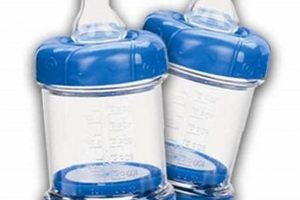
A vacuum forming inside an infant feeding bottle is the primary cause of nipple inversion during feeding. This phenomenon occurs when the pressure inside the bottle becomes significantly lower than the atmospheric pressure outside, essentially pulling the nipple inward.
Understanding the reasons behind this vacuum creation allows caregivers to ensure consistent and effective feeding. Addressing the issue of inverted bottle nipples is important for preventing infant frustration, minimizing air intake during feeding, and promoting adequate nutrient consumption.
Several factors can contribute to this issue. Bottle design, nipple selection, and feeding techniques all play a role in the likelihood of nipple inversion. Potential solutions include adjusting the bottle venting system, selecting appropriate nipple sizes and shapes, and modifying the feeding pace.
Addressing Bottle Nipple Inversion
Effective strategies exist to mitigate nipple collapse during infant feeding, promoting a smoother and more comfortable experience.
Tip 1: Evaluate Venting Systems: Modern feeding bottles often incorporate venting mechanisms designed to equalize pressure. Ensure these vents are unobstructed and functioning as intended. Refer to the bottle manufacturer’s instructions for proper venting system maintenance.
Tip 2: Adjust Nipple Flow Rate: A nipple with a flow rate that is too slow can exacerbate vacuum formation. Consider increasing the nipple size or type to facilitate a more continuous flow, matching the infant’s feeding pace.
Tip 3: Modify Bottle Angle: Holding the bottle at a steeper angle can reduce air accumulation within the bottle. This minimizes the pressure differential that leads to nipple inversion. Experiment with different angles to find the optimal feeding position.
Tip 4: Briefly Interrupt Feeding: If nipple collapse occurs repeatedly, briefly remove the bottle from the infant’s mouth to allow air to re-enter the bottle, equalizing pressure. This provides a temporary solution while other strategies are evaluated.
Tip 5: Experiment with Different Bottle and Nipple Designs: Various bottle and nipple shapes are designed with specific venting or flow characteristics. Trial different combinations to identify the most effective setup for the infant’s individual needs.
Tip 6: Ensure Proper Nipple Assembly: Verify that the nipple is correctly and securely attached to the bottle collar. A loose fit can impede proper venting and contribute to vacuum formation. Refer to the bottle’s instructions for correct assembly.
Implementing these strategies can contribute to a more successful and comfortable feeding experience for both caregiver and infant, reducing frustration and ensuring adequate nutrition.
Addressing the underlying causes of nipple inversion is key to facilitating optimal infant feeding outcomes.
1. Vacuum pressure imbalance

Vacuum pressure imbalance within an infant feeding bottle is a primary factor contributing to nipple collapse. This phenomenon arises when the pressure inside the bottle decreases significantly relative to the external atmospheric pressure. The resulting pressure differential forces the pliable nipple to invert or flatten, impeding milk flow and potentially frustrating the infant.
- Formation of Negative Pressure
As an infant consumes milk from the bottle, a void is created within the container. If the bottle is not adequately vented, the exiting milk is not replaced by an equal volume of air. This disparity results in a reduction of pressure inside the bottle, creating a relative vacuum. The greater the volume of milk consumed without adequate air replacement, the stronger the vacuum effect becomes.
- Impact of Bottle Venting Systems
Bottle designs incorporating venting systems aim to mitigate vacuum formation by allowing air to enter the bottle as milk is removed. These systems may consist of vents in the nipple base, bottle collar, or within the bottle itself. The effectiveness of these systems is crucial; if vents are blocked, inadequate, or improperly designed, the vacuum pressure imbalance will persist, leading to nipple collapse.
- Nipple Material and Flexibility
The material composition and flexibility of the nipple influence its susceptibility to collapse. Softer, more pliable nipples are generally more prone to inversion under negative pressure compared to firmer nipples. Nipple design, including shape and thickness, also plays a role in its resistance to vacuum-induced deformation.
- Infant Suckling Strength and Feeding Rate
An infant’s suckling strength and feeding rate can exacerbate vacuum pressure imbalance. Vigorous or rapid feeding increases the rate at which milk is removed from the bottle, accelerating the formation of a vacuum if venting is insufficient. Infants with strong suckling reflexes may be more likely to experience nipple collapse due to the rapid creation of negative pressure.
The interplay between vacuum formation, venting system efficacy, nipple characteristics, and infant feeding behavior dictates the likelihood of nipple collapse. Addressing vacuum pressure imbalance through appropriate bottle and nipple selection, proper venting maintenance, and adjusted feeding techniques is essential for ensuring consistent milk delivery and a positive feeding experience.
2. Inadequate venting

Inadequate venting in infant feeding bottles is a direct causative factor in nipple collapse. Venting systems are designed to allow air to enter the bottle, replacing the volume of milk consumed by the infant. When venting is insufficient, a vacuum forms inside the bottle, creating a pressure differential relative to the external atmosphere. This pressure difference exerts force on the nipple, drawing it inward and obstructing milk flow. The absence of proper venting is, therefore, a primary driver of nipple collapse.
The importance of effective venting cannot be overstated. Without it, infants may struggle to extract milk, leading to frustration, increased air ingestion, and potentially reduced nutritional intake. For example, a bottle with clogged vents or a poorly designed venting mechanism will fail to equalize pressure effectively. This can manifest as the nipple collapsing repeatedly during feeding, requiring frequent interruptions to release the vacuum. Consequently, the infant may become fussy, and the feeding process becomes prolonged and inefficient. Specific bottle designs that lack sophisticated venting systems are more prone to this issue, particularly with infants who have a strong suckling reflex.
Ultimately, understanding the link between inadequate venting and nipple collapse empowers caregivers to make informed decisions about bottle selection and feeding techniques. Proper maintenance of venting systems, including regular cleaning to prevent blockages, is crucial. Furthermore, recognizing the signs of inadequate ventingsuch as frequent nipple collapse, infant struggling to suck, or excessive air swallowingallows for timely intervention and adjustments to ensure a more comfortable and efficient feeding experience. Addressing inadequate venting resolves a significant factor contributing to feeding difficulties, promoting optimal infant nutrition and caregiver satisfaction.
3. Nipple flow restriction

Nipple flow restriction is a significant factor contributing to instances of nipple collapse during infant bottle feeding. When the nipple’s aperture is too small or becomes obstructed, it restricts the free flow of liquid. This restriction necessitates increased sucking effort from the infant to extract milk. The increased effort generates a stronger vacuum within the bottle as the infant attempts to draw liquid through the limited opening. The resulting vacuum pressure is often sufficient to overcome the nipple’s structural integrity, leading to its inversion or collapse.
The degree of flow restriction directly influences the likelihood of nipple collapse. For example, a newborn utilizing a nipple designed for older infants may experience minimal flow restriction, thereby reducing the vacuum pressure. Conversely, if a nipple becomes clogged with formula residue or is inherently designed with an insufficient flow rate, the infant’s sucking effort increases. This elevated effort leads to increased negative pressure within the bottle, culminating in nipple collapse. Observing an infant struggling to obtain milk from the bottle or displaying signs of frustration during feeding are indicators of potential flow restriction issues.
Addressing nipple flow restriction is crucial for preventing nipple collapse and ensuring a smooth feeding process. Regular inspection and cleaning of nipples to remove any obstructions are essential. Selecting nipples with appropriate flow rates corresponding to the infant’s age and sucking strength is also vital. If nipple collapse persists despite these measures, consider replacing the nipple with one designed for a faster flow rate, or examining the bottle’s venting system to ensure adequate air intake, thus mitigating vacuum formation. Understanding this connection allows caregivers to adjust feeding equipment and techniques, promoting efficient and comfortable infant nutrition.
4. Bottle design flaws
Certain bottle design flaws directly contribute to nipple collapse during infant feeding. Deficiencies in the bottle’s venting system represent a primary concern. If a bottle lacks an adequate mechanism for air to replace the volume of milk consumed, a vacuum forms within the bottle. This vacuum exerts negative pressure on the nipple, causing it to invert and restrict milk flow. Examples of flawed venting designs include insufficient vent size, blocked vent pathways, or ineffective vent placement. These deficiencies disrupt pressure equalization, leading directly to nipple collapse.
In addition to venting issues, bottle shape and material composition can also play a significant role. Bottles with complex internal contours may trap air, hindering proper venting and exacerbating vacuum formation. Furthermore, the type of plastic used in the bottle’s construction can affect its ability to flex and deform under pressure. A rigid bottle, for instance, is less likely to compensate for pressure changes than a more flexible one, potentially increasing the likelihood of nipple collapse. Bottle instability, such as a narrow base leading to frequent tipping, can also disrupt the feeding process and contribute to vacuum formation.
Addressing bottle design flaws is crucial for mitigating nipple collapse and ensuring effective infant feeding. Recognizing these deficiencies allows caregivers to make informed choices when selecting feeding equipment. Manufacturers bear the responsibility of developing bottles with effective venting systems, appropriate shapes, and suitable materials. Ultimately, prioritizing sound design principles can significantly improve the feeding experience for both infants and caregivers by reducing nipple collapse and promoting consistent milk flow.
5. Improper assembly

Incorrect assembly of an infant feeding bottle is a direct contributor to nipple collapse during feeding. When bottle components, specifically the nipple, collar, and bottle body, are not correctly joined, the intended venting mechanism is often compromised. This disruption creates a sealed environment within the bottle, preventing air from entering to replace the milk volume as the infant feeds. Consequently, a vacuum develops, drawing the nipple inward and obstructing milk flow. The physical act of improper assembly directly impairs the bottle’s functionality, leading to the described issue.
Examples of improper assembly include a nipple not fully secured within the collar, creating a gap through which air cannot freely pass. Alternatively, the collar may be overtightened, compressing the nipple and obstructing the venting channels designed into its base. These seemingly minor errors have significant consequences for the bottle’s performance. Real-world scenarios illustrate that even slightly misaligned components can disrupt the pressure balance required for proper feeding. Caregivers who hastily assemble bottles, or who are unfamiliar with the specific assembly requirements of a particular bottle brand, are particularly susceptible to these errors.
Understanding the link between improper assembly and nipple collapse emphasizes the importance of meticulous attention to detail when preparing infant feeding bottles. Proper assembly ensures the venting system functions as intended, preventing vacuum formation and promoting consistent milk flow. Caregivers should carefully review the manufacturer’s instructions for each bottle type and verify that all components are correctly aligned and secured. By addressing potential assembly errors, caregivers can proactively mitigate the risk of nipple collapse, leading to a more comfortable and efficient feeding experience for the infant and a reduction in caregiver frustration.
Frequently Asked Questions
This section addresses common inquiries regarding nipple collapse in infant feeding bottles, providing evidence-based explanations and practical solutions.
Question 1: What is the primary cause of bottle nipple collapse?
The primary cause is a vacuum forming inside the bottle. This occurs when the pressure inside becomes lower than the atmospheric pressure outside, drawing the nipple inward.
Question 2: How does inadequate venting contribute to this issue?
Insufficient venting prevents air from replacing the milk as the infant feeds. This creates a vacuum, leading to nipple inversion.
Question 3: Does the nipple flow rate influence nipple collapse?
Yes. A nipple with a flow rate that is too slow for the infant’s suckling strength requires increased sucking effort, exacerbating vacuum formation and increasing the likelihood of collapse.
Question 4: Can bottle design flaws be responsible for nipple collapse?
Yes. Bottles with poorly designed or obstructed venting systems fail to equalize pressure effectively, resulting in nipple collapse.
Question 5: Does incorrect assembly of the bottle contribute to this problem?
Yes. Improper assembly can obstruct venting mechanisms, preventing air from entering the bottle and leading to vacuum formation.
Question 6: What steps can be taken to prevent bottle nipple collapse?
Strategies include ensuring proper bottle venting, selecting the appropriate nipple flow rate, verifying correct bottle assembly, and experimenting with different bottle designs.
Understanding the underlying causes of nipple collapse and implementing appropriate preventative measures are crucial for ensuring a comfortable and efficient feeding experience for both infant and caregiver.
The next section will explore specific types of bottles and nipples designed to minimize nipple collapse.
Addressing Nipple Collapse in Infant Feeding
The preceding discussion comprehensively explored the multifaceted factors contributing to the phenomenon of bottle nipple collapse during infant feeding. Vacuum formation, inadequate venting, flow restriction, flawed bottle designs, and improper assembly were identified as key determinants influencing nipple inversion. Understanding these causative mechanisms is paramount for effective mitigation and ensuring optimal infant feeding outcomes.
By recognizing the interplay of these elements, caregivers are empowered to make informed decisions regarding bottle selection, feeding techniques, and maintenance practices. Continued research and development in bottle and nipple design are essential for further minimizing the occurrence of nipple collapse and improving the overall feeding experience for infants. Proper knowledge and preventative measures contribute significantly to infant well-being and nutritional intake.