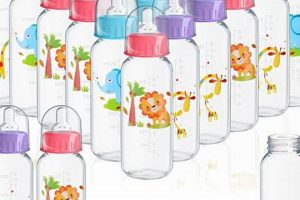
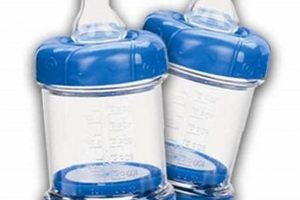
Infant feeding containers made from glass and designed to be free from harmful chemicals represent a significant option for parents seeking safe alternatives. These products are typically manufactured using borosilicate or soda-lime glass, materials known for their durability and resistance to thermal shock. An example would be a bottle constructed from borosilicate glass, accompanied by a silicone nipple and a polypropylene collar.
The significance of these alternatives lies in their inert nature; glass does not leach chemicals into the contents, even when heated. This characteristic contrasts with some plastics that may release substances like Bisphenol A (BPA) or phthalates, which have raised health concerns. Historically, glass was the primary material for baby bottles, but it was largely replaced by plastic due to its lighter weight and perceived shatter resistance. However, growing awareness of potential health risks associated with certain plastics has led to a resurgence in the popularity of glass options.
The following sections will delve into the material properties, safety standards, cleaning and sterilization procedures, and potential environmental impact associated with selecting these feeding containers for infants. Further considerations include comparing these bottles against alternative materials and addressing concerns about breakage and overall suitability.
Guidance on Utilizing Glass-Based Infant Feeding Vessels
The following recommendations aim to assist in the proper selection, use, and maintenance of glass feeding vessels for infants, promoting safety and longevity.
Tip 1: Material Verification: Prior to purchase, confirm the glass composition. Borosilicate glass is preferred due to its enhanced thermal shock resistance and durability compared to standard soda-lime glass.
Tip 2: Inspection for Damage: Routinely inspect the bottles for chips, cracks, or other signs of damage before each use. Discontinue use and replace the bottle immediately if any imperfections are detected. A visual inspection under adequate lighting is necessary.
Tip 3: Gradual Temperature Changes: Avoid abrupt temperature shifts. Allow bottles to reach room temperature before refrigerating or freezing. When warming, do so gradually using a bottle warmer or placing the bottle in a container of warm water.
Tip 4: Sterilization Protocols: Adhere to manufacturer-recommended sterilization procedures. Boiling, steaming, or the use of a dedicated sterilizer are acceptable methods. Ensure the bottle is completely cooled before handling after sterilization.
Tip 5: Proper Cleaning Practices: Wash bottles thoroughly with hot, soapy water after each feeding. Use a bottle brush to clean all internal surfaces, including threads and crevices. Rinse completely to remove any residual soap.
Tip 6: Safe Handling Practices: Exercise caution when handling glass bottles, particularly when wet. Use a secure grip to prevent accidental drops. Consider using a protective sleeve or cover to mitigate the risk of breakage.
Tip 7: Storage Considerations: Store bottles in a safe and secure location, away from potential impact or extreme temperatures. Consider designated storage containers or cabinets to prevent accidental damage.
Adherence to these recommendations will contribute to the safe and effective use of glass-based infant feeding vessels, mitigating potential hazards and maximizing product lifespan.
The following sections will address common concerns, alternative feeding methods, and long-term considerations for infant nutrition.
1. Material Safety

The concept of Material Safety is intrinsically linked to the selection and utilization of glass infant feeding bottles. The primary concern revolves around the potential for chemical leaching from the bottle material into the infant’s ingested liquid, be it formula or breast milk. Traditional plastic bottles have faced scrutiny due to the presence of substances like Bisphenol A (BPA) and phthalates, which have been shown to disrupt endocrine function and pose potential health risks, particularly in developing infants. The inherent advantage of glass, specifically borosilicate or soda-lime glass, is its chemical inertness. Because of its composition, it does not release these potentially harmful substances into the contents, irrespective of temperature fluctuations or prolonged storage. Therefore, the use of glass directly addresses concerns regarding Material Safety, offering a reduction in exposure to chemicals associated with adverse health effects. For example, a parent chooses glass specifically to avoid the reported issues of BPA-containing plastics, believing that this decision reduces their child’s risk. Thus, using glass as a material ensures safety.
The practical significance of this understanding is reflected in manufacturing standards and labeling practices. Bottles marketed as “BPA-free” or “phthalate-free” attempt to mitigate plastic concerns, but glass inherently provides that assurance without additional labeling. Furthermore, the longevity of glass bottles contributes to sustained Material Safety. Plastic bottles can degrade over time with repeated use and sterilization, potentially increasing the risk of chemical release. Glass, however, retains its structural and chemical integrity for a longer duration, ensuring consistent protection against contamination. For instance, repeated sterilization processes, crucial for infant hygiene, pose no increased risk of chemical release from a glass bottle, while some plastics may exhibit degradation after repeated exposure to high temperatures.
In conclusion, the selection of glass for infant feeding bottles directly correlates to heightened Material Safety due to the material’s inherent chemical inertness and durability. While challenges related to breakage exist, the benefits concerning the absence of chemical leaching outweigh the risks for many caregivers prioritizing the health and well-being of infants. This approach aligns with broader efforts to reduce infant exposure to potentially harmful chemicals, supporting the selection of safer feeding products. Furthermore, ongoing research into glass composition and manufacturing processes continues to refine the safety profile of this material, providing parents with increased confidence in their choices.
2. Thermal Resistance

Thermal resistance, as a property of materials used in infant feeding bottles, dictates the ability of the bottle to withstand rapid temperature changes without fracturing or degrading. This characteristic is of paramount importance in the context of glass feeding bottles, which are frequently subjected to heating and cooling cycles during sterilization, warming of formula or breast milk, and subsequent refrigeration. Insufficient thermal resistance can lead to structural failure, posing a safety hazard to the infant and caregiver. For instance, a glass bottle made from substandard glass may shatter when moved from a refrigerator to a bottle warmer, resulting in potential cuts and contamination of the infant’s food. The composition of the glass, specifically the presence of borosilicate, significantly enhances this resistance compared to standard soda-lime glass.
The correlation between thermal resistance and safety is direct. High thermal resistance ensures the integrity of the bottle throughout its lifecycle, minimizing the risk of breakage and subsequent exposure to sharp fragments. Furthermore, the enhanced durability afforded by superior thermal resistance reduces the likelihood of micro-cracks forming, which can harbor bacteria and compromise hygiene. In practical application, this means a borosilicate glass bottle can withstand repeated sterilization cycles in boiling water or a steam sterilizer without exhibiting signs of stress or degradation, while a bottle with lower thermal resistance may develop cracks or become more prone to shattering. Consequently, adhering to manufacturer-recommended sterilization procedures and avoiding extreme temperature fluctuations are critical for maintaining the bottle’s structural integrity.
In conclusion, thermal resistance is a key determinant of the safety and longevity of glass infant feeding bottles. The selection of appropriate glass composition, coupled with responsible handling practices, mitigates the risks associated with temperature-induced stress. This understanding reinforces the significance of considering material properties when choosing infant feeding equipment and underscores the necessity of adhering to established guidelines for cleaning and sterilization.
3. Chemical Inertness

Chemical inertness, concerning infant feeding bottles, denotes the material’s resistance to reacting with substances it contacts, particularly liquids intended for consumption by infants. The inherent chemical inertness of glass constitutes a primary rationale for its adoption in constructing feeding bottles, specifically those marketed as non-toxic. Glass, being an amorphous solid composed primarily of silica, exhibits minimal interaction with the constituents of infant formula or breast milk. This lack of reactivity prevents the leaching of potentially harmful chemicals from the bottle material into the infant’s food, thereby mitigating the risk of exposure to toxins. For instance, when acidic or alkaline solutions are stored in glass containers, no significant alteration in the solution’s chemical composition occurs due to the glass’s unreactive nature. In contrast, some plastics can release chemicals such as BPA or phthalates under similar conditions.
The practical significance of chemical inertness extends to various aspects of bottle usage. Sterilization procedures, which often involve exposure to high temperatures and aqueous environments, do not compromise the integrity of glass. Glass maintains its chemical stability, ensuring no introduction of foreign substances into the subsequent feeding. This contrasts with certain plastic materials that may degrade or leach chemicals upon repeated sterilization. Furthermore, the absence of chemical interaction preserves the nutritional value and taste of the contents. Breast milk, in particular, contains sensitive bioactive components that could be altered by reactive materials. The use of glass effectively protects these components, ensuring the infant receives the intended nutritional benefits. Consider the scenario where breast milk is stored in a glass bottle. The lipids, proteins, and vitamins remain unaltered, whereas a reactive container might compromise the milk’s composition.
In conclusion, chemical inertness forms a critical attribute contributing to the safety and non-toxic nature of glass infant feeding bottles. It provides a barrier against chemical contamination, preserves the integrity of the contents, and withstands sterilization processes without degradation. While concerns related to breakage and weight exist, the chemical inertness of glass represents a significant advantage, aligning with the objective of minimizing infant exposure to potentially harmful substances and supporting optimal infant health.
4. Breakage Potential
Breakage potential constitutes a primary concern associated with glass infant feeding bottles. The inherent fragility of glass, compared to plastic alternatives, presents a risk of shattering upon impact or thermal shock. This potential for breakage directly impacts safety, as shattered glass poses a laceration hazard and can contaminate the contents intended for infant consumption. For example, dropping a glass bottle onto a hard surface can result in fragmentation, necessitating careful cleanup to prevent injury and rendering the remaining contents unusable. The material composition, thickness, and design of the bottle influence its resistance to breakage; however, even reinforced glass remains susceptible to damage under sufficient force.
The practical implications of breakage potential necessitate careful handling and storage protocols. The use of protective sleeves or silicone covers can mitigate the risk of shattering by cushioning the bottle against impacts. Furthermore, awareness of thermal shock rapid temperature changes is crucial. Sudden transitions from refrigeration to boiling water, for instance, can induce stress fractures in the glass, increasing the likelihood of breakage. Manufacturers often recommend gradual warming methods to minimize this risk. Additionally, proper storage, away from edges and in designated compartments, helps to prevent accidental falls.
Mitigating the breakage potential of glass infant feeding bottles requires a multi-faceted approach, encompassing material science, product design, and user behavior. While glass offers the advantage of chemical inertness, the inherent fragility necessitates a conscious effort to minimize the risk of breakage through careful handling and protective measures. Ongoing advancements in glass manufacturing aim to enhance durability, but a collaborative approach between manufacturers and users remains essential for ensuring safety.
5. Cleaning Ease
The characteristic of cleaning ease holds significant relevance when evaluating infant feeding bottles, particularly those constructed from glass and marketed as non-toxic. The ability to effectively sanitize these bottles directly impacts infant health and safety by minimizing the risk of bacterial contamination.
- Surface Properties and Residue Removal
Glass, by nature, possesses a smooth, non-porous surface. This property inherently facilitates the removal of milk or formula residue during cleaning. Unlike some plastics that can exhibit microscopic crevices where bacteria can accumulate, the smooth surface of glass allows for thorough cleaning with standard brushes and detergents. For example, after feeding, residual milk proteins readily adhere to the inside of a bottle; however, on a glass surface, these proteins are more easily dislodged during washing than on a scratched or porous plastic surface.
- Resistance to Staining and Odor Retention
Glass exhibits a high degree of resistance to staining and odor retention, even after prolonged use. This characteristic ensures that previous feedings do not impart lingering odors or discoloration to subsequent feedings. Conversely, certain plastics may absorb pigments or odors from formula or breast milk, necessitating more rigorous cleaning protocols or eventual replacement. The inertness of glass also prevents the leaching of these absorbed substances back into the infant’s food.
- Compatibility with Sterilization Methods
Glass bottles are compatible with a broad range of sterilization methods, including boiling, steaming, and chemical sterilization. These methods effectively eliminate harmful bacteria that may persist even after thorough washing. The thermal stability of glass allows it to withstand the high temperatures associated with sterilization without degrading or releasing harmful chemicals. Some plastic alternatives may be unsuitable for certain sterilization methods due to concerns about chemical leaching or structural damage.
- Visual Inspection for Cleanliness
The transparency of glass allows for easy visual inspection to confirm cleanliness. Caregivers can readily identify any remaining residue or buildup after washing, ensuring that the bottle is thoroughly sanitized before each use. Opaque plastic bottles, in contrast, can obscure the presence of residual milk or formula, increasing the risk of inadvertent contamination.
The interconnectedness of surface properties, resistance to staining, sterilization compatibility, and visual inspection underscores the significance of cleaning ease in relation to glass infant feeding bottles. These factors collectively contribute to the overall safety and hygiene of the feeding process, ensuring that infants receive nourishment free from harmful contaminants. The ease with which glass bottles can be cleaned and sterilized further reinforces their position as a viable choice for caregivers prioritizing infant health.
6. Weight Considerations

Weight considerations form a critical aspect when evaluating glass infant feeding bottles marketed for their non-toxic properties. The increased weight of glass compared to plastic counterparts introduces several implications for both the caregiver and the infant. The added weight can influence handling ease, particularly during prolonged feeding sessions, and may pose challenges for infants learning to hold the bottle independently. A heavier bottle increases the physical demand on the caregiver, potentially leading to fatigue or discomfort. For instance, a parent holding a glass bottle filled with formula for twenty minutes may experience greater arm strain compared to holding a lighter plastic bottle of similar capacity. Similarly, an infant attempting to self-feed may struggle to manage the weight of a full glass bottle, potentially resulting in spills or frustration.
The practical consequences extend to portability and storage. A collection of glass bottles occupies more weight than an equivalent number of plastic bottles, affecting the convenience of transporting feeding supplies when traveling or on outings. This difference influences the choice of diaper bags and the ease of maneuvering with essential baby gear. Furthermore, the increased weight impacts the stability of bottle racks or storage systems, requiring robust designs to accommodate the heavier load. Therefore, weight considerations are not merely a matter of convenience but have implications for safety, usability, and logistical planning in daily routines.
In summary, weight considerations represent a significant trade-off in the selection of glass infant feeding bottles. While glass offers the advantage of chemical inertness and reduced risk of leaching, the added weight introduces challenges related to handling, portability, and storage. Addressing these challenges may involve strategies such as selecting smaller bottle sizes, using bottle sleeves with enhanced grip, and optimizing storage solutions. A thorough evaluation of these factors enables caregivers to make informed decisions that balance the benefits of non-toxic materials with practical considerations of daily use.
7. Nipple Compatibility

Nipple compatibility represents a crucial, yet often overlooked, aspect of selecting glass infant feeding bottles marketed as non-toxic. The interface between the bottle and the infant is primarily mediated through the nipple; therefore, its material composition, design, and secure fit directly influence feeding efficacy and infant safety. The selection of a compatible nipple is not merely a matter of convenience but a determinant of the overall benefits derived from using a non-toxic glass bottle. For instance, a glass bottle inherently free of BPA becomes functionally compromised if paired with a nipple constructed from materials containing harmful chemicals that can leach into the infant’s saliva during feeding. This scenario underscores the importance of a holistic approach to non-toxic feeding solutions, where every component adheres to stringent safety standards. The effect of incorrect nipple selection can range from poor latch and increased air intake during feeding, leading to colic and discomfort, to the ingestion of potentially harmful chemicals, thereby negating the advantages of a non-toxic glass bottle.
The practical application of understanding nipple compatibility involves careful consideration of several factors. The material of the nipple, typically silicone or rubber, should be certified as food-grade and free from harmful additives. The nipple’s shape and flow rate must align with the infant’s age and developmental stage to promote comfortable and efficient feeding. A secure fit between the nipple and the glass bottle is essential to prevent leakage and minimize air intake. Many manufacturers offer proprietary nipple designs specifically engineered for their glass bottles, ensuring optimal compatibility and performance. Real-world examples include instances where parents reported reduced colic symptoms after switching to a correctly sized and appropriately designed nipple for their glass bottles, highlighting the tangible benefits of proper nipple selection. Furthermore, consistent monitoring for signs of nipple wear and tear is necessary to prevent potential hazards, such as small pieces detaching and posing a choking risk.
In conclusion, nipple compatibility is an integral component of ensuring the safety and efficacy of non-toxic glass infant feeding bottles. It necessitates a comprehensive evaluation of the nipple’s material, design, and fit, alongside consistent monitoring for signs of degradation. The selection of a compatible nipple maximizes the benefits of using a non-toxic glass bottle, promoting optimal infant health and well-being. Challenges remain in standardizing nipple designs across different bottle brands; however, adherence to established safety guidelines and careful consideration of infant-specific needs can mitigate potential risks. The choice of a glass bottle should not be viewed in isolation but as part of a complete feeding system, where nipple compatibility plays a pivotal role in achieving the desired outcomes.
Frequently Asked Questions
The following questions address common concerns and provide factual information regarding glass infant feeding bottles designed to minimize exposure to harmful chemicals.
Question 1: Are all glass baby bottles truly non-toxic?
While glass inherently minimizes the risk of chemical leaching, it is crucial to verify the composition of all bottle components, including the nipple and collar. Ensure these components are labeled as BPA-free, phthalate-free, and made from food-grade materials.
Question 2: How does glass compare to plastic in terms of safety for infant feeding?
Glass offers a significant advantage regarding chemical inertness. Unlike certain plastics, glass does not leach harmful substances into the contents, even when heated or sterilized. However, the risk of breakage remains a primary consideration.
Question 3: What type of glass is best suited for infant feeding bottles?
Borosilicate glass is generally preferred due to its superior thermal shock resistance and durability compared to standard soda-lime glass. This reduces the likelihood of breakage during temperature fluctuations.
Question 4: How should glass baby bottles be properly cleaned and sterilized?
Glass bottles can be effectively cleaned with hot, soapy water and a bottle brush. Sterilization can be achieved through boiling, steaming, or the use of a dedicated sterilizer. Always adhere to the manufacturer’s instructions for both cleaning and sterilization procedures.
Question 5: What precautions should be taken to prevent glass baby bottles from breaking?
Handle glass bottles with care, avoiding sudden impacts or extreme temperature changes. Consider using a protective silicone sleeve to cushion the bottle. Inspect bottles regularly for chips or cracks, and discontinue use if any damage is detected.
Question 6: Are there any specific guidelines for warming liquids in glass baby bottles?
Avoid rapid temperature transitions. Allow refrigerated bottles to warm gradually, either at room temperature or in a bottle warmer. Never microwave glass bottles, as this can cause uneven heating and increase the risk of breakage.
The informed selection and conscientious use of these bottles represent a proactive approach to infant health, prioritizing material safety and minimizing potential exposure to harmful chemicals.
The next section will address the long-term environmental impact of various bottle materials and explore sustainable disposal practices.
Conclusion
The preceding exploration of non toxic glass baby bottles illuminates critical aspects of infant feeding equipment selection. Chemical inertness, thermal resistance, and cleaning ease distinguish glass options. However, breakage potential and weight considerations necessitate careful handling and informed decision-making. Thorough understanding of these factors empowers caregivers to prioritize infant well-being.
The convergence of scientific understanding and parental responsibility demands a continued focus on safer feeding alternatives. The future necessitates ongoing research into enhanced glass formulations and standardized safety protocols. Prioritizing infant health through informed product selection remains a paramount responsibility.