

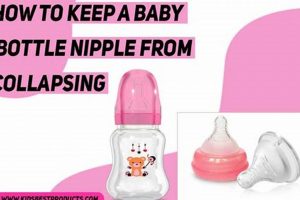

A vacuum forming inside an infant feeding bottle is the primary cause of nipple inversion during feeding. This phenomenon occurs when the pressure inside the bottle becomes significantly lower than the atmospheric... Read more »

The act of an infant using their teeth to latch onto and potentially damage the artificial teat of a feeding bottle is a common, albeit concerning, behavior. This action can range from... Read more »


Infants sometimes exhibit a behavior where they mouth or gnaw on the bottle’s teat without actively sucking and swallowing. This action differs from the intended method of feeding, which involves creating a... Read more »

Infant feeding equipment includes a critical component designed to deliver nourishment: the artificial teat. These teats, constructed from materials like silicone or rubber, come in varied designs, each engineered to regulate flow... Read more »

The phenomenon where a bottle’s feeding component flattens or inverts during use stems from a pressure imbalance. This occurs when the negative pressure created by the infant’s sucking exceeds the bottle’s capacity... Read more »