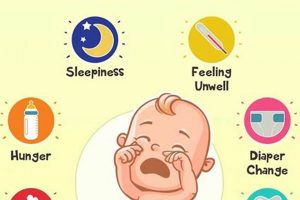
Infant sleep crying, characterized by seemingly spontaneous episodes of distress during sleep, is a common occurrence in early childhood. These episodes can range in intensity and duration, and are often perplexing for caregivers to understand and manage. Understanding the underlying causes is essential for providing appropriate comfort and care.
Comprehending the potential origins of sleep crying offers significant benefits to parents and infants alike. It can alleviate parental anxiety associated with the seemingly inexplicable distress, and it facilitates the implementation of targeted interventions to address the root causes. Historically, various cultural beliefs and medical theories have attempted to explain this phenomenon, highlighting the ongoing need for evidence-based understanding.
The subsequent discussion will explore physiological factors such as sleep cycles and hunger, environmental influences like room temperature and noise, and potential medical conditions that might contribute to these nocturnal crying episodes. Additionally, common coping strategies and when to seek professional medical advice will be addressed.
Understanding Infant Sleep Crying
Addressing infant sleep crying requires a systematic approach that considers various factors and aims to promote both infant comfort and parental well-being.
Tip 1: Track Sleep Patterns: Maintaining a detailed record of the infant’s sleep-wake cycles, including nap times and duration, helps identify potential triggers or patterns associated with crying episodes.
Tip 2: Evaluate Feeding Schedules: Inconsistent feeding intervals or insufficient caloric intake can contribute to nocturnal distress. Adjust feeding times to align with the infant’s needs and ensure adequate nourishment before bedtime.
Tip 3: Optimize the Sleep Environment: The ambient temperature, lighting, and noise levels within the infant’s sleep environment should be carefully regulated. A cool, dark, and quiet room is generally conducive to restful sleep.
Tip 4: Implement a Consistent Bedtime Routine: Establishing a predictable sequence of events leading up to bedtime can promote relaxation and signal to the infant that it is time to sleep. This may include a warm bath, gentle massage, or quiet story time.
Tip 5: Address Potential Medical Issues: If the crying is accompanied by other symptoms such as fever, congestion, or signs of discomfort, consult a pediatrician to rule out underlying medical conditions such as reflux or colic.
Tip 6: Consider Teething: Teething discomfort can disrupt sleep patterns and induce crying. Offering a chilled teething ring or administering appropriate pain relief medication, as directed by a pediatrician, may alleviate symptoms.
Tip 7: Observe for Signs of Overtiredness: Putting an infant to bed when overly tired can paradoxically lead to increased crying and restlessness. Watch for early signs of fatigue, such as eye rubbing or fussiness, and initiate the bedtime routine promptly.
Implementing these strategies can help reduce the frequency and intensity of infant sleep crying, fostering a more peaceful sleep environment for both the infant and caregivers.
Consulting with a healthcare professional is recommended if the crying persists or is accompanied by concerning symptoms.
1. Hunger

Hunger stands as a primary instigator of infant distress, directly impacting sleep patterns and frequently manifesting as unexplained nocturnal crying. A lack of adequate caloric intake can rouse a sleeping infant, triggering crying as a means of communication.
- Metabolic Needs
Infants possess high metabolic rates and small stomach capacities, necessitating frequent feedings, particularly in the early months. If the period between feedings extends beyond an infant’s tolerance, hypoglycemia can occur, prompting the baby to wake and cry. The frequency and volume of feedings directly correlate with the infant’s ability to sleep soundly through extended periods.
- Growth Spurts
Infants experience periods of rapid growth that elevate their caloric demands. During a growth spurt, a previously satisfied infant may suddenly require more frequent feedings, even during the night. Crying during sleep may indicate an unmet increase in nutritional needs that must be addressed to restore sleep.
- Feeding Schedules and Routines
Inconsistent or overly restrictive feeding schedules may contribute to nocturnal hunger cues. Implementing responsive feeding practices, where feedings are provided on demand, can align with the infant’s individual needs and reduce hunger-related crying. Daytime feeding patterns significantly impact nighttime sleep and comfort.
- Inefficient Feeding
An infant might not be efficiently extracting milk during breastfeeding or consuming sufficient formula during bottle feeding, resulting in inadequate caloric intake despite frequent feedings. Poor latch during breastfeeding or incorrect bottle nipple size can hinder effective feeding and contribute to hunger-related crying during sleep. Addressing these feeding challenges is critical for ensuring adequate nourishment and improving sleep quality.
The connection between hunger and sleep crying underscores the necessity of attentive monitoring of feeding cues and patterns. Addressing hunger-related awakenings with appropriate feeding strategies can significantly minimize unexplained crying episodes and promote more restful sleep for the infant and caregivers.
2. Discomfort
Discomfort serves as a potent catalyst for infant sleep crying, frequently manifesting as seemingly random episodes of nocturnal distress. Various sources of physical unease can disrupt an infant’s sleep, triggering crying as a primary communication method. The identification and mitigation of these discomfort factors are crucial in addressing sleep disturbances.
Diaper wetness or soiling presents a common source of irritation. Prolonged exposure to moisture can lead to skin irritation and dermatitis, instigating crying episodes. Temperature fluctuations also contribute significantly. Overheating or feeling cold can disrupt sleep and prompt a crying response. Restrictive clothing or uncomfortable sleeping positions can additionally provoke distress, disrupting sleep continuity. The presence of skin irritations, such as eczema or rashes, heightens sensitivity and can easily awaken an infant. Similarly, the discomfort associated with gas or colic can manifest during sleep, causing sudden bouts of crying. Understanding these diverse physical discomforts empowers caregivers to proactively address and alleviate these issues, contributing to improved sleep patterns.
Addressing discomfort requires vigilant observation and proactive intervention. Regular diaper changes, appropriate temperature regulation, comfortable clothing choices, and gentle massage techniques can mitigate potential sources of irritation. Recognizing and responding to these discomfort cues plays a pivotal role in minimizing unexplained sleep crying and fostering a more restful sleep environment for the infant. Consistent attention to these factors not only enhances infant comfort but also promotes a sense of security and well-being, contributing to improved sleep quality and reduced parental anxiety.
3. Sleep Cycle

Infant sleep cycles significantly influence the occurrence of seemingly random crying episodes during sleep. Understanding the distinct phases of infant sleep is crucial for interpreting these nocturnal disturbances and implementing effective soothing strategies.
- Active Sleep (REM)
Active sleep, characterized by rapid eye movements (REM), accounts for a substantial portion of an infant’s sleep time. During this phase, the infant is more likely to exhibit motor activity, including facial twitches, limb movements, and vocalizations. Arousal thresholds are lower during REM sleep, rendering the infant more susceptible to external stimuli and spontaneous awakenings, which may manifest as crying. This phase is crucial for brain development but also presents a heightened risk for sleep disruptions.
- Quiet Sleep (Non-REM)
Quiet sleep, also known as non-REM sleep, involves deeper, more restful sleep stages. In this phase, the infant’s body is more still, and breathing is more regular. Arousal thresholds are higher, making it less likely for external stimuli to trigger awakenings. However, brief arousals can still occur as the infant transitions between sleep stages. Crying episodes during quiet sleep may indicate more significant underlying issues such as pain or discomfort.
- Sleep Stage Transitions
Infants transition through various sleep stages multiple times during a sleep cycle, which is typically shorter than that of adults. These transitions are periods of increased vulnerability to awakenings and crying. During these transitions, the infant may experience brief periods of lighter sleep, making them more responsive to internal and external cues. Incomplete transitions can lead to partial arousals and crying, particularly if the infant is experiencing discomfort or hunger.
- Developmental Changes in Sleep Cycles
Infant sleep cycles evolve significantly during the first year of life. Newborns have shorter sleep cycles with a greater proportion of active sleep, while older infants gradually develop longer sleep cycles with more consolidated periods of quiet sleep. Changes in the structure of sleep cycles can affect the frequency and timing of crying episodes. As sleep cycles mature, crying may become less frequent and more associated with specific needs or discomforts.
The intricate interplay between infant sleep cycles and external factors contributes to the complexity of seemingly random sleep crying. Recognizing the patterns and developmental changes in sleep cycles enables caregivers to differentiate between normal sleep behaviors and signs of potential underlying issues, facilitating targeted interventions and promoting improved sleep quality.
4. Overtiredness
Overtiredness constitutes a significant precipitant of infant sleep disturbances, frequently manifesting as seemingly inexplicable episodes of crying during sleep. When an infant remains awake beyond their optimal window of wakefulness, the body initiates a stress response, leading to the release of cortisol and adrenaline. These hormones, while essential for alertness in appropriate contexts, can disrupt sleep architecture and render the infant more susceptible to crying spells during both sleep onset and throughout the night. The physiological consequence of overtiredness is a hyperarousal state that impairs the infant’s ability to self-soothe and transition smoothly between sleep cycles. A common scenario involves an infant missing a scheduled nap, resulting in increased fussiness and resistance to subsequent sleep attempts, ultimately culminating in crying episodes during sleep as the accumulated sleep debt exacerbates sleep fragmentation.
Recognizing the subtle cues of infant fatigue proves crucial in averting overtiredness and mitigating associated sleep disruptions. Early indicators may include eye rubbing, yawning, decreased activity levels, and increased fussiness. Proactive intervention involves promptly initiating sleep routines upon observing these signs, thereby preventing the escalation of stress hormones and promoting a more relaxed state conducive to sleep. For example, consistently adhering to age-appropriate wake windows and establishing a predictable bedtime routine can significantly reduce the incidence of overtiredness-induced crying episodes. Furthermore, understanding an infant’s individual sleep needs and adjusting daily schedules accordingly represents a cornerstone of effective sleep management. Failure to address overtiredness often leads to a cycle of poor sleep, characterized by frequent awakenings and prolonged crying spells, creating challenges for both the infant and caregivers.
In summary, overtiredness plays a critical role in the etiology of infant sleep crying, primarily through the disruption of hormonal balance and the impairment of self-soothing mechanisms. Prioritizing timely sleep opportunities and responding promptly to early fatigue cues are essential strategies for preventing overtiredness and promoting more consolidated, restful sleep. Addressing this factor contributes significantly to reducing the frequency and intensity of crying episodes during sleep and improving the overall sleep quality for infants, benefiting their development and well-being while alleviating parental stress.
5. Medical Issues

Medical conditions can significantly contribute to infant sleep crying, presenting as seemingly random episodes of distress during sleep. Identifying and addressing these underlying medical factors is crucial for effectively managing and resolving persistent nocturnal crying.
- Gastroesophageal Reflux (GER)
GER involves the backward flow of stomach contents into the esophagus, causing discomfort and pain, particularly when lying down. This reflux can disrupt sleep and trigger crying episodes. Symptoms may include arching of the back, frequent spitting up, and irritability. Medical intervention, such as dietary modifications or medication, may be necessary to alleviate reflux-related sleep disturbances.
- Colic
Colic is characterized by excessive, inconsolable crying in an otherwise healthy infant. While the exact cause of colic remains unknown, it can disrupt sleep and lead to prolonged crying spells, particularly in the evenings and during the early night. Management strategies may include dietary adjustments, soothing techniques, and, in some cases, medication to alleviate discomfort.
- Food Allergies and Intolerances
Food allergies or intolerances can manifest as gastrointestinal distress, skin rashes, or respiratory symptoms, disrupting sleep and inducing crying. Common culprits include cow’s milk protein, soy, and gluten. Identifying and eliminating offending foods from the infant’s diet or the breastfeeding mother’s diet can improve sleep quality and reduce crying episodes.
- Infections
Infections, such as ear infections or upper respiratory infections, can cause pain and discomfort, disrupting sleep and leading to increased crying. Accompanying symptoms may include fever, congestion, and irritability. Prompt medical diagnosis and treatment of infections are essential for restoring comfort and promoting restful sleep.
The presence of medical issues should be considered when investigating persistent infant sleep crying. A thorough medical evaluation can help identify underlying conditions and guide appropriate treatment strategies. Addressing these medical factors can significantly improve sleep quality and reduce the frequency and intensity of nocturnal crying episodes.
Frequently Asked Questions
This section addresses common inquiries regarding seemingly random instances of crying during infant sleep. It offers concise and informative responses to prevalent concerns.
Question 1: Is occasional crying during infant sleep normal?
Brief episodes of crying during infant sleep are frequently within the realm of typical behavior. These instances can correlate with sleep cycle transitions, minor discomforts, or fleeting hunger cues. However, persistent, excessive, or inconsolable crying warrants further investigation.
Question 2: How can differentiate between normal sleep crying and a more serious issue?
Normal sleep crying often involves brief vocalizations or whimpers that cease relatively quickly without intervention. In contrast, crying indicative of a more serious issue tends to be prolonged, intense, and accompanied by other symptoms, such as fever, feeding difficulties, or changes in bowel habits. Consultation with a healthcare professional is advised when in doubt.
Question 3: What are some immediate steps to take when an infant cries in their sleep?
Initial steps should include a brief assessment of the immediate environment, checking for potential sources of discomfort, such as a soiled diaper or uncomfortable temperature. Gentle soothing techniques, such as a soft voice or gentle touch, may prove effective. If crying persists or escalates, further investigation into underlying causes may be necessary.
Question 4: Can feeding practices influence sleep crying?
Yes, feeding practices exert a notable influence on sleep patterns and the incidence of nocturnal crying. Inadequate caloric intake, inconsistent feeding schedules, or food sensitivities can disrupt sleep and contribute to crying episodes. Optimizing feeding strategies, based on the infant’s age and individual needs, is essential for promoting restful sleep.
Question 5: When should medical advice be sought for sleep crying?
Medical advice is recommended when crying episodes are frequent, prolonged, or accompanied by other concerning symptoms, such as fever, vomiting, diarrhea, or signs of pain. Additionally, if crying significantly impacts the infant’s overall well-being or parental distress levels, seeking professional guidance is prudent.
Question 6: Do sleep training methods address sleep crying?
Sleep training methods may reduce the frequency of crying associated with sleep onset or awakenings. However, these approaches are not appropriate for addressing crying stemming from underlying medical conditions or unmet needs. A comprehensive assessment is essential to determine the suitability of sleep training in addressing sleep crying.
Understanding the nuances of infant sleep crying necessitates a holistic approach that encompasses both physiological and environmental factors. Proactive intervention and timely medical consultation, when warranted, can significantly improve sleep quality and overall well-being.
The following section summarizes the key considerations related to infant sleep crying, offering a concise overview of essential information.
Conclusion
The preceding discussion has comprehensively addressed the multifaceted issue of why does my baby randomly cry in her sleep. Physiological factors like sleep cycles and hunger, environmental influences such as room temperature and noise, and potential underlying medical conditions were examined as contributing elements. Additionally, coping strategies, including tracking sleep patterns, optimizing the sleep environment, and addressing medical issues, were explored. Understanding these factors is paramount for caregivers seeking to minimize these occurrences.
Continued research into infant sleep patterns and the development of effective interventions are crucial for promoting healthy sleep habits and mitigating parental stress. Recognizing the complexity of infant sleep and employing evidence-based approaches remain essential for ensuring optimal infant well-being. Further, when in doubt, consulting with the appropriate medical professional is always advised.