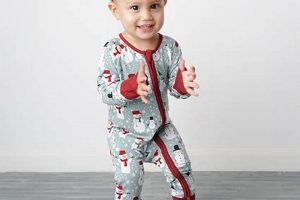
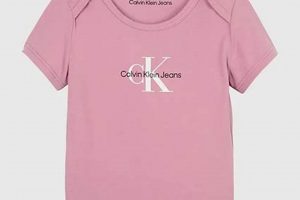
Size 80 in infant apparel represents a specific measurement standard used to categorize clothing for babies. Typically, this size corresponds to babies approximately 9-12 months old, or those measuring around 80 centimeters in height. A garment labeled with this numeric value is designed to accommodate a child within that height range, although weight and body shape can also influence the fit.
Understanding garment sizing allows caregivers to select appropriately fitting attire, promoting comfort and freedom of movement for the infant. Historical context reveals that standardization of clothing sizes, while helpful, still varies by manufacturer and region. Thus, reliance on height measurements alongside age guidelines is often recommended for accurate selection.
The subsequent discussion will delve into comparative sizing charts, potential variations across brands, and offer tips for ensuring a proper and comfortable fit when choosing apparel for growing infants.
Tips on Selecting Size 80 Infant Apparel
Proper sizing of infant clothing is crucial for comfort and unrestricted movement. The following tips provide guidance when selecting garments in the size 80 category.
Tip 1: Consult Size Charts: Always refer to the specific manufacturer’s size chart. Size 80 measurements can vary between brands, and charts provide precise measurements for height, weight, and chest circumference.
Tip 2: Prioritize Height Measurement: While age ranges are often associated with sizes, height is a more reliable indicator. Measure the infant’s height accurately and compare it to the size chart’s recommendations.
Tip 3: Consider Layering Needs: Account for the need to layer clothing, especially in cooler climates. Opting for a slightly larger size ensures that the infant can comfortably wear multiple layers without restriction.
Tip 4: Check Fabric Composition: Natural, breathable fabrics such as cotton are preferred for infant apparel. Synthetic materials may cause irritation or discomfort, especially for infants with sensitive skin.
Tip 5: Examine Seam Construction: Evaluate the garment’s seam construction. Flat seams minimize friction against the infant’s skin, reducing the risk of chafing or irritation. Ensure all seams are securely sewn.
Tip 6: Assess Closure Mechanisms: Closures, such as snaps or zippers, should be easy to operate and positioned away from areas that could cause discomfort. Ensure closures are lead-free and nickel-free.
Tip 7: Allow for Growth: Infants grow rapidly. Select garments with some room for growth to extend the wearability of the item. Avoid excessively tight or restrictive clothing.
By adhering to these tips, caregivers can ensure that apparel labeled size 80 provides optimal comfort, safety, and freedom of movement for the infant.
The following sections will address common challenges encountered when sizing infant clothing and offer solutions for ensuring a perfect fit.
1. Age approximation (9-12 months)
The age approximation of 9-12 months offers an initial, albeit imprecise, reference point in determining the appropriateness of Size 80 infant clothing. This age range corresponds to a period of rapid physical development where infants typically attain a height of approximately 80 centimeters. While the age guideline provides a general estimate, it is essential to recognize its limitations. Developmental variability among infants dictates that relying solely on age can result in ill-fitting garments. For instance, a nine-month-old experiencing a growth spurt may already require a larger size, whereas a twelve-month-old with a smaller stature may still comfortably fit within size 80 parameters.
The primary significance of the age approximation lies in its utility as a preliminary filter when browsing or selecting infant apparel. Parents or caregivers can utilize this information to narrow their focus, effectively streamlining the selection process. However, the correlation between age and size must be considered in conjunction with more precise indicators, such as the infant’s height and weight. Real-life examples underscore the importance of this holistic approach. Purchasing size 80 clothing solely based on the 9-12 month age range, without verifying height, may lead to the acquisition of items that are either too small, restricting movement and potentially causing discomfort, or too large, posing safety hazards due to excess fabric.
In summary, while the age approximation of 9-12 months provides a contextual starting point, its relevance to Size 80 infant clothing hinges on its integration with other sizing metrics. Over-reliance on age alone disregards the inherent variability in infant development, potentially leading to improper fit and compromised comfort. Height and weight measurements, therefore, serve as more reliable indicators, facilitating informed purchasing decisions that prioritize the infant’s well-being.
2. Height equivalent (80 centimeters)

The height equivalent of 80 centimeters serves as the primary determinant of size 80 in infant apparel. This measurement signifies that the garment is designed to fit an infant whose height approximates 80 centimeters. The connection is direct and causative: the garment’s dimensions are predicated upon accommodating this specific height range. The importance of the 80-centimeter height equivalence cannot be overstated, as it provides a standardized metric for caregivers to select clothing that aligns with the infant’s physical proportions. Without this height designation, size 80 would be an arbitrary label, lacking a consistent and reliable basis for selection.
Real-life scenarios underscore the practical significance of understanding this height equivalence. For instance, a caregiver measuring an infant’s height at 78 centimeters would reasonably anticipate that a size 80 garment will offer a suitable fit, potentially with some room for growth. Conversely, an infant measuring 83 centimeters would likely find a size 80 garment restrictive and uncomfortable, necessitating a larger size. This highlights the practical application of the height measurement in guiding purchasing decisions and ensuring optimal comfort for the infant. Further considerations should include the garment’s cut and style, as variations in these attributes may influence the overall fit, even when the height equivalence is appropriately matched.
In conclusion, the 80-centimeter height equivalence forms the foundational basis for size 80 infant clothing. Its importance lies in providing a tangible and measurable standard for ensuring appropriate fit. Understanding this connection empowers caregivers to make informed purchasing decisions, prioritizing infant comfort and safety. While other factors, such as fabric type and garment design, may also influence fit, the height equivalence remains the critical starting point in the selection process. Ignoring this measurement can lead to ill-fitting garments, undermining the intended purpose of providing comfortable and functional attire for the growing infant.
3. Brand variance (sizing discrepancies)

Brand variance in infant apparel sizing represents a significant challenge when determining what constitutes a size 80 garment. Discrepancies across manufacturers undermine the perceived uniformity of numeric sizing, necessitating careful consideration beyond the simple designation of “80.” This variance stems from differing approaches to measurement, grading, and manufacturing standards.
- Measurement Methodology
Each brand may employ a unique methodology for measuring garment dimensions corresponding to size 80. These variations include differences in the points of measurement (e.g., length, width, sleeve length) and the degree of tolerance allowed in production. Consequently, a size 80 onesie from one brand could exhibit notable differences in actual dimensions compared to a size 80 onesie from another brand. This necessitates consulting individual brand size charts.
- Grading Systems
Grading systems, the process by which a sample size is proportionally scaled to create other sizes, also contribute to variance. Different grading rules applied to size 80 can result in variations in the overall shape and proportions of the garment. One brand’s size 80 may be wider or longer than another’s, even if the basic measurements appear similar. This becomes especially relevant when considering the fit for infants with diverse body types.
- Manufacturing Tolerances
Manufacturing tolerances, or acceptable deviations from intended specifications, further compound sizing discrepancies. Even if brands adhere to similar measurement and grading systems, variations in production processes can lead to size inconsistencies. A size 80 garment may, within acceptable limits, deviate slightly from the specified dimensions. These seemingly minor discrepancies can accumulate, resulting in a noticeable difference in fit.
- Regional Standards
Regional sizing standards, where they exist, may also influence brand variance. Companies adhering to European standards might produce size 80 garments that differ from those following North American or Asian standards. This disparity is particularly relevant for international consumers purchasing apparel from brands originating in different regions.
Ultimately, brand variance underscores the limitations of relying solely on numeric sizing when selecting infant apparel. A comprehensive understanding of what constitutes a size 80 requires recognizing that this designation is not universally standardized. Instead, a cautious approach involving consulting brand-specific size charts and considering individual infant measurements is essential for ensuring an appropriate and comfortable fit.
4. Fabric considerations (material impacts fit)

The selection of fabric directly influences the fit of size 80 infant clothing, representing a critical consideration alongside measurements. Material properties such as elasticity, weight, and texture determine how a garment conforms to the infant’s body. For example, a size 80 garment constructed from a rigid, non-stretch fabric like tightly woven cotton may fit differently than a size 80 garment made from a stretchable knit fabric like a cotton-elastane blend. The former will maintain its shape, potentially restricting movement if the cut is not generous, whereas the latter will offer greater flexibility and adaptability to the infant’s form. Consequently, understanding fabric characteristics is essential for predicting the actual fit of apparel labeled as size 80. Failure to account for these factors can result in discomfort and limited mobility for the child, negating the benefits of selecting the correct size based solely on measurements.
Real-life scenarios illustrate this point. A caregiver purchasing a size 80 denim jumpsuit, a fabric known for its relative stiffness, may find that the garment fits snugly or restricts movement around the joints, even if the overall measurements align with the infant’s height. Conversely, a size 80 knit romper made from a soft, stretchy material will likely offer a more comfortable and forgiving fit, accommodating a wider range of body shapes and movements. The weight of the fabric also plays a role; heavier fabrics may drape differently and feel more constricting, while lighter fabrics are generally more breathable and comfortable against the skin. Therefore, it is imperative to consider the interplay between fabric properties and garment design when assessing the suitability of size 80 infant clothing. Practical applications of this understanding include prioritizing fabrics that allow for ease of movement, breathability, and temperature regulation, all of which contribute to the overall comfort and well-being of the infant.
In summary, fabric considerations are an integral component of accurately determining the fit of size 80 infant apparel. Material properties directly impact how a garment conforms to the body, influencing comfort, mobility, and overall wearability. Ignoring these factors in favor of solely relying on size labels can lead to suboptimal choices, compromising the infant’s comfort and potentially hindering their development. By understanding the relationship between fabric characteristics and fit, caregivers can make more informed purchasing decisions, ensuring that size 80 garments provide optimal comfort and functionality for the growing child. The challenge lies in educating consumers about these nuanced factors and encouraging manufacturers to provide detailed fabric information alongside sizing specifications.
5. Comfort priorities (movement restrictions)

The intersection of comfort priorities and potential movement restrictions forms a critical consideration when assessing size 80 infant clothing. Size 80, theoretically designed for infants approximately 9-12 months old or 80 centimeters in height, must facilitate natural movement without impeding development. Garment design, fabric selection, and construction techniques directly impact an infant’s ability to explore and interact with their environment, thereby affecting physical and cognitive development.
- Arm and Leg Mobility
Restricted arm and leg movement can impede gross motor skill development. A size 80 garment should allow for a full range of motion in the limbs, enabling activities such as crawling, reaching, and grasping. Tight sleeves or inseams can hinder these movements. For example, a size 80 onesie with a narrow chest and inflexible fabric may limit arm elevation, affecting an infant’s ability to push up from a prone position or reach for toys. Manufacturers should prioritize designs that accommodate natural limb movement, incorporating features such as gussets or stretchable fabrics in critical areas.
- Torso Flexibility
Torso flexibility is essential for developing core strength and coordination. Restrictive waistbands or tight-fitting torso designs can impede an infant’s ability to bend, twist, and sit comfortably. A size 80 garment should allow for these movements without binding or creating pressure points. For instance, overly structured dresses or shirts can restrict torso flexibility, affecting an infant’s balance and coordination. Garments should be designed with a relaxed fit through the torso, utilizing soft, flexible materials that move with the infant’s body.
- Neck and Shoulder Freedom
Unrestricted neck and shoulder movement is critical for visual exploration and fine motor skill development. Tight necklines or restrictive shoulder seams can limit an infant’s ability to turn their head and reach for objects, potentially affecting hand-eye coordination. A size 80 garment should provide ample room around the neck and shoulders, allowing for a full range of motion. For instance, turtlenecks or garments with high, stiff collars can restrict neck movement, hindering visual tracking and exploration. Designs should prioritize open necklines and flexible shoulder constructions.
- Fabric Breathability and Texture
Fabric breathability and texture directly influence comfort and can indirectly impact movement. Non-breathable fabrics can cause overheating and discomfort, leading to irritability and decreased activity. Similarly, rough or irritating textures can cause skin irritation, restricting movement as the infant attempts to avoid discomfort. A size 80 garment should be constructed from breathable, soft fabrics that promote airflow and minimize friction against the skin. Examples include natural fibers like cotton or bamboo, which are known for their breathability and gentle texture.
Ultimately, the value of a size 80 designation in infant apparel hinges on its ability to accommodate comfort priorities and avoid movement restrictions. Manufacturers bear the responsibility of designing garments that facilitate natural development. Caregivers must carefully assess not only the size label but also the garment’s design, fabric, and construction to ensure that it promotes unrestricted movement and optimal comfort for the infant.
6. Growth allowance (room for development)

Growth allowance represents a critical, yet often overlooked, aspect of size 80 infant clothing. Size 80, nominally intended for infants around 9-12 months, inevitably encounters the reality of rapid infant growth. Therefore, incorporating a growth allowanceproviding extra room within the garment beyond the infant’s current measurementsbecomes essential for extending the garment’s usability. The absence of adequate growth allowance effectively renders size 80 a fleeting fit, quickly outgrown, leading to unnecessary expense and inconvenience. This allowance isn’t simply about oversized clothing; it’s about designing garments that accommodate natural development over a defined period, maintaining comfort and functionality.
Practical implementation of growth allowance varies. Some manufacturers achieve this through strategically placed elastic panels, adjustable straps, or simply by designing the garment slightly larger than the minimum size 80 dimensions. Consider a size 80 romper designed with adjustable snap closures at the inseam. This allows caregivers to lengthen the garment as the infant’s torso grows, extending its wearability by several weeks or even months. Conversely, a size 80 dress with a fixed length and tight bodice offers no such allowance and may only fit for a brief period. Fabric choice also influences growth allowance. Stretchable fabrics inherently provide a degree of built-in allowance, conforming to the infant’s changing shape. Clear labeling indicating the garment’s intended growth allowance would greatly benefit consumers. The inclusion of this information empowers caregivers to make informed purchasing decisions, selecting garments that offer both a comfortable fit and extended wear.
In summary, growth allowance is an indispensable component of well-designed size 80 infant apparel. Its presence transforms size 80 from a static measurement into a dynamic range, accommodating the realities of infant growth. Overlooking this aspect diminishes the value proposition of size 80 garments, leading to premature obsolescence and increased expenditure. Ultimately, prioritizing growth allowance benefits both the consumer and the manufacturer, fostering satisfaction and promoting sustainable consumption practices. Further research and development should focus on optimizing growth allowance strategies, ensuring that size 80 garments truly meet the needs of growing infants and their caregivers.
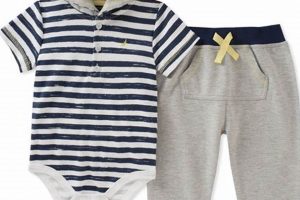
7. Garment type (onesie vs. pants)

The garment type, specifically distinguishing between onesies and pants, significantly influences the interpretation of size 80 in infant apparel. The fit characteristics, functional attributes, and sizing considerations differ substantially between these two common garment styles, necessitating a nuanced understanding beyond the generic size designation.
- Torso Length and Rise Discrepancies
Onesies, characterized by their single-piece construction encompassing the torso and often extending to the legs with snap closures at the crotch, require a precise measurement of torso length to ensure proper fit. A size 80 onesie failing to accommodate the infant’s torso length can result in discomfort, restricted movement, and potential pressure on the diaper area. Conversely, pants, designed as separate leg coverings with a waistband, focus on inseam length and rise (the distance from the waistband to the crotch). A size 80 pair of pants with an inadequate rise can lead to discomfort and difficulty in securing the diaper, while insufficient inseam length results in exposed ankles. Therefore, size 80 represents distinct measurement considerations for onesies versus pants.
- Ease of Movement and Activity Suitability
Onesies, due to their integrated design, offer unrestricted movement for infants during activities such as crawling, rolling, and playing. The single-piece construction minimizes the risk of the garment riding up or exposing the abdomen. Size 80 onesies are particularly suitable for infants who are not yet walking. Pants, while providing coverage for the legs, may present challenges depending on their cut and fabric. Size 80 pants that are too tight or constructed from inflexible materials can restrict movement, particularly during active play. Elastic waistbands, a common feature in infant pants, must be adequately sized to avoid constriction or discomfort.
- Diaper Accommodation and Closure Systems
Onesies, specifically designed to accommodate diapers, typically feature snap closures at the crotch to facilitate diaper changes. The design of these closures and the overall fit of the onesie in the diaper area are critical considerations when assessing a size 80 garment. A poorly designed size 80 onesie may not adequately cover the diaper, leading to leaks or discomfort. Pants, while not directly designed for diaper accommodation, must possess sufficient rise and a comfortable waistband to avoid compression. Size 80 pants with an inadequate rise may cause the diaper to shift or leak. Overalls, a variation of pants, often include adjustable straps to accommodate diaper bulk and growth.
- Layering and Seasonal Adaptability
Both size 80 onesies and pants serve different roles in layering and seasonal adaptation. Onesies, particularly those made from lightweight materials, often function as base layers, providing a comfortable and breathable foundation for additional clothing. Size 80 onesies can be paired with pants, sweaters, or jackets for added warmth. Pants, especially those made from thicker materials such as fleece or corduroy, provide insulation and protection against the elements. Size 80 pants can be layered over onesies or paired with long-sleeved shirts for colder weather. The choice between a onesie and pants, therefore, depends on the specific layering needs and seasonal requirements.
Understanding the nuanced differences between garment types, such as onesies versus pants, is paramount when interpreting size 80 in infant apparel. While size charts provide general guidelines, the specific design characteristics of each garment type necessitate careful consideration to ensure optimal fit, comfort, and functionality for the growing infant.
Frequently Asked Questions
The following section addresses common inquiries regarding size 80 infant clothing, offering clarity on sizing, fit, and related considerations.
Question 1: What age range typically corresponds to size 80?
Size 80 generally corresponds to infants between 9 and 12 months of age. However, this is an approximation, and actual fit is contingent upon the infant’s height and weight.
Question 2: How does height relate to size 80?
Size 80 is designed for infants measuring approximately 80 centimeters in height. This metric provides a more accurate sizing guide than age alone.
Question 3: Is there consistency in size 80 across different brands?
No, size 80 can vary significantly between brands. Consulting the specific manufacturer’s size chart is essential for accurate selection.
Question 4: What fabric types are most suitable for size 80 infant clothing?
Natural, breathable fabrics such as cotton are generally preferred. These materials minimize skin irritation and promote comfort.
Question 5: How much growth allowance should be considered when purchasing size 80 items?
A growth allowance of approximately 1-2 centimeters is recommended to accommodate natural development. This extends the garment’s usability.
Question 6: Are onesies and pants sized the same way in size 80?
No, onesies and pants have different sizing considerations. Onesies require attention to torso length, while pants necessitate consideration of inseam length and rise.
Accurate comprehension of these factors ensures appropriate selection of size 80 apparel, promoting infant comfort and well-being.
The subsequent discussion will examine practical strategies for assessing fit in size 80 infant clothing.
What is a Size 80 in Baby Clothes
The preceding exploration has illuminated the multifaceted aspects of “what is a size 80 in baby clothes.” This designation, nominally associated with infants aged 9-12 months or 80 centimeters in height, transcends a simple numeric label. Brand variance, fabric considerations, comfort priorities, growth allowance, and garment type all contribute to the actual fit and suitability of a size 80 garment. Reliance solely on age or height approximations is insufficient; informed purchasing decisions require a holistic assessment of these interrelated factors.
Ultimately, understanding what constitutes size 80 empowers caregivers to prioritize infant comfort and developmental needs. The pursuit of standardized sizing practices remains a critical objective for the industry, fostering transparency and minimizing consumer confusion. Continued emphasis on accurate measurement, detailed product specifications, and a commitment to prioritizing infant well-being will enhance the value and reliability of size 80 infant apparel.