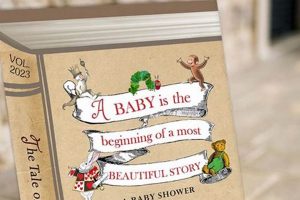
A celebration theme centered around children’s literature for expectant parents, this party style incorporates elements from well-loved stories. Decorations, activities, and even the menu often reflect the narratives and characters found within classic and contemporary picture books. For example, a gathering might feature decorations inspired by “The Very Hungry Caterpillar,” with food displays representing the caterpillar’s culinary journey, or a “Guess the Baby Book” game based on plot summaries.
The appeal of this theme lies in its nostalgic charm and its potential for creativity. It allows hosts to create a whimsical and personalized event, celebrating both the impending arrival of a child and the enduring power of storytelling. Historically, themed celebrations have provided a focus for gift-giving and well-wishes, with this particular type offering an opportunity to build a child’s library from the outset. The benefits extend to fostering a love of reading from an early age and creating a memorable experience for the parents-to-be.
Subsequent sections will delve into specific decoration ideas, activity suggestions, and catering options that complement this literary-inspired theme. Furthermore, considerations for selecting appropriate books for the occasion and crafting personalized invitations will be discussed.
Practical Advice for a Literary-Inspired Celebration
The following provides key considerations for organizing a successful celebration centered on children’s literature.
Tip 1: Selection of a Central Theme: Focus the design on one or two specific childrens books. This cohesive approach prevents thematic overload and simplifies decision-making regarding decorations, activities, and food.
Tip 2: Invitation Design and Content: The invitation should immediately convey the literary theme. Consider incorporating artwork from the featured book or writing a rhyming couplet referencing the story. Wording should clearly state the book theme.
Tip 3: Decoration Strategy: Emphasize visual elements from the selected book(s). Recreate scenes using craft supplies, balloons, and themed banners. If “Goodnight Moon” is the theme, incorporate a large paper moon and star decorations.
Tip 4: Activity Planning: Choose games and activities that align with the chosen literary work. A “Pin the Tail on the Cat” game, inspired by “The Cat in the Hat,” or a story-themed scavenger hunt are viable options.
Tip 5: Catering Considerations: The menu should reflect the literary theme. A “Very Hungry Caterpillar” buffet featuring the foods the caterpillar consumes is appropriate. Alternatively, book-shaped cookies or cupcakes decorated with characters can be included.
Tip 6: Gift Registry Focus: Encourage guests to contribute to the baby’s library. Specify particular books on the registry or request classic titles. This reinforces the overall literary concept.
Tip 7: Favors and Thank-You Notes: Extend the theme with small, book-related favors such as miniature books, bookmarks, or character-themed stickers. Thank-you notes should also incorporate literary imagery or quotes.
Adherence to these guidelines enhances the celebration’s overall coherence and creates a memorable experience for both the expectant parents and the guests. A consistent and well-executed theme demonstrates thoughtful planning and strengthens the event’s impact.
The concluding section will summarize the key benefits and offer final thoughts on hosting such a literary event.
1. Literary Theme

The thematic coherence of a celebration centered on children’s literature is paramount to its success. The overarching “Literary Theme” dictates the selection of decorations, activities, and catering, creating a unified and immersive experience. Its meticulous integration elevates the gathering from a generic event to a personalized and memorable occasion.
- Selection of Core Literary Work(s)
The foundation of the theme rests upon the chosen book or books. This selection must be age-appropriate and align with the parents’ preferences. Examples include classic tales such as “Where the Wild Things Are,” “The Very Hungry Caterpillar,” or “Goodnight Moon.” The selected works serve as the central reference point for all subsequent design and activity choices. The stories can be used as an outline for the entire shower.
- Visual Representation and Aesthetics
The visual elements must reflect the chosen literary work. This includes color palettes, character representations, and scenic recreations. For example, if the selected book is “Brown Bear, Brown Bear, What Do You See?”, decorations might feature oversized illustrations of the animals from the book. A cohesive visual presentation enhances the immersive quality of the event.
- Activity Integration and Alignment
Planned activities must align thematically with the selected literary work. A game of “Pin the Tail on Peter Rabbit” for a “Peter Rabbit” themed celebration, or a craft activity involving creating “Gruffalo” masks for a “The Gruffalo” celebration are appropriate. The activities should provide entertainment while reinforcing the literary theme.
- Catering and Culinary Alignment
The menu should reflect the selected book or books. This may involve recreating dishes mentioned in the story or designing themed desserts. For instance, a “If You Give a Mouse a Cookie” themed event might include cookies and milk on the menu. Creative catering choices enhance the overall thematic experience.
The integration of these facets contributes to a cohesive and engaging experience. The chosen book is not merely a decorative element but a central organizing principle, informing every aspect of the event. Such deliberate alignment transforms the gathering into a celebration of literature and anticipation of the child’s future engagement with stories.
2. Book Selection

The selection of appropriate literature forms the cornerstone of a successful themed celebration. The chosen book(s) will fundamentally influence decorations, activities, and overall ambiance.
- Age Appropriateness and Developmental Suitability
Consideration of the child’s projected age and developmental stage is paramount. Books intended for older children may not resonate with a newborn, while those designed for infants should align with their sensory and cognitive capabilities. Board books, with their durability and simple illustrations, are often a suitable starting point. Conversely, complex narratives or chapter books would be inappropriate.
- Parental Preferences and Values
The selected literature should reflect the parents’ preferences and values. This may involve considering their cultural background, personal interests, or educational philosophy. Books promoting inclusivity, diversity, or specific moral lessons might be prioritized. Ignoring the parents’ values can lead to a disconnect between the theme and the intended celebration.
- Illustrative Style and Visual Appeal
The illustrative style of the chosen book significantly impacts the visual design of the event. Books with vibrant colors and engaging illustrations provide a rich source of inspiration for decorations and visual elements. The selected book will dictate what colours and design choices can be pulled. Books with subdued or abstract art may present challenges in creating visually stimulating decorations.
- Narrative Structure and Adaptability
The narrative structure of the chosen book influences the types of activities that can be incorporated into the event. Simple, linear narratives lend themselves well to games and crafts that directly recreate scenes from the story. More complex or abstract narratives may require creative interpretation to translate into engaging activities.
The strategic approach to “Book Selection” enhances the cohesion and impact of the literary-inspired event. Thoughtful choices ensures that the celebration accurately reflects the parents’ values and interests while providing a stimulating introduction to the world of children’s literature.
3. Decor Cohesion

Within the context of a “story book baby shower,” decor cohesion refers to the unified and consistent application of thematic elements throughout the event’s visual presentation. The achievement of decor cohesion is crucial because it transforms a collection of individual decorations into a cohesive and immersive environment that reinforces the selected literary theme. For example, if the chosen book is “Guess How Much I Love You,” a decor cohesive strategy would ensure that all decorative elements, from table centerpieces featuring plush hares to banner text incorporating phrases from the book, complement each other stylistically and thematically.
The absence of decor cohesion can result in a disjointed and confusing aesthetic, diluting the intended impact of the theme. Imagine a scenario where a “story book baby shower” is nominally based on “The Very Hungry Caterpillar,” but the decorations consist of mismatched balloons in unrelated colors and generically themed baby shower banners. The lack of a cohesive visual strategy undermines the thematic intention. Conversely, a well-executed cohesive design plan employs a consistent color palette derived from the book’s illustrations, custom-made decorations featuring the caterpillar character, and strategically placed displays of the foods consumed in the story. This attention to detail elevates the event, making the book the central design element.
In conclusion, decor cohesion plays a pivotal role in enhancing the impact and memorability of a “story book baby shower”. A unified visual theme, achieved through careful planning and consistent execution, amplifies the immersive experience and contributes to a successful and engaging celebration. Although potential challenges exist in sourcing or creating specific themed decorations, the benefits of decor cohesion in creating a memorable and impactful event are considerable, justifying the investment of time and effort. It is essential to the ultimate goal, create lasting happy memories.
4. Activity Alignment

Within the framework of a “story book baby shower,” Activity Alignment signifies the strategic selection and implementation of games and entertainment that directly correlate with the chosen children’s literature. This facet ensures that activities are not merely distractions, but rather integral components that reinforce the overarching literary theme.
- Narrative Replication and Reinforcement
Activities should directly reflect specific scenes, characters, or plot points from the selected book. For instance, a “Guess How Much I Love You” themed event could feature a “Measure Your Love” activity, where guests estimate the length of streamers representing the love between Big Nutbrown Hare and Little Nutbrown Hare. This directly references the book’s central theme of quantifying affection, reinforcing the narrative in an engaging manner. The activities are not separate from the theme but build on the concept.
- Character Embodiment and Interaction
Activities can involve guests assuming roles or interacting with characters from the book. A “Where the Wild Things Are” celebration might include a “Wild Rumpus” parade where guests wear homemade monster masks and dance to simulate the book’s chaotic climax. This allows participants to actively engage with the narrative, fostering a deeper connection to the literary source material.
- Thematic Skill Application and Knowledge Testing
Activities can test guests’ knowledge of the book or require them to apply skills related to its themes. A “Very Hungry Caterpillar” event could incorporate a trivia game about the caterpillar’s diet or a craft activity involving creating a butterfly mobile, representing the caterpillar’s transformation. This provides a subtle educational component while remaining entertaining and thematic.
- Adaptability to Audience and Participation Levels
Activity selection must consider the age range and participation preferences of the guests. Options should be diverse, ranging from passive observation to active involvement, ensuring inclusivity. A book-themed Bingo game with images of characters or objects from the story can be adapted for varying levels of engagement. Guests may opt-in with whatever option best suits them.
By adhering to these guidelines, the entertainment at a “story book baby shower” transcends mere diversion. It becomes a deliberate means of reinforcing the literary theme, enriching the overall experience for the expectant parents and their guests. Effective “Activity Alignment” ensures the celebration is remembered not only as a gathering, but also as an appreciation of the literary arts.
5. Menu Integration

In the context of a themed celebration, menu integration represents the deliberate alignment of culinary offerings with the overarching theme. For a literary celebration, this involves crafting a menu that reflects elements from the selected childrens book, creating a cohesive and immersive dining experience.
- Direct Literary References
The menu should incorporate food items directly mentioned in the chosen book. For example, a “Green Eggs and Ham” themed event could feature deviled eggs dyed green, aligning the menu with the book’s central element. This approach offers a clear and immediate thematic connection.
- Character-Inspired Creations
Culinary creations can be designed to visually represent characters from the selected story. Cupcakes decorated with fondant figures of the main characters from “Where the Wild Things Are” or cookies shaped like the caterpillar from “The Very Hungry Caterpillar” serve as illustrative examples. This type of integration provides visual appeal and strengthens the thematic link.
- Symbolic Food Representation
Certain food items can be chosen to symbolize themes or motifs present in the book. A rainbow-colored fruit platter could represent the theme of diversity in “Elmer the Elephant,” or a plate of star-shaped sandwiches could echo the celestial imagery of “Goodnight Moon.” Such symbolic connections add depth to the dining experience.
- Interactive Food Activities
The menu can include interactive food activities that encourage guests to engage with the literary theme. A “Cloudy with a Chance of Meatballs” celebration could feature a build-your-own-meatball station, allowing guests to participate in creating their own culinary interpretations of the book’s premise. This approach fosters active participation and adds an element of playfulness.
Menu integration is not merely about serving food, but strategically aligning the culinary offerings with the narrative elements of the chosen book. By carefully considering direct references, character-inspired creations, symbolic food representation, and interactive food activities, hosts can create a culinary experience that elevates the impact and memorability of a “story book baby shower”.
6. Gift Focus

The “Gift Focus” within a “story book baby shower” context pertains to the strategic channeling of gift-giving towards building a foundation of children’s literature for the child. Instead of generically themed baby gifts, the emphasis shifts towards accumulating a curated collection of books, fostering early literacy and aligning with the overall literary theme of the event.
- Registry Prioritization of Books
Establishing a gift registry that prominently features books guides guests towards thematic gift selection. The registry can include specific titles desired by the parents, catering to various age ranges and developmental stages. Clear categorization by theme, author, or reading level enhances usability and directs gift-giving towards desired literary acquisitions. For instance, a registry might prioritize board books for initial sensory development alongside classic picture books for future reading.
- Designated “Book Instead of Card” Request
Including a request for guests to bring a book instead of a traditional greeting card fosters an increase in literary contributions. This request can be explicitly stated on the invitation, encouraging guests to personalize their chosen book with a message to the child. This practice serves a dual purpose: diminishing paper waste and building a library of personalized literary gifts with enduring sentimental value. The library will contain messages from friends and loved ones for years to come.
- Themed Gift Basket Ideas
Suggesting themed gift basket ideas centered around specific books provides guidance to guests seeking inspiration. Baskets might include the featured book, alongside related plush toys, blankets, or clothing items. A “The Very Hungry Caterpillar” basket could contain the book, a caterpillar plush, and a set of fruit-themed baby socks. This organized approach reduces the likelihood of duplicate gifts and strengthens the thematic coherence of the presents received.
- Charitable Donation Alternative
Offering a charitable donation alternative provides guests with an option to contribute to literacy-focused organizations in lieu of a physical gift. The invitation can include information on a partnered charity that promotes children’s literacy, allowing guests to support a meaningful cause aligning with the “story book baby shower” theme. The guests will have additional options for gift giving.
The deliberate “Gift Focus” redirects the traditional gift-giving process to cultivate a literary foundation for the child, reinforcing the celebration’s overarching theme and promoting early literacy. These considerations ensures thoughtful gifts that create a library that can be shared with loved ones and enjoyed for years to come.
Frequently Asked Questions
This section addresses common inquiries regarding the organization and execution of literary-themed celebrations for expectant parents, often termed “{story book baby shower}.” The information presented aims to provide clarity and guidance to individuals planning or considering such events.
Question 1: What distinguishes a {story book baby shower} from a standard baby shower?
The defining characteristic lies in its central theme: children’s literature. Decorations, activities, and catering are all designed to reflect elements from well-known and beloved children’s books. A traditional event may utilize general baby-related themes, whereas a literary celebration anchors all aspects to specific literary works.
Question 2: How does one select an appropriate literary theme?
The selection process should consider the parents’ preferences, the illustrative style of the books, and the adaptability of the narrative for activities. Choosing books that reflect the parents’ values and possess vibrant visuals is crucial. The selected literature should also lend itself to engaging games and decorations.
Question 3: What types of activities are suitable for a literary-themed event?
Suitable activities directly relate to the selected literary work. Options include character-themed games, plot-based trivia, and craft projects that recreate scenes or characters from the book. Activities must align with the overall theme and provide entertainment value to the guests.
Question 4: How can one effectively integrate the menu with the literary theme?
Menu integration involves crafting culinary offerings that reflect elements from the chosen book. This may involve directly referencing food items mentioned in the story, creating character-inspired dishes, or using food to symbolize themes present in the book. The menu should complement the literary theme and enhance the overall experience.
Question 5: What is the recommended approach to gift-giving at a {story book baby shower}?
The gift focus should be directed towards building a collection of children’s literature. This can be achieved through a gift registry that prioritizes books, a request for guests to bring a book instead of a card, or suggested themed gift basket ideas centered around specific literary works. These measures ensure that gift-giving aligns with the celebration’s thematic intention.
Question 6: What are the potential challenges in organizing such an event?
Potential challenges may include sourcing specific themed decorations, adapting complex narratives into engaging activities, and ensuring consistent thematic cohesion across all event elements. Adequate planning and creative problem-solving are essential to mitigate these challenges.
In summary, a well-executed literary-themed celebration requires meticulous planning and deliberate attention to thematic details. The benefits of such an event, including the promotion of early literacy and the creation of lasting memories, justify the required effort.
Subsequent sections will offer final thoughts and concluding remarks regarding literary celebrations for expectant parents.
In Conclusion
This exposition has detailed the facets of the “story book baby shower” concept, underscoring its potential as a refined alternative to conventional celebrations. The emphasis on literary foundations, thematic consistency, and thoughtful engagement distinguishes it. By considering book selection, decor cohesion, activity alignment, menu integration, and focused gift-giving, a meaningful and memorable occasion is possible.
The enduring impact of literature on child development is undeniable. Events such as these represent a conscious effort to cultivate a lifelong appreciation for reading and storytelling. As such, the future planning of celebrations should strategically prioritize resources in favour of such literary values.