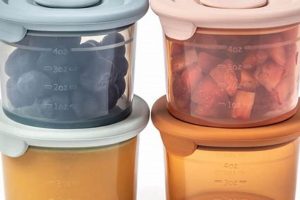
A kitchen implement designed for portioning and preserving homemade infant meals, these trays are typically constructed from flexible, food-grade material. Their compartmentalized design facilitates the freezing of individual servings, allowing for convenient defrosting and reducing food waste. A common example is a mold with multiple small, lidded wells ideal for storing pureed fruits, vegetables, or meats.
The utility of these items stems from their convenience, safety, and cost-effectiveness. Homemade baby food preparation grants control over ingredients, mitigating concerns related to preservatives and additives often found in commercially produced alternatives. Their construction from silicone offers flexibility for easy removal of frozen portions and resistance to extreme temperatures. Historically, parents relied on less sanitary or convenient methods for storing infant meals, highlighting the innovative nature of this product.
The subsequent sections will delve into the optimal selection criteria for these items, proper usage guidelines, recommended cleaning practices, and a comparative analysis of different brands and models available on the market. This analysis provides readers with the information necessary to make informed purchasing decisions.
Optimizing Usage
The following recommendations are intended to maximize the lifespan and utility of the product, ensuring safe and effective food storage for infants.
Tip 1: Initial Sanitization: Prior to first use, sterilize the product via boiling or steam sterilization, removing any potential manufacturing residue. This practice establishes a foundation of hygiene.
Tip 2: Portion Control: Fill each compartment according to the infant’s typical serving size. This prevents waste and allows for controlled feeding schedules.
Tip 3: Cooling Before Freezing: Allow freshly prepared food to cool to room temperature before placing it in the tray for freezing. This minimizes condensation and potential ice crystal formation.
Tip 4: Secure Sealing: Ensure the lid is securely fastened to prevent freezer burn and maintain food quality. Properly sealed compartments extend the freezer life of the contents.
Tip 5: Labeling and Dating: Clearly label each batch with the contents and date of preparation. This prevents confusion and ensures appropriate food rotation within the freezer.
Tip 6: Proper Defrosting: Defrost frozen portions in the refrigerator overnight or use a microwave on a low setting. Avoid leaving food at room temperature for extended periods to minimize bacterial growth.
Tip 7: Cleaning Protocol: Wash the tray thoroughly with warm soapy water after each use. For stubborn residue, consider using a bottle brush to reach all crevices. A dishwasher is also acceptable, typically on the top rack.
Adhering to these guidelines ensures the safe and efficient storage of infant nutrition, reducing waste and promoting informed feeding practices.
The subsequent section will address best practices related to selecting the ideal item for individual needs and circumstances.
1. Material Safety

Material safety is paramount when selecting implements intended for contact with infant food. The composition of a freezer tray directly impacts the potential for chemical leaching and subsequent exposure of the child to harmful substances. Silicone, the prevalent material in these products, must meet stringent safety standards to ensure non-toxicity.
- BPA, Phthalate, and Lead Absence
The absence of Bisphenol A (BPA), phthalates, and lead is a critical determinant of safety. These chemicals, historically used in plastic production, are endocrine disruptors and pose developmental risks. Reputable manufacturers explicitly certify their products are free from these substances, often indicated through labeling and third-party testing documentation.
- Food-Grade Silicone Certification
Food-grade silicone must adhere to regulations set by bodies such as the FDA or European standards. This certification indicates that the silicone has undergone testing to verify its suitability for contact with food, confirming its resistance to chemical migration under varying temperature conditions. Compliance is crucial to safeguard against potential contamination.
- Resistance to Temperature Extremes
Silicone’s inert nature translates to stability across a wide temperature range, relevant when subjecting these trays to freezing and subsequent thawing or microwaving. Inferior materials may degrade under extreme temperatures, releasing chemicals into the food. Quality silicone maintains its structural integrity and chemical stability throughout these processes.
- Absence of Unpleasant Odors or Tastes
A newly manufactured tray should not exhibit strong chemical odors or impart unwanted tastes to the stored food. Such characteristics indicate potential issues with the silicone’s quality or incomplete curing during production. This factor serves as a simple, initial screening mechanism to evaluate the suitability of the product.
The collective assurance provided by BPA-free certification, food-grade compliance, temperature stability, and the absence of off-putting odors confirms the material’s safety. These characteristics define whether the tray represents a secure method for preparing and preserving infant nutrition, underscoring the importance of diligent product evaluation.
2. Portion Control

Precise portioning of infant food is intrinsically linked to the design and function of the silicone baby food freezer tray. The compartmentalized structure of these trays directly facilitates portion control, enabling parents and caregivers to prepare and store individual servings tailored to the infant’s age, appetite, and developmental stage. The individual compartments inherently limit the amount of food frozen, creating a pre-measured and convenient system for meal preparation. For example, a parent preparing a puree of sweet potatoes can accurately measure out one-ounce portions into each compartment, ensuring consistent servings over multiple days. This directly contrasts with methods of freezing food in bulk, where portion sizes are estimations, leading to potential food waste or overfeeding.
The importance of portion control extends beyond simple convenience. It is critical for establishing healthy eating habits early in life and preventing overfeeding, which can contribute to childhood obesity. By utilizing a tray with clearly defined portions, caregivers can track the infant’s intake and make informed decisions about feeding schedules and nutritional needs. Furthermore, pre-portioned frozen food minimizes the time spent preparing meals, promoting a more structured and efficient feeding routine. Different trays offer varied compartment sizes, allowing for customization as the infant grows and their caloric requirements evolve. The act of using the product itself reinforces an awareness of appropriate serving sizes, encouraging mindful feeding practices.
In summary, the silicone baby food freezer tray serves as a tangible tool for enacting portion control within infant feeding. The segmented design inherently promotes precise measurement and facilitates consistent serving sizes, supporting both the infant’s nutritional well-being and the caregiver’s efficiency. The understanding of this connection is vital for maximizing the benefits of homemade baby food and establishing healthy eating habits from an early age. While some may find the initial preparation time demanding, the long-term advantages of controlled portions and customized nutrition outweigh the effort.
3. Freezing Efficiency

Freezing efficiency, in the context of a silicone baby food freezer tray, refers to the tray’s capacity to rapidly and uniformly freeze individual portions of food while maintaining nutritional integrity and preventing freezer burn. This efficiency is critical for preserving the quality of homemade baby food and maximizing its shelf life.
- Thermal Conductivity of Silicone
Silicone possesses moderate thermal conductivity, facilitating the relatively rapid transfer of heat from the food to the surrounding freezer environment. This characteristic promotes quicker freezing times compared to materials with lower conductivity, minimizing the formation of large ice crystals that can damage cellular structures and compromise texture upon thawing. Faster freezing helps retain vitamins and nutrients.
- Compartmentalization and Surface Area
The tray’s compartmentalized design increases the surface area exposed to the cold air within the freezer. This increased exposure accelerates the freezing process, as heat can dissipate more rapidly from smaller portions than from a single large mass. The individual portions freeze uniformly, preventing localized hot spots that could encourage bacterial growth or uneven texture degradation. This uniformity ensures consistent quality across all servings.
- Airtight Seal and Freezer Burn Prevention
The presence of a tight-fitting lid or cover on the tray is crucial for preventing freezer burn. Freezer burn occurs when moisture evaporates from the food’s surface, leading to dehydration and textural changes. An airtight seal minimizes moisture loss, preserving the food’s flavor, texture, and nutritional value. Properly sealed trays maintain the integrity of the food for extended periods within the freezer.
- Stackability and Freezer Space Optimization
A tray’s design that allows for easy stacking maximizes freezer space utilization. This is particularly relevant for households with limited freezer capacity. Efficient use of space contributes to overall freezing efficiency, as it allows for proper air circulation around the trays, further promoting uniform freezing. A well-organized freezer contributes to consistent temperature maintenance and reduced energy consumption.
The collective impact of thermal conductivity, compartmentalization, airtight sealing, and stackability directly influences the freezing efficiency of a silicone baby food freezer tray. These factors determine its ability to effectively preserve homemade baby food, ensuring that it retains its nutritional value and palatable texture for consumption at a later date. Choosing a tray that optimizes these elements is essential for maximizing the benefits of preparing and storing infant meals.
4. Ease of Cleaning

The inherent properties of silicone significantly contribute to the ease of cleaning associated with these food storage implements. Unlike materials with porous surfaces, silicone resists the absorption of food particles and liquids, reducing the likelihood of persistent stains and odors. This non-porous nature facilitates efficient cleaning with minimal effort. For instance, after storing pureed carrots, a quick rinse with warm, soapy water is typically sufficient to remove all residue, preventing the staining that could occur with plastic alternatives. The smooth surface of silicone further minimizes food adhesion, simplifying the cleaning process.
Dishwasher compatibility enhances cleaning convenience. Silicone’s resistance to high temperatures allows for placement in the dishwasher, where the combination of hot water and detergent effectively sanitizes the tray. This eliminates the need for laborious handwashing, saving time and ensuring thorough cleaning. However, inspecting the tray after dishwashing is advisable to confirm the removal of any stubborn food particles. An example would be checking the corners of individual compartments for residual spinach puree. The flexibility of the silicone material also contributes to ease of cleaning, as it allows for gentle bending and manipulation to access hard-to-reach areas.
In conclusion, the connection between the material properties of silicone and the ease of cleaning is undeniable. The non-porous surface, temperature resistance, and flexibility of the material translate to a practical and hygienic solution for storing and preparing infant food. This ease of cleaning is not merely a convenience; it is a critical factor in maintaining food safety and preventing bacterial contamination, reinforcing the value of silicone baby food freezer trays as a suitable kitchen tool.
5. Storage Capacity

Storage capacity, in relation to silicone baby food freezer trays, refers to the total volume of food the tray can accommodate and the configuration of its individual compartments. This characteristic significantly impacts the tray’s utility, determining the quantity of food that can be prepared and preserved in a single batch, as well as the suitability for varying stages of infant development.
- Total Volume and Batch Preparation
The overall volume dictates the maximum quantity of baby food that can be prepared and frozen at one time. A tray with higher total capacity allows for larger batch cooking, which can be beneficial for parents aiming to streamline meal preparation. For instance, a tray with a 500ml capacity can accommodate significantly more food than a 250ml tray, reducing the frequency of cooking and freezing cycles. The choice depends on individual needs and available freezer space.
- Individual Compartment Size and Age-Appropriate Portions
The size of each compartment influences the suitability of the tray for different stages of infant development. Smaller compartments, typically around 1-2 ounces, are ideal for introducing solids to younger infants with smaller appetites. Larger compartments, such as 3-4 ounces, cater to older infants requiring larger portions. A tray with variable-sized compartments can adapt to the evolving needs of the growing child. The ability to offer age-appropriate portions minimizes waste and promotes proper nutritional intake.
- Number of Compartments and Meal Variety
The number of individual compartments affects the variety of foods that can be stored simultaneously. A tray with multiple compartments allows for the preparation and freezing of a range of different purees or food combinations. For example, a tray with ten compartments could hold pureed carrots, peas, applesauce, and chicken, providing a diverse selection of meals readily available. This feature is particularly useful for introducing new flavors and ingredients to the infant’s diet.
- Stackability and Freezer Space Optimization
The physical dimensions and stackability of the tray contribute to the efficient utilization of freezer space. Trays designed with a flat, stackable profile minimize wasted space and allow for organized storage. In contrast, bulky or irregularly shaped trays can occupy excessive room, limiting the amount of food that can be stored. Stackable trays enhance storage capacity indirectly by maximizing the use of available space within the freezer.
The interplay between total volume, compartment size, number of compartments, and stackability determines the overall practicality of a silicone baby food freezer tray. The ideal storage capacity is contingent on individual factors such as batch cooking habits, freezer space limitations, and the infant’s stage of development. By carefully considering these elements, caregivers can select a product that effectively meets their specific needs and contributes to a streamlined and efficient baby food preparation process.
6. Durability

Durability, concerning food storage implements for infants, directly correlates with the lifespan and sustained functionality of the product. A robust tray offers long-term cost-effectiveness and minimizes the risk of material degradation that could compromise food safety. This section explores key facets that contribute to the overall durability of these items.
- Material Resistance to Degradation
High-quality silicone exhibits inherent resistance to degradation from repeated exposure to freezing temperatures and subsequent thawing or heating cycles. Inferior materials may become brittle, crack, or warp over time, compromising structural integrity and potentially leaching chemicals into the food. Durable silicone maintains its flexibility and shape despite thermal stress.
- Tear Resistance and Structural Integrity
The physical strength of the silicone determines its ability to withstand accidental drops, impacts, or forceful removal of frozen food portions. A tray with high tear resistance resists splitting or puncturing, maintaining its functionality and preventing food leakage. Robust construction minimizes the risk of damage during normal usage, extending the product’s lifespan.
- Resistance to Staining and Odor Retention
Durable silicone resists staining from vibrantly colored foods and the retention of persistent odors, even after repeated use. Materials that readily absorb stains or odors can become unhygienic and aesthetically unappealing over time. Quality silicone remains visually clean and odor-free, contributing to a more sanitary and pleasant food preparation experience.
- Lifespan and Frequency of Replacement
The durability of a silicone baby food freezer tray directly influences its expected lifespan and the frequency with which it needs to be replaced. A more durable product will withstand extended use, offering long-term value and minimizing the cost associated with frequent replacements. Investing in a high-quality, durable tray represents a more sustainable and economical choice over time.
The collective influence of material resistance, tear resistance, stain and odor resistance, and extended lifespan underscores the significance of durability. These factors ensure that the item remains a reliable, safe, and cost-effective tool for preparing and preserving infant nutrition, minimizing the need for frequent replacements and contributing to a more sustainable consumption pattern.
Frequently Asked Questions
The following questions address prevalent concerns and misconceptions regarding the use of silicone baby food freezer trays. The responses aim to provide clarity and promote informed decision-making.
Question 1: Is silicone truly safe for storing infant food?
Food-grade silicone, when manufactured to established standards, is generally recognized as safe. The absence of BPA, phthalates, and lead is a critical requirement. Consumers should verify product certifications to ensure compliance with safety regulations.
Question 2: How should a used freezer tray be cleaned?
Thorough cleaning with warm, soapy water is generally sufficient. Dishwasher compatibility, typically on the top rack, provides added convenience. Inspection for residual food particles after washing is advisable.
Question 3: Can these trays be used in a microwave?
Some, but not all, freezer trays are microwave-safe. Verification of the manufacturer’s instructions is essential prior to microwaving to avoid potential material damage or food contamination.
Question 4: How long can baby food be safely stored in the freezer using these trays?
Properly frozen baby food can typically be stored for one to three months. Consistent freezer temperature and secure sealing are critical for maintaining food quality and safety.
Question 5: What is the best method for defrosting frozen baby food?
Defrosting in the refrigerator overnight is the recommended method. Microwave defrosting is permissible but should be performed cautiously to prevent uneven heating and potential hot spots.
Question 6: How can freezer burn be prevented when using these trays?
Ensuring an airtight seal is paramount. Properly fitted lids or covers minimize moisture loss and prevent the formation of ice crystals on the food’s surface.
In summation, adherence to safety guidelines, proper cleaning practices, and appropriate storage techniques maximizes the benefits and minimizes the potential risks associated with these food preservation items.
The subsequent section will provide a comparative analysis of various brands and models, highlighting the features and benefits of each.
Conclusion
This exploration has illuminated the multifaceted utility of the silicone baby food freezer tray. From material safety and portion control to freezing efficiency, cleaning ease, storage capacity, and durability, each aspect contributes to the product’s overall effectiveness in the preparation and preservation of infant nutrition. The information presented underscores the importance of informed selection and proper usage to maximize benefits and mitigate potential risks.
The silicone baby food freezer tray is a tool that empowers caregivers to provide nutritious, homemade meals for infants. However, careful consideration of individual needs and adherence to established guidelines are crucial. Continued innovation and refinement of these products promise further advancements in the safety and convenience of infant food storage, ensuring optimal nutritional support during this critical developmental phase. Diligent evaluation of material composition and product design remains paramount in the pursuit of reliable and secure solutions for infant feeding practices.