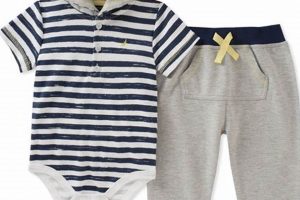
Infant garments created through interlocking loops of yarn offer warmth, comfort, and a personalized touch. These items range from simple hats and booties to elaborate sweaters and blankets, demonstrating a diverse application of textile artistry for newborns and young children.
The practice of crafting soft goods for babies has significant historical and practical value. Historically, hand-created items represented essential preparation for a new arrival. Today, they remain cherished for their inherent softness, breathability, and potential for customization, offering advantages over mass-produced alternatives in terms of material control and design uniqueness.
The subsequent sections will delve into the various yarn types suitable for delicate skin, explore common knitting patterns, and address essential care instructions to ensure the longevity and safety of these handcrafted creations.
Essential Guidance for Crafting Infant Apparel
Creating items for babies requires careful consideration of several factors to ensure comfort, safety, and durability. The following points provide key recommendations for successful and satisfying results.
Tip 1: Select Appropriate Yarn: Prioritize natural fibers such as merino wool, cotton, or bamboo. These materials are gentle on delicate skin, hypoallergenic, and breathable, minimizing the risk of irritation or overheating. Avoid synthetic yarns that may contain potentially harmful chemicals or allergens.
Tip 2: Prioritize Seamless Construction: Whenever feasible, opt for patterns that minimize or eliminate seams. Seams can rub against a baby’s skin, causing discomfort and potentially leading to irritation. Techniques like knitting in the round or using raglan sleeves are effective seam-reducing methods.
Tip 3: Employ Secure Stitch Patterns: Choose stitch patterns that create a dense and secure fabric. This prevents tiny fingers and toes from becoming entangled in loose loops. Garter stitch, seed stitch, and moss stitch are good options that offer both texture and security.
Tip 4: Incorporate Easy Care Considerations: Infants require frequent clothing changes. Select yarns that are machine washable and dryable to simplify the cleaning process. Always follow the yarn manufacturer’s care instructions to prevent shrinkage or damage to the finished item.
Tip 5: Opt for Simple Designs: Intricate designs with embellishments like buttons, ribbons, or beads can pose a choking hazard. Keep designs simple and functional, focusing on comfort and ease of use. Avoid long drawstrings or ties.
Tip 6: Ensure Proper Sizing: Accurate sizing is crucial for both comfort and safety. Consult reliable size charts and measure the infant to ensure a proper fit. Garments that are too tight can restrict movement, while those that are too loose may present a risk of entanglement.
Tip 7: Pre-Wash All Materials: To eliminate any potential irritants that can cause allergies to newborn skin. It also prevent shrinkage once the cloth has been made.
Adhering to these guidelines enhances the quality and safety of garments, ensuring both the well-being of the infant and the satisfaction of the creator.
The concluding segment of this exposition will cover pattern selection and the importance of gauge swatches in achieving desired results.
1. Fiber Selection

Fiber selection constitutes a foundational element in the creation of appropriate items. The choice of fiber directly impacts several critical factors, including the garment’s softness, breathability, durability, and potential allergenic properties. For instance, garments crafted from merino wool offer exceptional softness and warmth while remaining breathable, thus mitigating the risk of overheating. Conversely, acrylic yarns, while often more cost-effective, may lack breathability and can cause skin irritation in sensitive individuals. The potential for direct skin contact necessitates a meticulous evaluation of fiber characteristics before commencing any project.
Real-world examples underscore the significance of informed fiber selection. Hospitals and neonatal units frequently utilize cotton items due to its hypoallergenic properties and ease of sterilization. Furthermore, the rise in popularity of organic cotton highlights a growing awareness of the environmental and health benefits associated with natural, sustainably sourced fibers. Conversely, instances of allergic reactions to synthetic dyes and fibers present in commercially produced clothing emphasize the potential risks associated with neglecting fiber considerations. Practical application involves carefully reading yarn labels, researching fiber properties, and considering the intended use of the garment. For example, a lightweight cotton yarn would be preferable for summer apparel, while a warmer wool blend might be selected for winter use.
In summary, the careful selection of appropriate yarn is paramount. It directly impacts the comfort, safety, and longevity of the garment. Challenges associated with fiber choice include balancing cost with quality, addressing potential allergies, and ensuring ease of care. Understanding the interplay between fiber properties and the needs of the infant is essential for creating garments that are both functional and beneficial. The ongoing emphasis on natural and sustainable fibers reflects a growing awareness of the long-term health and environmental implications of textile selection.
2. Design Simplicity

Design simplicity in the context of handcrafted infant apparel prioritizes functionality, safety, and ease of care. Minimizing complexity reduces potential hazards and enhances the overall practicality of the garment.
- Reduced Choking Hazards
Simplified designs inherently feature fewer embellishments such as buttons, beads, or ribbons. These small components pose a significant choking hazard for infants. By omitting them, the risk of accidental ingestion is substantially reduced, promoting a safer environment for the child.
- Enhanced Comfort
Elaborate designs often incorporate intricate stitch patterns or textured elements that can irritate delicate skin. Simple, smooth fabrics minimize friction and discomfort, allowing for unrestricted movement and promoting a more comfortable experience for the infant. Avoiding complex constructions helps ensure the garment lies flat against the skin, preventing chafing.
- Improved Ease of Care
Garments with simpler designs are generally easier to launder and maintain. Intricate patterns or delicate embellishments often require hand washing or specialized cleaning procedures. Streamlined designs constructed from durable materials can withstand frequent machine washing and drying, simplifying the caregiver’s routine and ensuring the item remains hygienic.
- Facilitated Dressing and Undressing
Simple designs typically feature straightforward closures, such as snaps or strategically placed openings, facilitating easy dressing and undressing. This is particularly important when dealing with infants who may be fussy or uncomfortable during clothing changes. Complex closures, like multiple buttons or intricate ties, can prolong the process and increase the risk of agitation.
The emphasis on design simplicity underscores a practical approach to crafting infant apparel. By prioritizing safety, comfort, and convenience, these simplified designs meet the functional needs of both the infant and the caregiver, ensuring the garments serve their purpose effectively and without unnecessary complications. The reduced complexity also allows for greater focus on the quality of materials and construction techniques, further enhancing the overall value of the finished item.
3. Seam Reduction

The strategic minimization of seams in infant garments represents a crucial aspect of design, directly impacting comfort and minimizing potential irritations. Seams, particularly those located in areas of high friction or pressure, can cause chafing and discomfort to a baby’s sensitive skin. Reducing the number of seams, therefore, alleviates these potential issues. This can be achieved through various knitting techniques, such as seamless construction using circular needles, or strategic pattern design that integrates sections of the garment, eliminating the need for separate pieces to be joined together. The consequence is a smoother interior surface, reducing the likelihood of skin irritation.
Real-world examples illustrate the practical significance of seam reduction. Premature infant clothing frequently utilizes seamless designs to accommodate their exceptionally delicate skin. Similarly, socks designed with seamless toes prevent irritation and discomfort within shoes. Furthermore, the increasing popularity of top-down knitting techniques allows for the creation of entire sweaters with minimal or no seams, enhancing comfort and eliminating potential pressure points. This is particularly relevant in areas such as the armpits and shoulders, where seams can restrict movement and cause rubbing. Techniques such as the Magic Loop method enable the knitting of small-circumference items, like booties and hats, without seams.
In summary, seam reduction is a vital consideration in the creation of handcrafted infant apparel. By minimizing seams, the resulting garments offer enhanced comfort, reduced potential for skin irritation, and improved overall wearability for the infant. Challenges lie in adapting existing patterns to incorporate seamless techniques and ensuring that seam reduction does not compromise the structural integrity of the garment. However, the benefits of a seam-free or minimally seamed garment outweigh these challenges, making it a worthwhile pursuit for anyone creating items for infants. Prioritizing comfort in this way directly improves the experience of the baby wearing the item.
4. Stitch Density

Stitch density, the measure of stitches per unit area in a knitted fabric, exerts a profound influence on the functionality and safety of infant apparel. A tight stitch density produces a firm, compact fabric, while a loose stitch density results in a more open and flexible structure. This parameter directly affects the garment’s thermal properties, durability, and susceptibility to snagging or stretching. In infant garments, a sufficiently dense stitch pattern minimizes the risk of small fingers or toes becoming entangled in loose loops, preventing potential injuries. Moreover, a denser fabric provides superior insulation, crucial for maintaining a consistent body temperature in newborns, whose thermoregulatory systems are still developing. Appropriate stitch density contributes to the garment’s overall resilience, withstanding repeated washing and wear without significant distortion or weakening.
Variations in stitch density are evident in different types of infant garments. For example, close-knit booties and hats prioritize warmth and protection from the elements, necessitating a tighter stitch. Conversely, lightweight summer tops might employ a slightly looser stitch to enhance breathability and prevent overheating. The choice of stitch pattern directly influences the resulting density. Garter stitch, known for its stability and firmness, yields a denser fabric compared to lace patterns, which inherently create openwork designs. Achieving the correct stitch density requires careful attention to yarn weight, needle size, and the knitter’s tension. A gauge swatch, a small sample of knitted fabric, serves as a crucial tool for verifying that the intended stitch density aligns with the pattern specifications. Discrepancies necessitate adjustments in needle size or knitting technique to achieve the desired result.
Mastery of stitch density is essential for crafting functional and safe infant apparel. A garment with insufficient density may lack durability, provide inadequate warmth, or pose entanglement risks. Conversely, an excessively dense fabric may be stiff, uncomfortable, and restrict movement. The ability to consistently achieve the specified stitch density translates to greater control over the garment’s final properties, ensuring that it meets the specific needs of the infant. Proper tension and the adherence to gauge guidelines are critical. The challenges include variations in yarn characteristics and individual knitting styles, which can impact stitch density. Ultimately, a thorough understanding of stitch density, combined with meticulous attention to detail, ensures that knitted infant apparel provides optimal comfort, safety, and durability.
5. Size Accuracy
Size accuracy represents a critical determinant of the suitability and safety of handcrafted infant apparel. Imprecise dimensions can negate the benefits of carefully chosen materials and construction techniques. An undersized garment may restrict movement, impeding healthy development and potentially causing discomfort or circulatory issues. Conversely, oversized clothing presents entanglement hazards, increasing the risk of accidental suffocation or injury as infants explore their surroundings. Accurate sizing ensures freedom of movement while minimizing safety concerns, thereby maximizing the practicality and well-being associated with these items. The relationship between size accuracy and items is causative; accurate measurements are necessary for creating safe and functional clothes.
Practical examples underscore the necessity of precise sizing. Premature infants require specifically sized garments to accommodate their smaller stature and unique physiological needs. Standardized size charts serve as essential references, providing guidelines for chest circumference, body length, and other relevant measurements. However, variations in yarn weight, stitch patterns, and individual knitting tension can affect the finished dimensions. Therefore, meticulous measurement of gauge swatches and careful adherence to pattern specifications are crucial for achieving the intended size. Experienced crafters often adapt patterns to accommodate individual differences, such as variations in infant body proportions or personal preferences regarding fit. A correctly sized hat, for example, will stay in place without being too tight, protecting the infant from the elements without restricting blood flow. Similarly, appropriately sized socks will not slip off easily, preventing cold feet and minimizing the risk of tripping.
In conclusion, size accuracy is not merely a cosmetic consideration but a fundamental aspect of ensuring the safety, comfort, and functionality of knitted infant apparel. The challenges of achieving accurate sizing stem from material variations, pattern complexities, and individual crafting techniques. However, through diligent measurement, careful adherence to guidelines, and thoughtful adaptation to individual needs, creators can significantly enhance the value and practicality of their handcrafted items. The pursuit of size accuracy directly contributes to the well-being of the infant and reinforces the importance of attention to detail in this specialized craft.
6. Care Requirements
The longevity and safety of knitted infant apparel are intrinsically linked to adherence to appropriate care requirements. Understanding these requirements is essential for maintaining the structural integrity, hygienic properties, and overall suitability of garments intended for delicate skin.
- Yarn Fiber Considerations
Different fiber types necessitate distinct care protocols. Natural fibers, such as merino wool and cotton, may require gentle washing cycles and specific drying methods to prevent shrinkage or distortion. Synthetic fibers, while often more durable, may be susceptible to damage from high heat or harsh chemicals. Correct identification of the yarn composition is paramount for selecting appropriate cleaning agents and techniques, ensuring the garment retains its original form and texture.
- Washing Temperature and Agitation
Elevated water temperatures and aggressive washing cycles can compromise the structural integrity of knitted fabrics, leading to felting, stretching, or color fading. Gentle washing cycles with cold or lukewarm water are generally recommended for delicate infant garments. Similarly, minimizing agitation during the washing process helps prevent fiber damage and maintains the garment’s original shape. Hand washing may be preferable for particularly intricate or fragile items.
- Drying Methods
Improper drying techniques can significantly impact the lifespan of knitted garments. High heat from tumble dryers can cause shrinkage, distortion, and damage to delicate fibers. Air drying, either laid flat or hung in a shaded area, is often the preferred method for preserving the garment’s shape and preventing color fading. When tumble drying is unavoidable, using a low-heat setting and removing the garment promptly can mitigate potential damage.
- Cleaning Agent Selection
Harsh detergents and bleaching agents can irritate sensitive skin and degrade the quality of knitted fibers. Selecting mild, hypoallergenic detergents specifically formulated for infant clothing is crucial for minimizing potential allergic reactions and preserving the garment’s integrity. Avoiding the use of fabric softeners can also help maintain the breathability of the fabric and prevent the buildup of residue that can irritate sensitive skin.
The implementation of appropriate care protocols significantly extends the lifespan of handcrafted infant apparel, ensuring ongoing safety and comfort. Deviations from recommended care guidelines can result in diminished garment quality and potential hazards, underscoring the importance of informed decision-making in maintaining these items. Careful consideration of yarn fiber characteristics, washing parameters, drying methods, and cleaning agent selection is essential for preserving the value and suitability of items created with care.
Frequently Asked Questions
The following section addresses common inquiries regarding the creation and care of knitted items for infants. These responses are intended to provide clear and concise information to assist in the responsible crafting of such items.
Question 1: What yarn fibers are most suitable for infant garments?
Natural fibers such as merino wool, cotton, and bamboo are generally recommended due to their softness, breathability, and hypoallergenic properties. Avoid synthetic fibers that may contain irritants or lack adequate breathability.
Question 2: How can choking hazards be minimized in knitted infant apparel?
Opt for simple designs that avoid the use of small embellishments such as buttons, beads, or ribbons. Ensure that any closures are securely attached and pose no risk of detachment.
Question 3: What techniques can be used to reduce seams in knitted garments?
Seamless construction methods, such as knitting in the round or using raglan sleeves, minimize the need for seams. These techniques result in a smoother interior surface, reducing the potential for skin irritation.
Question 4: How does stitch density impact the safety and functionality of knitted infant apparel?
A dense stitch pattern prevents small fingers and toes from becoming entangled in loose loops. It also provides superior insulation and contributes to the garment’s overall durability.
Question 5: Why is accurate sizing crucial for infant garments?
Accurate sizing ensures freedom of movement while minimizing the risk of entanglement. Undersized garments can restrict circulation and development, while oversized items pose a safety hazard.
Question 6: What are the recommended care instructions for knitted infant garments?
Follow the yarn manufacturer’s care instructions carefully. Gentle washing cycles, mild detergents, and air drying are generally recommended for preserving the garment’s shape and preventing damage.
In summary, careful attention to material selection, design considerations, construction techniques, and care requirements is essential for creating safe, comfortable, and durable knitted items for infants.
The subsequent section will discuss resources for patterns.
Conclusion
This exposition has elucidated the essential considerations for producing infant garments with interlocking loops of yarn. Specific attention has been given to the importance of fiber selection, design simplicity, seam reduction, stitch density, accurate sizing, and appropriate care. The successful application of these principles yields items that prioritize infant comfort, safety, and garment longevity.
Continued adherence to established best practices remains paramount. The creation of safe and durable infant apparel is not merely a craft but a responsibility. Vigilance in material selection and construction techniques ensures that these carefully created items meet the unique needs and vulnerabilities of the infants for whom they are intended.