Pre-cut fabric strips, typically 2.5 inches wide, offer a convenient starting point for creating smaller, comforting covers for infants. These coordinated collections of textiles streamline the process of assembling a visually appealing and functional item often given as a gift or created as a treasured family heirloom. The consistent width simplifies cutting and piecing, particularly beneficial for those new to textile arts or seeking efficiency in their crafting projects.
The appeal of utilizing coordinated fabric strips lies in the time saved by bypassing the initial cutting stage. This allows creators to focus on design and assembly, resulting in quicker project completion. Historically, scrap quilts were constructed from leftover fabric; this method provides a controlled, aesthetically pleasing alternative, ensuring a cohesive color palette and print selection. The finished product provides warmth, comfort, and a visual stimulus for the infant while offering a sense of accomplishment and creativity for the maker.
The subsequent sections will explore various design options suitable for these pre-cut fabric strips, focusing on techniques for optimizing fabric usage and achieving different aesthetic outcomes. Detailed instructions for several beginner-friendly projects will also be provided, outlining necessary materials and step-by-step guidance for successful construction.
Tips for Creating Baby Quilts with Fabric Strips
The utilization of pre-cut fabric strips simplifies the construction of baby quilts, but strategic planning enhances the final result. These tips optimize fabric usage and streamline the assembly process.
Tip 1: Pre-washing Fabric Strips: Pre-washing fabric strips prior to assembly minimizes shrinkage after the quilt is complete. This step ensures consistent sizing and prevents distortion of the finished product after laundering.
Tip 2: Careful Seam Allowance: Maintaining a consistent and accurate seam allowance, typically 1/4 inch, is crucial for aligning fabric pieces correctly. Inconsistent seam allowances result in mismatched blocks and a less cohesive final product.
Tip 3: Strategic Color Placement: Planning the placement of fabric colors and patterns strategically creates visual interest. Consider alternating light and dark fabrics or arranging them in a gradient to enhance the overall design.
Tip 4: Stabilizing Long Seams: For projects involving long, continuous seams, consider using a walking foot on the sewing machine. This foot helps to feed all layers of fabric evenly, preventing stretching or puckering.
Tip 5: Pressing Seams Open or to One Side: Pressing seams properly is essential for a flat and professional finish. Determine whether pressing seams open or to one side is preferable for the chosen pattern, and maintain consistency throughout the project.
Tip 6: Basting Before Quilting: Basting the quilt top, batting, and backing layers together securely prevents shifting during the quilting process. Use safety pins or a basting spray to ensure all layers remain aligned.
Strategic planning and careful execution are key to maximizing the benefits of pre-cut fabric strips in baby quilt construction. By implementing these tips, a durable and visually appealing heirloom can be created efficiently.
The following sections will delve into specific design variations and advanced techniques for crafting unique baby quilts using these convenient fabric collections.
1. Simple Geometric Shapes

The incorporation of uncomplicated geometric forms within the designs utilizing pre-cut fabric strips streamlines the assembly process and enhances the visual accessibility of the finished baby quilt. Simplicity in design often translates to efficiency in production and a greater likelihood of success, particularly for novice textile artists. This section details the relationship between elementary shapes and the effectiveness of these quilts.
- Square Construction
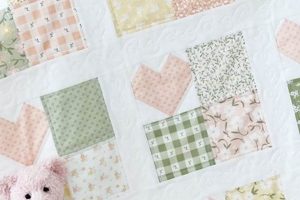
The square, a fundamental geometric unit, provides the basis for numerous straightforward layouts. Fabric strips are cut into squares, then arranged in rows and columns. This method allows for rapid construction and easy visualization of the final design. An example includes a basic patchwork quilt where alternating fabric strips create a checkerboard pattern. The implication is a quick, visually engaging, and easily adaptable design.
- Rectangular Arrangements
Rectangles, derived directly from the initial fabric strip dimensions, facilitate a linear design approach. The strips themselves can be sewn together lengthwise, or cut into shorter segments and rejoined. This method leads to striped patterns or “rail fence” style quilts. These arrangements are economical in fabric usage and provide opportunities for contrasting colors and textures. Such designs emphasize the linearity and inherent dimensions of the pre-cut strips.
- Triangular Elements
While requiring additional cutting, triangles introduce dynamic angles into the quilt design. Half-square triangles, created from cutting squares diagonally, offer a versatile component for creating star patterns or more complex geometric arrangements. This introduces a moderate level of complexity while still maintaining relative ease of construction. The impact is a visually stimulating quilt with a more intricate appearance than simple squares or rectangles.
- Strip Piecing Techniques
Strip piecing involves sewing fabric strips together lengthwise to form a larger fabric unit. This unit can then be cut into segments, which are rearranged and sewn together to create intricate designs. Examples include bargello patterns or kaleidoscopic effects. This method maximizes the visual impact while leveraging the efficiency of strip-based construction. The outcome is a more complex visual design achieved through relatively simple sewing techniques.
These geometric components demonstrate the adaptability of pre-cut fabric strips in creating baby quilts. By utilizing simple shapes, quilt makers can produce visually appealing and functional items with relative ease and efficiency, while more complex patterns introduce a greater degree of visual interest. The choice of shape often reflects the desired aesthetic and the skill level of the creator.
2. Color Coordination
Effective color coordination is a critical element in the successful execution of baby quilts utilizing pre-cut fabric strips. The inherent nature of these fabric collections lies in their pre-selected color palettes, which are intended to streamline the design process and ensure a harmonious aesthetic. The degree to which these colors are effectively employed directly impacts the visual appeal and emotional resonance of the finished quilt. A poorly coordinated palette can result in a visually jarring or unappealing product, while a well-coordinated selection fosters a sense of tranquility and visual coherence. For example, a collection featuring muted pastel shades, if arranged thoughtfully, evokes a sense of gentleness and calm, suitable for an infant’s environment. Conversely, a brightly colored collection requires careful distribution of hues to prevent visual overload. The practical significance of this understanding lies in the ability to create a textile item that not only serves a functional purpose but also contributes positively to the sensory environment of the infant.
The impact of color extends beyond mere aesthetics; it also influences perception of size and depth within the quilt design. Strategic use of contrasting colors can create the illusion of dimension, adding visual interest to otherwise simple patterns. For instance, placing darker shades at the center of a block and lighter shades at the periphery can create a sense of depth. Furthermore, the selection of colors must align with the intended purpose of the quilt and the overall design theme. A quilt designed for daytime play might incorporate bolder, more stimulating colors, while a quilt intended for nighttime comfort might benefit from softer, more soothing tones. The pre-selected nature of fabric strip collections simplifies this process, but careful consideration of the arrangement and interplay of colors remains essential for achieving the desired effect.
In summary, the connection between color coordination and the utilization of pre-cut fabric strips in baby quilt design is undeniable. Effective color selection and arrangement directly contribute to the visual appeal, emotional resonance, and overall success of the project. While fabric strip collections offer a curated palette, the responsibility remains with the creator to thoughtfully arrange these hues to achieve a harmonious and visually stimulating result. Challenges may arise in balancing personal aesthetic preferences with the intended purpose of the quilt, but a foundational understanding of color theory and strategic application of these principles are essential for producing a high-quality and aesthetically pleasing textile item.
3. Quilting Density

The density of stitching in a quilt, known as quilting density, significantly impacts the durability, warmth, and aesthetic appeal of baby quilts constructed from pre-cut fabric strips. This parameter is not merely decorative; it directly influences the functionality and longevity of the finished product.
- Structural Integrity and Fabric Stability
Increased quilting density enhances the structural integrity of the quilt. Closely spaced stitching prevents shifting of the fabric layers (top, batting, and backing), which is particularly important in baby quilts due to frequent washing and handling. Insufficient quilting can lead to bunching and distortion of the fabric over time, compromising the quilt’s appearance and functionality. For instance, a quilt with minimal stitching may experience batting migration, creating unevenness and reducing its thermal efficiency. The implications are a less durable and aesthetically pleasing final product.
- Thermal Properties and Warmth Retention
Quilting density affects the thermal properties of the quilt. Denser quilting compresses the batting, which can reduce its loft and therefore its insulation capacity. However, it also creates more pockets of trapped air, potentially increasing warmth. The optimal quilting density balances insulation with compressibility, ensuring the baby quilt provides adequate warmth without being excessively bulky or stiff. A loosely quilted blanket may be warmer due to increased loft, but is also more prone to batting shifting and cold spots. An appropriately dense quilting pattern maximizes warmth and comfort while maintaining structural integrity.
- Aesthetic Considerations and Design Definition
The quilting pattern itself contributes to the overall aesthetic of the quilt. Denser quilting allows for more intricate designs to be stitched, enhancing the visual appeal. Simple straight-line quilting provides a clean, modern look, while more elaborate free-motion quilting can add texture and depth. The choice of quilting pattern and density should complement the fabric choices and overall design of the quilt. For example, a quilt made from brightly colored fabric strips might benefit from a simpler quilting pattern to avoid visual overload, while a quilt with more muted tones could accommodate a more detailed and intricate quilting design. Aesthetic implications can alter the feel of the quilt and it’s crucial to balance them properly with structural integrity.
- Flexibility and Drape
Quilting density directly impacts the flexibility and drape of the quilt. Denser quilting results in a stiffer quilt with less drape, while sparser quilting allows for greater flexibility and a softer feel. The ideal quilting density for a baby quilt balances durability with comfort, ensuring the quilt is both functional and pleasant to the touch. A densely quilted quilt may be more durable, but it can also be stiff and uncomfortable for a baby. A loosely quilted quilt will have a softer drape, but will not stand up to as much wear and tear. Finding the right balance is critical for creating a quilt that meets the needs of both the baby and the caregiver.
In conclusion, the selection of an appropriate quilting density is crucial when creating baby quilts using pre-cut fabric strips. Factors such as structural integrity, thermal properties, aesthetic considerations, and desired drape must all be considered to achieve a functional, durable, and visually appealing final product. The optimal quilting density balances these competing needs to create a quilt that is both safe and comforting for the infant.
4. Binding Durability
The edge finish, or binding, of a baby quilt constructed using pre-cut fabric strips directly dictates the item’s lifespan and resistance to wear. A robust binding safeguards the quilt’s perimeter, preventing fraying and separation of layers during repeated use and laundering. Given the frequent washing cycles typical for infant bedding, a well-constructed and durable binding is paramount.
- Fabric Selection and its role
The choice of fabric for the binding significantly impacts its durability. Tightly woven cotton or cotton blends, often in a double-fold construction, provide enhanced resistance to abrasion and tearing. Lightweight or loosely woven fabrics are prone to fraying and should be avoided. The implementation of a fabric with a higher thread count will inherently prolong the life of the binding. An example would be using quilting cotton instead of muslin.
- Seam Construction Techniques
The method of attaching the binding to the quilt influences its structural integrity. Machine-sewn bindings, particularly those employing a sturdy stitch such as a straight stitch or a zigzag stitch, offer greater durability than hand-sewn alternatives. Mitered corners, formed by precisely folding and stitching the binding fabric, reinforce the corners and prevent them from unraveling. Inadequate seam allowances may result in the binding detaching from the quilt body, thereby reducing its service life. An example includes a reinforcing stitch at corners.
- Binding Width and Layering
The width of the binding and the number of fabric layers employed contribute to its overall strength. Wider bindings provide a larger surface area for attachment and distribute stress more evenly. Double-fold bindings, consisting of two layers of fabric, offer enhanced protection compared to single-layer alternatives. A binding that is too narrow or lacks sufficient layering is more susceptible to wear and tear, leading to premature failure. The example would be a 2.5 inch wide double fold binding instead of a 1 inch single fold.
- Reinforcement and Maintenance
Reinforcement techniques, such as adding interfacing or additional stitching along the binding edge, can further enhance its durability. Regular inspection and repair of any damaged areas, such as frayed edges or loose seams, are essential for prolonging the lifespan of the binding. Neglecting maintenance can lead to more extensive damage and necessitate complete replacement of the binding. An example of maintenance includes reinforcing a corner with a patch.
These factors collectively determine the binding’s capacity to withstand the rigors of frequent use and laundering. Consequently, selecting appropriate materials, employing robust construction techniques, and implementing routine maintenance are crucial for ensuring the longevity of a baby quilt fashioned from pre-cut fabric strips. The objective is to create a durable and safe item capable of withstanding the demands of daily use in an infant’s environment.
5. Fabric Softness
The tactile quality of textiles directly influences the suitability of baby quilts, making fabric softness a paramount consideration when utilizing pre-cut fabric strips. The immature skin of infants is particularly susceptible to irritation and discomfort from rough or abrasive materials. Consequently, the selection of inherently soft fabrics is essential for ensuring the comfort and safety of the child. Pre-cut fabric strips, typically composed of cotton or flannel, offer varying degrees of softness, impacting the overall sensory experience associated with the finished quilt. For example, a quilt constructed from tightly woven cotton, while durable, may lack the desired level of plushness compared to a quilt made from brushed flannel. The practical significance of this understanding lies in minimizing the risk of skin irritation and promoting a sense of security and well-being for the infant.
The laundering process can either enhance or diminish the softness of a fabric. Repeated washing, particularly with harsh detergents, can strip natural oils from cotton fibers, resulting in a rougher texture. Conversely, using gentle, hypoallergenic detergents and fabric softeners specifically designed for baby clothes can help maintain or even improve the softness of the fabric over time. Moreover, pre-washing the fabric strips before assembling the quilt can remove excess dyes and chemicals, further reducing the potential for skin irritation and enhancing the initial softness. An example could be to add a 1/4 cup of vinegar to the rinse cycle. These actions demonstrate a proactive approach to optimizing fabric softness and ensuring the long-term comfort of the baby using the quilt.
Fabric softness is an intrinsic element of baby quilt design, directly correlating to the comfort and well-being of the infant. While pre-cut fabric strips offer convenience and visual appeal, careful consideration must be given to the inherent softness of the chosen materials and the potential impact of laundering practices. The challenge lies in balancing durability and aesthetic preferences with the need for a gentle and non-irritating textile. A comprehensive understanding of fabric properties and responsible care practices is essential for creating a baby quilt that is both beautiful and safe for its intended user.
6. Washability
The selection of textile patterns for infants necessitates a prioritized focus on ease of care, with washability being a paramount attribute. Baby quilts, inherently exposed to spills, stains, and general soiling, require frequent cleaning. Pre-cut fabric strips, often utilized in creating such quilts, present both advantages and considerations regarding their capacity to withstand repeated laundering cycles. The inherent value of a visually appealing quilt is diminished if it proves impractical to maintain. Examples include fabric shrinkage, dye bleeding, or structural damage resulting from improper cleaning methods.
The utilization of pre-washed fabrics mitigates potential shrinkage; however, the colorfastness of dyes remains a critical factor. Substandard dyes may bleed during washing, compromising the aesthetic integrity of the quilt. Furthermore, construction techniques employed in assembling the quilt influence its resilience to laundering. Secure stitching and reinforced seams are essential for preventing seam separation or fabric distortion. The selection of batting material also impacts washability, with some batting types exhibiting a tendency to clump or flatten after washing. Practical applications involve choosing colorfast fabrics, employing durable stitching, and selecting batting materials specifically designed for frequent laundering. Failure to address these concerns can result in a quilt that deteriorates rapidly with each wash cycle.
In summary, the connection between pre-cut fabric strip-based quilts and washability is intrinsic to the item’s overall value and longevity. The selection of appropriate materials and the application of robust construction techniques are critical for ensuring that these quilts can withstand the rigors of frequent cleaning without compromising their aesthetic appeal or structural integrity. Challenges arise in balancing the desire for visually appealing designs with the practical need for easy maintenance; however, prioritizing washability ensures that these quilts remain functional and aesthetically pleasing throughout their lifespan.
Frequently Asked Questions
The following addresses common inquiries regarding the selection, creation, and maintenance of baby quilts utilizing pre-cut fabric strips.
Question 1: What are the primary advantages of using pre-cut fabric strips in baby quilt construction?
Pre-cut fabric strips streamline the quilting process by eliminating the need for initial cutting, saving time and ensuring consistent fabric widths. They also often feature coordinated color palettes, simplifying design choices.
Question 2: Are all pre-cut fabric strips suitable for baby quilts?
Not necessarily. The fabric composition and dye quality should be considered. Opt for soft, natural fibers like cotton or flannel and ensure the dyes are colorfast to prevent bleeding during washing.
Question 3: What is the recommended size for a baby quilt made with pre-cut fabric strips?
A common size is approximately 36 inches by 45 inches, providing adequate coverage without being too large for an infant. However, dimensions can be adjusted based on personal preference and intended use.
Question 4: How does quilting density impact the suitability of a baby quilt?
Appropriate quilting density prevents shifting of the batting and ensures the quilt remains intact through repeated washings. Overly dense quilting can make the quilt stiff, while insufficient quilting can lead to uneven wear and tear.
Question 5: What are the best practices for washing a baby quilt made with pre-cut fabric strips?
Use a gentle, hypoallergenic detergent and wash on a delicate cycle. Tumble dry on low heat or air dry to prevent shrinkage and maintain the fabric’s softness. Pre-washing the fabric prior to construction can help minimize color bleeding.
Question 6: How can the durability of a baby quilt made with pre-cut fabric strips be maximized?
Select high-quality fabrics, use a reinforced binding, and employ secure stitching techniques. Regular inspection and timely repairs can also extend the quilt’s lifespan.
These frequently asked questions address fundamental considerations for creating durable, safe, and visually appealing baby quilts using pre-cut fabric strips. Adherence to these guidelines ensures a final product that meets both aesthetic and functional requirements.
The subsequent section will explore specific examples of design patterns suitable for these fabric collections, focusing on techniques for achieving different aesthetic outcomes.
Conclusion
This exploration of textile designs for infants utilizing pre-cut fabric strips has emphasized the multifaceted considerations inherent in their creation. Factors ranging from fabric selection and color coordination to quilting density, binding durability, fabric softness, and washability collectively determine the suitability and longevity of the finished item. A comprehensive understanding of these elements is crucial for producing a safe, functional, and aesthetically pleasing product.
Given the significance of providing infants with comforting and durable textile items, continued refinement of techniques and materials within the realm of quilt design remains essential. Further research and experimentation may yield innovative approaches to enhance the safety, sustainability, and aesthetic appeal of these crafted items, ensuring they serve as cherished heirlooms for generations to come.