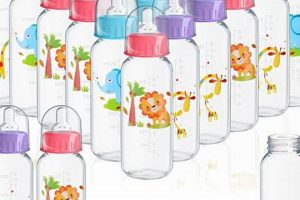
Effective drying of infant feeding containers is a crucial step in maintaining hygiene and preventing the growth of harmful bacteria. Ensuring these items are thoroughly devoid of moisture after cleaning significantly reduces the risk of microbial contamination, a primary concern for infant health. This process involves eliminating residual water from all surfaces of the bottle, nipples, and associated components after washing.
The importance of proper drying lies in its contribution to a safe feeding environment. Damp conditions are conducive to bacterial proliferation, potentially leading to gastrointestinal issues in infants. Historically, methods for drying have evolved from simple air-drying to utilizing specialized drying racks and sanitizing appliances. The benefits of thorough drying extend beyond mere hygiene, contributing to parental peace of mind and a reduced likelihood of infant illness.
The subsequent sections will detail various established methods for achieving optimal dryness, including considerations for different bottle types, suitable drying apparatus, and best practices to minimize the risk of contamination. Specific techniques for air drying, utilizing drying racks, and employing electric bottle dryers will be explored.
Effective Drying Strategies
Optimizing the drying process for infant feeding equipment is essential for minimizing bacterial growth and promoting infant health. Implementing the following strategies will contribute to a more hygienic feeding environment.
Tip 1: Thorough Rinsing Post-Washing: After washing with soap and water, rinse all bottle components meticulously under hot, running water for one to two minutes. This removes any residual soap, which can promote bacterial adhesion.
Tip 2: Utilize a Dedicated Drying Rack: Employ a drying rack specifically designed for baby bottles. These racks allow for proper airflow around each item, facilitating quicker and more complete evaporation.
Tip 3: Orient Bottles Downward: Position bottles and nipples with the openings facing downwards on the drying rack. This promotes drainage and prevents water from pooling inside the components.
Tip 4: Air Dry in a Clean Environment: Select a well-ventilated area free from dust and potential contaminants for air drying. Avoid drying near sinks or garbage receptacles.
Tip 5: Sanitize Before Drying: Consider sanitizing bottle components after washing and before drying, particularly for infants under three months or those with compromised immune systems. Sanitization eliminates more bacteria before drying commences.
Tip 6: Avoid Using Cloth Towels: Refrain from using cloth towels to dry bottles. Towels can harbor bacteria and lint, potentially contaminating the sanitized items. Air drying is the preferred method.
Tip 7: Inspect for Residual Moisture: Before assembling and storing bottles, thoroughly inspect each component for any remaining moisture. Shake vigorously to dislodge any trapped water. If moisture is detected, repeat the drying process.
Implementing these drying techniques significantly reduces the risk of bacterial contamination, contributing to a safer and healthier feeding experience for infants. By prioritizing proper drying, caregivers can minimize the potential for gastrointestinal distress and other related health concerns.
The subsequent section will address storage considerations to further maintain the integrity of thoroughly dried and sanitized infant feeding equipment.
1. Clean Drying Environment
A clean drying environment constitutes a foundational element in the effective and hygienic drying of infant feeding bottles. The presence of airborne contaminants, dust particles, or residual moisture in the surrounding area can compromise the sanitation efforts undertaken during the washing and sanitizing phases. If bottles are placed to dry in an area laden with such elements, they become susceptible to re-contamination, potentially negating the benefits of prior cleaning. For instance, drying bottles near an open window in a dusty environment or adjacent to a kitchen sink harboring microbial growth provides opportunities for harmful microorganisms to colonize the previously cleaned surfaces.
The establishment of a dedicated, clean drying space minimizes the risk of such re-contamination. This space should ideally be well-ventilated to promote rapid evaporation of moisture, further inhibiting bacterial proliferation. Practical measures include regularly cleaning the designated drying area with appropriate sanitizing agents, ensuring surfaces are free of dust and debris, and maintaining a separation from potential sources of contamination, such as waste receptacles or areas with high foot traffic. The effectiveness of sanitizing bottles is significantly diminished if the subsequent drying process occurs in an environment that introduces new contaminants.
In summary, the creation and maintenance of a clean drying environment represent a critical control point in ensuring the safety and hygiene of infant feeding bottles. The interplay between thorough cleaning, sanitization, and a contaminant-free drying space is essential for minimizing the risk of microbial contamination and safeguarding infant health. Ignoring this aspect can undermine the overall effectiveness of bottle cleaning protocols and introduce potential health risks.
2. Adequate Air Circulation
Adequate air circulation is a critical determinant of the efficiency and effectiveness of infant feeding bottle drying. The process of moisture removal relies heavily on the principle of evaporation, which is significantly enhanced by unimpeded airflow. Restricted air circulation prolongs the drying time, creating a more conducive environment for bacterial growth. For instance, placing wet bottles in a closed cabinet or stacking them densely on a drying rack restricts airflow around each component, thereby hindering evaporation and increasing the risk of microbial contamination. The efficacy of cleaning and sanitizing is compromised when bottles remain damp for extended periods due to insufficient air circulation.
The practical application of this understanding translates into specific drying techniques and apparatus. Using open-structured drying racks designed to maximize airflow around each bottle part is essential. These racks typically feature widely spaced pegs or dividers, allowing air to circulate freely. Furthermore, positioning the drying rack in a well-ventilated area of the kitchen or utilizing a fan to promote air movement can significantly expedite the drying process. Consideration must also be given to the ambient humidity level, as higher humidity can impede evaporation and necessitate increased air circulation.
In summary, the connection between adequate air circulation and effective bottle drying is direct and consequential. Insufficient airflow prolongs drying time, increasing the risk of bacterial proliferation. Prioritizing air circulation through appropriate drying techniques and equipment is, therefore, a fundamental aspect of maintaining the hygiene and safety of infant feeding bottles. The challenge lies in consistently implementing these practices and adapting them to varying environmental conditions to ensure optimal drying performance.
3. Orientation for Drainage

The spatial arrangement of infant feeding bottle components during the drying phase, specifically “Orientation for Drainage,” directly impacts the efficiency of moisture removal and, consequently, the reduction of bacterial growth. Incorrect orientation can trap residual water, fostering an environment conducive to microbial proliferation. Strategic positioning facilitates complete drainage, contributing significantly to a more hygienic outcome.
- Valve and Nipple Positioning
Positioning nipples and bottle valves with the opening facing downwards allows gravity to assist in the removal of residual fluid. Valves, often intricate in design, can harbor water in crevices if not properly oriented. Similarly, nipples oriented upwards or horizontally may retain droplets, prolonging drying time. Correct orientation ensures complete drainage of these critical components.
- Bottle Body Inversion
Inverting the bottle body on a drying rack with the opening facing downwards is fundamental for drainage. This allows any remaining water to escape, preventing the formation of stagnant pools at the bottom of the bottle. Using specialized drying racks with pegs designed to hold bottles securely in this inverted position optimizes the drainage process.
- Component Disassembly
Complete disassembly of the bottle into its individual components is necessary to facilitate effective drainage. Leaving the bottle assembled restricts airflow and prevents thorough drying of interior surfaces and connection points. Separating the nipple, valve (if applicable), bottle ring, and bottle body ensures that each part can be oriented for optimal drainage.
- Angle of Inclination
The angle at which components are placed on the drying rack can influence the speed and completeness of drainage. A steeper angle generally promotes more efficient water runoff. Racks that offer adjustable angles or that are specifically designed to provide an optimal incline can enhance the drainage process and reduce drying time. Bottles should be tilted not just inverted.
These elements of “Orientation for Drainage” are not merely procedural suggestions but represent a critical component in the overall strategy for ensuring the hygienic condition of infant feeding bottles. Effective implementation of these principles reduces the risk of bacterial contamination, contributing to a safer feeding environment for infants.
4. Complete Moisture Removal

The relationship between complete moisture removal and the process of drying infant feeding bottles is one of direct causality. Incomplete removal of moisture creates an environment conducive to bacterial growth, thereby negating the benefits of previous cleaning and sanitization efforts. The presence of residual water provides a breeding ground for microorganisms, which can proliferate rapidly under favorable conditions. Therefore, achieving complete dryness is not merely a desirable outcome but a fundamental prerequisite for ensuring the hygienic safety of infant feeding equipment.
The practical significance of understanding this connection is multifaceted. For example, relying solely on visual inspection to determine dryness can be misleading, as minute droplets of water may remain hidden in crevices or within components. Instead, a more thorough approach is necessary, involving physical manipulation and inspection under adequate lighting. This may include shaking bottles vigorously to dislodge trapped water or using absorbent, lint-free materials to wick away any remaining moisture. Electric bottle dryers that utilize heated air circulation can also be employed to ensure more consistent and complete drying.
In summary, complete moisture removal is not an optional step in the drying process but rather an integral component essential for mitigating the risk of bacterial contamination. While various methods may be employed to achieve this goal, the underlying principle remains constant: residual moisture fosters microbial growth and compromises the safety of infant feeding bottles. Challenges may arise from complex bottle designs with numerous components and intricate internal structures. Overcoming these challenges requires a systematic and meticulous approach to drying, prioritizing complete moisture removal as a non-negotiable objective.
5. Sanitization Integration

Sanitization Integration represents a critical precursor to the drying process for infant feeding bottles, serving to minimize the microbial load prior to moisture removal. Integrating sanitization protocols effectively reduces the risk of bacterial proliferation during and after drying, enhancing the overall hygiene of infant feeding equipment.
- Pre-Drying Microbial Reduction
Sanitization, implemented before drying, significantly diminishes the number of viable microorganisms present on bottle surfaces. This reduction minimizes the potential for bacteria to multiply in the presence of residual moisture during the drying phase. Methods such as boiling, steaming, or chemical sanitization contribute to this initial microbial reduction, setting the stage for a more hygienic drying process. For instance, steaming bottles for a prescribed duration effectively eliminates a substantial portion of surface bacteria before drying commences.
- Impact on Drying Time
Sanitization methods involving high temperatures can accelerate the drying process. Heat from steaming or boiling can pre-warm the bottle components, leading to faster evaporation during air drying. This reduction in drying time minimizes the window of opportunity for microbial growth, further enhancing the benefits of sanitization. Utilizing a bottle dryer with a sanitization cycle exemplifies this integrated approach.
- Selection of Sanitization Method
The choice of sanitization method directly impacts the effectiveness of the subsequent drying process. Certain methods, such as chemical sanitization, may leave residual chemicals on bottle surfaces. Thorough rinsing after chemical sanitization is crucial to prevent chemical residues from interfering with the drying process or posing a risk to the infant. Selecting a sanitization method compatible with subsequent drying practices is essential for optimal results.
- Maintenance of Sanitized State
Integrating sanitization necessitates maintaining the sanitized state of bottle components until they are completely dry. Handling sanitized bottles with clean hands or utensils and placing them on a clean drying rack prevents re-contamination. Furthermore, ensuring the drying environment is free from dust and other contaminants is essential for preserving the benefits of sanitization. The effectiveness of sanitization is contingent upon maintaining a hygienic chain of custody throughout the entire drying process.
These facets of Sanitization Integration collectively contribute to a more hygienic approach to infant feeding bottle management. By prioritizing sanitization prior to drying, caregivers can minimize the risk of bacterial contamination, promoting a safer and healthier feeding environment for infants. The effectiveness of drying practices is fundamentally enhanced when coupled with a robust sanitization protocol.
Frequently Asked Questions
The following addresses common inquiries regarding best practices for safely and effectively drying infant feeding bottles, nipples, and associated components.
Question 1: Is air drying sufficient for infant feeding bottles?
Air drying is an acceptable method provided it is performed in a clean, well-ventilated environment, and the bottle components are oriented to facilitate complete drainage. Supplemental measures, such as using a dedicated drying rack, enhance the effectiveness of air drying.
Question 2: Can cloth towels be used to dry baby bottles?
The use of cloth towels is discouraged due to the potential for introducing contaminants. Cloth towels can harbor bacteria and lint, which may compromise the sanitized state of the bottle components. Air drying is the preferred alternative.
Question 3: How long does it take for baby bottles to air dry completely?
Drying time varies depending on ambient humidity, temperature, and air circulation. Generally, bottles should air dry for a minimum of several hours to ensure complete moisture removal. Visual inspection is recommended to confirm dryness.
Question 4: Are electric bottle dryers necessary for proper drying?
Electric bottle dryers can offer convenience and efficiency, especially those equipped with sanitization cycles. While not strictly necessary, these appliances can reduce drying time and ensure more consistent results, particularly in environments with high humidity.
Question 5: What steps should be taken if mold is found on baby bottles or drying racks?
If mold is detected, the affected items should be thoroughly cleaned and sanitized. In severe cases, replacement of the affected items may be necessary. Ensure the drying environment is well-ventilated to prevent future mold growth.
Question 6: How does dishwasher drying compare to air drying or using a dedicated dryer?
Dishwasher drying, when using a sanitizing cycle and heated drying option, can be an effective method. However, it is crucial to ensure that the bottles are dishwasher-safe and are properly positioned to allow for complete drainage and drying. Air drying or using a dedicated dryer may be preferable for delicate items or when a sanitizing cycle is not available.
The keys to safe and effective bottle drying are a clean environment, proper orientation for drainage, and complete moisture removal, regardless of the specific method employed.
The concluding section will present a summary of best practices and additional resources for maintaining optimal hygiene in infant feeding.
Conclusion
This exploration of how to dry baby bottles has underscored the critical role of thorough moisture removal in preventing bacterial proliferation. Key aspects include maintaining a clean drying environment, ensuring adequate air circulation, orienting bottle components for optimal drainage, and verifying complete dryness before storage. Integrating sanitization protocols prior to drying further enhances hygiene. The collective application of these principles minimizes the risk of microbial contamination, safeguarding infant health.
Consistent adherence to these drying practices is paramount for maintaining a safe feeding environment. Further research and adherence to evolving guidelines from pediatric health organizations are encouraged to optimize infant feeding hygiene. The health and well-being of infants depend on diligent application of these fundamental sanitation measures.