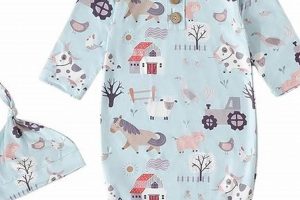
Appropriate sleepwear for infants, particularly when using a swaddle, necessitates careful consideration of thermal regulation. The objective is to ensure the baby is neither overheated nor too cold. The selection of clothing to be worn beneath the swaddle is contingent upon room temperature and the type of swaddle used. Factors such as the fabric’s thickness and breathability influence the overall warmth provided.
Maintaining a comfortable and safe sleep environment contributes significantly to infant well-being. Overheating is a known risk factor associated with Sudden Infant Death Syndrome (SIDS), making appropriate clothing choices critical. Historically, swaddling has been practiced across cultures, but modern guidelines emphasize safe practices, including monitoring the infant’s temperature and avoiding excessive layers.
The following sections will outline specific guidelines for selecting appropriate sleepwear under a swaddle, taking into account varying room temperatures and types of swaddles. Practical advice on monitoring the baby’s temperature and adjusting clothing accordingly will also be provided.
Dressing an Infant for Sleep with a Swaddle
Optimal sleepwear beneath a swaddle contributes to a safe and comfortable sleep environment for the infant. Overheating is a significant concern and should be actively avoided.
Tip 1: Monitor Room Temperature. The ambient room temperature is a primary factor in determining appropriate clothing. A consistently maintained temperature between 68-72F (20-22C) is generally recommended. A room thermometer provides accurate readings.
Tip 2: Select Lightweight Fabrics. Opt for breathable, natural fabrics such as cotton or muslin for clothing worn under the swaddle. These materials allow for better airflow and reduce the risk of overheating. Avoid synthetic fabrics that trap heat.
Tip 3: Start with a Single Layer. In moderately warm conditions, a single layer, such as a short-sleeved bodysuit, may suffice. Adjust the layer based on the infants temperature and the room environment. Check the baby’s chest or back of the neck to assess warmth. A warm or sweaty baby may be overdressed.
Tip 4: Consider the Swaddle’s TOG Rating. Some swaddles are rated using a TOG (Thermal Overall Grade) value, indicating their insulation level. Use this rating as a guide when determining appropriate clothing. Higher TOG ratings necessitate lighter clothing underneath.
Tip 5: Adjust Based on Infant’s Cues. Infants cannot regulate their body temperature as efficiently as adults. Closely observe the baby for signs of overheating, such as flushed skin, rapid breathing, or sweating. Conversely, cool extremities and shivering indicate the need for additional warmth.
Tip 6: Avoid Loose Blankets. When using a swaddle, loose blankets within the crib pose a suffocation risk and are not recommended. The swaddle itself provides sufficient warmth and security.
Tip 7: Regularly Check the Infant. Periodically check the infant’s temperature, especially during the initial hours after being swaddled. Adjust the clothing as needed to maintain a comfortable body temperature.
Adherence to these guidelines assists in creating a secure and comfortable sleep environment, minimizing the risk of overheating and promoting restful sleep.
The subsequent sections will provide information on selecting the right type of swaddle and address common misconceptions surrounding infant sleepwear.
1. Room temperature monitoring

Maintaining a consistent and appropriate room temperature is paramount when determining how to dress an infant for sleep while using a swaddle. The goal is to prevent overheating or excessive cooling, both of which can compromise the infant’s well-being and sleep quality.
- SIDS Risk Mitigation
Overheating is a known risk factor for Sudden Infant Death Syndrome (SIDS). Maintaining a room temperature within the recommended range helps to minimize this risk. A consistently monitored room temperature provides a baseline for clothing adjustments, ensuring the infant is not excessively warm. In contrast, cooler room temperature can lower infant’s body temperature and also make them uncomfortable.
- Optimal Thermal Comfort
Infants have a limited capacity for regulating their body temperature. A stable room temperature contributes to optimal thermal comfort, allowing the infant to sleep soundly without experiencing temperature-related discomfort. Monitoring allows proactive adjustment of clothing layers to match the environment.
- Clothing Layering Guidance
Room temperature serves as a primary determinant for selecting appropriate clothing layers to be worn beneath the swaddle. Warmer room temperatures necessitate fewer layers, potentially requiring only a single, lightweight garment. Conversely, cooler room temperatures may warrant an additional layer, provided overheating is avoided. A thermometer helps evaluate baby’s body temperature.
- Impact on Swaddle Selection
The choice of swaddle material and thickness should align with the room temperature. A thicker swaddle may be suitable for cooler environments, while a lightweight swaddle is more appropriate for warmer rooms. Room temperature monitoring informs this decision, ensuring the combined effect of clothing and swaddle creates a comfortable and safe thermal environment.
In summary, consistent room temperature monitoring serves as the foundation for safe sleep practices when employing a swaddle. It informs clothing layer selection, impacts swaddle choice, and directly contributes to mitigating SIDS risk by maintaining an optimal thermal environment. Consistent monitoring enable caregivers to adjust to ensure the infant’s thermal comfort and safety.
2. Fabric breathability essential
The breathability of fabric used for infant sleepwear, especially when combined with swaddling, is a critical factor in maintaining a safe and comfortable thermal environment. Appropriate fabric choice mitigates the risk of overheating, a known contributor to Sudden Infant Death Syndrome (SIDS).
- Airflow Enhancement
Breathable fabrics, such as cotton or muslin, permit greater airflow compared to synthetic materials. This enhanced airflow facilitates the evaporation of moisture from the infant’s skin, thereby regulating body temperature. Conversely, fabrics that restrict airflow can trap heat and moisture, leading to overheating.
- Moisture Management
Infants are prone to sweating, particularly during sleep. Breathable fabrics effectively wick away moisture, keeping the infant’s skin dry and preventing discomfort or skin irritation. Non-breathable fabrics retain moisture, creating a damp environment that can foster bacterial growth and skin problems.
- Thermal Regulation Support
Breathable materials assist the infant’s natural thermal regulation mechanisms. By allowing excess heat to dissipate, these fabrics prevent the infant from becoming excessively warm. This is particularly important when using a swaddle, which inherently restricts movement and may limit the infant’s ability to cool down.
- Reduced Overheating Risk
The primary benefit of using breathable fabrics is the reduced risk of overheating. This is of paramount importance in the context of infant sleep safety. Overheating has been linked to SIDS, and selecting appropriate sleepwear materials contributes significantly to mitigating this risk. Selecting fabric for dressing a baby needs to be seriously considered.
The selection of breathable fabrics directly impacts infant safety and comfort when used in conjunction with swaddling. Enhanced airflow, effective moisture management, and support for thermal regulation collectively minimize the risk of overheating and promote a more restful sleep experience. Failure to prioritize breathable materials compromises these benefits and elevates potential health risks.
3. Single layer preferred
When considering appropriate sleepwear for infants who are swaddled, the principle of “single layer preferred” is a crucial safety guideline. The intention behind this recommendation is to minimize the risk of overheating, a recognized factor contributing to Sudden Infant Death Syndrome (SIDS). The swaddle itself provides a layer of insulation; therefore, additional clothing should be carefully considered to avoid excessive warmth. For example, in a room maintained at the recommended temperature of 68-72F (20-22C), a lightweight cotton onesie may be the only necessary garment beneath the swaddle. Conversely, layering multiple items, such as a onesie, pajamas, and a swaddle, can quickly elevate the infant’s body temperature to unsafe levels. Practical significance lies in preventing thermal stress, which can disrupt sleep and potentially compromise the infant’s health.
The implementation of “single layer preferred” requires careful evaluation of the infant’s environment and individual characteristics. Factors such as the swaddle’s TOG (Thermal Overall Grade) rating and the infant’s personal thermal comfort should influence clothing choices. For instance, a swaddle with a higher TOG rating indicates greater insulation, necessitating a lighter single layer or, in some cases, no additional clothing at all. Furthermore, constant monitoring of the infant’s temperature through tactile assessment of the chest or back of the neck is essential. If the infant’s skin feels warm or sweaty, reducing the clothing layer is warranted. Conversely, cool extremities may suggest the need for a slightly warmer single layer, but caution should still be exercised to avoid overheating.
In summary, the “single layer preferred” principle within the context of infant swaddling is a critical element of safe sleep practices. Its practical application relies on vigilant monitoring of environmental conditions, individualized assessment of the infant’s thermal needs, and a thorough understanding of the swaddle’s thermal properties. The challenge lies in balancing warmth and safety, ensuring the infant remains comfortable without being subjected to the risks associated with overheating. Adherence to this guideline, in conjunction with other safe sleep recommendations, contributes to a healthier sleep environment for the infant.
4. Swaddle TOG rating
The Thermal Overall Grade (TOG) rating of a swaddle serves as a crucial indicator of its thermal resistance or insulation capacity. Understanding this rating is paramount when determining appropriate clothing for an infant beneath the swaddle. The goal is to maintain a comfortable and safe body temperature, preventing both overheating and excessive cooling.
- Defining Thermal Comfort Levels
The TOG rating provides a standardized measure of how effectively a fabric insulates. A higher TOG rating signifies greater insulation, indicating the swaddle will provide more warmth. Conversely, a lower TOG rating suggests minimal insulation, appropriate for warmer conditions. When determining attire, caregivers should select garments that, in conjunction with the swaddle’s TOG rating, maintain the infant within a comfortable thermal range, typically between 68-72F (20-22C). For example, a swaddle with a high TOG rating of 2.5 may only require a single, lightweight onesie underneath, while a lower-rated swaddle of 0.5 may necessitate a long-sleeved bodysuit or light pajamas, contingent upon room temperature.
- Adjusting Clothing for Seasonal Variations
Seasonal changes necessitate adjustments in both the TOG rating of the swaddle and the clothing worn underneath. During warmer months, a swaddle with a low TOG rating (e.g., 0.5 or less) is recommended, coupled with minimal clothing such as a diaper and a thin, breathable onesie. In colder months, a swaddle with a higher TOG rating (e.g., 2.5) may be appropriate, but the clothing beneath should be adjusted accordingly to prevent overheating. Overdressing an infant, even with a low-rated swaddle, poses a risk of thermal stress and should be avoided. An example might include reducing clothing from a long-sleeved bodysuit to a short-sleeved onesie if using a higher TOG swaddle in the winter.
- Mitigating Overheating Risks
The primary concern when selecting sleepwear for a swaddled infant is to mitigate the risk of overheating, a known risk factor for Sudden Infant Death Syndrome (SIDS). Overheating occurs when the infant’s body temperature rises excessively, leading to discomfort, restlessness, and potential physiological stress. The swaddle’s TOG rating directly influences the potential for overheating. Caregivers must carefully consider the TOG rating and adjust the clothing worn underneath to maintain a safe thermal environment. Monitoring the infant for signs of overheating, such as flushed skin, rapid breathing, or sweating, is crucial. Adjustments to clothing or swaddle TOG rating should be made promptly if these signs are observed.
- Practical Implementation Guidelines
Practical implementation of TOG rating awareness involves a combination of environmental monitoring, garment selection, and infant observation. Regularly monitor the room temperature to ensure it remains within the recommended range. Select a swaddle with a TOG rating appropriate for the season and room temperature. Choose breathable fabrics for clothing worn beneath the swaddle to promote airflow and moisture wicking. Monitor the infant’s temperature by feeling the chest or back of the neck; adjust clothing accordingly if the infant feels too warm or too cool. Consistent and attentive monitoring is essential for ensuring a safe and comfortable sleep environment.
In summary, the swaddle TOG rating serves as a critical element in determining appropriate clothing for infants during sleep. Effective management of thermal comfort requires a comprehensive approach, integrating room temperature monitoring, thoughtful garment selection, awareness of the swaddle’s TOG rating, and vigilant observation of the infant’s physiological cues. Prioritizing these factors contributes significantly to minimizing the risk of overheating and promoting a safe and restful sleep experience.
5. Observe infant cues

The practice of observing infant cues is inextricably linked to appropriate dressing of infants for sleep, particularly when a swaddle is utilized. The connection stems from the infant’s limited capacity to regulate body temperature and communicate thermal discomfort verbally. Therefore, caregivers must rely on behavioral and physiological indicators to gauge the infant’s thermal state. These cues serve as real-time feedback on the efficacy of clothing choices in conjunction with the swaddle. For instance, if an infant exhibits flushed skin, rapid breathing, or sweating, it indicates the infant is likely overheated and requires immediate adjustment, such as removing a layer of clothing or using a swaddle with a lower TOG rating. Conversely, if the infant displays cool extremities or shivering, additional warmth may be necessary, although caution must be exercised to avoid overheating.
Practical application involves continuous monitoring of the infant’s thermal comfort level. Caregivers should regularly check the infant’s temperature by feeling the chest or back of the neck, avoiding the extremities as indicators. Furthermore, observable behavioral patterns provide additional insight. Restlessness, fussiness, or difficulty settling into sleep can be indicative of thermal discomfort, prompting a reassessment of the clothing and swaddle combination. One common error is relying solely on room temperature as a guide without considering the infant’s individual response. For example, an infant may still overheat in a room maintained at the recommended temperature if over-clothed, highlighting the necessity of observing individual cues. Another challenge lies in distinguishing thermal discomfort from other potential causes of infant distress, such as hunger or discomfort. A systematic approach, involving a process of elimination, is often required to accurately interpret the infant’s signals.
In summary, observing infant cues is not merely an optional component but a fundamental requirement for ensuring safe and comfortable sleep when swaddling. It provides essential feedback on the effectiveness of clothing choices, enabling caregivers to make informed adjustments that mitigate the risk of overheating or excessive cooling. Challenges exist in accurately interpreting cues and differentiating thermal discomfort from other causes of distress. However, consistent monitoring and a systematic approach enable caregivers to respond appropriately, contributing to a healthier and safer sleep environment for the infant.
Frequently Asked Questions
This section addresses common inquiries regarding appropriate sleep attire for infants when using a swaddle. The focus remains on ensuring a safe and comfortable sleep environment, minimizing risks associated with overheating or excessive cooling.
Question 1: Is it necessary for an infant to wear clothing beneath a swaddle?
The necessity of wearing clothing beneath a swaddle depends primarily on the ambient room temperature and the thermal properties of the swaddle itself. In warmer environments, a single, lightweight layer, such as a cotton onesie, may suffice. Conversely, cooler temperatures may necessitate an additional layer, provided overheating is avoided.
Question 2: What types of fabrics are most suitable for clothing worn under a swaddle?
Breathable, natural fabrics such as cotton, muslin, or bamboo are recommended. These materials promote airflow and facilitate moisture-wicking, reducing the risk of overheating. Synthetic fabrics should be avoided due to their tendency to trap heat and moisture.
Question 3: How can one determine if an infant is overdressed while swaddled?
Indicators of overheating include flushed skin, rapid breathing, sweating, and restlessness. Tactile assessment of the infant’s chest or back of the neck can also provide valuable information; warm or damp skin suggests the infant is overdressed.
Question 4: What is the significance of the swaddle’s TOG rating in determining appropriate clothing?
The TOG (Thermal Overall Grade) rating indicates the swaddle’s insulation capacity. A higher TOG rating signifies greater warmth, necessitating lighter clothing underneath. Conversely, a lower TOG rating may allow for slightly heavier clothing, contingent upon room temperature and infant cues.
Question 5: Can a blanket be used in addition to a swaddle for added warmth?
The use of loose blankets within the crib alongside a swaddle is strongly discouraged due to the increased risk of suffocation. The swaddle should provide sufficient warmth and security; additional blankets are unnecessary and potentially hazardous.
Question 6: How frequently should an infant’s temperature be monitored when swaddled?
Infant temperature should be monitored regularly, particularly during the initial hours after being swaddled. Periodic checks of the chest or back of the neck can help determine if clothing adjustments are necessary. Frequent monitoring is especially important during seasonal transitions or when environmental conditions fluctuate.
Appropriate clothing selection, consideration of the swaddle’s TOG rating, and vigilant monitoring of the infant’s temperature are essential components of safe sleep practices. By adhering to these guidelines, the risk of overheating can be effectively minimized.
The following section will provide guidance on selecting the right type of swaddle for your infant.
Conclusion
Appropriate dressing of infants for sleep when utilizing a swaddle is a critical aspect of ensuring infant safety and well-being. Key considerations include maintaining a consistent room temperature, selecting breathable fabrics, understanding a swaddle’s TOG rating, and closely observing infant cues for signs of thermal distress. Adherence to these principles minimizes the risk of overheating, a known contributor to Sudden Infant Death Syndrome (SIDS). A comprehensive approach, integrating environmental awareness, clothing selection, and vigilant monitoring, is essential for establishing a safe and comfortable sleep environment.
The information presented serves as a foundation for informed decision-making regarding infant sleepwear. Continued vigilance and adaptation to individual infant needs are paramount. Further research and consultation with healthcare professionals are encouraged to ensure the implementation of best practices in infant care. The long-term well-being of the infant relies on a consistent commitment to safe sleep practices.