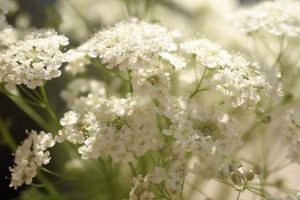
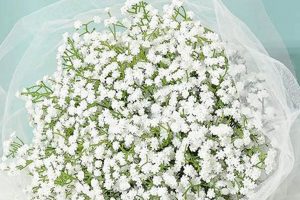
The olfactory properties of Gypsophila paniculata, commonly known as baby’s breath, are often described as subtle and, for some, slightly unpleasant. A distinct assessment of its scent reveals a somewhat earthy, musty, or even hay-like aroma. This experience varies based on individual sensitivity and the specific cultivar. While not overtly pungent, its odor profile differs significantly from more fragrant blooms like roses or lilies.
Historically, baby’s breath has been valued for its aesthetic qualities, serving primarily as a filler flower in bouquets and floral arrangements. Its neutral color and delicate texture complement other flowers without overpowering them visually. The plant’s resilience and long vase life contribute to its widespread use in the floral industry. However, its subtle, and sometimes perceived as negative, scent has not been a primary focus of its cultivation or appreciation.
Therefore, further discussion will address the factors contributing to the perception of the aroma, individual variations in scent sensitivity, and techniques for mitigating or masking any perceived undesirable odors associated with Gypsophila paniculata. The analysis will consider both the objective chemical compounds present in the flower and the subjective interpretations of those compounds by different individuals.
Managing Baby’s Breath Aroma
The following recommendations address potential concerns regarding the scent of Gypsophila paniculata in floral arrangements and provide methods for managing or mitigating any perceived unpleasant odors. Implementation of these techniques may improve the overall sensory experience.
Tip 1: Select Fresh Blooms: Choose baby’s breath stems from reputable florists, ensuring freshness. Newly cut flowers are less likely to exhibit the musty or hay-like odor associated with older, deteriorating specimens. Examine the stems for any signs of decay or discoloration prior to purchase.
Tip 2: Proper Hydration: Maintain adequate hydration by placing stems in clean water with floral preservative. Regularly change the water to prevent bacterial growth, a potential source of unpleasant smells. Trim the stem ends at a 45-degree angle to promote water uptake.
Tip 3: Ventilation Considerations: Adequate ventilation can assist in dispersing any noticeable odor. Arrange the flowers in a well-ventilated area to prevent the scent from concentrating in a confined space.
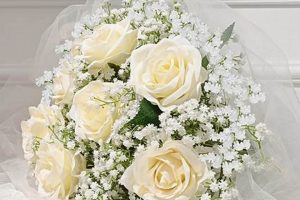
Tip 4: Scent Pairing: Strategically combine baby’s breath with more fragrant flowers to mask or balance its inherent aroma. Roses, lavender, or lilies can contribute pleasant scents that overshadow any perceived negative qualities of Gypsophila paniculata.
Tip 5: Odor Absorbers: Employ odor-absorbing materials near the floral arrangement. Baking soda, activated charcoal, or commercial odor absorbers can neutralize ambient smells, including those emanating from the baby’s breath.
Tip 6: Consider Alternative Varieties: Explore different Gypsophila varieties. Some cultivars may exhibit a less pronounced or more desirable scent profile compared to Gypsophila paniculata. Consult with a florist to identify suitable alternatives.
Tip 7: Artificial Options: If odor sensitivity is a significant concern, consider utilizing high-quality artificial baby’s breath. Modern artificial flowers often closely mimic the appearance of natural blooms without emitting any scent.
Implementing these strategies offers multiple avenues for addressing concerns surrounding the fragrance. Selecting fresh flowers, maintaining proper hydration, optimizing ventilation, employing scent pairing, and exploring alternative solutions contribute to a more enjoyable experience with baby’s breath in floral displays.
The subsequent section will delve into the scientific understanding of the chemical compounds responsible for the scent and the diverse individual responses to those compounds.
1. Individual Sensitivity

Individual sensitivity to odors represents a primary determinant in the perception of whether Gypsophila paniculata possesses an undesirable scent. The subjective nature of olfaction leads to substantial variability in how different individuals interpret the volatile compounds emitted by this flower.
- Genetic Predisposition and Receptor Variation
Genetic factors influence the expression of olfactory receptors, leading to differences in odor detection thresholds and perceived intensity. Variations in receptor genes can result in some individuals being more sensitive to specific compounds present in baby’s breath, such as geosmin, which contributes to an earthy aroma. Thus, a genetically predisposed individual may find the flower’s scent overpowering or unpleasant, while another with a different genetic profile may not detect it or find it innocuous.
- Prior Exposure and Learned Associations
Past experiences with similar scents can shape an individual’s perception. If an individual associates an earthy or musty smell with negative experiences, such as mold or decay, they may be more likely to perceive baby’s breath as having an unpleasant odor. Conversely, if prior exposure to similar scents occurred in a positive context, the perception might be more neutral or even favorable. These learned associations directly influence the emotional response to the flower’s aroma.
- Physiological Factors and Health Conditions
Physiological factors, including hormonal changes and underlying health conditions such as allergies or sinusitis, can alter an individual’s sense of smell. Pregnant women, for example, often experience heightened sensitivity to odors. Certain medical conditions or medications may also cause olfactory distortions or phantosmia, leading to the perception of unpleasant smells that are not actually present or exaggerating existing scents. These physiological variations can significantly impact the assessment of baby’s breath.
- Cultural and Social Influences
Cultural norms and societal expectations play a role in shaping olfactory preferences. In some cultures, earthy or floral scents might be associated with purity or naturalness, while in others, they might be deemed less desirable. Social conditioning can influence an individual’s learned response to certain odors, making them more or less acceptable based on cultural context. This can contribute to varying perceptions of the plant’s aroma based on cultural background.
In conclusion, individual sensitivity encompasses a complex interplay of genetic, experiential, physiological, and cultural factors. These elements combine to determine whether the volatile compounds emitted by Gypsophila paniculata are perceived as pleasing, neutral, or unpleasant. Therefore, the determination of whether the plant possesses an undesirable smell remains subjective and highly dependent on the individual experiencing it.
2. Flower Freshness

The freshness of Gypsophila paniculata is a critical determinant in its perceived aroma. As with many cut flowers, degradation processes initiate soon after harvesting, influencing the volatile organic compound (VOC) profile and potentially leading to the development of undesirable odors. Therefore, the condition of the flowers directly correlates with whether they emit an unpleasant smell.
- Decomposition Processes and VOC Shift
Following harvesting, enzymatic reactions and microbial activity contribute to the breakdown of cellular structures within the flower. This decomposition leads to the release of various VOCs, some of which may be perceived as musty, stale, or even putrid. Freshly cut baby’s breath typically exhibits a subtle, less intense aroma, while older specimens accumulate these degradation products, resulting in a more pronounced and often unpleasant odor. The shift in VOC composition directly impacts the flower’s scent profile.
- Water Uptake and Hydration Status
Adequate water uptake is essential for maintaining flower turgidity and slowing down decomposition. When baby’s breath is dehydrated, cellular breakdown accelerates, leading to a faster accumulation of undesirable VOCs. Proper hydration, achieved through stem trimming and the use of floral preservatives, helps prolong the flower’s vase life and maintain a more favorable scent. Poor hydration contributes to a more pronounced off-putting odor.
- Microbial Growth and Biofilm Formation
Stagnant water in vases provides an environment conducive to microbial growth. Bacteria and fungi can proliferate, forming biofilms on the stem ends and in the water itself. These microorganisms contribute to the production of volatile compounds that can mix with and exacerbate any existing undesirable odors from the degrading flower tissue. Changing the water regularly and using antibacterial floral preservatives minimizes microbial growth and associated smells.
- Storage Conditions and Handling Practices
Improper storage conditions, such as high temperatures and poor ventilation, can accelerate flower degradation. Bruising or physical damage during handling can also release enzymes that trigger rapid decomposition. Storing baby’s breath in a cool, well-ventilated environment and handling it with care minimizes physical damage and extends its freshness, thus reducing the likelihood of unpleasant odors. Gentle handling and appropriate temperature control are crucial.
In summary, the freshness of Gypsophila paniculata is intrinsically linked to its scent profile. Decomposition processes, water uptake, microbial growth, and storage conditions all influence the volatile compounds released by the flower. Maintaining optimal freshness through proper handling, hydration, and storage practices minimizes the development of undesirable odors, thus improving the overall olfactory experience and negating the question if the flowers smell bad.
3. Environmental Factors

Environmental factors significantly influence the perceived scent of Gypsophila paniculata. These factors modulate the release and diffusion of volatile organic compounds (VOCs), directly affecting the olfactory experience. Temperature, humidity, and airflow are primary determinants in whether the plant emits an aroma perceived as unpleasant.
Elevated temperatures increase the rate of VOC evaporation from the flower tissue, potentially intensifying the scent. In poorly ventilated spaces, this intensified aroma can become concentrated, exacerbating any underlying musty or earthy notes that some individuals find disagreeable. High humidity can promote microbial growth on the flower stems, leading to the production of additional volatile compounds associated with decay and unpleasant smells. Conversely, low humidity may cause the flowers to dry out more rapidly, accelerating decomposition and the release of degradation-related VOCs. Proper airflow helps to disperse VOCs, preventing the concentration of odors and reducing the likelihood of a negative olfactory experience. For example, baby’s breath displayed in a warm, humid bathroom with limited ventilation is more likely to exhibit a noticeable and potentially unpleasant scent compared to flowers kept in a cool, well-ventilated space.
Furthermore, exposure to direct sunlight or proximity to other odor-emitting substances can alter the perceived fragrance. Sunlight can accelerate the breakdown of certain VOCs, potentially creating new, less desirable compounds. Absorption of odors from nearby sources, such as decaying fruit or cleaning chemicals, can mask or combine with the natural scent of the baby’s breath, leading to an altered and potentially unpleasant olfactory profile. An understanding of these environmental influences is crucial for managing and mitigating any perceived negative scent associated with Gypsophila paniculata, highlighting the importance of proper placement and environmental control in maintaining a pleasant floral display.
4. Cultivar Variations

Cultivar variations within Gypsophila paniculata represent a significant factor influencing the perceived presence of an undesirable odor. Different cultivars exhibit variations in their genetic makeup, which in turn affects the production and composition of volatile organic compounds (VOCs). These VOCs are responsible for the plant’s aroma, and differences in their concentration and type can result in some cultivars having a more pronounced or qualitatively different scent than others. This variation directly contributes to whether a particular variety is perceived as having an unpleasant smell. For example, some newer cultivars have been bred specifically to reduce the intensity of the characteristic “baby’s breath” scent, whereas older or less refined varieties might retain a stronger, sometimes mustier odor.
The selection of specific cultivars offers a practical approach to managing olfactory concerns associated with baby’s breath. Florists and consumers can choose varieties known for their reduced scent profiles, effectively minimizing the risk of an undesirable aromatic experience. Moreover, some cultivars may express a more pleasant or neutral scent due to differences in the ratio of specific VOCs. For instance, a cultivar with a higher concentration of terpenes (associated with citrusy or piney notes) might be perceived more favorably than one dominated by sulfur compounds or aldehydes (often linked to musty or grassy odors). Understanding these cultivar-specific differences empowers informed decision-making, allowing individuals to select baby’s breath varieties that align with their olfactory preferences.
In conclusion, cultivar variations play a critical role in the perceived aroma of Gypsophila paniculata. By selectively breeding and choosing cultivars with reduced or more desirable scent profiles, it’s possible to mitigate concerns regarding unpleasant odors. Further research into the specific VOC profiles of different cultivars could lead to the development of even more scent-neutral or fragrant varieties, enhancing the appeal of baby’s breath in floral arrangements and other applications. The careful consideration of cultivar variations is thus essential for optimizing the olfactory experience associated with this widely used flower.
5. Olfactory perception

Olfactory perception is the central process by which the human brain interprets chemical stimuli in the air as distinct scents. Its relationship to the determination of whether Gypsophila paniculata, commonly known as baby’s breath, emits an unpleasant odor is direct and fundamental. This biological process shapes subjective experiences, influencing whether an individual perceives the flower’s volatile compounds as agreeable, neutral, or disagreeable.
- Odor Threshold and Receptor Sensitivity
Odor threshold refers to the minimum concentration of a substance required for it to be detectable by smell. Individuals exhibit varying sensitivities to the volatile compounds present in baby’s breath. Genetic variations and prior exposures influence the expression and sensitivity of olfactory receptors, resulting in some individuals detecting the flower’s scent at lower concentrations than others. A higher sensitivity may lead to perceiving the flower’s scent as more intense and potentially unpleasant, while a lower threshold might render it imperceptible.
- Cognitive Interpretation and Associative Memory
Olfactory perception is not solely a sensory event; it is intertwined with cognitive processes. The brain interprets the signals received from olfactory receptors based on prior experiences and learned associations. If an individual associates an earthy or musty smell (common descriptors of baby’s breath) with negative experiences, such as mold or decay, they are more likely to perceive the flower’s scent as unpleasant. Conversely, a lack of negative associations might result in a neutral or even positive perception. These cognitive interpretations significantly shape the subjective assessment of the flower’s odor.
- Influence of Context and Surrounding Environment
The surrounding environment and context in which the scent is experienced play a role in olfactory perception. The presence of other odors can either mask or amplify the scent of baby’s breath. In a room with strong floral fragrances, the subtle notes of Gypsophila paniculata may be undetectable. However, in a confined space with poor ventilation, the concentrated aroma may become more prominent and potentially unpleasant. The interaction between the flower’s scent and the ambient environment affects its overall perception.
- Adaptation and Sensory Fatigue
Prolonged exposure to a particular odor can lead to olfactory adaptation, also known as sensory fatigue. The olfactory receptors become less responsive to the stimulus, resulting in a decreased perception of its intensity. Individuals constantly exposed to baby’s breath may become desensitized to its scent, rendering it less noticeable over time. This adaptation can influence the long-term perception of the flower’s aroma, potentially diminishing its perceived unpleasantness with continued exposure.
In conclusion, olfactory perception, encompassing odor thresholds, cognitive interpretations, contextual influences, and adaptation, fundamentally determines the subjective evaluation of Gypsophila paniculata‘s scent. These factors collectively dictate whether an individual perceives the flower as emitting an unpleasant odor, highlighting the complex and individualized nature of scent perception.
Frequently Asked Questions
The following addresses common inquiries regarding the olfactory characteristics of Gypsophila paniculata, providing factual information to clarify misconceptions and guide understanding.
Question 1: Is the scent of baby’s breath universally considered unpleasant?
No. The perception of scent is subjective. While some describe the aroma as earthy or musty, others find it mild or even undetectable. Individual sensitivity plays a significant role.
Question 2: Does the freshness of the flower impact its scent?
Yes. Older, degrading flowers tend to develop a more pronounced and potentially unpleasant odor due to decomposition processes and microbial activity.
Question 3: Do all varieties of baby’s breath smell the same?
No. Cultivar variations exist within Gypsophila paniculata. Some varieties may exhibit a less intense or qualitatively different scent profile compared to others.
Question 4: Can environmental factors influence the scent of baby’s breath?
Yes. Temperature, humidity, and ventilation can modulate the release and concentration of volatile organic compounds, affecting the perceived aroma.
Question 5: Are there any methods to mitigate a perceived unpleasant scent?
Yes. Proper hydration, ventilation, and scent pairing with more fragrant flowers can help mask or balance the inherent aroma. Selecting fresh blooms is also advisable.
Question 6: Could underlying health conditions influence scent perception?
Yes. Physiological factors, including hormonal changes and conditions such as allergies or sinusitis, can alter an individual’s sense of smell and influence scent perception.
In summary, the scent of baby’s breath is subject to individual interpretation and influenced by flower freshness, cultivar variations, environmental factors, and health conditions. Practical steps can be taken to mitigate any perceived unpleasantness.
The subsequent section will summarize the key findings presented in this analysis.
Conclusion
This analysis has explored the nuanced question of whether Gypsophila paniculata, commonly known as baby’s breath, possesses an unpleasant scent. Examination of the multifaceted factors influencing scent perception reveals a subjective experience contingent upon individual sensitivity, flower freshness, cultivar variations, environmental conditions, and the complex process of olfactory interpretation. While some may detect and find disagreeable the earthy or musty notes associated with the plant, others may not perceive any notable odor or may find it unobjectionable. The inquiry, therefore, cannot yield a definitive “yes” or “no” answer.
Ultimately, a comprehensive understanding of the variables at play empowers individuals to make informed decisions regarding the use and placement of baby’s breath in floral arrangements. Further research into the specific volatile organic compounds responsible for the plant’s aroma and their interaction with individual olfactory receptors could refine cultivation practices and inform breeding programs, potentially leading to the development of scent-optimized cultivars. Continued exploration of these factors promises a more complete understanding of the olfactory characteristics of Gypsophila paniculata and its impact on human perception.