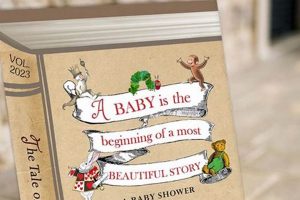
A thoughtful alternative to traditional greeting cards at a baby shower involves guests gifting books to the expectant parents for the child’s future library. Instead of signing a card that may be discarded, attendees inscribe a message inside the cover of a book, creating a lasting keepsake for the family and a growing collection of literature for the baby.
This practice offers several advantages. It fosters a love of reading from an early age, provides a valuable educational resource for the child, and generates a unique and personalized collection of stories imbued with well-wishes from loved ones. This tradition moves away from disposable greetings and toward a more sustainable and meaningful form of celebration.
Considering participation in this movement, it is useful to explore selection criteria, inscription suggestions, and methods for communicating this preference to guests, thereby ensuring a successful and enriching experience for all involved.
Selecting Books for a Baby Shower Gift
Choosing the right book involves considering age appropriateness, educational value, and the parents’ preferences. Thoughtful selection ensures the gift will be cherished and beneficial.
Tip 1: Consider Age Appropriateness: Select board books for infants, picture books for toddlers, and early chapter books for older children. Check age recommendations on the book’s cover.
Tip 2: Diversify Genres: Include a mix of classic tales, educational books, and books featuring diverse characters and perspectives. This promotes a well-rounded literary experience.
Tip 3: Inscribe Thoughtful Messages: Write a personal message inside the cover, expressing your well-wishes for the child’s future. Share a favorite memory or an encouraging sentiment.
Tip 4: Coordinate with the Parents-to-Be: If possible, inquire about the parents’ preferences or any books they already own to avoid duplication. A registry can facilitate this.
Tip 5: Focus on Durability: Choose books that are made to withstand wear and tear, particularly for younger children. Board books and sturdy picture books are ideal.
Tip 6: Consider Interactive Elements: Books with textures, sounds, or lift-the-flaps can enhance engagement and make reading a more interactive experience.
Tip 7: Support Local Authors and Illustrators: Opting for books from local creators can introduce the child to regional culture and support the local literary community.
Thoughtful selection ensures the book becomes a cherished keepsake, contributing to the child’s intellectual development and creating lasting memories.
Moving forward, the focus will shift to communicating this preference to shower guests.
1. Literary Value

The selection of books with inherent literary merit elevates the “books for baby shower instead of cards” concept from a mere gifting trend to an investment in the childs intellectual and emotional development. The quality of the literature provided shapes early cognitive experiences and fosters a lifelong appreciation for language and storytelling.
- Exposure to Rich Language
Books with strong literary value often employ sophisticated vocabulary and diverse sentence structures. This exposure enhances a childs linguistic abilities, improving reading comprehension, vocabulary acquisition, and overall communication skills. Classic literature, such as works by Maurice Sendak or Margaret Wise Brown, exemplifies this principle.
- Development of Critical Thinking
Literary works with complex narratives and nuanced characters encourage critical thinking. Children learn to analyze motives, understand different perspectives, and draw inferences, thereby developing essential analytical skills applicable across various domains. The exploration of themes in books like “Charlotte’s Web” fosters deeper understanding of concepts such as friendship and sacrifice.
- Cultural Understanding
Books with literary value often offer insights into different cultures, historical periods, and social contexts. Exposure to diverse narratives broadens a childs understanding of the world and promotes empathy and tolerance. Examples include folktales from various cultures or historical fiction that presents accurate and sensitive portrayals of the past.
- Emotional Intelligence
Quality literature often explores complex emotions and relationships. Children learn to recognize and understand their own feelings and the feelings of others, enhancing their emotional intelligence. Books that address themes of loss, resilience, or acceptance contribute significantly to a child’s emotional development.
The incorporation of books possessing substantial literary value within the “books for baby shower instead of cards” initiative contributes profoundly to a child’s cognitive, emotional, and social development, fostering a lifelong appreciation for literature and its transformative power.
2. Lasting Keepsake

The concept of books for baby shower instead of cards inherently emphasizes the creation of a lasting keepsake. Unlike ephemeral greeting cards, books possess the potential to endure through the child’s formative years and beyond, evolving into cherished mementos. The inscriptions within these books, personalized messages from loved ones, transform each volume into a tangible representation of the support and anticipation surrounding the childs arrival. This transition from disposable greetings to enduring objects has significant impact on emotional value.
The permanence of books as keepsakes ensures that the sentiments expressed at the baby shower remain accessible for years to come. As the child grows, they can revisit these books, not only enjoying the stories but also connecting with the individuals who gifted them. Each reading becomes a reminder of the network of care and affection surrounding them. For example, a book gifted by a grandparent with a handwritten message can become an especially poignant reminder of that bond, particularly if the grandparent is no longer present. The practical result is a library that doubles as a family history.
In summary, the enduring nature of books makes them ideal substitutes for transient cards at a baby shower. The inscriptions added to these books transform them into deeply personal keepsakes that resonate throughout a childs life, fostering a sense of connection and belonging. While challenges such as book selection or inscription prompts may arise, the benefits of establishing a lasting legacy of love and literacy far outweigh any obstacles.
3. Educational benefit

The practice of gifting books for a baby shower instead of cards has a direct and measurable impact on a child’s cognitive development. The accumulation of a home library from an early age correlates with increased reading proficiency, vocabulary acquisition, and overall academic success. The educational benefit is not merely the presence of books, but also the exposure to diverse literary styles, narrative structures, and subject matter. A child who grows up surrounded by books is more likely to develop a love for reading, which in turn fosters a lifelong pursuit of knowledge. For example, early exposure to board books can stimulate visual and tactile senses, while picture books can introduce fundamental concepts such as colors, shapes, and numbers. This early learning lays the groundwork for more complex cognitive skills later in life.
Moreover, the inscriptions within these books serve as personalized learning tools. Parents and family members can use the books to engage in interactive reading sessions, tailoring the content to the child’s individual interests and developmental stage. The inscriptions can also serve as springboards for discussions about values, morals, and life lessons. Furthermore, the educational benefit extends beyond purely academic skills. Reading fiction can enhance empathy and emotional intelligence, as children learn to identify with characters and understand their motivations. Non-fiction books can introduce children to a wide range of subjects, from science and history to art and music, broadening their horizons and sparking their curiosity. Example, research has shown a direct correlation between the number of books in a home and a child’s years of completed education.
In summary, the educational benefit is a central and compelling reason to adopt the “books for baby shower instead of cards” tradition. It goes beyond a simple act of gifting; it is an investment in a child’s future, fostering a love of learning, expanding knowledge, and promoting cognitive and emotional development. While careful book selection and parental involvement are necessary to maximize these benefits, the potential for positive impact is undeniable. This initiative can transform a baby shower into a celebration of literacy and a commitment to lifelong learning.
4. Parental preference

The successful implementation of a “books for baby shower instead of cards” initiative hinges significantly on acknowledging and respecting parental preference. The selection of books should align with the parents’ values, cultural background, and educational philosophies. Disregarding parental input can result in a collection of books that are either unwanted, redundant, or inconsistent with the family’s beliefs, thereby undermining the intended purpose of the gift. For instance, some parents may prioritize books that promote STEM education, while others may prefer classic literature or books that celebrate diversity. A failure to ascertain these preferences can lead to a collection of gifts that ultimately fail to resonate with the family.
Understanding parental preference involves more than just identifying preferred genres or authors. It also includes considering the parents’ overall approach to child-rearing and their long-term educational goals. For example, parents who are committed to bilingualism may appreciate books in multiple languages. Similarly, parents who are environmentally conscious may prefer books made from recycled materials or those that promote environmental awareness. Furthermore, parental preference extends to the aesthetic qualities of the books. Some parents may value visually appealing illustrations and high-quality production values, while others may prioritize durability and functionality. A coordinated effort to gather information about these various dimensions of parental preference is essential for ensuring the gifts are both meaningful and appreciated.
In summary, parental preference serves as a guiding principle for the “books for baby shower instead of cards” initiative. Aligning book selections with parental values and educational goals maximizes the likelihood that the gifts will be cherished and utilized. It also demonstrates respect for the parents’ autonomy and their role as primary caregivers. While accommodating diverse preferences may present challenges, the effort to understand and honor parental perspectives ultimately enhances the significance and impact of this alternative gifting tradition. Neglecting parental preference can compromise the integrity of the initiative and diminish its long-term value.
5. Age Appropriate

The selection of age-appropriate books is paramount within the framework of gifting books for a baby shower in lieu of traditional cards. This consideration directly impacts the immediate usability and long-term relevance of the gift. Presenting books intended for older children to an infant, for example, renders the gift temporarily unusable, delaying its potential educational and emotional benefits. Conversely, offering solely board books may limit the breadth of the child’s future literary experiences. A diversified collection, strategically curated with age progression in mind, maximizes the sustained value and practicality of this alternative gifting approach.
Age appropriateness is not solely defined by the child’s chronological age; it also encompasses developmental milestones and cognitive abilities. Board books, designed for infants and toddlers, utilize simple language, durable materials, and visually engaging illustrations to stimulate early sensory development. Picture books, suitable for preschool-aged children, introduce more complex narratives, characters, and themes, fostering imagination and emotional intelligence. Early chapter books, aimed at elementary school children, build reading comprehension and vocabulary skills, preparing them for more advanced literary endeavors. For instance, gifting a collection encompassing board books such as “Brown Bear, Brown Bear, What Do You See?” alongside picture books like “The Very Hungry Caterpillar” and early chapter books such as “Frog and Toad Are Friends” ensures a balanced literary foundation for the child’s evolving needs.
In summary, the principle of age appropriateness serves as a critical determinant in the success of a “books for baby shower instead of cards” initiative. Careful consideration of the child’s developmental stage and cognitive abilities ensures the selection of books that are both engaging and beneficial. This strategic approach enhances the long-term value of the gift, transforming it from a well-intentioned gesture into a sustained contribution to the child’s intellectual and emotional growth. Failure to prioritize age appropriateness can diminish the impact of this alternative gifting tradition, rendering the gifts less effective and potentially undermining their intended purpose.
6. Inscription meaning

In the context of gifting books at a baby shower as an alternative to cards, the inscription assumes paramount importance. It transforms a simple object into a personalized keepsake, imbuing the book with sentimental value and creating a lasting connection between the giver, the recipient, and the child.
- Personalized Wishes and Advice
Inscriptions offer the opportunity to express heartfelt wishes for the child’s future, offer words of wisdom, or share personal anecdotes. For instance, a grandparent might write about their own favorite childhood book and the lessons it taught them. These personalized messages provide the child with a sense of connection to their extended family and friends, creating a legacy of love and support. The inclusion of advice, whether practical or philosophical, can serve as a guiding principle throughout the child’s life.
- Memories and Shared Experiences
Inscriptions can also encapsulate shared memories between the giver and the parents-to-be. These recollections add a layer of depth and intimacy to the gift, transforming it into a time capsule of significant moments. For example, a friend might reference a memorable event from the parents’ courtship or a shared experience that solidified their friendship. These inscriptions serve as reminders of the strong bonds of friendship and familial love that surround the child’s arrival.
- Literary Context and Inspiration
An inscription can provide context for the book itself, explaining why it was chosen or highlighting its particular significance. This can encourage the child to engage with the book on a deeper level, fostering a love of reading and a critical appreciation for literature. For instance, a giver might explain why they found a particular book to be inspiring or thought-provoking. This adds value to the gift, and it acts as a literary recommendation or invitation to delve into the power of narrative.
- Timeless Sentiment and Enduring Love
The essence of an inscription lies in its ability to convey enduring love and support. The act of writing a heartfelt message ensures that the sentiment will endure, transcending the fleeting nature of a greeting card. The inscription represents an investment in the child’s future, conveying a lasting message of love and encouragement that can be revisited throughout their life. It embodies the hope and aspirations that loved ones hold for the child, securing its place as a meaningful heirloom.
The inscription transforms a book from a mere object into a deeply personal and meaningful gift within the “books for baby shower instead of cards” tradition. It serves as a testament to the connections and sentiments that surround the child’s birth, enriching the reading experience and creating a lasting legacy of love and literacy.
7. Genre diversity

In the context of gifting books for baby showers as an alternative to traditional cards, genre diversity assumes a crucial role in fostering comprehensive intellectual and emotional development. A collection encompassing varied genres provides a more enriching and well-rounded literary foundation for the child.
- Cognitive Development Through Non-Fiction
Non-fiction books, including biographies, scientific explanations, and historical accounts, cultivate critical thinking and expand the child’s knowledge base. Exposure to factual information early in life stimulates curiosity and encourages a lifelong pursuit of learning. Introducing topics such as astronomy or animal biology, even at a young age, can plant the seeds for future academic interests and scientific literacy.
- Emotional Intelligence via Realistic Fiction
Realistic fiction helps children navigate complex social dynamics and understand diverse perspectives. Books exploring themes of friendship, family relationships, and personal challenges provide valuable lessons in empathy and emotional regulation. These stories offer a safe space for children to explore difficult emotions and develop coping mechanisms, fostering emotional resilience and social awareness.
- Imagination and Creativity with Fantasy and Science Fiction
Fantasy and science fiction genres stimulate imagination and foster creative problem-solving skills. Books featuring fantastical worlds, magical creatures, or futuristic technologies encourage children to think outside the box and explore unconventional solutions. These genres can also introduce complex moral and philosophical questions, prompting critical thinking and ethical reasoning.
- Cultural Awareness Through Folktales and Mythology
Folktales and mythology expose children to diverse cultures, traditions, and belief systems. These stories offer insights into the values and customs of different societies, fostering intercultural understanding and promoting tolerance. Exposure to a wide range of cultural narratives broadens children’s perspectives and encourages appreciation for the richness and diversity of the human experience.
The conscious incorporation of genre diversity within a collection of books gifted at a baby shower transforms the act from a simple gesture into a strategic investment in the child’s holistic development. The inclusion of non-fiction, realistic fiction, fantasy, science fiction, folktales, and mythology contributes to a comprehensive literary foundation that fosters cognitive growth, emotional intelligence, imagination, and cultural awareness. In practice, the careful selection of books representing diverse genres ensures that the child receives a rich and varied exposure to the world and its narratives.
Frequently Asked Questions
The following addresses common inquiries surrounding the practice of gifting books in lieu of traditional greeting cards at baby showers, providing clarity and guidance for those considering this alternative.
Question 1: Is it appropriate to request books instead of cards for a baby shower?
The request is generally considered appropriate, particularly when communicated politely and with sufficient advance notice. Clarity in wording is crucial to ensure guests understand the request. It is advisable to provide suggestions or guidelines to facilitate the selection process.
Question 2: How should this preference be communicated to baby shower guests?
The preference should be clearly stated on the baby shower invitation. Language such as “In lieu of cards, a book for the baby’s library would be greatly appreciated” is effective. Providing a brief explanation of the rationale behind this request can further enhance guest understanding.
Question 3: What types of books are most suitable for this purpose?
Suitable books encompass a wide range of genres and age levels, from board books for infants to early chapter books for toddlers and young children. Factors such as durability, educational value, and parental preferences should guide the selection process.
Question 4: Should a gift registry be created to manage book selections?
Creating a gift registry is a prudent approach to prevent duplicate gifts and ensure the collection aligns with parental preferences. The registry should include a diverse selection of books across various age ranges and genres.
Question 5: Is there a polite way to discourage guests who insist on giving cards?
Direct discouragement is not advisable. However, phrasing the invitation to strongly emphasize the preference for books can subtly guide guests toward that option. A gentle reminder to inscribe the book with a message, instead of including a separate card, may further reinforce the intent.
Question 6: What is the appropriate etiquette for the expectant parents upon receiving books as gifts?
Expressing sincere gratitude for each book is essential. Parents should acknowledge the thoughtfulness of the gift and the personal message inscribed within. A handwritten thank-you note, specifically mentioning the book title and the giver’s message, demonstrates appreciation for the gesture.
The key takeaways emphasize clear communication, respectful acknowledgement of guest preferences, and genuine appreciation for the gifts received. Careful planning and execution ensure a successful and meaningful experience for all involved.
Attention now shifts to summarizing the key elements discussed within this discourse.
Books for Baby Shower Instead of Cards
The preceding discussion has elucidated the multifaceted benefits and considerations associated with the “books for baby shower instead of cards” concept. Key elements encompass the literary value, the lasting keepsake aspect, the educational benefit, respect for parental preference, age-appropriate selection, the meaningfulness of inscriptions, and genre diversity. Each of these components contributes to the creation of a thoughtful and enduring gift that extends beyond the ephemeral nature of traditional greeting cards.
The adoption of this practice represents a deliberate shift towards fostering literacy, promoting intellectual development, and cultivating meaningful connections. The long-term impact of instilling a love of reading and providing a personalized collection of stories warrants careful consideration and informed implementation by those seeking to celebrate new life with intention and purpose.