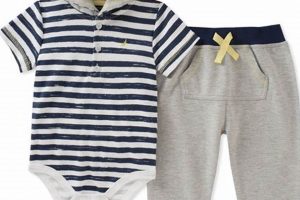
Garments designed for infants and young children, intended for nighttime wear, and specifically engineered to regulate body temperature are a category of specialized apparel. These items often incorporate materials and construction techniques that promote breathability and moisture-wicking, helping to maintain a comfortable and stable thermal environment for the child during sleep. For example, a one-piece pajama constructed from merino wool or bamboo fabric, featuring strategically placed ventilation panels, would fall into this category.
The value of such apparel lies in its potential to contribute to improved sleep quality for infants. Maintaining a consistent body temperature can reduce the likelihood of overheating or chilling, conditions that may disrupt sleep patterns. Historically, parents have sought various methods to ensure their children’s comfort during sleep; this type of clothing represents a modern approach, leveraging advancements in textile technology to address this ongoing need.
The subsequent sections will delve into the specific types of materials used in the construction of temperature-regulating sleepwear, explore the physiological benefits associated with maintaining a stable thermal environment during sleep, and provide guidance on selecting appropriate garments for different age groups and environmental conditions. These considerations are vital for ensuring the safety and well-being of the child.
Guidance on Selection and Use
The following guidelines are provided to assist in the appropriate selection and utilization of temperature-regulating sleepwear for infants.
Tip 1: Prioritize Material Composition: Opt for natural fibers such as merino wool or bamboo, known for their breathability and moisture-wicking properties. Synthetics may trap heat and moisture, potentially leading to discomfort.
Tip 2: Consider the Tog Rating: If the garments have a tog rating (a measure of thermal resistance), select one appropriate for the ambient room temperature. Higher tog ratings are suitable for colder environments, while lower ratings are better for warmer conditions.
Tip 3: Layering Strategically: In cooler climates, consider layering temperature-regulating sleepwear with other lightweight, breathable garments. Avoid overdressing the infant, as this can lead to overheating.
Tip 4: Monitor the Infant’s Temperature: Regularly check the infant’s temperature, particularly during the initial use of these garments. Signs of overheating include flushed skin, rapid breathing, and sweating. Conversely, signs of chilling include cold extremities and shivering.
Tip 5: Ensure Proper Fit: Select garments that fit appropriately. Clothing that is too tight can restrict movement and potentially impede circulation. Clothing that is too loose may pose a suffocation hazard.
Tip 6: Adhere to Safe Sleep Practices: Always place infants on their backs to sleep, regardless of the type of sleepwear used. Ensure the sleep environment is free from loose blankets, pillows, and toys.
Tip 7: Wash According to Instructions: Follow the manufacturer’s washing instructions to maintain the integrity of the fabric and its temperature-regulating properties. Harsh detergents and high heat settings can damage delicate fibers.
Adherence to these recommendations can contribute to a safer and more comfortable sleep environment for the infant, promoting improved sleep quality and overall well-being.
The final section will address common concerns and provide additional resources for parents seeking information on infant sleep safety.
1. Material Breathability

Material breathability, in the context of infant nighttime apparel designed for temperature regulation, is a fundamental attribute directly influencing the microclimate surrounding the infant’s body. Breathable fabrics facilitate the passive exchange of air and moisture vapor between the skin surface and the external environment. The cause-and-effect relationship is evident: fabrics with higher breathability values allow for greater evaporative cooling, reducing the likelihood of overheating during sleep. The importance of this characteristic is underscored by the limited capacity of infants to regulate their body temperature, making them particularly susceptible to fluctuations in their thermal environment. For example, garments constructed from tightly woven synthetic fibers exhibit low breathability, potentially trapping heat and moisture, which increases the risk of discomfort and disturbed sleep.
Practical significance lies in the selection of appropriate fabrics. Natural fibers like merino wool and cotton, or advanced synthetics engineered for moisture-wicking, demonstrate superior breathability compared to conventional polyester or fleece. These materials allow perspiration to evaporate more readily, maintaining a drier and more stable skin temperature. Consequently, infants wearing breathable nighttime apparel are less prone to heat rash, restlessness, and disrupted sleep cycles. Furthermore, breathable materials reduce the risk of bacterial growth, as they minimize the accumulation of moisture, which is a conducive environment for microorganisms.
In summary, material breathability is a critical component of effective temperature-regulating infant sleepwear. Its influence on the infant’s thermal environment has significant implications for comfort, sleep quality, and overall well-being. While challenges exist in accurately measuring and quantifying breathability, a thorough understanding of fabric properties and their impact on heat and moisture transfer is essential for selecting garments that promote a safe and comfortable sleep environment for infants. This understanding directly relates to the broader theme of optimizing infant health and development through informed choices in apparel and sleep practices.
2. Thermal Regulation

Thermal regulation, in the context of infant sleepwear, refers to the maintenance of a stable core body temperature, crucial for physiological well-being and undisturbed sleep. Garments designed for this purpose aim to mitigate temperature fluctuations, preventing both overheating and chilling, which can disrupt sleep patterns and potentially compromise infant health.
- Fabric Composition and Heat Retention
The inherent thermal properties of a fabric directly influence heat retention. Natural fibers, such as merino wool, possess a crimped structure that creates air pockets, providing insulation and reducing heat loss in cooler environments. Conversely, tightly woven synthetic fabrics can trap heat, leading to overheating. The selection of appropriate fabric types is therefore critical in ensuring optimal thermal regulation.
- Moisture Management and Evaporative Cooling
The ability of a fabric to wick moisture away from the skin is essential for effective thermal regulation. Evaporation of moisture from the skin’s surface causes cooling. Fabrics with high moisture-wicking capabilities, such as bamboo or certain engineered synthetics, facilitate this process, preventing the build-up of perspiration and reducing the risk of overheating, particularly in warmer climates.
- Garment Design and Ventilation
The design of the sleepwear, including features like strategically placed ventilation panels or looser fits, can enhance air circulation and facilitate heat dissipation. Conversely, tightly fitting garments or those with excessive layers can impede airflow and contribute to overheating. Therefore, careful consideration of garment design is necessary to optimize thermal regulation.
- Environmental Considerations and Adaptation
External factors, such as ambient room temperature and humidity, significantly influence the thermal demands placed on infant sleepwear. The selection of appropriate garments should take into account these environmental conditions. Lighter, more breathable materials are suitable for warmer environments, while heavier, more insulating materials are appropriate for cooler temperatures. Adjusting the garment choice to suit the prevailing conditions is crucial for maintaining thermal equilibrium.
The aforementioned facets highlight the multifaceted nature of thermal regulation in infant sleepwear. Optimizing fabric composition, moisture management, garment design, and adaptation to environmental conditions are all critical factors in ensuring that these garments effectively maintain a stable and comfortable core body temperature for infants during sleep, thereby promoting health and well-being.
3. Moisture Management

Effective moisture management is a critical characteristic of infant nighttime apparel designed to regulate temperature. The ability of a garment to effectively wick away and manage moisture contributes significantly to maintaining a comfortable and stable microclimate for the infant, reducing the risk of skin irritation and promoting uninterrupted sleep. This feature is particularly important given infants’ limited capacity for thermoregulation and their increased susceptibility to skin conditions.
- Fiber Composition and Wicking Action
The type of fiber used in the construction of the garment directly influences its moisture-wicking capabilities. Hydrophobic fibers, such as polyester, tend to repel water, trapping moisture against the skin. In contrast, hydrophilic fibers, like merino wool, cotton, and bamboo, possess the ability to absorb and draw moisture away from the skin surface. The selection of hydrophilic fibers is crucial for promoting effective moisture management in infant sleepwear. For example, garments made from bamboo rayon exhibit excellent wicking properties, drawing perspiration away from the skin and allowing it to evaporate more readily, thus maintaining a drier and more comfortable environment.
- Fabric Structure and Air Permeability
Beyond fiber type, the structure of the fabric also plays a significant role. Loosely woven fabrics or those with specific engineered structures enhance air permeability, facilitating the evaporation of moisture that has been wicked away from the skin. Tightly woven fabrics, conversely, restrict airflow, hindering evaporation and potentially leading to a build-up of moisture. The ideal fabric structure combines effective wicking action with sufficient air permeability to ensure that moisture is efficiently transported away from the body and allowed to evaporate. This effect is readily observable in performance athletic wear designed to manage perspiration during strenuous activity, a principle directly applicable to infant sleepwear.
- Impact on Skin Health
The accumulation of moisture against the skin can create an environment conducive to the growth of bacteria and fungi, increasing the risk of skin irritation, rashes, and other dermatological issues. Effective moisture management reduces this risk by keeping the skin dry and minimizing the potential for microbial proliferation. Infants with sensitive skin or a history of eczema benefit particularly from sleepwear that prioritizes moisture management, as it helps to prevent flare-ups and maintain skin integrity. For instance, infants prone to diaper rash are often advised to wear breathable clothing that minimizes moisture contact in the affected area.
- Influence on Sleep Quality
Discomfort caused by excessive moisture can disrupt sleep patterns and lead to restlessness and irritability in infants. By maintaining a drier and more comfortable sleep environment, effective moisture management promotes improved sleep quality. Infants who are less likely to wake up due to discomfort from perspiration are more likely to experience longer, more restful sleep periods, contributing to their overall health and development. Studies have shown a direct correlation between comfortable sleepwear and improved sleep outcomes in infants, highlighting the importance of moisture management as a key factor in sleep hygiene.
These facets collectively demonstrate the significance of moisture management in the design and selection of “baby night tempurate clothing”. By prioritizing fabrics and construction techniques that effectively wick away moisture and promote air permeability, manufacturers can create garments that contribute to a healthier, more comfortable, and more restful sleep experience for infants. The long-term implications of improved sleep quality and reduced skin irritation underscore the value of this crucial design element.
4. Proper Sizing

Proper sizing is paramount when selecting infant sleepwear, particularly garments engineered for temperature regulation. Incorrect sizing can compromise the intended functionality of the clothing and potentially pose safety risks. This section explores the multifaceted implications of proper sizing in relation to infant nighttime apparel.
- Impact on Thermal Regulation Efficiency
Garments that are too tight restrict air circulation, hindering the fabric’s ability to effectively manage moisture and dissipate heat. This can lead to overheating, counteracting the intended thermal regulation properties. Conversely, excessively loose clothing creates air gaps that can disrupt the thermal balance, leading to chilling in cooler environments. For instance, a temperature-regulating sleep sack that is too small will not allow for adequate movement and ventilation, while an oversized sleep sack may not provide sufficient insulation.
- Influence on Comfort and Mobility
Restrictive clothing inhibits natural movement and can cause discomfort, disrupting sleep. Infants require freedom of movement to adjust their position during sleep. Properly sized garments allow for comfortable movement without being overly constricting. For example, a properly sized footed pajama should allow the infant to kick and stretch without feeling confined. Ill-fitting clothing can lead to increased fussiness and awakenings during the night.
- Potential Safety Hazards
Overly large garments pose a suffocation risk. Loose fabric can bunch up around the infant’s face, obstructing breathing. Conversely, garments that are too small can restrict circulation and potentially cause skin irritation. Ensuring the correct size minimizes these potential hazards. For example, drawstrings or loose ribbons on oversized garments present a significant strangulation risk and should be avoided.
- Accurate Measurement and Growth Considerations
Accurate measurement is essential for determining the appropriate size. Manufacturers typically provide sizing charts based on the infant’s weight and height. It is important to consult these charts and measure the infant accurately before selecting a size. Furthermore, infants grow rapidly, so it is advisable to select sizes that allow for some growth without being excessively large. Regularly assessing the fit of the garment is crucial to ensure ongoing safety and comfort.
These facets demonstrate the criticality of proper sizing in maximizing the benefits and minimizing the risks associated with temperature-regulating infant sleepwear. Careful consideration of these factors contributes to a safer and more comfortable sleep environment, promoting the infant’s well-being. The accurate selection and consistent monitoring of garment fit are essential components of responsible infant care.
5. Safety Standards

Stringent safety standards govern the production and sale of infant apparel, including temperature-regulating sleepwear. These standards address a range of potential hazards, from flammability and chemical content to small parts and strangulation risks. Non-compliance with these standards can result in product recalls and legal liabilities, highlighting the critical importance of adherence for manufacturers. The cause-and-effect relationship is clear: rigorous testing and compliance with established safety protocols minimize the likelihood of harm to infants. For example, regulations such as the Consumer Product Safety Improvement Act (CPSIA) in the United States mandate testing for lead content and phthalates in children’s clothing, mitigating the risk of chemical exposure.
Further examples include flammability standards, which require that infant sleepwear either be flame-resistant or fit snugly to prevent easy ignition. Garments failing to meet these standards can pose a significant burn risk. The selection of appropriate closures, such as snaps or zippers, is also governed by safety regulations to prevent choking hazards. Real-world incidents involving recalled infant clothing due to non-compliance with safety standards underscore the practical significance of understanding and adhering to these regulations. Parents and caregivers must be aware of these standards when selecting infant sleepwear to ensure the safety and well-being of the child.
In summary, safety standards are an integral component of temperature-regulating infant sleepwear. These standards mitigate a range of potential hazards, protecting infants from harm. While navigating the complexities of these regulations can be challenging for both manufacturers and consumers, adherence to established safety protocols is essential for ensuring the safety and well-being of infants. This understanding reinforces the broader theme of prioritizing infant health through informed choices and responsible manufacturing practices.
Frequently Asked Questions
The following questions and answers address common inquiries and concerns regarding temperature-regulating sleepwear for infants, offering clarity on their functionality and safe usage.
Question 1: What are the primary benefits of temperature-regulating infant sleepwear?
The principal advantages include maintaining a stable core body temperature, reducing the risk of overheating or chilling, promoting improved sleep quality, and minimizing skin irritation associated with excessive moisture.
Question 2: How does temperature-regulating sleepwear differ from conventional infant pajamas?
Unlike standard pajamas, these garments utilize specialized fabrics and designs to actively manage heat and moisture, facilitating evaporative cooling and insulation as needed to maintain a consistent thermal environment.
Question 3: What materials are considered most suitable for temperature-regulating infant sleepwear?
Natural fibers like merino wool and bamboo are favored for their breathability, moisture-wicking properties, and inherent temperature-regulating capabilities. Engineered synthetics designed for similar performance attributes are also utilized.
Question 4: How should parents determine the appropriate size and tog rating for temperature-regulating sleepwear?
Manufacturers’ sizing charts, based on weight and height, should be consulted. Tog ratings, indicating thermal resistance, should be selected according to the ambient room temperature. Lower tog ratings are suitable for warmer environments, while higher ratings are appropriate for cooler conditions.
Question 5: What safety precautions should be observed when using temperature-regulating infant sleepwear?
Garments should fit appropriately to prevent restriction or entanglement. Overdressing should be avoided. Infants should always be placed on their backs to sleep, and the sleep environment should be free from loose bedding or other potential hazards. Compliance with relevant safety standards is paramount.
Question 6: How should temperature-regulating infant sleepwear be laundered to maintain its performance characteristics?
Manufacturer’s washing instructions should be followed meticulously. Harsh detergents, bleach, and high heat settings can damage delicate fibers and compromise the garment’s temperature-regulating properties.
Understanding these key aspects ensures the informed and responsible use of temperature-regulating sleepwear, promoting the health and safety of infants during sleep.
The subsequent section will provide a concluding overview of the core principles and best practices discussed throughout this article.
Conclusion
This exploration has illuminated the critical aspects of “baby night tempurate clothing,” underscoring its role in maintaining a stable and comfortable sleep environment for infants. Key considerations include material selection, emphasizing breathability and moisture management; proper sizing, crucial for both safety and thermal regulation; and adherence to stringent safety standards to mitigate potential hazards. The information presented reinforces the notion that these garments represent a significant advancement in infant care, offering tangible benefits in terms of sleep quality and overall well-being.
The ongoing pursuit of safer and more effective solutions for infant sleep underscores a commitment to improving the lives of our youngest members. Continued research, technological innovation, and rigorous adherence to safety protocols are essential to ensure that advancements in infant apparel translate into measurable improvements in health and developmental outcomes. Prioritizing informed decision-making and responsible manufacturing practices remains paramount in this critical endeavor.