Determining appropriate dimensions for handcrafted infant coverings involves several considerations. These dimensions directly influence the item’s utility and safety. For instance, a very small covering might not adequately warm a baby, while an excessively large one could pose a suffocation hazard. Therefore, careful selection of measurements is crucial when creating these items.
Properly sized handmade infant blankets offer numerous advantages. They provide warmth and comfort, aiding in regulating the baby’s body temperature. Historically, such items have served as symbols of care and affection, often passed down through generations. The act of creating one provides a tangible expression of love and contributes to a sense of security for the infant.
The following sections will examine common dimension ranges for these handmade coverings, factors influencing dimension choices, and guidance on selecting the most suitable dimensions based on the intended use and recipient’s age and size. Specific information on selecting appropriate yarn weights and crochet stitch patterns will also be discussed, ensuring a safe and aesthetically pleasing final product.
Guidance on Dimensions for Crocheted Infant Coverings
The following recommendations provide assistance in determining the appropriate dimensions for crocheted coverings intended for infants. Adhering to these suggestions will contribute to both the safety and functionality of the finished item.
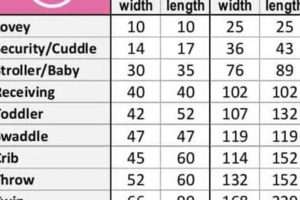
Tip 1: Premature Infant Dimensions: For premature infants, a smaller size is advised, typically ranging from 18 inches by 24 inches to 24 inches by 24 inches. This prevents excessive material from potentially posing a hazard.
Tip 2: Newborn Dimensions: A standard newborn size generally falls within the range of 30 inches by 30 inches to 36 inches by 36 inches. This provides adequate coverage without being overly cumbersome.
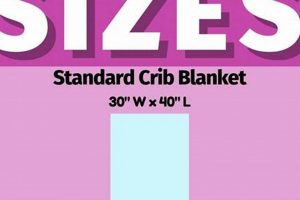
Tip 3: Stroller Dimensions: Coverings intended for use in strollers should be appropriately sized to fit comfortably within the stroller without dragging on the ground. Dimensions of approximately 30 inches by 40 inches are generally suitable.
Tip 4: Toddler Dimensions: For toddlers, a larger dimension is recommended, often around 40 inches by 60 inches. This accommodates their increased size and activity level.
Tip 5: Gauge Swatch Importance: Always create a gauge swatch using the chosen yarn and hook to ensure the finished item will meet the intended dimensions. Adjust hook size as needed to achieve the correct gauge.
Tip 6: Border Considerations: Account for the addition of a border when calculating the initial dimensions. A border can add several inches to the overall size of the finished item.
Tip 7: Yarn Weight Impact: The weight of the yarn selected will directly impact the final size. Thicker yarns will result in a larger, denser covering compared to finer yarns.
Tip 8: Stitch Pattern Density: Denser stitch patterns, such as single crochet, will typically result in a smaller, more compact covering compared to looser patterns like granny squares. Adjust dimensions accordingly.
These guidelines offer a starting point for determining suitable dimensions. Individual preferences and the specific needs of the infant should always be taken into account. Prioritizing safety and functionality is paramount when creating items intended for young children.
The subsequent sections will delve into the selection of appropriate yarn fibers and textures, further enhancing the comfort and safety of the finished crocheted infant covering.
1. Premature dimensions

Appropriate dimensions for crocheted infant coverings intended for premature babies are critical. Given the unique vulnerabilities of premature infants, selecting the correct size is paramount for both safety and comfort. These smaller-than-average dimensions mitigate potential hazards and ensure the covering provides warmth without overwhelming the infant.
- Reduced Suffocation Risk
Larger coverings can pose a suffocation risk for premature infants due to their limited mobility and weaker reflexes. Smaller dimensions, typically ranging from 18 inches by 24 inches to 24 inches by 24 inches, minimize the risk of the fabric covering the infant’s face. Clinical settings often adhere to strict size guidelines for this reason.
- Incubator Compatibility
Premature infants often require incubation to maintain stable body temperatures. Overly large coverings can interfere with the incubator’s functionality and impede medical staff access. Compact dimensions facilitate easy placement and removal within the incubator environment, ensuring optimal thermal regulation and care accessibility.
- Thermal Regulation Efficiency
Premature infants have difficulty regulating their body temperature. A smaller crocheted covering, appropriately sized, can provide targeted warmth without causing overheating. The goal is to create a microclimate of warmth and security without compromising the infant’s ability to dissipate excess heat. Material choice is equally important, favoring breathable, natural fibers.
- Developmental Appropriateness
Excessive fabric can be visually overwhelming and potentially impede the infant’s developing motor skills. Smaller dimensions are visually less stimulating and allow for greater freedom of movement. The simplicity of a smaller covering aligns with the developmental needs of a premature infant, fostering a sense of calm and security.
In summary, the selection of precise dimensions for crocheted infant coverings designed for premature babies directly addresses crucial safety and developmental considerations. The reduced size minimizes suffocation risks, ensures incubator compatibility, promotes efficient thermal regulation, and respects the infant’s developmental stage. These dimensional considerations are not arbitrary but represent a critical aspect of providing appropriate care through handcrafted items.
2. Newborn standard

The “newborn standard” serves as a foundational parameter within the broader context of “baby blanket sizes crochet.” It represents a dimension range optimized for infants in the immediate postnatal period. This standard is not arbitrary; it’s informed by anthropometric data, safety considerations, and functional requirements. A blanket adhering to the newborn standard typically ranges from 30 inches by 30 inches to 36 inches by 36 inches. This size provides adequate coverage for a newborn without presenting an excessive amount of loose fabric that could pose a hazard. Deviations from this standard, whether resulting in significantly larger or smaller dimensions, can compromise the blanket’s utility and safety profile. For example, a covering smaller than 30 inches might fail to provide sufficient warmth, while one exceeding 36 inches could become entangled or present a suffocation risk, especially if the infant lacks the motor skills to reposition it.
The application of the newborn standard in the crafting process directly influences material selection and stitch pattern choices. A crocheter aiming for a 32-inch square blanket, for instance, must calculate the necessary number of stitches and rows based on the chosen yarn’s gauge. Disregarding the standard can lead to a finished product that is either disproportionate or impractical for its intended use. Furthermore, the newborn standard implicitly guides the selection of yarn fiber. Soft, hypoallergenic materials are preferred to protect the delicate skin of a newborn. Rough or heavily textured yarns, regardless of the blanket’s adherence to size guidelines, would be unsuitable due to potential irritation. Thus, the standard operates as an integrated constraint, shaping not only the dimensions but also the overall composition of the crocheted item.
In conclusion, the newborn standard is a critical determinant within the realm of handcrafted infant coverings. It serves as a practical benchmark, informed by safety and functional needs, ensuring the resulting item is both useful and appropriate for the intended recipient. Challenges arise when crafters deviate from established guidelines without a thorough understanding of the potential consequences. While creativity and personalization are valued, adherence to foundational standards remains essential for producing safe and effective items for newborn care.
3. Stroller suitability

Stroller suitability, in the context of crocheted infant coverings, refers to the dimensional appropriateness of a blanket designed for use within a stroller. Dimensions are critical to ensure functionality and safety during stroller use.
- Wheel Entanglement Risk
Overly large coverings can trail onto the ground and become entangled in the stroller’s wheels. This presents a safety hazard, potentially causing the stroller to stop abruptly or tip over. Dimensions must be carefully calculated to prevent excess material from contacting the wheels. Common sizes suited for strollers typically range from 30 inches by 36 inches to 36 inches by 40 inches.
- Occupant Comfort and Coverage
The blanket must adequately cover the infant or toddler while seated in the stroller, providing warmth and protection from the elements. Insufficient coverage negates the blanket’s primary purpose. The dimensions should allow for the blanket to be tucked around the child without being excessively bulky or restrictive. The stroller’s seat dimensions are a critical factor in determining appropriate blanket size.
- Folding and Storage Considerations
A stroller-suitable blanket should be easily foldable and storable when not in use. Bulky or unwieldy blankets can consume valuable storage space within the stroller’s basket or require separate carrying. The chosen stitch pattern and yarn weight influence the blanket’s compressibility. Thinner, more pliable yarns and tighter stitch patterns typically result in a more compact and easily storable item.
- Accessibility for Harness Restraints
The blanket should not interfere with the proper functioning of the stroller’s harness restraints. It must be possible to secure the child safely without the blanket impeding the harness straps or buckles. The blankets dimensions and thickness should allow for unobstructed access to the harness system. This requires careful consideration of the blanket’s overall design and construction.
In summary, stroller suitability necessitates a balanced approach to dimensioning, ensuring both the safety and comfort of the child. The dimensions should prevent entanglement with the strollers wheels, provide adequate coverage, allow for easy folding and storage, and not obstruct the functionality of the harness restraints. Deviation from appropriately sized dimensions can compromise the overall utility and safety of the handcrafted covering.
4. Toddler comfort

Optimal dimensions in crocheted infant coverings directly impact a toddler’s sense of comfort and security. Sizing considerations move beyond simple coverage to encompass factors such as mobility, independence, and emotional well-being.
- Freedom of Movement
Toddlers are actively exploring their environment. A blanket of inappropriate size can restrict movement, leading to frustration and discomfort. Dimensions that allow for rolling, crawling, or walking while still providing coverage are essential. Common sizes suited for toddlers typically range from 40 inches by 45 inches to 45 inches by 60 inches.
- Development of Independence
Toddlers strive for autonomy. An excessively large or heavy covering can impede their ability to manage it independently, leading to dependence on caregivers. A lighter, more manageable size empowers toddlers to use the blanket as needed, fostering a sense of self-reliance. Yarn weight directly affects this aspect, lighter materials preferred.
- Regulation of Body Temperature
Toddlers engage in varied levels of physical activity. An appropriately sized and weighted covering allows for easier temperature regulation. Overly heavy or bulky items can lead to overheating, while insufficient coverage leaves them chilled. Breathable yarn fibers and open-stitch patterns contribute to effective temperature control.
- Emotional Security and Transitional Object
Coverings often serve as transitional objects, providing comfort and security during periods of stress or change. A familiar and appropriately sized item can facilitate emotional regulation, particularly during naps or bedtime. Consistency in size and texture can enhance its role as a source of comfort. Dimensions should not exceed the toddler’s physical capacity to manage and manipulate it.
These interconnected facets demonstrate that “toddler comfort” extends beyond basic physical needs. The interplay between dimensions, yarn selection, and stitch patterns directly affects a toddler’s physical, emotional, and developmental well-being. Handcrafted coverings that thoughtfully incorporate these considerations can enhance the toddler’s overall sense of security and independence.
5. Gauge consistency

Achieving predictable and accurate dimensions in handmade infant coverings requires meticulous attention to gauge consistency. The gauge, defined as the number of stitches and rows per unit of measure, is a fundamental determinant of the final product’s size. Inconsistencies in gauge directly translate into dimensional discrepancies, potentially rendering the covering either too small to provide adequate warmth or too large to be safely manageable.
- Impact on Planned Dimensions
The planned dimensions of an infant covering rely directly on maintaining the stated gauge outlined in the pattern or design. If the crocheter’s gauge deviates from the specified gauge, the final dimensions will deviate proportionally. For instance, if a pattern calls for 12 stitches per 4 inches and the crocheter achieves only 10 stitches, the finished item will be significantly wider than intended. This can result in the blanket being too large for a stroller or presenting a potential entanglement hazard.
- Influence of Yarn and Hook Combinations
Gauge is intricately linked to the specific combination of yarn and crochet hook employed. A change in either the yarn weight or the hook size will inevitably alter the gauge. Even slight variations in yarn thickness between different dye lots of the same yarn can impact the gauge. Therefore, it is essential to create a gauge swatch using the exact yarn and hook intended for the project and to adjust the hook size if necessary to achieve the specified gauge.
- Role of Tension Control
Consistent tension is paramount for maintaining a uniform gauge throughout the project. Variations in tension, even subtle ones, can accumulate over time, resulting in significant dimensional discrepancies. Factors such as crocheting environment, fatigue, and stress levels can influence tension. Regular breaks and conscious effort to maintain a consistent grip on the yarn are crucial for achieving gauge consistency. Blocking, a process of wetting and shaping the finished item, can help to even out minor tension inconsistencies but cannot compensate for significant gauge deviations.
- Integration with Border Application
The border of a crocheted infant covering often serves as a visual and structural finishing element. However, an inconsistent gauge throughout the body of the blanket can complicate the application of a border. Uneven edges resulting from gauge discrepancies can make it challenging to attach a border uniformly, leading to puckering or rippling. Accurate gauge is thus essential for ensuring a neat and professional finish, where the border seamlessly integrates with the central panel of the covering.
In conclusion, gauge consistency is not merely a technical detail but a critical factor ensuring the success of any “baby blanket sizes crochet” project. It is the foundation upon which accurate dimensions are built, influencing material choices, technique execution, and the final aesthetic outcome. Mastering the art of achieving consistent gauge is therefore essential for producing safe, functional, and aesthetically pleasing handmade infant coverings.
6. Border allowance

In the construction of crocheted infant coverings, border allowance is a critical dimensional factor. This allowance represents the additional length and width accounted for during the initial stages of planning, specifically to accommodate the application of a decorative or functional border. Failure to accurately estimate this allowance can result in a finished product whose overall dimensions deviate significantly from the intended size. This is particularly relevant within the context of “baby blanket sizes crochet,” where precision is paramount for safety and usability.
The border contributes not only aesthetically but also structurally to the infant covering. It can reinforce the edges, preventing unraveling, and provide a tactile element that enhances the blanket’s overall comfort. However, the application of a border inherently alters the dimensions of the crocheted fabric. A wide, dense border, for example, can add several inches to the overall length and width, potentially exceeding the prescribed dimensions for a newborn or stroller blanket. Conversely, a border that is too narrow or loosely constructed may fail to provide adequate reinforcement and could compromise the blanket’s durability. Examples of border styles impacting dimension include picot edges, which add minimal length, and shell stitch borders, which can add significant width. Therefore, the intended border style directly influences the initial dimensions of the crocheted panel.
Effective management of border allowance involves a two-pronged approach: accurate initial dimension calculations and consistent tension control during the crochet process. Prior to commencing the project, the crocheter must estimate the expected dimensional increase resulting from the chosen border style. This estimate is then subtracted from the desired final dimensions to determine the required size of the central panel. Throughout the crochet process, maintaining consistent tension is equally crucial. Variations in tension can distort the fabric, leading to uneven edges that complicate border attachment and further compromise the overall dimensions. Neglecting border allowance and tension control can result in an infant covering that is either too small, rendering it functionally inadequate, or too large, posing a potential safety hazard. The interplay between the central panel’s dimensions, the border’s dimensional impact, and consistent tension defines the final dimensions and suitability of the crocheted infant covering.
7. Yarn weight impact

Yarn weight, a classification system describing the thickness of yarn, exerts a significant influence on the final dimensions and overall characteristics of crocheted infant coverings. This influence is particularly relevant when considering desired dimensions for these handcrafted items.
- Dimensional Scalability
Yarn weight directly dictates the physical scale of the resulting fabric. A heavier yarn, such as bulky or super bulky, will produce a larger, denser fabric compared to a lighter yarn, such as fingering or sport weight, given the same number of stitches and rows. This necessitates adjustments in stitch counts and row counts to achieve the intended dimensions. A pattern designed for a worsted weight yarn, if executed with a DK weight yarn, will invariably result in a smaller finished covering, requiring recalculation of the pattern parameters.
- Drape and Fabric Density
Yarn weight affects the drape and density of the crocheted fabric. Lighter weight yarns generally produce a softer, more fluid drape, suitable for delicate infant skin. Heavier weight yarns result in a stiffer, more structured fabric with greater insulation properties. The selection of yarn weight must align with the intended use and climatic conditions. A fine merino wool yarn would be appropriate for a lightweight summer covering, while a chunky acrylic yarn might be better suited for a winter blanket.
- Gauge Discrepancies
Yarn weight is intrinsically linked to gauge, the number of stitches and rows per unit of measure. Discrepancies between the intended gauge and the achieved gauge can significantly alter the final dimensions of the covering. Heavier weight yarns typically yield fewer stitches and rows per inch compared to lighter weight yarns. Accurate gauge swatching, using the intended yarn weight and crochet hook, is essential to ensure the finished product conforms to the specified dimensions.
- Material Consumption
Yarn weight influences the total amount of yarn required to complete the project. Heavier weight yarns, due to their greater mass per unit length, generally require less yardage compared to lighter weight yarns for a covering of equivalent dimensions. Consideration of yarn weight and estimated yardage is crucial for budgetary planning and ensuring sufficient material is available to complete the project without interruption.
In summary, yarn weight is a primary determinant of the final dimensions, drape, density, gauge, and material requirements of crocheted infant coverings. Careful consideration of yarn weight and its interplay with other factors is essential for achieving predictable and satisfactory results in handmade infant textile production.
Frequently Asked Questions
The following questions address common inquiries and misconceptions regarding appropriate dimensions for handmade infant coverings.
Question 1: What constitutes a standard dimension for a newborn infant covering?
A generally accepted dimension range for a newborn infant covering is 30 inches by 30 inches to 36 inches by 36 inches. This size provides adequate coverage without presenting an excessive amount of loose fabric.
Question 2: How do premature infant covering dimensions differ from those intended for full-term newborns?
Coverings intended for premature infants require smaller dimensions, typically ranging from 18 inches by 24 inches to 24 inches by 24 inches. This reduction minimizes the risk of suffocation and facilitates incubator compatibility.
Question 3: What factors influence the selection of appropriate dimensions?
The recipient’s age, intended use (e.g., stroller, crib), yarn weight, and stitch pattern density all influence appropriate dimension selection. Safety and functionality are paramount considerations.
Question 4: Does the addition of a border affect the final dimensions of a crocheted infant covering?
Yes, the addition of a border invariably alters the final dimensions. The border’s width and style must be factored into the initial dimension calculations to achieve the desired overall size.
Question 5: How does yarn weight impact the choice of covering dimensions?
Yarn weight directly influences the resulting fabric’s scale. Heavier yarns produce larger fabrics compared to lighter yarns, necessitating adjustments in stitch and row counts to maintain dimension accuracy.
Question 6: Is it essential to create a gauge swatch before commencing a crocheted infant covering project?
Creating a gauge swatch using the intended yarn and hook is crucial. This ensures the crocheter’s tension aligns with the pattern’s specified gauge, guaranteeing the finished item meets the intended dimensions.
Careful attention to dimensional accuracy is essential when crafting infant coverings, ensuring both safety and functional effectiveness.
The subsequent section explores specific yarn fiber properties and their suitability for infant coverings.
Considerations Regarding “Baby Blanket Sizes Crochet”
This exposition has underscored the multifaceted nature of determining appropriate dimensions for handcrafted infant coverings. Key points include the criticality of gauge consistency, the dimensional impact of yarn weight and border additions, and the influence of the recipient’s age and intended use. Adherence to recommended dimension ranges, particularly for premature infants and newborns, directly contributes to infant safety. Variations from established standards necessitate a thorough understanding of potential consequences.
Continued diligence in dimensional planning and execution is crucial for promoting both the safety and comfort of infants. Further research and standardized sizing charts may further aid crafters in producing consistent and appropriate coverings. Thoughtful creation and meticulous attention to detail contribute to the enduring value and practicality of these handmade items. Such efforts underscore the importance of informed craftsmanship in supporting infant well-being.