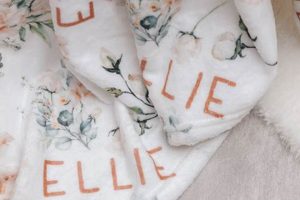
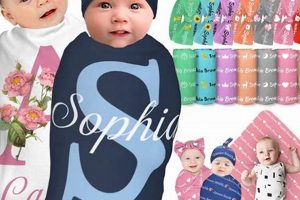
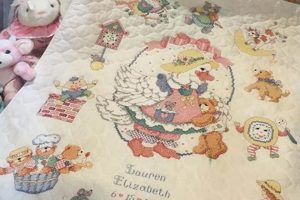
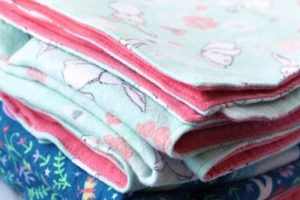
The concept encompasses a range of creative approaches to designing and crafting coverings intended for infants. These notions may involve variations in material selection, size, color palette, pattern complexity, and embellishment techniques. For instance, a design might incorporate a specific knit stitch, a unique fabric combination like fleece and cotton, or an embroidered animal motif.
Infant coverings provide warmth and security, contributing to a sense of well-being for the child. Historically, handmade versions were often passed down through families, acquiring sentimental value in addition to their practical function. Their construction allows for personalized expressions of care and affection.
The subsequent sections will delve into different aspects related to creating these items, from selecting appropriate materials and stitch patterns to considering safety guidelines and care instructions, ensuring the finished product is both aesthetically pleasing and functional for the infant’s needs.
Practical Considerations for Infant Covering Designs
The following guidelines offer practical considerations when planning the construction of coverings intended for infants. Attention to these details can contribute to the safety and longevity of the finished item.
Tip 1: Material Selection. Prioritize natural fibers, such as cotton or bamboo, known for their breathability and softness. Avoid materials that may cause allergic reactions or irritation to sensitive skin.
Tip 2: Size and Weight. Consider the appropriate dimensions for the infant’s age and developmental stage. Avoid excessive bulk or weight, which could pose a suffocation hazard.
Tip 3: Edge Finishing. Securely finish all edges to prevent unraveling and potential choking hazards. Options include crocheted borders, tightly woven bindings, or serged edges.
Tip 4: Embellishments. Exercise caution when incorporating embellishments, such as buttons or ribbons. Ensure they are securely attached to prevent detachment and ingestion.
Tip 5: Stitch Density. If knitting or crocheting, maintain a tight stitch density to prevent fingers and toes from becoming entangled in the fabric.
Tip 6: Washing Instructions. Choose materials and construction methods that allow for frequent washing and drying. Provide clear care instructions to maintain hygiene and prevent shrinkage.
Tip 7: Avoid Loose Weaves. Refrain from using excessively loose or open-weave patterns, as they may present entanglement risks.
Adherence to these suggestions can enhance the safety and suitability of handmade items for infants. The selection of appropriate materials and careful construction techniques are paramount.
The succeeding sections will elaborate on the different styles, patterns, and construction methods available, further enriching the understanding of this craft.
1. Material Breathability

Material breathability is a critical factor in the design and selection of infant coverings. It directly influences the infant’s comfort and safety by regulating temperature and reducing the risk of overheating, a significant concern in early infancy. The choice of materials with adequate airflow is paramount for creating a safe and effective product.
- Temperature Regulation
Breathable materials facilitate the evaporation of moisture and allow for air circulation, helping to maintain a stable body temperature for the infant. Overheating can lead to discomfort, restlessness, and an increased risk of Sudden Infant Death Syndrome (SIDS). Natural fibers, such as cotton or bamboo, are known for their superior breathability compared to synthetic alternatives like polyester.
- Moisture Management
Infants, particularly newborns, are susceptible to skin irritation from excessive moisture. Breathable materials wick away moisture from the skin, preventing the buildup of sweat and reducing the likelihood of rashes or dermatitis. This is particularly important in warmer climates or during periods of increased activity.
- Air Circulation
Adequate air circulation is essential for preventing the buildup of carbon dioxide around the infant’s face. Densely woven or non-breathable materials can restrict airflow, potentially leading to rebreathing of exhaled air. Loose-knit fabrics and materials with open weaves promote better ventilation.
- Material Composition
The composition of the material directly affects its breathability. Natural fibers generally exhibit superior breathability due to their inherent structure and ability to absorb and release moisture. Synthetic materials, while often durable and easy to care for, tend to be less breathable and may trap heat and moisture against the skin.
The integration of breathable materials into infant coverings is not merely a matter of comfort; it is a matter of safety. By prioritizing materials that promote temperature regulation, moisture management, and air circulation, the risk of overheating, skin irritation, and potential respiratory complications can be significantly reduced. The careful selection of breathable fabrics is a fundamental aspect of responsible design and manufacturing of items intended for infants.
2. Size Appropriateness

The dimensions of infant coverings directly correlate with safety and utility. Excessive size introduces potential entanglement risks, while insufficient size compromises the primary function of providing warmth and security. Therefore, size appropriateness is not merely a design consideration but a crucial safety parameter.
An oversized covering, for instance, can inadvertently cover an infant’s face, potentially obstructing breathing. Conversely, an undersized version may fail to provide adequate thermal regulation, particularly during colder periods. Practical application of size appropriateness involves adhering to recommended dimensions based on the infant’s age and developmental stage, typically ranging from smaller sizes for newborns to larger sizes for older infants. Standardization in dimensions assists caregivers in selecting appropriate items.
In summary, adherence to recommended size guidelines mitigates risks associated with excessive or insufficient dimensions. Challenges in maintaining consistent size arise from variations in manufacturing processes and material properties. Understanding the significance of size appropriateness contributes to the overall safety and effectiveness of infant care products. The correct sizes ensure the baby is not caught on blanket and have adequate warmth to maintain healthy body temperature.
3. Stitch Security
Stitch security, within the framework of coverings intended for infants, represents a critical design and construction parameter directly influencing safety and longevity. The integrity of individual stitches and their interconnections dictates the overall structural stability of the finished item, mitigating potential hazards.
- Thread Integrity
The choice of thread significantly impacts stitch security. High-tensile strength threads, composed of durable materials like cotton or polyester, resist breakage and abrasion, maintaining stitch integrity over prolonged use and repeated laundering. Conversely, weaker threads are prone to fraying and separation, compromising the structural integrity of the blanket.
- Knotting Techniques
Secure knotting techniques at the beginning and end of each seam or row are essential for preventing unraveling. Backstitching, reinforcement knots, and weaving in loose ends are common practices employed to anchor stitches and minimize the risk of separation. Inadequate knotting compromises the overall security of the stitching.
- Stitch Density and Type
A high stitch density, achieved through close spacing of individual stitches, enhances the overall strength and durability of the fabric. Certain stitch types, such as reinforced seams or interlocking stitches, provide greater resistance to stress and strain compared to simpler stitch patterns. Appropriate stitch selection based on fabric type and intended use is crucial.
- Edge Finishing
Securely finished edges, employing techniques like binding, serging, or crocheted borders, prevent fraying and unraveling along the perimeter of the covering. Unfinished edges present a potential hazard as loose threads can become entangled or ingested. Edge finishing reinforces the overall structural integrity of the item.
These facets of stitch security contribute to the creation of infant coverings that are both durable and safe. Prioritizing thread integrity, secure knotting, appropriate stitch density, and robust edge finishing ensures that these items withstand repeated use and laundering while minimizing potential hazards for the infant. Compromises in stitch security can result in reduced product lifespan and increased risk of entanglement or ingestion of loose threads. A strong understanding of stitch security supports responsible product development of coverings for infants.
4. Color Harmony

Color harmony, within the context of infant coverings, exerts a significant influence on visual appeal and potentially affects the infant’s cognitive and emotional development. Thoughtful color choices contribute to a visually pleasing and stimulating environment, which is essential for early sensory experiences. A lack of harmony can result in visual discordance, potentially causing unease or overstimulation. For instance, a blanket employing clashing primary colors might be visually jarring, whereas a palette of muted pastels generally evokes a sense of calm and tranquility, thereby promoting rest. Color harmony is also crucial for maintaining the aesthetic integration with the nursery environment.
The practical application of color harmony principles involves selecting palettes that exhibit balance and unity. This can be achieved through monochromatic schemes, analogous color combinations, or complementary color pairings, always considering the intensity and saturation of each hue. Consider a blue blanket with varying shades of blues and greens around the edges, invoking the nature. Moreover, contrast plays a key role; a subtle contrast between the blanket’s main color and its trim can enhance visual interest without overwhelming the infant. Neutral tones can serve as a grounding element, providing a backdrop for more vibrant accent colors.
Effective implementation of color harmony principles in infant coverings presents challenges. Personal preferences, cultural associations, and the availability of suitable materials influence the design process. Despite these hurdles, a commitment to color harmony elevates the aesthetic quality of the blanket and potentially contributes to the infant’s well-being. The relationship between color harmony and visual stimuli for infants is an area of ongoing research, underscoring the importance of informed and deliberate color choices in the creation of items intended for their use.
5. Pattern Simplicity

Pattern simplicity, in the context of designs intended for infants, directly correlates with visual processing demands and potential stimulation levels. Intricate, visually dense patterns can overwhelm the infant’s developing visual system, leading to overstimulation and, potentially, agitation. Conversely, simple patterns offer a calming visual focus, aiding in relaxation and promoting a sense of security. The impact is evident in the design choices for commercially produced infant items, where geometric shapes and high-contrast color schemes are often favored over complex, multi-faceted images.
The application of pattern simplicity extends beyond purely aesthetic considerations. A straightforward pattern, such as alternating rows of knit and purl stitches, facilitates ease of construction, particularly for handmade items. This reduces the time and resources required for production, allowing caregivers or craftspeople to create comforting items efficiently. For example, a simple striped design using two or three colors can be easily adapted to various sizes and materials, offering versatility and practicality. Also, from safety considerations, simple pattern lessens the changes of loose threat or other safety hazard objects.
Ultimately, prioritizing pattern simplicity reflects an understanding of infant visual perception and developmental needs. While elaborate designs may appeal to adult aesthetics, the primary objective is to provide a comforting and secure environment for the infant. This principle encourages a focus on functionality and safety, promoting designs that are both visually soothing and practical for everyday use. The balance between aesthetic appeal and developmental appropriateness remains a central consideration in creating items for the youngest demographic.
Frequently Asked Questions
The subsequent questions address common inquiries regarding the selection, construction, and maintenance of coverings intended for infant use. These responses aim to provide clarity and guidance based on established safety recommendations and best practices.
Question 1: What constitutes a safe material for infant coverings?
Natural fibers, such as cotton, bamboo, or merino wool, are generally recommended due to their breathability and reduced risk of allergic reactions. Synthetic materials should be avoided or used with caution, ensuring they are free of harmful chemicals and dyes.
Question 2: What size is appropriate for an infant covering?
Size appropriateness is determined by the infant’s age and developmental stage. Oversized coverings pose a suffocation risk. Dimensions should be adequate to provide warmth and security without being excessively large or bulky.
Question 3: How should embellishments be incorporated into infant coverings?
Embellishments, such as buttons, ribbons, or appliques, should be securely attached to prevent detachment and potential ingestion. The use of small, easily detachable embellishments should be minimized or avoided altogether.
Question 4: What stitch density is recommended for knitted or crocheted infant coverings?
A tight stitch density is crucial to prevent fingers and toes from becoming entangled in the fabric. Loose or open-weave patterns should be avoided to minimize this risk.
Question 5: How often should infant coverings be washed?
Infant coverings should be washed frequently, particularly if soiled or exposed to allergens. Regular laundering helps maintain hygiene and prevent the buildup of bacteria or irritants.
Question 6: What are the recommended care instructions for infant coverings?
Care instructions should be clearly communicated, emphasizing the use of gentle detergents and appropriate washing temperatures to prevent shrinkage or damage to the fabric. Avoid using harsh chemicals or bleach.
In summary, selecting appropriate materials, ensuring proper sizing, securing embellishments, maintaining stitch density, and adhering to recommended care instructions are paramount for creating safe and functional infant coverings. These considerations contribute to the overall well-being and safety of the infant.
The subsequent section will address the historical context and cultural significance surrounding infant coverings, providing a broader understanding of their role in child care practices.
Conclusion
This exploration of baby blanket ideas underscores the multifaceted considerations involved in creating safe, functional, and aesthetically pleasing items for infants. Attention to material selection, size appropriateness, stitch security, color harmony, and pattern simplicity is paramount for ensuring the infant’s well-being and promoting a sense of comfort and security.
Future advancements in textile technology and design innovation may further refine baby blanket ideas, offering enhanced safety features and improved functionality. Continued research into infant sensory development will undoubtedly inform design choices, leading to coverings that not only provide warmth but also contribute to early cognitive and emotional growth. The thoughtful and deliberate application of these principles remains essential in providing optimal care for infants.
![Softest Pink Baby Blanket: Cuddle-Worthy & Safe [Shop Now] | Baby Care 101: Essential Tips for Happy, Healthy Babies](https://singlebabies.com/wp-content/uploads/2026/05/th-104-300x200.jpg "Softest Pink Baby Blanket: Cuddle-Worthy & Safe [Shop Now] Baby Care 101: Essential Tips for Happy, Healthy Babies")