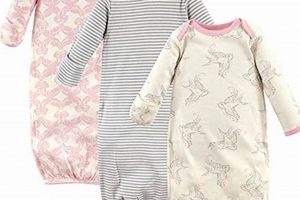
Infant garments designed for nighttime wear, often constructed from soft, breathable fabrics, provide ease of dressing and diaper changes. These articles of clothing typically feature a loose-fitting design that allows for unrestricted movement and promote comfortable sleep for newborns and young babies.
The use of such apparel contributes to a baby’s overall well-being by regulating body temperature and minimizing skin irritation. Historically, these items evolved from simple swaddling cloths to more sophisticated designs incorporating features like elasticized bottoms or snap closures, reflecting advancements in textile technology and parental preferences for convenience and safety.
The ensuing discussion will delve into specific aspects of these infant garments, including material composition, safety considerations, sizing guidelines, and variations in style and functionality.
Guidance on Selecting and Utilizing Infant Sleepwear
The following recommendations offer practical advice for parents and caregivers seeking to optimize the comfort, safety, and functionality of garments intended for infant sleep.
Tip 1: Prioritize Breathable Fabrics: Opt for materials like cotton or muslin, which allow for adequate airflow and reduce the risk of overheating. Synthetic fabrics may trap moisture and contribute to skin irritation.
Tip 2: Ensure Proper Fit: Choose a size that allows for comfortable movement but is not excessively loose. Overly large garments can pose a suffocation hazard or impede mobility.
Tip 3: Consider Climate Conditions: Adjust the weight and fabric of the garment to suit the ambient temperature. Lightweight options are preferable in warmer environments, while heavier fabrics may be necessary in cooler climates.
Tip 4: Evaluate Closure Mechanisms: Examine snap or zipper closures for durability and security. Ensure that closures are securely fastened and free from sharp edges or small parts that could detach.
Tip 5: Regularly Inspect for Wear and Tear: Periodically check the garment for signs of damage, such as loose seams or frayed edges. Discard any items that exhibit significant wear to prevent potential hazards.
Tip 6: Minimize Embellishments: Select items with minimal embellishments, such as ribbons, buttons, or decorative appliques, to reduce the risk of choking or entanglement.
Tip 7: Adhere to Safe Sleep Practices: Always place infants on their backs to sleep, even when utilizing these garments. Avoid the use of loose bedding, pillows, or toys in the sleep environment.
Following these guidelines promotes a safe and comfortable sleep environment for infants, contributing to their overall health and well-being.
The subsequent sections of this document will address advanced topics related to infant sleepwear, including considerations for specific developmental stages and emerging trends in design and functionality.
1. Fabric Composition

The selection of fabric constitutes a fundamental determinant of a baby’s comfort and safety within a sleeper gown. Fiber characteristics directly influence breathability, moisture management, and thermal regulation. For instance, garments composed of tightly woven synthetic materials may impede airflow, potentially leading to overheating and discomfort, especially in warmer environments. Conversely, natural fibers such as cotton or bamboo rayon permit superior ventilation and wicking of moisture, thereby minimizing the risk of skin irritation and maintaining a more stable body temperature. This difference manifests in real-world scenarios where infants wearing synthetic-based sleepwear exhibit increased perspiration and restlessness compared to those clad in natural fiber alternatives.
Beyond breathability, the inherent properties of a fabric impact its suitability for sensitive infant skin. Certain dyes and chemical treatments applied to synthetic fabrics can trigger allergic reactions or exacerbate existing skin conditions like eczema. Therefore, the selection of organic or OEKO-TEX certified materials, free from harmful substances, assumes critical importance. A practical example is the observable reduction in skin rashes and irritation among infants with sensitivities when exclusively utilizing sleepwear crafted from untreated or minimally processed natural fibers. Further, the durability and laundering characteristics of a fabric affect the garment’s longevity and hygienic properties, influencing both cost-effectiveness and the prevention of microbial growth.
In summary, fabric composition represents a primary consideration in the selection of appropriate sleepwear. The decision between natural and synthetic fibers directly affects infant comfort, skin health, and overall well-being. Awareness of these factors empowers caregivers to make informed choices that mitigate potential risks and promote a safe and restful sleep environment. Challenges persist in balancing affordability with quality and sustainability, urging continued innovation in textile production and consumer education regarding responsible purchasing practices.
2. Design Functionality

The practical utility of infant sleepwear is significantly determined by its design. This aspect encompasses features that enhance usability, safety, and the overall well-being of the infant during sleep periods. A well-designed garment facilitates parental caregiving tasks and contributes to a secure sleep environment.
- Closure Mechanisms and Accessibility
The design of closure mechanisms directly impacts the ease of diaper changes, especially during nighttime hours. Options such as zippers, snaps, or envelope necklines offer varying degrees of accessibility. Zipper closures, particularly those with two-way functionality, allow for quick and convenient diaper changes without fully undressing the baby. Snap closures, while potentially more secure, may require more time and dexterity to fasten and unfasten. Envelope necklines provide additional room for maneuvering the garment over the infant’s head. The choice of closure should balance security with ease of use.
- Fit and Freedom of Movement
The design must prioritize a comfortable fit that allows for unrestricted movement. A garment that is too tight can constrict the baby’s breathing or circulation, while an excessively loose garment can present a suffocation hazard. Designs that incorporate gussets or elasticized features around the legs and waist provide flexibility and accommodate the baby’s movements during sleep. A well-fitted design also minimizes the risk of the fabric bunching up around the baby’s face.
- Thermal Regulation Features
Design functionality extends to the garment’s ability to regulate the baby’s body temperature. Features like integrated mittens or footies offer additional warmth in cooler environments, while breathable fabrics and loose-fitting designs prevent overheating in warmer conditions. Some designs incorporate moisture-wicking properties to keep the baby dry and comfortable throughout the night. The design should adapt to various environmental conditions to ensure the baby’s thermal comfort.
- Safety Considerations in Design
Safety is paramount in the design of infant sleepwear. Features such as tagless labels, covered zippers, and the absence of loose ribbons or buttons minimize potential hazards. Flame-resistant materials and designs that adhere to safety standards help reduce the risk of burns. The overall design should prioritize safety to create a secure sleep environment.
These facets of design functionality are essential considerations when selecting infant sleepwear. The optimal choice should balance usability, comfort, safety, and thermal regulation to promote a restful and secure sleep experience for the infant and facilitate efficient caregiving for parents.
3. Size Appropriateness

The correlation between size appropriateness and infant sleep apparel is directly linked to safety and comfort. An ill-fitting garment, either too large or too small, presents potential hazards and compromises the infant’s well-being. Overly large gowns increase the risk of entanglement or suffocation due to loose fabric obstructing the infant’s airway or restricting movement. Conversely, undersized garments can constrict circulation, impede breathing, and restrict natural movement, potentially leading to discomfort and disturbed sleep patterns. The direct consequence of incorrect sizing is, therefore, a compromised sleep environment and increased risk of adverse events. As a component, selecting the correct size is essential for safety.
Real-world examples frequently illustrate the impact of size appropriateness. Hospital nurseries and neonatal intensive care units (NICUs) meticulously adhere to sizing guidelines for infant garments to minimize risks and ensure accurate monitoring of vital signs. Garments that are too tight can interfere with monitoring equipment, while overly loose garments can become dislodged, exposing the infant to temperature fluctuations. Furthermore, parental observations often reveal that infants wearing appropriately sized sleepwear exhibit reduced restlessness and improved sleep duration compared to those in ill-fitting garments. A practical application includes standardized sizing charts provided by manufacturers, enabling caregivers to select the appropriate size based on the infant’s weight and length, thereby mitigating the risk of size-related complications.
In summary, size appropriateness is not merely a matter of aesthetics but a critical factor in ensuring infant safety and comfort within the confines of a sleep gown. Challenges remain in achieving consistent sizing standards across different brands and addressing variations in infant body shapes. By prioritizing accurate sizing and adhering to manufacturer guidelines, caregivers can significantly reduce the risk of adverse events and promote a more restful sleep environment for infants. This understanding contributes to a broader awareness of the importance of evidence-based practices in infant care and the critical role of appropriately designed and sized apparel in promoting infant well-being.
4. Seasonal Adaptability

Seasonal adaptability in infant sleepwear directly affects thermal regulation and comfort. The ability of a “baby sleeper gown” to adjust to varying environmental temperatures is paramount for maintaining a stable and safe sleep environment, crucial for infant health.
- Fabric Weight and Insulation
Fabric weight dictates the level of insulation provided by the garment. Lighter materials, such as muslin or lightweight cotton, are appropriate for warmer months, facilitating airflow and preventing overheating. Heavier fabrics, like fleece or thicker cotton blends, offer increased insulation for colder seasons. Real-world application involves switching to lighter gowns during summer to prevent heat rash and employing heavier ones during winter to maintain core body temperature.
- Sleeve Length and Foot Coverage
Sleeve length and foot coverage contribute to thermal regulation. Sleeveless or short-sleeved gowns may suffice during warmer periods, allowing for greater ventilation. Conversely, long-sleeved gowns with integrated mittens or footies provide additional warmth and protection against cold temperatures. Hospitals often utilize full-coverage gowns during winter months to prevent hypothermia in newborns.
- Layering Capabilities
The capacity to layer garments allows for greater flexibility in adapting to fluctuating temperatures. A loose-fitting “baby sleeper gown” can be easily layered over or under other clothing items, permitting adjustments based on the ambient temperature. Parents often employ layering strategies, adding or removing layers as needed to maintain optimal thermal comfort for their infants.
- Moisture Management
Seasonal variations in humidity necessitate different moisture management properties in infant sleepwear. During humid summer months, breathable fabrics that wick away moisture are essential to prevent skin irritation and discomfort. In drier winter months, fabrics that retain some moisture can help prevent dry skin. Textile manufacturers incorporate moisture-wicking technologies into summer-weight gowns to enhance comfort.
The interplay between fabric properties, design features, and layering strategies determines the seasonal adaptability of “baby sleeper gown”. These considerations are critical for ensuring infant comfort, safety, and overall well-being throughout the year. Failure to account for seasonal variations can lead to thermal stress, potentially impacting sleep quality and health.
5. Safety Standards

Stringent safety standards govern the manufacture and distribution of infant sleepwear, reflecting a commitment to minimizing potential hazards and ensuring the well-being of vulnerable infants. These standards encompass a wide range of factors, from material composition to design features, and are enforced by regulatory bodies to protect consumers. Adherence to these regulations is not merely a legal obligation but a moral imperative for manufacturers.
- Flammability Resistance
One of the foremost safety concerns surrounding infant sleepwear is flammability. Standards mandate that fabrics used in these garments either be inherently flame-resistant or treated with flame-retardant chemicals to prevent rapid ignition and propagation of fire. Examples include regulations requiring specific burn test results for textiles intended for infant use. Failure to meet these standards can result in product recalls and legal liabilities, as demonstrated by instances where non-compliant sleepwear was found to pose an unacceptable fire risk. The implications are significant, as rapid combustion can lead to severe burns or even fatalities in the event of a fire.
- Chemical Content Restrictions
Stringent limits are placed on the permissible levels of harmful chemicals, such as lead, phthalates, and formaldehyde, in infant sleepwear. These substances can leach out of the fabric and be absorbed through the skin, potentially causing developmental problems or allergic reactions. Regulations specify allowable concentrations of these chemicals and mandate rigorous testing to ensure compliance. Instances of sleepwear containing excessive levels of these substances have led to recalls and heightened scrutiny of manufacturing processes. The potential consequences include long-term health effects for infants and damage to the reputation of manufacturers.
- Small Parts and Entanglement Hazards
Safety standards address the risk of choking and entanglement posed by small parts, such as buttons, snaps, and ribbons, on infant sleepwear. Regulations dictate that these components must be securely attached to prevent detachment and ingestion. Furthermore, design features that could create entanglement hazards, such as long drawstrings or loose ribbons, are prohibited. Cases of infants choking on detached buttons have underscored the importance of these regulations. The implications include the potential for asphyxiation or serious injury, necessitating careful design and manufacturing practices.
- Design and Construction Requirements
Specific design and construction requirements aim to minimize the risk of suffocation and strangulation. Examples include limitations on neck openings to prevent constriction and guidelines for appropriate sizing to avoid loose fabric that could obstruct breathing. Regulatory bodies conduct inspections to ensure compliance with these requirements. Instances of improperly designed sleepwear posing a suffocation risk have prompted recalls and revisions to design standards. The aim is to promote safe sleep environments by ensuring that infant sleepwear does not contribute to the risk of accidental injury or death.
Collectively, these safety standards represent a comprehensive framework for protecting infants from potential hazards associated with sleepwear. Continued vigilance and enforcement of these standards are essential to ensuring the safety and well-being of infants. Furthermore, ongoing research and technological advancements contribute to the refinement of these standards and the development of even safer infant sleepwear products.
6. Ease of Care

The practical maintenance of infant sleep apparel significantly impacts parental convenience and hygiene. Considerations of “ease of care” are central to the selection and sustained use of “baby sleeper gown,” influencing both the longevity of the garment and the health of the infant. Proper care protocols minimize the risk of skin irritation and infection, while streamlined maintenance procedures reduce the time burden on caregivers.
- Machine Washability
Machine washability represents a cornerstone of ease of care. Garments that tolerate standard washing machine cycles reduce manual labor and facilitate frequent cleaning, crucial for addressing inevitable spills and messes. Real-world application involves the ability to quickly launder soiled sleepwear, mitigating the risk of bacterial growth and unpleasant odors. The implications are significant, as parents can maintain a clean and hygienic sleep environment without extensive effort.
- Drying Efficiency
The speed and method of drying contribute to ease of care. Garments that dry quickly, whether through machine drying or air drying, minimize delays in reuse. Materials that retain excessive moisture create a breeding ground for bacteria. The ability to tumble dry on low heat or air dry without significant shrinkage or distortion is essential. Examples include fabrics that maintain their shape and integrity after multiple drying cycles, preserving both appearance and functionality.
- Stain Resistance
The inherent stain resistance of the fabric impacts the effort required to maintain the garment’s appearance. Materials that readily release stains reduce the need for harsh detergents or pre-treatment, minimizing potential skin irritation from residual chemicals. Real-world examples include fabrics treated with stain-resistant finishes or those with naturally stain-repellent properties. The ease with which common infant messes are removed influences the long-term aesthetic appeal and hygienic qualities of the garment.
- Ironing Requirements
Minimal or non-existent ironing requirements contribute to ease of care. Garments that resist wrinkling or naturally release creases reduce the time spent on garment maintenance. The implications are considerable, as parents can prioritize other caregiving tasks. Examples include fabrics that maintain a presentable appearance without ironing or those that soften with washing, reducing the need for extensive smoothing.
The combined effect of these factorsmachine washability, drying efficiency, stain resistance, and minimal ironingdetermines the overall ease of care for “baby sleeper gown.” A garment that incorporates these attributes offers significant advantages to caregivers, simplifying maintenance and promoting a clean and comfortable sleep environment for infants. The selection process should, therefore, prioritize these characteristics to optimize both the longevity of the garment and the convenience of parental care.
Frequently Asked Questions Regarding Infant Sleep Gowns
The following section addresses common inquiries and misconceptions concerning the use of infant sleep gowns, providing evidence-based guidance for caregivers.
Question 1: What materials are most suitable for a “baby sleeper gown” to ensure infant comfort and safety?
Optimal materials include breathable natural fibers such as cotton, muslin, or bamboo rayon. These fabrics promote airflow, reduce the risk of overheating, and minimize skin irritation. Avoid synthetic materials that may trap moisture and impede ventilation.
Question 2: How does the design of a “baby sleeper gown” contribute to ease of use for diaper changes?
Designs incorporating features such as snap closures along the inseam or zippers extending from the neck to the foot facilitate convenient diaper changes without fully undressing the infant. Envelope necklines provide added flexibility.
Question 3: What size of “baby sleeper gown” is appropriate to minimize safety hazards while maximizing comfort?
The fit should be snug but not constricting, allowing for freedom of movement without excessive looseness. Consult sizing charts provided by manufacturers, considering the infant’s weight and length. Avoid garments that are excessively large, as loose fabric poses a suffocation risk.
Question 4: How should a “baby sleeper gown” be adapted to different seasonal temperatures to ensure infant well-being?
During warmer months, opt for lightweight fabrics and sleeveless or short-sleeved designs. In colder months, select heavier fabrics with integrated mittens or footies. Layering is recommended to accommodate fluctuating temperatures.
Question 5: What safety standards should be verified when purchasing a “baby sleeper gown?”
Confirm that the garment meets flammability standards, restricts chemical content, and minimizes small parts or entanglement hazards. Look for certifications such as OEKO-TEX, indicating that the fabric has been tested for harmful substances.
Question 6: What are the optimal care instructions for a “baby sleeper gown” to maintain hygiene and garment integrity?
Machine wash in cold water with a mild detergent and tumble dry on low heat. Avoid harsh chemicals or bleach. Regularly inspect the garment for signs of wear and tear, and discard any items that exhibit significant damage.
Prioritizing appropriate materials, designs, sizing, seasonal adaptation, safety standards, and care protocols ensures the selection and utilization of infant sleep gowns contribute positively to infant comfort, safety, and well-being.
The subsequent sections will explore advanced considerations related to specialized sleepwear options and emerging trends in infant garment technology.
Baby Sleeper Gown
This exploration has traversed the multifaceted dimensions of the term. Emphasis has been placed on fabric composition, design functionality, size appropriateness, seasonal adaptability, safety standards, and ease of care. The convergence of these factors directly influences infant comfort, parental convenience, and, most critically, infant safety during sleep. Neglecting these considerations introduces potential risks to infant well-being.
The ongoing commitment to rigorous research, stringent regulatory oversight, and informed consumer choices remains paramount. Future endeavors should prioritize the development of innovative materials and designs that further enhance infant safety and comfort. A sustained focus on these objectives will serve to safeguard the health and well-being of the most vulnerable members of society. Consistent application of best practices will help create an healthy environment and better future.