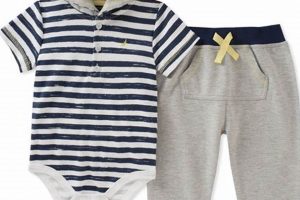
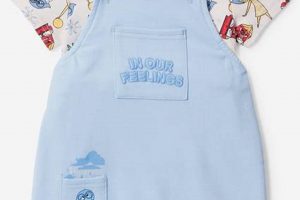
A delicate knit fabric characterized by small, repeating patterns of holes, often resembling lace, is frequently employed in the manufacture of garments for infants. This type of material is chosen for its breathability and lightweight nature, providing comfort for the wearer. Garments made from this fabric include bodysuits, tops, and blankets designed for babies.
The appeal of this particular textile in infant apparel lies in its enhanced ventilation, reducing the risk of overheating. Furthermore, the soft texture is gentle against a baby’s sensitive skin, minimizing irritation. Historically, this knit has been associated with fine craftsmanship and is often viewed as a classic and timeless choice for children’s wear, signifying quality and care.
The following sections will delve deeper into the specific attributes, care considerations, and selection criteria associated with garments crafted from this specialized knit. Understanding these elements is crucial for making informed purchasing decisions and ensuring the longevity of these delicate items.
Essential Considerations for Garments Featuring Pointelle Knit
Selecting appropriate apparel for infants requires careful consideration of material properties and design. The following tips offer guidance on maximizing the benefits and ensuring the longevity of items incorporating this delicate knit.
Tip 1: Prioritize Natural Fibers: Opt for items made from 100% cotton or blends with a high percentage of natural fibers. These materials enhance breathability and minimize potential skin irritation.
Tip 2: Examine Stitch Quality: Assess the integrity of the knit. Tightly woven patterns indicate durability and reduced likelihood of snags or unraveling.
Tip 3: Consider Layering: Given the open weave, utilize these garments as a base layer in cooler conditions to provide light insulation without overheating.
Tip 4: Gentle Washing Practices: Machine wash on a delicate cycle using a mild detergent specifically formulated for baby clothes. Avoid harsh chemicals or bleach.
Tip 5: Avoid High Heat Drying: Tumble dry on low or, ideally, line dry to prevent shrinkage and maintain the fabric’s integrity. High heat can damage the delicate knit structure.
Tip 6: Inspect for Loose Threads: Before each use, carefully inspect the garment for any loose threads or damaged areas that could pose a hazard to the infant.
Tip 7: Proper Storage: Store these items folded neatly in a drawer or on a shelf to prevent stretching or distortion of the knit pattern.
By adhering to these guidelines, the benefits of breathability, comfort, and aesthetic appeal can be maximized. These practices contribute to the extended lifespan of these delicate infant garments.
The next section will address the various styles and applications where garments incorporating this material are commonly found, further enhancing understanding of its versatility.
1. Breathable knit structure

The utilization of specific knit patterns within infant apparel significantly impacts the comfort and well-being of the wearer. Garments made from this specialized knit are valued for their capacity to facilitate air circulation, a crucial factor in regulating body temperature and minimizing discomfort.
- Ventilation and Airflow
The characteristic open-work design promotes enhanced airflow, allowing heat and moisture to dissipate effectively. This minimizes the risk of overheating, particularly important for infants who are less able to regulate their body temperature.
- Fiber Composition and Breathability
The breathability of the knit is directly influenced by the fiber composition. Natural fibers, such as cotton, possess inherently superior ventilation properties compared to synthetic materials. This choice of fiber enhances the overall effectiveness of the knit in promoting airflow.
- Knit Density and Air Permeability
The density of the knit pattern determines the degree of air permeability. A looser knit structure, while delicate, allows for greater airflow compared to a tightly woven fabric. Careful consideration of knit density balances breathability with durability.
- Moisture Management
Beyond airflow, the knit contributes to moisture management. The fabric’s structure facilitates the absorption and evaporation of perspiration, preventing the build-up of moisture against the skin, which can lead to discomfort or irritation.
The intentional design of the breathable knit structure is a key factor in the suitability of apparel made with this textile. The combination of open-work patterns, appropriate fiber selection, and careful manipulation of knit density collectively contributes to a garment that prioritizes infant comfort and well-being through effective temperature regulation and moisture management. These considerations are crucial in evaluating the quality and functionality.
2. Softness for sensitive skin

The characteristic of gentleness against delicate skin is paramount when selecting garments for infants. This consideration is particularly relevant when examining textiles chosen for apparel, influencing both comfort and well-being.
- Fiber Selection and Tactile Properties
The choice of fiber significantly impacts the texture of the fabric. Natural fibers, such as cotton and bamboo, are often preferred due to their inherent softness compared to synthetic alternatives. These materials possess a smooth surface that minimizes friction against the skin, reducing the potential for irritation.
- Knit Structure and Surface Texture
The structure of the knit influences the overall feel of the material. The open-work design, while contributing to breathability, must maintain a smooth surface to prevent snagging or chafing. Variations in stitch patterns can affect the texture, necessitating careful evaluation to ensure optimal comfort.
- Chemical Processing and Residual Irritants
The processes involved in textile manufacturing can introduce chemical residues that may cause adverse reactions in sensitive skin. Selecting garments certified free from harmful substances, such as formaldehyde and allergenic dyes, is crucial to mitigate potential irritation.
- Garment Construction and Seam Placement
The construction of the garment, including seam placement and finishing techniques, plays a vital role in minimizing discomfort. Flat seams and the absence of abrasive tags or embellishments reduce friction and pressure points against the infant’s skin.
The interaction between fiber selection, knit structure, chemical processing, and garment construction determines the suitability of apparel for infants with sensitive skin. Careful consideration of these factors is essential when evaluating items, ensuring that the chosen garments prioritize comfort and minimize the risk of irritation.
3. Delicate, open-work patterns
The presence of delicate, open-work patterns is a defining characteristic of the textile commonly associated with infant apparel. These patterns not only contribute to the aesthetic appeal of the garments but also influence functional properties, impacting comfort and practicality.
- Aesthetic Enhancement and Visual Appeal
The open-work design introduces a subtle, decorative element to infant clothing. This aesthetic appeal can be particularly valued by caregivers seeking garments that combine functionality with visual refinement. The intricate patterns often evoke a sense of tradition and artisanal quality.
- Breathability and Ventilation
The openings inherent in the patterns facilitate airflow, enhancing ventilation and reducing the risk of overheating. This is particularly important for infants, who are less adept at regulating their body temperature. The patterns function as micro-vents, promoting thermal regulation.
- Material Flexibility and Drape
The open-work design can enhance the flexibility and drape of the fabric. This allows the garment to conform more readily to the infant’s body, providing a comfortable and unrestricted fit. The increased flexibility can also improve the garment’s durability by reducing stress on the fabric.
- Manufacturing Complexity and Quality Control
Creating these patterns requires precise manufacturing techniques. Maintaining the integrity and uniformity of the patterns necessitates stringent quality control measures. Imperfections in the patterns can compromise both the aesthetic appeal and the structural integrity of the garment.
The delicate, open-work patterns are integral to the function and appeal. These patterns influence ventilation, flexibility, and aesthetic value, contributing to its suitability for infant wear. However, the implementation of these patterns requires careful attention to manufacturing processes and quality control to ensure optimal performance and longevity.
4. Durable, quality construction
The association between durable, quality construction and textiles used in infant apparel is critical. The delicate nature of fabric demands robust construction methods to withstand regular wear, washing, and the active movements of infants. Inadequate construction leads to premature wear and tear, rendering the garment unsafe or unusable. Reinforcements at stress points, secure seam finishes, and the use of quality threads directly contribute to the garment’s longevity. For example, a bodysuit constructed with reinforced snap closures and double-stitched seams will withstand significantly more use compared to one with single stitching and flimsy closures. This durability is not merely a matter of convenience; compromised seams or detached embellishments pose a choking hazard, underscoring the practical significance of superior construction.
Further enhancing the longevity of garments is the selection of appropriate stitching techniques. Overlock stitching prevents fraying, particularly important along edges and seams. Flatlock seams, commonly used in high-quality activewear, eliminate bulky ridges, minimizing irritation against the infant’s skin. The precision and density of stitching are also indicative of quality construction. A higher stitch count per inch strengthens the fabric and reduces the likelihood of seam slippage. These considerations extend beyond the basic construction of the garment to include the attachment of embellishments, ensuring they are securely fastened to prevent detachment.
In summary, the emphasis on durable, quality construction is not merely an aesthetic or marketing consideration but a fundamental requirement for safe and reliable infant apparel. Attention to detail in stitching techniques, reinforcement of stress points, and secure attachment of embellishments are essential to ensure garments can withstand the demands of daily use and maintain their integrity over time. Failure to prioritize quality construction can result in compromised safety and premature wear, highlighting the importance of discerning manufacturing practices.
5. Gentle care requirements

The delicate nature of textiles used in manufacturing necessitates a corresponding approach to laundering and maintenance. Adherence to specific guidelines preserves the garment’s integrity, prolongs its lifespan, and ensures continued suitability for sensitive skin.
- Water Temperature and Fiber Integrity
Elevated water temperatures can compromise the structural integrity of natural fibers. Cold water washing is recommended to minimize shrinkage and prevent fiber damage. This practice preserves the garment’s shape and texture, extending its usability.
- Detergent Selection and Residue Mitigation
Harsh detergents can leave behind residues that irritate an infant’s skin. Mild, fragrance-free detergents specifically formulated for baby clothes are recommended. A thorough rinse cycle is essential to remove any lingering detergent, minimizing the risk of allergic reactions or skin sensitivities.
- Drying Methods and Fabric Preservation
High heat from machine drying can cause shrinkage and distortion. Air drying or tumble drying on a low heat setting is preferred. Line drying, while time-consuming, minimizes the risk of damage and preserves the garment’s original shape and texture.
- Ironing and Texture Maintenance
Direct ironing can flatten the delicate knit pattern, diminishing the fabric’s aesthetic appeal and potentially compromising its breathability. If ironing is necessary, a low heat setting and the use of a pressing cloth are recommended to protect the fabric from direct contact with the iron.
These care requirements are integral to preserving the quality and safety of apparel. Neglecting these precautions can result in diminished comfort, reduced lifespan, and potential hazards to the infant, underscoring the importance of adhering to recommended care instructions. Prioritizing these gentle methods maintains its unique properties, ensuring it remains a safe and comfortable option for infants.
Frequently Asked Questions About Pointelle Baby Clothes
The following section addresses common inquiries regarding garments manufactured using the specialized knit, providing clarity on aspects ranging from care to material properties.
Question 1: What are the defining characteristics of garments?
These garments are characterized by a delicate knit fabric featuring small, repeating patterns of holes. This open-work design enhances breathability and lends a subtle decorative element. Predominantly used in light clothing such as t-shirts and bodysuits.
Question 2: Is this type of fabric suitable for infants with sensitive skin?
Garments constructed from natural fibers, such as cotton, are generally well-suited for sensitive skin. However, it is imperative to verify that the garment is free from harsh dyes and chemical treatments that could cause irritation. Always wash new garments before first use.
Question 3: How should these garments be laundered to maintain their quality?
Laundering should be conducted using a gentle cycle with cold water and a mild detergent formulated for baby clothes. Avoid bleach or harsh chemicals. Tumble drying on low heat or air drying is recommended to prevent shrinkage and damage to the delicate knit.
Question 4: What are the advantages of using this knit in infant apparel?
The primary advantage lies in the enhanced breathability afforded by the open-work design, minimizing the risk of overheating. Additionally, the soft texture of natural fibers provides comfort against an infant’s delicate skin.
Question 5: Are there specific safety considerations when selecting apparel?
Examine garments for any loose threads or embellishments that could pose a choking hazard. Ensure snap closures are securely fastened and free from sharp edges. Opt for garments with minimal seams to reduce potential irritation.
Question 6: How does the durability of these garments compare to other fabrics?
Durability is contingent upon the quality of the knit and the fiber composition. While the open-work design may appear delicate, garments crafted from high-quality natural fibers with reinforced seams can exhibit considerable resilience. Proper care, as outlined above, is crucial for extending garment lifespan.
In summary, selecting appropriate garments requires careful consideration of material properties, care instructions, and safety features. Adhering to recommended guidelines ensures both the comfort and well-being of the infant.
The subsequent section will provide a comprehensive guide on styling options using garments.
Pointelle Baby Clothes
This exploration of pointelle baby clothes has illuminated key characteristics and considerations relevant to their selection and care. The unique knit structure, breathability, and softness offer tangible benefits for infant comfort. However, realizing these benefits necessitates a commitment to gentle laundering practices, careful quality inspection, and an awareness of potential safety hazards inherent in delicate materials. The information presented provides a framework for informed decision-making in the purchase and maintenance of these garments.
The ongoing advancement in textile technology and manufacturing processes presents opportunities for further enhancing the durability and safety of pointelle baby clothes, and the longevity of the garment. A continued emphasis on ethical sourcing, sustainable production, and rigorous quality control is paramount. Thoughtful application of the principles outlined herein will contribute to maximizing the value and safety associated with the utilization of these garments.