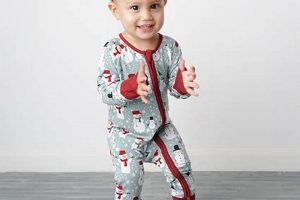
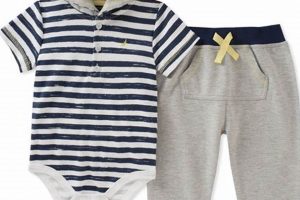
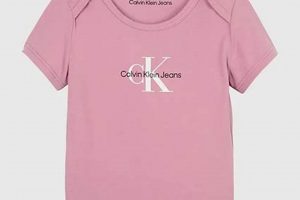
The duration for which infants wear the smallest size of clothing, typically labeled “newborn,” varies significantly. This size is generally designed to fit babies weighing up to approximately 7-9 pounds and measuring up to 21 inches in length. However, these are just guidelines, and individual infant growth patterns dictate actual usage. Some infants may never fit into newborn sizes at all, while others may wear them for several weeks.
Understanding the typical timeline of infant growth is beneficial for preparing a baby’s wardrobe. Newborn clothes represent an initial investment for parents, and having an accurate estimate minimizes unnecessary purchases. Factors influencing the wearing duration include the baby’s birth weight, rate of growth, and the specific sizing standards of different clothing brands. Parents can also look at the clothing labels for weight and length guidelines for better clarity.
Given the wide variation, monitoring an infant’s weight and length is recommended for determining when to transition to the next size. Observe the fit of clothing items: tightness around the diaper area, shoulders, or legs suggests the need for a larger size. Prioritizing comfort and freedom of movement is key, as clothing that is too small can restrict movement and potentially cause discomfort. This is especially critical during an infants rapid developmental phase.
Determining the Duration of Newborn Clothing Use
Accurately estimating the period during which an infant will wear newborn-sized clothing requires careful observation and consideration of several factors. This section provides specific guidance to assist in this determination.
Tip 1: Monitor Weight and Length: Regularly track the infant’s weight and length, comparing these measurements to the size charts provided by clothing manufacturers. These charts offer a more precise indication of appropriate sizing than relying solely on age-based labels.
Tip 2: Observe Clothing Fit: Examine the fit of the clothing on the infant. Signs that the clothing is becoming too small include tightness around the abdomen, restricted arm or leg movement, and difficulty fastening snaps or zippers.
Tip 3: Consider Brand Variations: Be aware that sizing standards can vary significantly between different clothing brands. What fits as “newborn” in one brand may be closer to “0-3 months” in another. Check the brand’s sizing chart before purchasing.
Tip 4: Prioritize Comfort: Ensure the infant’s comfort by selecting clothing that allows for unrestricted movement. Avoid clothing that is overly tight or restrictive, as this can impede development and cause discomfort.
Tip 5: Account for Diaper Size: The size of the infant’s diaper can impact the fit of clothing. A larger diaper may necessitate moving to the next clothing size sooner than anticipated.
Tip 6: Prepare a Range of Sizes: Instead of exclusively purchasing newborn sizes, acquire a small selection of 0-3 month sizes. This provides flexibility as the infant grows and ensures a smooth transition when newborn clothing becomes too small.
These tips should equip caregivers to monitor the infant’s development and adjust clothing choices accordingly, promoting comfort and facilitating optimal growth.
With proactive monitoring and flexible clothing choices, parents can navigate this stage effectively, prioritizing the infant’s well-being and developmental needs.
1. Average weight and height

The newborn clothing size is fundamentally linked to a baby’s average weight and height at birth and in the immediate weeks following. Deviation from these averages directly influences how long an infant can comfortably and safely wear this size. Weight and height benchmarks serve as the primary indicators for appropriate clothing selection.
- Birth Weight and Newborn Size
Birth weight is a crucial determinant. Newborn sizes are typically designed for infants weighing between 5 and 8 pounds. An infant born above this weight range may never fit into, or only briefly wear, newborn clothes. The average weight provides a baseline, but individual variation is significant.
- Length and Clothing Fit
An infant’s length, generally around 18-21 inches at birth, is another key factor. If an infant is born longer than this range, newborn clothing may be too short, restricting movement and causing discomfort. Clothing length impacts the fit around the torso and limbs, directly affecting the usability of newborn sizes.
- Growth Rate and Transition Timing
The rate at which an infant gains weight and height also plays a role. Rapid growth necessitates a quicker transition to larger sizes, even if the infant initially fits into newborn clothes. Monitoring weight and length gain helps predict when this transition will be necessary.
- Premature Infants and Newborn Sizes
Premature infants, born with lower than average weight and height, may fit into newborn sizes for a longer duration. In some cases, specialized preemie sizes are used initially, with a later transition to newborn sizes. The initial size selection is determined by these infants’ distinct physical characteristics at birth.
In summary, average weight and height are pivotal metrics in determining the usability period of newborn clothing. While averages offer general guidance, individual infant measurements and growth patterns provide a more accurate assessment for selecting appropriate and comfortable clothing sizes.
2. Infant's growth rate

The rate at which an infant grows directly influences the duration for which newborn clothing remains suitable. Rapid growth necessitates a quicker transition to larger sizes, while a slower growth rate allows for extended use of newborn attire. This growth velocity is not uniform across all infants, creating variability in clothing size requirements.
Infants experiencing growth spurts will typically outgrow newborn clothing within a few weeks. Conversely, those with a more gradual growth pattern may wear this size for a month or longer. For example, an infant gaining one to two pounds per week will likely require larger clothing sooner than an infant gaining only a few ounces weekly. Furthermore, the consistency of growth impacts clothing duration; intermittent growth spurts may lead to periods where newborn clothes fit adequately, followed by rapid outgrowing periods.
Understanding an infant’s individual growth rate is crucial for effective wardrobe planning and budgeting. Monitoring weight and length gains provides valuable insights into when a transition to larger sizes is imminent. This proactive approach prevents discomfort for the infant and minimizes unnecessary expenditure on clothing that is quickly outgrown. Therefore, the connection between infant’s growth rate and how long newborn clothing lasts is integral to infant care and parental preparedness.
3. Clothing brand sizing

The duration for which an infant can wear newborn clothing is inextricably linked to the sizing standards employed by different clothing brands. This variability introduces a significant factor in determining when a transition to larger sizes becomes necessary, independent of the infant’s actual growth.
- Inconsistencies in Sizing Charts
Clothing brands frequently utilize differing sizing charts, resulting in variations in the actual dimensions of garments labeled as “newborn.” For example, one brand’s newborn size may correspond to a weight range of 6-9 pounds, while another may specify 7-10 pounds for the same label. These inconsistencies mean that an infant fitting comfortably in one brand’s newborn clothing may require a larger size in another, thus impacting how long the newborn size remains wearable. The weight and height guidelines listed by the specific clothing manufacturer should be considered.
- Variations in Garment Proportions
Beyond weight and height, clothing brands may also vary in the proportions of their garments. Some brands design newborn clothing with a longer torso, while others prioritize width. An infant with a longer torso may outgrow a particular brand’s newborn size sooner than an infant of the same weight but with a shorter torso. Consequently, the unique proportions of each brand’s clothing contribute to differences in how long newborn sizes fit.
- Impact of Fabric Type and Stretch
The type of fabric used and its degree of stretch also influence the usability of newborn clothing. Stretchy fabrics, such as knit cotton blends, may accommodate a wider range of infant sizes and allow for longer wear compared to less flexible fabrics. Brands utilizing more rigid fabrics may require an earlier size transition, even if the infant is within the stated weight and height parameters for newborn clothing. The fabric’s inherent properties, therefore, affect clothing longevity.
- Premium vs. Budget Brands
A correlation exists between clothing brand pricing and sizing accuracy. Premium brands tend to invest more in precise sizing and quality control, leading to greater consistency within their sizing standards. Budget brands may exhibit more variability due to cost-saving measures in production. Therefore, parents choosing primarily from budget brands should be particularly vigilant in monitoring clothing fit and anticipating potential size discrepancies, which may lead to a reduced wearable period for newborn clothing.
The variations in sizing charts, garment proportions, fabric type, and brand positioning collectively contribute to the unpredictable nature of newborn clothing usage. Therefore, parents should not rely solely on size labels, but rather prioritize assessing the fit and comfort of each garment to determine when a transition to larger sizes is necessary. Examining clothing from different brands may yield distinct results.
4. Fit observations

The correlation between fit observations and the duration infants utilize newborn clothing is direct and consequential. Visual and tactile assessments of how clothing fits an infant provide the most reliable indicators of when a size transition is necessary. Standardized size charts offer guidelines, but individual body proportions and growth patterns necessitate careful attention to actual garment fit.
Tightness across the chest or abdomen, limited range of motion in limbs, and pressure marks on the skin are objective signs that newborn clothing has become too small. For example, if snaps at the crotch of a onesie strain or fail to close comfortably, this is a clear indication that a larger size is required. Likewise, if sleeves or pant legs are constricting the infant’s movements, hindering natural activity, the clothing is no longer appropriate. Overlooking these signs can lead to discomfort, restricted development, and potential skin irritation. Regular fit checks, ideally during each clothing change, are vital.
Accurate fit observations, therefore, determine the actual usable lifespan of newborn clothing for a specific infant. Relying solely on age-based sizing recommendations, without considering the concrete evidence of fit, leads to suboptimal clothing choices. Prioritizing diligent fit assessment ensures infant comfort, promotes healthy development, and reduces wasteful clothing purchases. The practical outcome of astute fit observation is maximized use of appropriately sized garments, enhancing both the infant’s well-being and resource efficiency.
5. Comfort considerations
The degree of comfort provided by newborn clothing directly impacts the duration for which such clothing remains suitable for an infant. Clothing that restricts movement, causes skin irritation, or fails to maintain an appropriate body temperature necessitates a prompt transition to larger or differently designed garments, irrespective of size labels.
- Fabric Selection and Skin Sensitivity
The selection of fabric significantly influences infant comfort. Fabrics that are rough, non-breathable, or contain irritating dyes can cause skin rashes and discomfort. Conversely, soft, breathable, and hypoallergenic fabrics, such as organic cotton or bamboo, minimize skin irritation and promote comfort, allowing the infant to wear the clothing for a potentially extended period. The skin’s reaction dictates clothing suitability.
- Clothing Design and Freedom of Movement
Clothing designs that restrict an infant’s natural movements, such as tight-fitting garments or those with inflexible seams, can lead to discomfort and impede motor skill development. Garments designed with ample room for movement and flexible materials enhance comfort, allowing for a potentially longer period of wear. The design features, therefore, dictate comfort levels and wearability.
- Temperature Regulation and Clothing Layers
An infant’s ability to regulate body temperature is limited, making appropriate clothing crucial for maintaining thermal comfort. Overly warm clothing can lead to overheating and discomfort, while insufficient clothing can result in chilling. The appropriate layering of breathable garments allows for optimal temperature regulation, contributing to comfort and potentially extending the period during which newborn clothing is suitable. Thermal management dictates clothing appropriateness.
- Seam Placement and Potential Irritation
The placement and construction of seams within newborn clothing significantly impact comfort. Poorly placed or roughly finished seams can rub against an infant’s delicate skin, causing irritation and discomfort. Clothing with flat, smooth seams, or those with seams located away from high-friction areas, minimizes irritation and promotes comfort, potentially extending the clothing’s usable lifespan. Seam quality directly impacts skin comfort and clothing duration.
Considering these facets demonstrates that comfort is not merely a secondary concern, but rather a primary factor in determining the duration for which newborn clothing remains appropriate. Discomfort necessitates a prompt size or style transition, regardless of whether the infant technically fits within the size guidelines. Thus, prioritizing comfort ensures infant well-being and maximizes the functional lifespan of clothing.
6. Diaper size impact

The size of diapers utilized by an infant directly influences the duration for which newborn-sized clothing remains appropriate. As an infant transitions to larger diaper sizes, the increased bulk around the diaper area can necessitate a corresponding increase in clothing size, even if the infant’s weight and length would otherwise suggest continued suitability of newborn attire. This interrelationship underscores the practical importance of considering diaper size when assessing clothing fit.
For instance, an infant initially fitting comfortably in newborn clothing while using size N diapers may require a transition to 0-3 month clothing sooner than anticipated upon moving to size 1 diapers. The increased volume of the larger diaper can create tightness in the crotch and abdominal areas, restricting movement and causing discomfort. This effect is particularly pronounced with fitted or cloth diapers, which tend to be bulkier than disposable varieties. Consequently, parents observing tightness in the diaper area, even if other areas of the garment fit adequately, should consider upsizing clothing to accommodate the larger diaper.
In summary, diaper size exerts a significant impact on the lifespan of newborn clothing. The increased bulk associated with larger diaper sizes necessitates earlier transitions to larger clothing sizes than would otherwise be required based solely on the infant’s physical dimensions. Vigilant observation of clothing fit, particularly in the diaper area, is crucial for ensuring infant comfort and avoiding unnecessary restriction of movement. The relationship between diaper size and clothing fit must be actively considered to optimize infant well-being and resource allocation during this developmental phase.
Frequently Asked Questions
The following addresses common inquiries regarding the appropriate duration for infants to wear newborn-sized clothing. The answers provide guidelines based on typical growth patterns and practical considerations.
Question 1: What are the typical weight and length parameters for newborn clothing?
Newborn clothing is generally designed to fit infants weighing up to 7-9 pounds and measuring up to 21 inches in length. These figures are approximate, and individual garment sizing may vary.
Question 2: How quickly do most infants outgrow newborn clothing?
The rate at which infants outgrow newborn clothing varies significantly. Some infants may wear this size for only a few weeks, while others may fit into it for a month or more. Factors influencing this duration include birth weight, growth rate, and clothing brand sizing.
Question 3: What are the signs that an infant has outgrown newborn clothing?
Indicators that newborn clothing is too small include tightness around the diaper area, shoulders, or limbs, restricted movement, and difficulty fastening snaps or zippers. Regularly observing clothing fit is essential.
Question 4: Do clothing sizes vary significantly between different brands?
Yes, clothing sizes can vary considerably between brands. It is advisable to consult the specific sizing charts provided by each manufacturer rather than relying solely on labeled sizes.
Question 5: Is it necessary to purchase a large quantity of newborn clothing?
Given the relatively short duration for which infants typically wear newborn clothing, purchasing a large quantity is generally not recommended. A small selection of essential items, supplemented with a few garments in the 0-3 month size range, provides greater flexibility.
Question 6: How does diaper size impact the fit of newborn clothing?
As infants transition to larger diaper sizes, the increased bulk around the diaper area can necessitate a transition to larger clothing sizes, even if the infant’s weight and length would otherwise suggest continued suitability of newborn attire.
In summary, determining the appropriate duration for infants to wear newborn clothing requires careful consideration of various factors, including weight, length, growth rate, clothing brand sizing, and diaper size. Regular fit observations are essential for ensuring comfort and promoting healthy development.
The next section will explore practical tips for managing infant wardrobe transitions.
How Long Do Babies Stay in Newborn Clothes
The preceding discussion underscores the complex interplay of factors determining how long babies stay in newborn clothes. Infant size at birth, rate of growth, variations in clothing brand sizing, attentive fit observations, comfort considerations, and diaper size all contribute to the usable lifespan of these garments. No single metric definitively dictates the transition point; rather, a holistic assessment is required.
Given the inherent variability, reliance solely on averages or labeled sizes is insufficient. Caregivers must prioritize diligent monitoring of infant development and responsiveness to individual needs. Understanding that “how long do babies stay in newborn clothes” depends on a multitude of conditions promotes responsible consumerism and minimizes potential discomfort for the infant. Future research could further refine sizing standards and provide enhanced predictive tools, ultimately benefiting both infants and their caregivers.