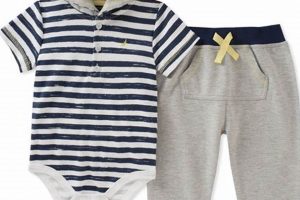
Apparel specifically designed to shield infants from the harmful effects of ultraviolet radiation constitutes a vital category of garments. These items typically incorporate fabrics with a high Ultraviolet Protection Factor (UPF) rating, offering a significant barrier against sun exposure. Examples include long-sleeved shirts, pants, hats with wide brims, and swimsuits that cover a substantial portion of the body.
Safeguarding delicate skin from the sun is paramount for infant health. Prolonged or intense exposure can lead to sunburn, increasing the risk of skin damage and, later in life, skin cancer. Utilizing protective garments provides a proactive and reliable method of reducing UV radiation contact. Historically, parents relied on traditional methods like shade and limited sun exposure; however, advancements in textile technology have enabled the creation of specialized fabrics that offer superior defense.
The subsequent sections will delve into the factors to consider when selecting appropriate items, explore the materials used in their construction, and provide guidance on proper care and maintenance to ensure continued effectiveness.
Selection and Use Guidance
The following guidelines offer practical advice for choosing and utilizing sun-protective garments for infants, maximizing their effectiveness and ensuring optimal skin health.
Tip 1: Prioritize UPF Rating: Scrutinize the Ultraviolet Protection Factor (UPF) rating of the fabric. A UPF of 50+ indicates that the material blocks 98% of UVB and UVA rays. Lower ratings offer less protection.
Tip 2: Opt for Full Coverage: Choose garments that provide maximum skin coverage. Long sleeves, long pants, and swimwear with extended leg and arm coverage are preferable to minimize exposed areas.
Tip 3: Select Tightly Woven Fabrics: Tightly woven fabrics offer greater sun protection than loosely woven or sheer materials. Hold the garment up to a light source; less light transmission indicates better protection.
Tip 4: Consider Fabric Color: Darker-colored fabrics generally absorb more UV radiation than lighter colors. While not a replacement for UPF-rated materials, dark hues can offer an additional layer of protection.
Tip 5: Ensure Proper Fit: Garments should fit comfortably and not be too tight, as stretching the fabric can reduce its UPF effectiveness. Ensure adequate room for movement and air circulation.
Tip 6: Supplement with Sunscreen: While protective clothing significantly reduces sun exposure, it is crucial to apply sunscreen to any exposed skin, such as the face, hands, and feet. Choose a broad-spectrum sunscreen with an SPF of 30 or higher.
Tip 7: Re-evaluate After Wear and Washing: Repeated wear and washing can diminish the UPF effectiveness of some fabrics. Follow care instructions carefully, and consider replacing items that show signs of wear or fading.
Adhering to these recommendations will aid in providing a higher level of protection for infants, minimizing the risks associated with ultraviolet radiation exposure.
The concluding section will summarize the key points and offer final considerations for infant sun safety.
1. UPF Fabric Rating

Ultraviolet Protection Factor (UPF) fabric rating is a critical metric in assessing the effectiveness of textiles designed to shield infants from solar radiation. It quantifies the amount of ultraviolet (UV) radiation that can penetrate the fabric, directly impacting the level of protection afforded by the garment.
- Quantification of UV Blockage
The UPF rating indicates the fraction of UV rays blocked by the fabric. For example, a UPF rating of 50+ signifies that the fabric allows less than 2% of UV radiation to pass through, effectively blocking 98% or more. This numerical value provides a standardized measure for comparing the protective capabilities of different materials.
- Regulatory Standards and Certification
Various organizations establish standards and certification processes for UPF ratings. These certifications ensure that the labeled UPF value is accurate and reliable. Manufacturers adhering to these standards demonstrate a commitment to providing genuine protection. Absence of certification may indicate unreliable or unsubstantiated claims regarding UV protection.
- Influence of Fabric Composition and Weave
The composition of the fabric and the tightness of its weave significantly affect its UPF rating. Tightly woven fabrics made from materials like polyester or nylon typically offer higher UPF values compared to loosely woven or natural fibers. The fabric’s ability to absorb or reflect UV radiation is determined by its inherent properties and construction.
- Impact of Laundering and Wear
Repeated laundering and normal wear can gradually reduce the UPF rating of fabrics. Washing and drying processes can cause fibers to break down or lose their protective properties. Following care instructions carefully and replacing garments that show signs of wear are important to maintain the intended level of protection.
The UPF fabric rating serves as a fundamental indicator of the protective qualities inherent in specialized infant apparel. Careful consideration of the UPF value, coupled with adherence to proper usage and maintenance guidelines, contributes significantly to minimizing the risks associated with ultraviolet radiation exposure. Ignoring this metric can leave infants vulnerable to harmful sun damage, underscoring the importance of selecting garments with verified UPF ratings.
2. Coverage Extent

Coverage extent, referring to the proportion of skin shielded by apparel, is a primary determinant of its protective efficacy. For infants, whose skin is particularly vulnerable to solar radiation, the degree of coverage offered by their garments directly correlates with the reduction in UV exposure and subsequent risk of sunburn and long-term skin damage. This section explores several facets of coverage extent and its implications for infant sun safety.
- Surface Area Maximization
The fundamental principle of coverage extent involves maximizing the area of skin shielded by clothing. Garments designed with long sleeves, full-length pants, and extended necklines provide greater protection compared to those with minimal coverage. Swimwear that covers a larger portion of the torso and limbs is also crucial for aquatic environments. Inadequate coverage can result in concentrated UV exposure on unprotected areas, negating the benefits of UPF-rated fabrics on other parts of the body.
- Head and Neck Protection
The head and neck region are particularly susceptible to sun damage due to their frequent exposure and the thinness of the skin. Wide-brimmed hats that provide shade to the face, ears, and neck are essential for complete protection. Additionally, garments with built-in neck coverings or high collars can further minimize exposure in these vulnerable areas. The omission of head and neck protection can significantly increase the overall risk of sun-related harm.
- Foot and Hand Consideration
While often overlooked, the feet and hands are also vulnerable to UV exposure, especially during outdoor activities. Infants are less likely to wear sunscreen on these areas consistently. Therefore, options such as socks, shoes, or garments with extended sleeves and pant legs that cover the hands and feet can offer a supplemental layer of protection. This is especially relevant for infants who are crawling or playing on surfaces that reflect sunlight.
- Seam and Closure Design
The design and placement of seams and closures can influence the effectiveness of coverage. Gaps or openings in the fabric near seams or around closures can create pathways for UV radiation to reach the skin. Overlapping fabric panels and strategically positioned closures can minimize these potential weak points. Careful attention to detail in garment construction contributes to enhanced overall protection.
In summary, the extent of coverage provided by infant sun protection clothing is a critical factor in mitigating the risks associated with UV radiation exposure. Prioritizing garments that maximize skin coverage in all vulnerable areas, including the head, neck, hands, and feet, is essential for ensuring comprehensive protection and promoting long-term skin health.
3. Breathability

Breathability, the capacity of a fabric to allow moisture vapor to pass through it, is a critical consideration in the design and selection of infant sun protection clothing. It directly impacts thermal regulation and comfort, influencing the likelihood of heat stress or discomfort, particularly in warm weather conditions.
- Moisture Vapor Transmission
Moisture vapor transmission refers to the rate at which water vapor, primarily perspiration, can move through the fabric. Materials with high moisture vapor transmission allow sweat to evaporate, preventing the build-up of moisture against the skin. This is particularly important for infants, as they have less developed thermoregulatory systems and are more susceptible to overheating. Non-breathable fabrics can trap moisture, leading to discomfort, skin irritation, and an elevated risk of heat rash or heatstroke.
- Air Permeability and Cooling Effect
Air permeability describes the ability of air to pass through the fabric. Greater air permeability promotes air circulation around the infant’s body, facilitating cooling through convection. Fabrics with open weaves or specialized constructions that enhance airflow contribute to a more comfortable microclimate within the garment. Restricted airflow can negate the benefits of moisture vapor transmission, as humidity remains elevated near the skin’s surface.
- Fiber Selection and Fabric Construction
The type of fiber used in the fabric and its construction significantly influence breathability. Natural fibers, such as cotton and linen, generally offer better breathability compared to synthetic fibers like polyester, unless the latter is specifically engineered for enhanced moisture management. Knit fabrics tend to be more breathable than woven fabrics due to their inherent structure, which allows for greater air circulation. Fabric finishes and coatings can also impact breathability; treatments designed to enhance water resistance may compromise the fabric’s ability to breathe.
- Impact on Comfort and Well-being
The breathability of sun protection clothing directly affects an infant’s comfort and overall well-being. Garments that are excessively warm or trap moisture can cause irritability, restlessness, and sleep disturbances. Comfortable and breathable clothing encourages longer wear times, maximizing the protective benefits. Furthermore, well-designed breathable garments can reduce the need for frequent changes due to perspiration, simplifying childcare.
The integration of breathability into the design and material selection of infant sun protection clothing is essential for ensuring both safety and comfort. The interplay between moisture vapor transmission, air permeability, fiber selection, and construction dictates the overall effectiveness of the garment in maintaining a comfortable and safe microclimate for the infant. Failure to prioritize breathability can compromise the intended protective function by increasing the risk of heat-related ailments.
4. Chemical Safety
Chemical safety is of paramount importance in the context of infant sun protection clothing. The proximity of these garments to an infant’s delicate skin necessitates careful consideration of the materials and processes used in their manufacture, minimizing the risk of adverse health effects.
- Restricted Substances and Regulations
Numerous regulations govern the use of chemicals in textiles, particularly those intended for infants and young children. These regulations restrict or prohibit the use of substances known to be toxic, carcinogenic, allergenic, or otherwise harmful. Examples include formaldehyde, phthalates, azo dyes, and heavy metals. Compliance with these regulations, such as REACH in Europe and CPSIA in the United States, is crucial for ensuring the safety of infant sun protection clothing. Failure to adhere can lead to skin irritation, allergic reactions, or more severe health consequences.
- Dyes and Pigments
The dyes and pigments used to color fabrics can pose a chemical safety concern if not properly selected and applied. Certain azo dyes, for instance, can release carcinogenic aromatic amines. Opting for dyes that are certified as safe and non-toxic is essential. Furthermore, the dyeing process itself should be conducted in a manner that minimizes the presence of residual chemicals in the finished product. Fabrics labeled as “low-impact dyes” or “natural dyes” generally represent safer alternatives, although thorough verification is necessary.
- Fabric Finishes and Treatments
Various finishes and treatments are applied to fabrics to enhance their performance, such as water repellency, wrinkle resistance, or UV protection. However, some of these treatments may involve the use of chemicals that can be harmful. For example, perfluorinated compounds (PFCs), used for water repellency, have been linked to adverse health effects. Similarly, certain flame retardants can pose a risk. Selecting garments that utilize alternative, non-toxic finishes or that forgo unnecessary treatments altogether is advisable.
- Testing and Certification
Independent testing and certification play a vital role in verifying the chemical safety of infant sun protection clothing. Organizations such as OEKO-TEX provide certification programs that assess products for the presence of harmful substances. These certifications offer consumers assurance that the garments have been tested and meet established safety standards. The presence of such certifications serves as a reliable indicator of a manufacturer’s commitment to chemical safety.
The facets above underscore the complex interplay between chemical substances and the health and safety of infants wearing protective apparel. Vigilance in sourcing materials, adherence to regulatory standards, and reliance on third-party certifications contribute significantly to mitigating chemical risks and ensuring that sun protection clothing provides safe and effective shielding from harmful UV radiation. Chemical safety can not be overemphasized when it comes to infant health.
5. Durability Maintenance

Durability maintenance is intrinsically linked to the ongoing effectiveness of infant sun protection clothing. The Ultraviolet Protection Factor (UPF) rating, which denotes the garment’s ability to block harmful UV radiation, is not necessarily a permanent attribute. Repeated laundering, exposure to environmental factors, and general wear can degrade the fabric’s protective capabilities, thereby reducing its efficacy over time. Neglecting proper care instructions can lead to premature deterioration, rendering the clothing less effective in shielding an infant’s sensitive skin. For instance, washing a garment with harsh detergents or at high temperatures can damage the fibers and diminish the UPF rating, effectively compromising its intended function. Similarly, prolonged exposure to direct sunlight when drying can accelerate the breakdown of the fabric’s protective properties.
Practical application of durability maintenance involves adherence to specific care guidelines recommended by the manufacturer. These guidelines typically address washing temperature, detergent type, drying methods, and ironing instructions. For example, some UPF-rated fabrics require washing in cold water with mild detergents and air drying to preserve their protective properties. Regularly inspecting the clothing for signs of wear and tear, such as fading, stretching, or fabric thinning, is also essential. These indicators can signal a reduction in UV protection, necessitating replacement of the garment. Real-world scenarios highlight the importance of this; a parent who consistently washes a UPF-rated swimsuit in hot water may inadvertently reduce its protective capacity, unknowingly exposing their child to increased UV radiation during subsequent use. The longevity and sustained effectiveness of infant sun protection clothing directly depend on diligent adherence to recommended maintenance practices.
In summary, the consistent application of durability maintenance practices is paramount for ensuring the continued effectiveness of infant sun protection clothing. Failure to properly care for these garments can undermine their intended function, placing infants at greater risk of UV-related skin damage. Understanding the connection between care practices and garment longevity, along with proactive inspection for wear and tear, are crucial components of a comprehensive sun safety strategy for infants. Challenges may arise from unclear care instructions or a lack of awareness regarding the impact of laundering on UPF ratings, underscoring the need for clear communication and parental education on this topic.
Frequently Asked Questions
The following section addresses prevalent inquiries concerning garments designed to protect infants from ultraviolet radiation, aiming to clarify usage, maintenance, and efficacy.
Question 1: What defines the effectiveness of infant solar shielding apparel?
Effectiveness is primarily determined by the Ultraviolet Protection Factor (UPF) rating of the fabric, the extent of skin coverage provided by the garment, and its breathability to ensure comfort and prevent overheating.
Question 2: How frequently should infant solar shielding apparel be replaced?
Replacement frequency depends on usage and care. Garments exhibiting signs of wear, fading, or fabric thinning may have diminished UPF protection and should be replaced to maintain adequate shielding.
Question 3: Is it necessary to apply sunscreen beneath infant solar shielding apparel?
Sunscreen application is recommended on skin areas not covered by the garment, such as the face, hands, and feet. Apparel provides a physical barrier, but uncovered areas remain vulnerable to UV exposure.
Question 4: Can infant solar shielding apparel be used in all weather conditions?
Infant solar shielding apparel is suitable for sunny conditions. In overcast conditions, UV radiation can still penetrate cloud cover, making protective measures advisable. During extreme heat, breathability becomes paramount to prevent overheating.
Question 5: Are all fabrics equally effective in providing solar protection for infants?
No, fabrics vary significantly in their capacity to block UV radiation. Tightly woven fabrics with high UPF ratings offer superior protection compared to loosely woven or lightweight materials.
Question 6: How should infant solar shielding apparel be laundered to preserve its protective properties?
Laundering should adhere to the manufacturer’s instructions. Generally, washing in cold water with mild detergents and air drying helps maintain the garment’s UPF rating. Avoid harsh chemicals and high heat.
Effective use of infant solar shielding apparel necessitates understanding its limitations and proper care protocols to ensure ongoing UV protection.
The succeeding section will address practical considerations for choosing age-appropriate and activity-specific solar shielding apparel.
Conclusion
This exploration has underscored the vital role of baby sun protection clothing in safeguarding infants from the detrimental effects of solar radiation. The discussions emphasized the importance of Ultraviolet Protection Factor (UPF) ratings, coverage extent, breathability, chemical safety, and durability maintenance, highlighting how these factors collectively determine the effectiveness and longevity of such garments. A comprehensive understanding of these elements empowers caregivers to make informed decisions when selecting appropriate attire for their children.
Prioritizing the health and well-being of infants necessitates a proactive approach to sun safety. By embracing the principles outlined and remaining vigilant in the selection and maintenance of protective clothing, it is possible to significantly reduce the risks associated with ultraviolet exposure and promote a future of healthy skin for the youngest members of society. Continued research and development in textile technology promise further advancements in protective capabilities, warranting ongoing attention to this critical area of infant care.