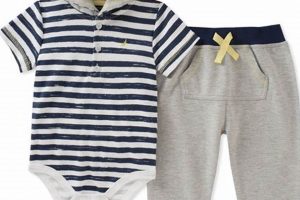
Garments designed for infants within their first three months of life constitute a distinct category of apparel. These items are typically crafted with soft, breathable fabrics and prioritize ease of dressing and undressing for frequent changes. Examples include bodysuits, sleepers, and swaddling blankets, often featuring simple closures like snaps or zippers.
The selection of appropriate attire for newborns is crucial for maintaining their comfort and regulating their body temperature, as they are less able to do so independently. Historically, infant clothing focused primarily on functionality, but modern designs also emphasize aesthetics and safety standards. Proper sizing and material choices can significantly impact an infant’s well-being and comfort levels.
The subsequent sections will delve into specific types of these garments, factors to consider when selecting them, and best practices for their care and maintenance, providing a comprehensive guide for caregivers.
Guidance on Infant Apparel Selection (0-3 Months)
Selecting appropriate garments for infants aged zero to three months requires careful consideration. The following guidance aims to provide informational support for caregivers navigating this process.
Tip 1: Prioritize Fabric Composition. Opt for natural, breathable fabrics such as cotton or muslin. These materials minimize the risk of skin irritation and allow for adequate ventilation.
Tip 2: Evaluate Closure Mechanisms. Select garments with simple, accessible closures such as snaps or zippers. Complex fastenings can be time-consuming and potentially uncomfortable for the infant.
Tip 3: Consider Seasonal Appropriateness. Adjust clothing choices to the prevailing climate. Layering garments provides flexibility in regulating an infant’s body temperature across varying conditions.
Tip 4: Adhere to Safe Sleep Guidelines. Avoid garments with loose ribbons, drawstrings, or decorative elements that could pose a suffocation hazard during sleep.
Tip 5: Factor in Growth Rate. Infants grow rapidly during this period. Purchase a sufficient quantity of garments in larger sizes to accommodate anticipated growth spurts.
Tip 6: Maintain Hygiene Practices. Wash all new garments before initial use. Utilize hypoallergenic detergents to minimize the risk of allergic reactions.
Tip 7: Assess Comfort and Mobility. Choose garments that allow for unrestricted movement and do not constrict the infant’s limbs or torso. Observe the infant for signs of discomfort or irritation.
The careful selection and appropriate usage of infant apparel can contribute significantly to the comfort and well-being of the infant during these crucial early months.
The subsequent section will address considerations for purchasing and maintaining these essential items.
1. Fabric Composition

The fabric composition of garments designed for infants aged 0 to 3 months exerts a direct influence on the infant’s health and comfort. The immature skin of newborns possesses heightened sensitivity and permeability, rendering it particularly susceptible to irritants and allergens present in certain synthetic materials. Therefore, the selection of fabric constitutes a critical determinant of dermatological well-being during this developmental stage. For example, clothing manufactured from synthetic fibers like polyester can impede air circulation, potentially leading to overheating and skin irritation, such as miliaria (heat rash). Conversely, natural fibers such as cotton, bamboo, or merino wool facilitate breathability, allowing moisture to evaporate and minimizing the risk of irritation. The prevalence of infant clothing brands specifically marketing organic cotton underscores the industry’s recognition of this principle and consumer demand for hypoallergenic options.
The practical significance of understanding fabric composition extends beyond dermatological considerations. The choice of fabric also affects the garment’s durability, ease of care, and overall environmental impact. While synthetic blends may offer increased wrinkle resistance, their production often involves processes that contribute to pollution. Natural fibers, particularly organically grown varieties, represent a more sustainable alternative. Moreover, the ability of a fabric to withstand repeated washing without significant degradation is crucial, given the frequency with which infant clothing requires laundering. Selecting high-quality, durable fabrics translates to longer garment lifespan and reduced overall consumption.
In summary, the connection between fabric composition and infant well-being is multifaceted and profound. While the immediate benefit lies in minimizing skin irritation and allergic reactions, the long-term implications encompass durability, sustainability, and overall environmental responsibility. Challenges remain in educating consumers about the nuances of fabric types and sourcing ethically produced materials. However, prioritizing natural, breathable, and durable fabrics represents a fundamental aspect of responsible infant care and clothing selection.
2. Closure Accessibility

Closure accessibility constitutes a critical design element in infant garments intended for the 0-to-3-month age range. The connection between accessibility and practicality is direct: simplified closures facilitate quicker and less disruptive diaper changes, which are frequent occurrences in this age group. Cumbersome or intricate closure mechanisms prolong the changing process, potentially causing discomfort or agitation for the infant. Examples include the replacement of button-down backs with strategically placed snap closures along the inseam or the substitution of tie-string closures with easily manipulated zippers. The practical significance of this design consideration is underscored by the reduced stress experienced by both the infant and caregiver during routine care.
Further analysis reveals that closure accessibility also influences the garment’s overall functionality. A design prioritizing ease of access allows for rapid adjustments to clothing layers in response to fluctuating environmental conditions, maintaining the infant’s thermal comfort. For example, a side-snap t-shirt permits adjustments without requiring the infant to be fully undressed, minimizing heat loss. Moreover, easily accessible closures are particularly beneficial in situations requiring immediate medical attention, such as administering medication or examining the infant’s skin. In contrast, garments with complex or restrictive closures can impede timely intervention.
In conclusion, closure accessibility represents a non-negotiable feature in the design and selection of infant clothing for the 0-to-3-month age range. Its impact extends beyond mere convenience, influencing the infant’s comfort, the caregiver’s efficiency, and the capacity for prompt medical intervention. Although challenges may persist in standardizing closure designs across brands, prioritizing easily manipulated and strategically placed closures is paramount.
3. Size Appropriateness

Size appropriateness in infant garments designed for the 0 to 3 months age range directly impacts physiological comfort and unrestricted physical development. Garments that are excessively large present entanglement and suffocation hazards, particularly during sleep. Conversely, apparel that is too small restricts movement, impedes circulation, and can contribute to dermatological irritation. A properly sized garment allows for natural limb movement and unrestricted breathing, thereby fostering healthy development. Real-world examples include infants experiencing skin chafing and restricted motor skills due to inappropriately sized clothing. The practical significance of this understanding lies in mitigating potential health risks and promoting optimal physical development during this critical period.
The determination of correct size is not solely based on the manufacturer’s labeled age range. Infant growth rates exhibit considerable variability; therefore, weight and length measurements are essential considerations. Furthermore, variations in garment sizing across different brands necessitate careful attention to size charts and product specifications. Pragmatically, caregivers should regularly assess the fit of garments on the infant, observing for signs of constriction, such as redness or indentations on the skin. Adjustments in clothing size should be made promptly to accommodate growth spurts, ensuring continued comfort and safety.
In summary, size appropriateness is a fundamental aspect of selecting infant clothing for the 0 to 3 months age group. Its importance extends beyond mere aesthetics, directly affecting infant safety, comfort, and physical development. Challenges remain in standardizing sizing conventions across brands, but diligent attention to measurements and regular assessment of garment fit are crucial strategies for mitigating risks and promoting infant well-being.
4. Seasonal Adaptability
Seasonal adaptability in garments designed for infants aged 0 to 3 months directly impacts thermoregulation, a critical physiological function due to newborns’ limited capacity for independent temperature control. The external environment exerts a profound influence on infant body temperature, creating a direct cause-and-effect relationship. Failure to adapt clothing choices to seasonal variations increases the risk of hypothermia during colder months and hyperthermia during warmer periods. For instance, dressing an infant in heavy, insulated clothing during summer can lead to overheating, dehydration, and potentially heatstroke. Conversely, insufficient layering in winter increases the susceptibility to cold stress and hypothermia. Therefore, seasonal adaptability is a fundamental component of appropriate infant clothing selection.
The practical application of seasonal adaptability involves a multifaceted approach. During colder months, layering is essential, utilizing breathable base layers such as cotton bodysuits, followed by insulating mid-layers like fleece jackets or sweaters, and finally, protective outer layers such as quilted snowsuits for outdoor exposure. In warmer months, lightweight, breathable fabrics are paramount, minimizing the risk of overheating. Sun-protective clothing, including wide-brimmed hats and long-sleeved shirts made from tightly woven fabrics, is also crucial for shielding delicate skin from harmful ultraviolet radiation. Adaptations should also account for indoor environments; for example, reducing layers in heated or air-conditioned spaces to prevent temperature imbalances. Real-world examples include parents utilizing swaddling blankets of varying thicknesses depending on the season and adjusting the number of layers worn during sleep to maintain a consistent body temperature.
In summary, seasonal adaptability is a non-negotiable consideration in selecting clothing for infants aged 0 to 3 months. Its importance lies in safeguarding thermoregulation and mitigating associated health risks. Challenges include accurately assessing the infant’s temperature and adjusting layers proactively, requiring a heightened awareness of environmental conditions and individual needs. Prioritizing breathable fabrics, layering strategies, and sun protection measures are fundamental to promoting infant well-being across diverse seasonal conditions.
5. Safety Compliance

Safety compliance constitutes a foundational requirement in the design and manufacture of garments intended for infants aged 0 to 3 months. This requirement stems directly from the inherent vulnerability of newborns, who lack the physical capabilities to mitigate potential hazards associated with improperly designed or constructed clothing. The presence or absence of safety compliance directly influences the risk of injury or even fatality. For instance, garments containing small, detachable components, such as buttons or decorative embellishments, pose a significant choking hazard. Similarly, clothing constructed from flammable materials elevates the risk of severe burns in the event of accidental exposure to fire. Real-world examples of infant injuries and deaths resulting from non-compliant clothing underscore the critical importance of adhering to established safety standards. Therefore, safety compliance is not merely an optional feature but a mandatory prerequisite for all infant apparel.
Further analysis reveals that safety compliance encompasses a comprehensive range of design and manufacturing considerations. Regulations often mandate the absence of drawstrings or ribbons in the neck area of infant clothing to prevent strangulation. Similarly, standards may dictate the use of specific types of dyes and finishes to minimize the risk of allergic reactions or skin irritation. The practical application of safety compliance involves rigorous testing and certification procedures to ensure that garments meet or exceed established safety thresholds. Manufacturers are often required to provide documentation demonstrating adherence to relevant safety standards, such as the Consumer Product Safety Improvement Act (CPSIA) in the United States or EN 71 in Europe. This involves independent testing by certified laboratories to verify the absence of harmful substances and the structural integrity of the garment.
In summary, safety compliance is an indispensable aspect of selecting and utilizing infant clothing for the 0 to 3 months age group. Its significance extends beyond mere regulatory adherence, directly affecting infant health and well-being. Challenges persist in ensuring consistent enforcement of safety standards across global markets, requiring vigilance from both manufacturers and consumers. However, prioritizing safety-certified garments represents a fundamental responsibility in protecting infants from preventable harm.
Frequently Asked Questions
The following questions address common concerns and misconceptions regarding garments for infants aged 0 to 3 months, providing clarity and guidance on best practices.
Question 1: What constitutes the most appropriate fabric for infant apparel in this age range?
Natural, breathable fabrics such as 100% cotton, muslin, or bamboo are generally recommended. These materials minimize the risk of skin irritation and allow for adequate air circulation. Synthetics, while potentially durable, can trap moisture and exacerbate skin sensitivity.
Question 2: How frequently should infant garments be laundered?
Frequent laundering is advisable, particularly given the potential for soiling and exposure to bodily fluids. New garments should always be washed before initial use. Hypoallergenic detergents are recommended to minimize the risk of allergic reactions.
Question 3: What are the primary safety considerations regarding infant clothing?
Safety considerations include avoiding garments with loose ribbons, drawstrings, or small, detachable components that could pose a choking hazard. Fire-retardant treatments should be carefully evaluated, as some may contain potentially harmful chemicals. Garments should also fit appropriately to prevent entanglement or restriction of movement.
Question 4: How does one determine the correct size when purchasing infant apparel?
Sizing charts provided by manufacturers should be consulted, paying particular attention to weight and length measurements rather than relying solely on age-based labels. Infant growth rates vary considerably, necessitating regular assessment of garment fit.
Question 5: Is it necessary to purchase specialized sleepwear for infants?
Specialized sleepwear, such as sleep sacks or swaddling blankets, can promote restful sleep and reduce the risk of sudden infant death syndrome (SIDS) by preventing the use of loose blankets. These items should adhere to established safety standards and allow for unrestricted hip movement.
Question 6: What are the implications of garment choice on an infant’s thermoregulation?
Infants possess limited capacity for independent thermoregulation. Therefore, clothing choices must adapt to environmental conditions. Layering is recommended for colder climates, while lightweight, breathable fabrics are preferable in warmer environments. Overheating can be as detrimental as hypothermia, necessitating careful monitoring.
The information presented addresses fundamental aspects of selecting and utilizing infant garments. Prioritizing safety, comfort, and appropriate sizing contributes to the well-being of the infant.
The subsequent section will explore considerations for sustainable and ethical sourcing of infant apparel.
Conclusion
The preceding analysis has illuminated the multifaceted considerations inherent in the selection and utilization of garments for infants aged 0 to 3 months. Fabric composition, closure accessibility, size appropriateness, seasonal adaptability, and safety compliance emerge as critical determinants of infant well-being. Prioritization of these factors is essential for mitigating potential health risks and fostering optimal development during this vulnerable period.
Careful attention to the aforementioned principles represents a fundamental responsibility in safeguarding infant health and promoting positive developmental outcomes. Continued vigilance in adhering to safety standards, promoting ethical sourcing practices, and adapting clothing choices to individual needs will contribute to a healthier and more sustainable future for infant care.