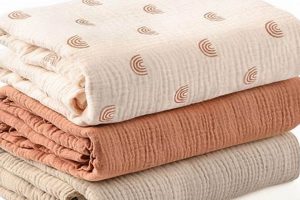
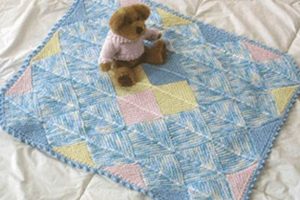
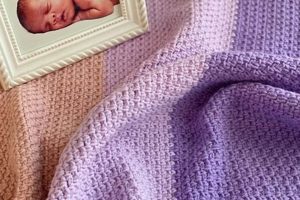
The construction of a soft, comforting textile designed for infants is a common practice involving basic sewing techniques. This process typically utilizes materials such as cotton flannel, fleece, or quilt batting, resulting in a finished product intended for swaddling, providing warmth, or offering a familiar source of comfort for a baby. For example, a parent might craft a small, square blanket from organic cotton to use in a stroller.
Creating such an item provides several benefits. It offers a personalized touch, allows for control over materials used, and can be a cost-effective alternative to purchasing commercially produced versions. Historically, handmade items, including those designed for infants, have represented a significant expression of care and resourcefulness, often passed down through generations as cherished heirlooms.
The following sections will outline the necessary materials, preparation steps, various construction methods, and finishing techniques involved in the crafting of this essential item for infants. Careful attention to detail ensures a durable and safe product, meeting the specific needs of the intended recipient.
Tips for Optimal Construction
Achieving a durable and aesthetically pleasing result requires careful consideration of several key factors during the construction phase.
Tip 1: Fabric Pre-Treatment: Pre-washing all fabrics is crucial to prevent shrinkage after the blanket is completed. This step ensures consistent dimensions and avoids distortion of the finished product.
Tip 2: Accurate Measurement and Cutting: Precise measurements and straight cuts are essential for creating a square or rectangular blanket. Using a rotary cutter, a self-healing mat, and a clear ruler will improve accuracy and efficiency.
Tip 3: Seam Allowance Consistency: Maintain a consistent seam allowance throughout the project. This will contribute to a professional finish and ensure that the blanket retains its intended size. A quarter-inch seam allowance is generally recommended.
Tip 4: Reinforcing Seams: Securing seams with backstitching at the beginning and end of each seam will prevent unraveling and increase the longevity of the blanket. This is particularly important for items intended for frequent use and washing.
Tip 5: Mitered Corners for Binding: When applying binding, create mitered corners for a clean and professional appearance. Mitered corners reduce bulk and provide a more durable finish at the corners of the blanket.
Tip 6: Selecting Appropriate Thread: Choose a thread that complements the fabric type and color. Cotton or polyester threads are generally suitable for most baby blankets, offering durability and resistance to fading.
Tip 7: Ensuring Even Stitching: Maintain a consistent stitch length throughout the project. Uneven stitching can weaken the seams and detract from the overall appearance of the blanket. Regular practice on scrap fabric is recommended.
Adhering to these guidelines will result in a high-quality, durable, and visually appealing item that provides comfort and security for the infant.
The subsequent sections will provide detailed instructions on advanced techniques for embellishing and personalizing the blanket, further enhancing its sentimental value.
1. Fabric Selection

The selection of appropriate materials directly impacts the suitability, comfort, and longevity of a handcrafted item for infants. Careful consideration must be given to various fabric properties to ensure the resulting product meets specific safety and functionality requirements.
- Fiber Content
The fiber content of the fabric dictates its breathability, softness, and washability. Natural fibers, such as cotton and bamboo, are often preferred due to their hypoallergenic properties and gentle feel against a baby’s skin. Synthetic fibers, such as fleece, offer warmth and durability but may not be as breathable. The choice depends on the intended use and desired properties of the finished blanket.
- Fabric Weight and Texture
The weight and texture influence the blanket’s warmth and drape. Lightweight fabrics like cotton voile are suitable for warm weather, while heavier fabrics like fleece provide insulation in colder climates. Texture should be soft and smooth to avoid irritating the baby’s delicate skin. Fabrics with raised textures or embellishments should be avoided due to potential safety hazards.
- Colorfastness and Dye Safety
Colorfastness is crucial to prevent dyes from bleeding or fading during washing, which could transfer onto the baby’s skin or other clothing. Opting for fabrics dyed with baby-safe, non-toxic dyes is essential to minimize the risk of allergic reactions or skin irritation. Testing a small piece of fabric before use can help determine its colorfastness.
- Weave and Construction
The weave and construction of the fabric determine its durability and resistance to wear and tear. Tightly woven fabrics, such as quilting cotton, are less likely to fray and can withstand frequent washing. Knit fabrics, such as jersey knit, offer stretch and softness but may require special handling during sewing to prevent distortion. The choice should balance durability with the desired aesthetic and feel of the blanket.
In conclusion, the careful consideration of fiber content, fabric weight, dye safety, and weave construction ensures that the resulting blanket is not only aesthetically pleasing but also safe, comfortable, and durable for its intended purpose. These factors are integral to ensuring the creation of a high-quality item that contributes positively to the infant’s well-being. The appropriate fabric selection makes how to sew a baby blanket project more successfull.
2. Pattern Design

Pattern design functions as a foundational element in the process of how to sew a baby blanket. The chosen pattern dictates the final dimensions, shape, and construction complexity of the item. A poorly designed pattern can lead to inaccurate fabric cutting, mismatched seams, and a final product that is either structurally unsound or aesthetically unappealing. For instance, a simple square or rectangular pattern, executed accurately, will yield a functional and easily achievable blanket. Conversely, an intricate design involving curves and multiple fabric pieces demands a higher level of skill and precision, increasing the potential for errors if the pattern is not well-drafted.
The selection of a pattern should align with the intended function and aesthetic of the blanket. A quilt-style pattern, for example, necessitates the piecing together of multiple fabric squares or shapes, often incorporating batting for added warmth. This approach allows for creative expression through the arrangement of colors and textures. Alternatively, a simpler pattern involving a single piece of fabric, such as fleece or flannel, requires minimal sewing and is suitable for beginners. The pattern should also consider the safety of the infant; avoid designs with small embellishments or loose pieces that could pose a choking hazard. Real-life examples include using free online patterns for basic fleece blankets or purchasing professionally drafted patterns for more complex quilted designs.
In summary, pattern design is inextricably linked to the success of how to sew a baby blanket project. Careful consideration of the pattern’s complexity, suitability for the intended purpose, and adherence to safety standards is crucial. While simple patterns offer ease of execution, more intricate designs allow for greater creative expression. The challenge lies in selecting a pattern that balances skill level with desired outcome, ensuring a safe, functional, and aesthetically pleasing final product. This step significantly influences the efficiency and final look of the project.
3. Seam Allowance

Seam allowance, a critical element in garment and textile construction, holds significant importance in the creation of a safe and durable item. Its proper implementation directly impacts the overall quality and longevity of the finished product.
- Definition and Purpose
Seam allowance refers to the area between the edge of the fabric and the stitching line. Its primary purpose is to provide structural integrity to the seam, preventing it from unraveling or tearing under stress. In the context of crafting textiles, a consistent and appropriately sized seam allowance is essential for creating a resilient and long-lasting product.
- Standard Seam Allowance for Infants’ Items
A common seam allowance for garments and textiles intended for infants typically ranges from 1/4 inch to 1/2 inch. This range provides sufficient fabric for secure stitching while minimizing bulk, ensuring the item remains comfortable against the infant’s skin. Deviations from this standard can compromise seam strength or create unnecessary bulk, potentially causing discomfort.
- Impact on Blanket Dimensions
Inaccurate seam allowances can significantly alter the final dimensions of the finished item. If the seam allowance is larger than intended, the resulting blanket will be smaller than the planned size. Conversely, a smaller seam allowance can lead to a larger blanket but with weaker seams. Precise measurements and consistent seam allowances are, therefore, essential for achieving the desired dimensions and structural integrity. For example, using a 5/8 inch seam allowance instead of a 1/2 inch on all sides of a 36-inch square will reduce the finished blanket to 34 inches.
- Considerations for Different Fabrics
The appropriate seam allowance may vary depending on the type of fabric used. Thicker fabrics, such as fleece or multiple layers of quilt batting, may require a slightly larger seam allowance to accommodate the increased bulk. Conversely, lighter fabrics may require a narrower seam allowance to prevent excessive bulk. Furthermore, fabrics prone to fraying, such as loosely woven cotton, necessitate a wider seam allowance to provide adequate protection against unraveling. For example, a fleece blanket might benefit from a 1/2 inch seam allowance, while a lightweight cotton voile blanket might only need 1/4 inch.
In conclusion, the proper implementation of seam allowance is an indispensable aspect of the creation of a safe and durable textile for infants. Adherence to standard guidelines, accurate measurements, and fabric-specific considerations are crucial for achieving a finished product that meets both functional and aesthetic requirements. Paying careful attention to this detail ensures the blanket is both comfortable and long-lasting, providing a safe and comforting item for the intended recipient. Understanding seam allowance is directly relevant to learning how to sew a baby blanket with quality.
4. Stitch Type

The selection of stitch type directly influences the durability, safety, and aesthetic appeal of a crafted item. Different stitch types offer varying degrees of strength, stretch, and resistance to unraveling, thereby impacting the item’s longevity and functionality. For instance, a straight stitch is generally suitable for joining fabric pieces, but it may not be ideal for areas subject to significant stress or stretching. A zig-zag stitch, conversely, provides greater elasticity and prevents fraying, making it advantageous for securing edges or reinforcing seams on items designed for frequent use and washing. In essence, the appropriate selection ensures structural integrity and minimizes the risk of seam failure, contributing to the overall quality of the finished product. How to sew a baby blanket projects always need the correct stitch type.
Practical application necessitates consideration of the fabric type and intended use. When constructing from delicate fabrics, such as lightweight cotton or muslin, a shorter stitch length is advisable to prevent puckering and maintain the fabric’s integrity. Conversely, heavier fabrics, like fleece or multiple layers of batting, may require a longer stitch length to ensure adequate penetration and secure seam construction. Furthermore, decorative stitches can be incorporated to enhance the visual appeal, adding a personalized touch without compromising structural soundness. Examples include using a blanket stitch around the edges for a hand-crafted look or employing a decorative overlock stitch for a professional finish. These choices reflect a deliberate effort to balance aesthetic considerations with functional requirements.
In summary, the careful selection of stitch type represents a critical element in the construction of quality items. It demands a comprehensive understanding of fabric properties, seam requirements, and desired aesthetic outcomes. While straight stitches provide basic functionality, zig-zag and decorative stitches offer enhanced durability and visual appeal. Overlooking this aspect can lead to compromised structural integrity and diminished longevity. The successful execution lies in the application of appropriate stitch types, tailored to the specific characteristics of the materials used and the intended function of the final product, ensuring the creation of a safe, durable, and aesthetically pleasing article. The suitable stitch types have a connection with how to sew a baby blanket well.
5. Edge Finishing

Edge finishing represents a critical step in the process of how to sew a baby blanket, directly influencing the item’s durability, aesthetic appeal, and safety. Raw edges, if left unfinished, are susceptible to fraying, which compromises the blanket’s structural integrity and reduces its lifespan. Moreover, loose threads from frayed edges pose a potential choking hazard for infants. Therefore, selecting and implementing appropriate edge finishing techniques is essential to ensure a safe and long-lasting product. For instance, a simple serged edge prevents fraying and provides a clean finish, while a more elaborate binding technique adds both durability and a decorative element.
Various edge finishing options exist, each with its own set of advantages and disadvantages. Binding, often made from cotton or satin, involves encasing the raw edges of the blanket with a strip of fabric, providing a secure and aesthetically pleasing finish. A rolled hem creates a clean and subtle edge by folding the fabric over itself multiple times and stitching it in place. A serged edge utilizes an overlock machine to encase the raw edges with thread, preventing fraying quickly and efficiently. The choice of edge finishing technique depends on the fabric type, desired aesthetic, and the sewer’s skill level. For example, a minky fabric blanket may benefit from a satin binding to add a touch of luxury, while a flannel blanket might be adequately finished with a simple rolled hem.
In conclusion, edge finishing is an indispensable component of how to sew a baby blanket, transforming it from a mere piece of fabric into a durable, safe, and visually appealing item. The selection of an appropriate edge finishing method, based on fabric type and aesthetic considerations, significantly contributes to the overall quality and longevity of the final product. While basic techniques like serging offer simplicity and functionality, more elaborate methods like binding provide opportunities for creative expression and enhanced durability. The successful execution of edge finishing ensures that the blanket serves its purpose effectively and safely, providing comfort and security for the infant.
6. Thread Quality

Thread quality is a critical determinant in the longevity and structural integrity of an item. Its selection directly impacts the durability, safety, and aesthetic appeal of textiles, including those crafted for infants.
- Fiber Composition
The fiber composition of thread significantly influences its strength, elasticity, and resistance to wear and tear. Threads composed of polyester or cotton-wrapped polyester offer superior durability and are less prone to breakage compared to those made solely of cotton. In the context of a crafted textile item, selecting a thread with a robust fiber composition ensures that seams withstand repeated washing and handling, minimizing the risk of separation or unraveling.
- Thread Weight and Thickness
Thread weight, typically indicated by a number, denotes the thread’s thickness and density. A heavier thread is suitable for thicker fabrics, providing enhanced seam strength, while a lighter thread is preferable for delicate fabrics to prevent puckering or distortion. The use of an inappropriately weighted thread can compromise the structural integrity of the item. For instance, employing a heavy thread on lightweight cotton may result in unsightly puckering, whereas a light thread on heavy fleece could lead to seam failure.
- Colorfastness and Dye Stability
The colorfastness of thread is crucial for maintaining the aesthetic appeal over time. Threads with poor dye stability are susceptible to fading or bleeding during laundering, potentially discoloring the surrounding fabric and detracting from the item’s overall appearance. Selecting threads with high colorfastness ratings ensures that the colors remain vibrant and true, even after repeated washing cycles. This consideration is particularly important for items intended for infants, as they are often subjected to frequent laundering.
- Surface Finish and Lubrication
The surface finish and lubrication of thread influence its smoothness and ease of passage through fabric during sewing. Threads with a smooth, lubricated finish reduce friction and prevent snagging, resulting in even and consistent stitches. Conversely, rough or poorly lubricated threads can cause skipped stitches, thread breakage, and damage to the fabric. Selecting threads with a high-quality surface finish contributes to a more efficient sewing process and a superior final product.
These considerations highlight the direct correlation between thread quality and the overall success and lifespan of a crafted textile item. Choosing a thread that possesses the appropriate fiber composition, weight, colorfastness, and surface finish is essential for achieving a durable, aesthetically pleasing, and safe final product. The durability will contribute to how to sew a baby blanket can success or fail. The thread quality directly impacts the item’s longevity and functional effectiveness.
7. Safety Standards

The creation of a textile intended for infant use necessitates strict adherence to established safety standards. The item’s construction, including material selection and assembly techniques, must prioritize the infant’s well-being, mitigating potential hazards such as suffocation, strangulation, or ingestion of small parts. Failure to comply with relevant safety standards during the project of constructing the items can result in serious harm to the infant. For instance, blankets with long, unsecure ribbons or embellishments pose a strangulation risk, while the use of non-breathable fabrics can increase the risk of suffocation. Adherence to established guidelines, such as those provided by regulatory bodies, is crucial to minimize these risks and ensure the safety of the final product. Understanding safety standards is directly related with how to sew a baby blanket properly.
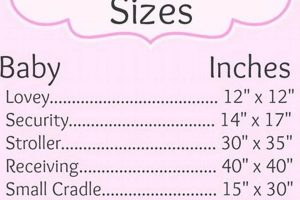
Practical application of safety standards requires careful material selection. Fabrics should be breathable, non-toxic, and free from harmful chemicals or dyes. Seams must be securely stitched to prevent unraveling, and embellishments, if used, should be firmly attached and of a size that cannot be easily ingested. Moreover, the dimensions of the blanket should be appropriate for the infant’s age and size to prevent entanglement. Real-world examples include using organic cotton flannel that is Oeko-Tex certified, ensuring it is free from harmful substances, and avoiding the use of buttons or zippers that could detach and become choking hazards. The practical is related to knowing how to sew a baby blanket well.
In summary, integrating safety standards into every stage of creating item for infants is paramount. Awareness of potential hazards, meticulous material selection, and diligent construction techniques are essential for creating a product that is both comforting and safe. While challenges may arise in balancing aesthetic desires with safety requirements, the ultimate goal must always be the protection and well-being of the infant. Disregarding safety standards not only exposes the infant to unnecessary risks but also carries significant ethical and legal ramifications for the creator. Therefore, a comprehensive understanding of and commitment to safety standards is indispensable for anyone involved in how to sew a baby blanket.
Frequently Asked Questions
The following section addresses common inquiries and concerns regarding the creation of a safe and long-lasting soft item intended for use by infants.
Question 1: What constitutes the most suitable fabric choice to minimize the risk of allergic reactions in infants?
Fabrics composed of natural fibers, such as organic cotton or bamboo, are generally recommended. These materials possess hypoallergenic properties and are less likely to cause irritation or allergic reactions compared to synthetic alternatives.
Question 2: Is it permissible to incorporate embellishments, such as buttons or ribbons, into its design?
The inclusion of small embellishments is strongly discouraged due to the potential choking hazard they pose to infants. Any decorative elements should be securely attached and of a size that cannot be easily ingested.
Question 3: What is the recommended wash cycle and detergent type to maintain fabric integrity and hygiene?
Laundering in cold water using a mild, fragrance-free detergent is advised. This approach minimizes the risk of color bleeding, fabric shrinkage, and allergic reactions associated with harsh chemicals or fragrances. Prior to use, pre-washing the fabric is crucial.
Question 4: How frequently should the item be laundered to ensure optimal hygiene for the infant?
Frequent laundering, ideally after each use or when visibly soiled, is recommended. This practice minimizes the accumulation of bacteria and allergens, promoting a clean and healthy environment for the infant.
Question 5: What seam finishing techniques are most effective in preventing fraying and enhancing durability?
Serging or binding the edges with a durable fabric strip are highly effective techniques. These methods encase the raw edges, preventing fraying and reinforcing the overall structural integrity.
Question 6: What criteria should be considered when assessing the thread’s suitability to ensure seam strength and longevity?
The thread should be composed of a durable fiber, such as polyester or cotton-wrapped polyester, and possess a weight appropriate for the fabric thickness. Additionally, the thread should exhibit high colorfastness and resistance to abrasion to withstand repeated washing and handling.
The principles outlined above emphasize the importance of prioritizing safety, durability, and hygiene when crafting a textile for infants. Adherence to these guidelines ensures a product that is both comforting and conducive to the infant’s well-being.
The subsequent segment will delve into advanced techniques for personalizing the item, enhancing its sentimental value and creating a unique keepsake.
Conclusion
The preceding exploration of how to sew a baby blanket has detailed the essential considerations involved in the creation of a safe, durable, and aesthetically pleasing item. Key aspects include the meticulous selection of appropriate fabrics, thoughtful pattern design, precise seam allowance execution, appropriate stitch type implementation, secure edge finishing, high-quality thread selection, and unwavering adherence to established safety standards. These factors collectively contribute to a final product that meets the unique needs of infants.
The construction of such an item represents more than a mere sewing endeavor; it is an investment in an infant’s comfort and well-being. The information outlined within serves as a foundation for informed decision-making, encouraging careful planning and execution. The continued pursuit of knowledge and refinement of skills in this area will ensure the ongoing provision of safe and comforting items for generations to come. Therefore, a diligent approach to these principles remains paramount in the crafting of safe and lasting items designed for the most vulnerable among us.