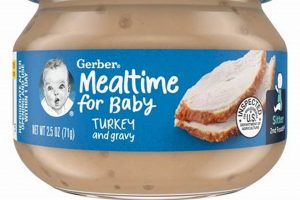
This specialized product line provides protein-rich nourishment designed for infants transitioning to solid foods. The offerings include a variety of single-protein options, such as chicken, beef, and turkey, formulated to be easily digestible and palatable for young children. These products are processed to achieve a smooth, pureed consistency suitable for babies typically around six months of age and older.
Introducing protein sources through these carefully prepared meals can be vital for infant growth and development. Iron, zinc, and other essential nutrients found in meat contribute to healthy physical and cognitive maturation. Historically, pured meats have been a common component of infant diets, reflecting the understanding of the nutritional demands during this period of rapid development. The selection of reputable brands ensures stringent quality control and safety measures are adhered to during production, offering parents assurance regarding their baby’s food.
This article will explore the nutritional value of these products, examine potential benefits and considerations for parents, and discuss best practices for incorporating these items into a well-rounded infant feeding plan. The following sections will cover preparation tips, allergy awareness, and storage guidelines to optimize the feeding experience and ensure the health and safety of infants.
Guidance on Introducing Meat-Based Infant Nutrition
The following recommendations aim to provide clarity on integrating meat-based options into an infant’s diet, focusing on safety and nutritional adequacy.
Tip 1: Begin with Single-Protein Varieties: Introduce one protein source at a time, such as chicken, beef, or turkey, to monitor for potential allergic reactions or sensitivities. Wait several days between introducing new proteins.
Tip 2: Adhere to Recommended Age Guidelines: Generally, these products are suitable for infants around six months of age. Consult a pediatrician or registered dietitian for individualized feeding advice.
Tip 3: Prioritize Small Portions: Start with small servings (1-2 tablespoons) and gradually increase the quantity based on the infant’s appetite and tolerance. Avoid forcing the infant to finish the entire portion.
Tip 4: Ensure Proper Storage and Handling: Follow the manufacturer’s instructions for storage. Refrigerate opened containers promptly, and discard any unused portions after 24-48 hours to prevent bacterial growth.
Tip 5: Observe for Allergic Reactions: Watch for signs of allergic reactions, such as skin rashes, hives, vomiting, diarrhea, or difficulty breathing. If any of these symptoms occur, discontinue use and seek immediate medical attention.
Tip 6: Complement with a Balanced Diet: These protein sources should be part of a varied diet that includes fruits, vegetables, and grains to ensure the infant receives a comprehensive range of nutrients.
Tip 7: Verify Product Safety: Confirm the packaging is intact and the product is within its expiration date prior to feeding. Do not use if the seal is broken or the contents appear discolored or have an unusual odor.
Incorporating meat-based options can significantly contribute to an infant’s iron and protein intake, supporting healthy growth and development when done with careful consideration and attention to safety.
The subsequent sections of this article will delve deeper into addressing common concerns and potential challenges associated with integrating these items into an infant’s diet.
1. Protein Source

The protein source within the context of this specialized nutrition is a primary determinant of its nutritional value and suitability for infant consumption. Specific sources, such as chicken, beef, or turkey, each present a distinct amino acid profile, which is critical for muscle development, immune function, and overall growth. The choice of protein directly impacts the bioavailability of essential nutrients, thereby influencing the efficacy of the product in meeting the infants nutritional requirements. For instance, beef may offer a higher concentration of iron compared to chicken, while chicken might be easier to digest for some infants.
Manufacturers carefully select and process these protein sources to ensure they are easily digestible and free from potential contaminants. This process often involves strict quality control measures and adherence to food safety regulations. A real-life example is the meticulous grinding and cooking procedures employed to achieve a smooth, consistent texture and to eliminate any potential pathogenic bacteria. Furthermore, sourcing from reputable suppliers who adhere to ethical farming practices is a consideration, impacting the overall quality and safety of the final product.
Understanding the type and quality of protein employed is crucial for parents making informed choices about their infant’s nutrition. Inadequate protein intake can lead to growth retardation and compromised immune function, highlighting the importance of selecting an appropriate protein source. Challenges include identifying potential allergens and ensuring adequate iron intake, necessitating careful reading of product labels and consultation with pediatricians or registered dietitians. This understanding underscores the practical significance of protein source as a foundational element of nutritious food for developing infants.
2. Iron Content
Iron content is a critical aspect of infant nutrition, particularly when considering the introduction of solids. The amount of iron in supplemental foods, such as specialized meat products designed for babies, directly impacts the infant’s development, cognitive function, and overall health. Iron deficiency in infancy can lead to irreversible developmental delays, underscoring the significance of this nutrient.
- Bioavailability of Iron
The form of iron present influences how effectively it is absorbed by the infant’s body. Heme iron, found in animal-based products, is typically more readily absorbed compared to non-heme iron from plant-based sources. Processing methods used in manufacturing “Gerber meat baby food” can impact the bioavailability of iron, necessitating careful attention to formulation and nutrient retention. For instance, excessive heat treatment may reduce the bioavailability of certain nutrients, including iron.
- Iron’s Role in Cognitive Development
Iron is crucial for brain development, particularly in the first two years of life. It plays a vital role in myelination, neurotransmitter synthesis, and energy metabolism within brain cells. Inadequate iron levels can impair cognitive function, leading to developmental delays and behavioral issues. Products with optimized iron levels can support healthy brain development during this critical period. Example is meat baby food with iron.
- Iron Deficiency Anemia
Insufficient iron intake can result in iron deficiency anemia, a condition characterized by a reduced number of red blood cells and impaired oxygen transport. Infants with iron deficiency anemia may exhibit symptoms such as fatigue, irritability, and poor growth. “Gerber meat baby food” enriched with iron can help prevent iron deficiency anemia by supplementing the infant’s diet with a readily available source of this essential mineral.
- Complementary Foods and Iron Absorption
The presence of certain nutrients in complementary foods can either enhance or inhibit iron absorption. For example, vitamin C can improve the absorption of non-heme iron, while phytates and tannins found in some plant-based foods can reduce iron absorption. Formulating “Gerber meat baby food” with careful consideration of nutrient interactions can optimize iron absorption and maximize its nutritional benefits. For instance, the inclusion of citric acid, a source of vitamin C, can enhance iron uptake.
The interconnectedness of iron bioavailability, cognitive development, anemia prevention, and nutrient interactions underscores the importance of careful formulation and selection of “Gerber meat baby food.” These factors significantly influence the product’s ability to meet the iron needs of infants and support their healthy development. Furthermore, comparisons with alternative iron sources in infant diets highlight the unique benefits offered by appropriately formulated products.
3. Texture Smoothness

Texture smoothness represents a critical attribute of these pured meat products, directly impacting their acceptability and safety for infant consumption. A homogenous, lump-free consistency minimizes the risk of choking and facilitates easy swallowing, which is essential for infants who are new to solid foods and have not yet developed mature chewing abilities. The production processes employed to achieve this level of refinement, such as high-speed blending and homogenization, are thus indispensable components of manufacturing this food category. For example, a product with an uneven texture can lead to gagging or rejection by the infant, potentially hindering the introduction of meat as a valuable protein source.
The importance of appropriate texture extends beyond mere palatability. A smooth texture aids in digestion, allowing the infant’s still-developing digestive system to process the food more efficiently. Furthermore, it ensures a consistent nutrient delivery, as the infant can consume the entire portion without encountering textural obstacles. Real-world instances of product recalls due to textural inconsistencies, such as the presence of bone fragments or fibrous material, underscore the gravity of maintaining strict quality control measures. These quality measures ensures the desired smooth consistency is achieved.
Achieving and maintaining this desired texture requires advanced food processing technologies and rigorous testing protocols. Challenges include preventing separation of ingredients, managing particle size distribution, and ensuring batch-to-batch consistency. The practical significance of understanding the role of texture smoothness in meat-based infant nutrition lies in its direct influence on the infant’s feeding experience, nutritional intake, and safety. Comprehending this attribute enables parents and caregivers to make informed choices and underscores the necessity for manufacturers to prioritize textural quality in their production processes.
4. Ingredient Safety

Ingredient safety is paramount in the production of “Gerber meat baby food” due to the vulnerability of infants to harmful substances. The selection and processing of ingredients directly affect product safety and infant well-being. The absence of contaminants, such as heavy metals, pesticides, and pathogenic bacteria, is a primary objective. This necessitates rigorous sourcing protocols and stringent quality control measures throughout the manufacturing process. Contamination can lead to adverse health effects, including developmental delays and gastrointestinal illnesses.
Stringent testing and quality assurance procedures are implemented to mitigate risks. These include regular testing of raw materials and finished products for contaminants, adherence to food safety regulations, and implementation of Hazard Analysis and Critical Control Points (HACCP) systems. For example, Gerber maintains detailed records of ingredient sourcing, processing, and testing to ensure full traceability and compliance with safety standards. Regular audits of suppliers’ facilities are also conducted to verify adherence to best practices in food safety.
In summary, ingredient safety constitutes a foundational element of “Gerber meat baby food.” Upholding stringent standards mitigates potential risks and ensures the provision of safe and nutritious food for infants. Challenges persist in identifying and managing emerging contaminants, necessitating continuous monitoring and improvement of safety protocols. The impact of ingredient safety extends beyond immediate health concerns, influencing long-term development and well-being, thus underscoring its critical importance.
5. Age Suitability

Age suitability is a critical factor when considering “Gerber meat baby food” for infant feeding. The appropriate age range for introduction is determined by factors such as digestive development, nutritional needs, and the risk of allergies. Adherence to recommended age guidelines is essential for ensuring the infant’s health and safety. Premature or delayed introduction can pose significant risks.
- Digestive Development
Infants’ digestive systems mature at different rates. Introducing solid foods, including meat-based options, before the digestive system is ready can lead to gastrointestinal distress, malabsorption, and allergic reactions. Typically, most infants exhibit sufficient digestive maturity around six months of age. “Gerber meat baby food” is formulated to be easily digestible for infants within the appropriate age range. Example: A premature infant’s digestive system would likely be unable to process the proteins in “Gerber meat baby food,” leading to discomfort and potential complications.
- Nutritional Requirements
The nutritional needs of infants change as they grow. Breast milk or formula typically provide adequate nutrition for the first six months of life. Around this time, infants may require additional iron and other nutrients that can be obtained from solid foods, including meat. “Gerber meat baby food” is designed to supplement the infant’s diet with essential nutrients at the appropriate developmental stage. Failing to introduce iron-rich foods like “Gerber meat baby food” at the recommended age may lead to iron deficiency anemia.
- Allergy Risk
Introducing solid foods too early can increase the risk of developing food allergies. Starting with single-ingredient foods, such as “Gerber meat baby food” with a single protein source (e.g., chicken or beef), allows parents to monitor for allergic reactions. Introducing a variety of foods gradually and according to recommended guidelines can help identify potential allergens and minimize the risk of severe reactions. Early introduction of multiple allergens simultaneously may overwhelm the infant’s immune system.
- Oral Motor Skills
The development of oral motor skills, such as swallowing and manipulating food in the mouth, is crucial for the safe and effective introduction of solid foods. Infants typically develop these skills around six months of age. “Gerber meat baby food” is designed with a smooth texture that is easy for infants to swallow, minimizing the risk of choking. An infant who has not developed adequate oral motor skills may struggle to swallow thicker or lumpier foods, leading to gagging or choking.
The interconnectedness of digestive development, nutritional requirements, allergy risk, and oral motor skills emphasizes the importance of adhering to age suitability guidelines when introducing “Gerber meat baby food.” This ensures that the infant’s health and safety are prioritized, and that the introduction of solid foods is aligned with the infant’s developmental readiness. Deviations from these guidelines can lead to adverse health outcomes, underscoring the need for informed parental decisions and consultation with healthcare professionals.
6. Portion Size

Appropriate portion sizes for “Gerber meat baby food” are vital for ensuring optimal nutrition and preventing overfeeding or underfeeding in infants. Determining the correct serving size requires careful consideration of factors such as the infant’s age, weight, developmental stage, and individual appetite. Inadequate or excessive portions can lead to adverse health outcomes, highlighting the importance of informed decision-making.
- Age and Developmental Stage
Infants’ caloric and nutrient needs vary significantly with age and developmental milestones. Younger infants typically require smaller portions than older infants due to their smaller stomach capacity and lower energy expenditure. For example, a six-month-old infant might consume only one to two tablespoons of “Gerber meat baby food” per feeding, while an eight-month-old might consume up to four tablespoons. These recommendations serve as general guidelines, and individual needs may vary based on growth patterns and activity levels. Parents should consult with pediatricians or registered dietitians to determine the most appropriate portion sizes for their infant’s specific needs.
- Individual Appetite and Cues
Infants possess innate abilities to regulate their food intake and respond to internal hunger and satiety cues. Parents should pay close attention to these cues when feeding “Gerber meat baby food.” Signs of hunger include reaching for the spoon, opening the mouth, and showing excitement at the sight of food. Signs of fullness include turning away from the spoon, closing the mouth, and becoming disinterested in the feeding process. Forcing an infant to finish a portion can override their natural satiety cues, potentially leading to overfeeding and unhealthy eating habits later in life. The key is responsive feeding, where parents react to the infant’s cues, and stop the feeding process when the infant displays signs of satiation, regardless of how much food remains.
- Nutritional Content and Caloric Density
The nutritional content and caloric density of “Gerber meat baby food” also influence appropriate portion sizes. Meat-based options are typically rich in protein and iron, which are essential for infant growth and development. However, excessive intake of protein can strain the infant’s kidneys, and excessive caloric intake can lead to overweight or obesity. Parents should be mindful of the overall nutritional composition of “Gerber meat baby food” and adjust portion sizes accordingly. For instance, if an infant is consuming other high-protein foods, the portion size of “Gerber meat baby food” may need to be reduced to maintain a balanced diet.
- Frequency of Feeding
The frequency of feeding also affects the appropriate portion size of “Gerber meat baby food.” Infants who are fed more frequently may require smaller portions per feeding, while those fed less frequently may require larger portions. A consistent feeding schedule can help regulate the infant’s appetite and prevent overeating. However, it is essential to remain flexible and responsive to the infant’s individual needs. Some days, an infant may be hungrier than others due to growth spurts or increased activity levels. Parents should adjust portion sizes and feeding frequency as needed, while continuing to prioritize responsive feeding practices.
Determining appropriate portion sizes for “Gerber meat baby food” is a multifaceted process that requires careful consideration of the infant’s age, weight, developmental stage, appetite, and the nutritional content of the food. Adherence to responsive feeding practices, consultation with healthcare professionals, and ongoing monitoring of the infant’s growth and development are essential for ensuring optimal nutrition and preventing potential health issues. The correct portion size is not a static value, but rather a dynamic adjustment based on the infant’s ever-changing needs.
7. Storage Guidelines

Storage guidelines constitute an integral element in ensuring the safety and nutritional integrity of “Gerber meat baby food.” Deviations from recommended storage practices can lead to bacterial growth, nutrient degradation, and increased risk of foodborne illness, directly impacting the infant’s health. Therefore, strict adherence to specified protocols is crucial for preserving product quality and minimizing potential hazards. The causal link between appropriate storage and product safety is well-established, underscoring the importance of treating these guidelines as a non-negotiable aspect of infant feeding. For example, failure to refrigerate an opened container of “Gerber meat baby food” within the recommended timeframe can result in the proliferation of harmful bacteria, making the product unsafe for consumption.
The practical application of these guidelines extends beyond mere refrigeration. Proper handling during storage, such as using clean utensils and avoiding cross-contamination with other foods, is equally important. The recommended storage duration post-opening must be strictly observed, typically within 24 to 48 hours, regardless of whether the product appears visually acceptable. Furthermore, storage temperature plays a crucial role; maintaining a consistent refrigerator temperature below 40F (4C) is essential for inhibiting bacterial growth. Freezing is generally not recommended as it can alter the texture and potentially degrade some nutrients, but if freezing is considered, it should be done immediately after opening and in appropriate freezer-safe containers. A real-world example of the significance of these practices is evident in cases of infant botulism, which can result from improperly stored or handled baby food.
In conclusion, adherence to storage guidelines is not merely a precautionary measure but a fundamental requirement for safeguarding the health and well-being of infants consuming “Gerber meat baby food.” Challenges in maintaining consistent adherence may arise from factors such as misunderstanding of instructions or lapses in hygiene. However, the potential consequences of non-compliance necessitate a clear understanding and diligent application of recommended storage practices. This understanding links directly to the broader theme of responsible infant feeding, emphasizing the critical role of caregivers in protecting vulnerable populations from foodborne risks.
Frequently Asked Questions About “Gerber Meat Baby Food”
This section addresses common inquiries regarding the use, safety, and nutritional aspects of “Gerber meat baby food.” The answers provided are intended to offer clear and factual information for informed decision-making.
Question 1: What is the appropriate age to introduce “Gerber meat baby food” to an infant?
Generally, pediatricians recommend introducing solid foods, including “Gerber meat baby food,” around six months of age. This recommendation is based on the infant’s developmental readiness and increased nutritional needs. However, individual circumstances may vary, necessitating consultation with a healthcare provider.
Question 2: Are there potential allergy concerns associated with “Gerber meat baby food”?
Yes, as with any new food, there is a potential for allergic reactions. It is advisable to introduce single-protein varieties initially, observing for any signs of allergy, such as rash, hives, vomiting, or diarrhea. Consult a pediatrician if concerns arise.
Question 3: How should “Gerber meat baby food” be stored after opening?
Opened containers of “Gerber meat baby food” must be refrigerated promptly. The product should be used within 24 to 48 hours. Discard any unused portion after this timeframe to prevent bacterial growth.
Question 4: Is it necessary to heat “Gerber meat baby food” before serving?
Heating is not mandatory but may enhance palatability for some infants. If heating, ensure the food is heated evenly and tested for temperature before feeding to prevent burns. Avoid using a microwave oven, as it can create hot spots.
Question 5: How can “Gerber meat baby food” contribute to an infant’s nutritional intake?
“Gerber meat baby food” is a source of protein and iron, essential nutrients for infant growth and development. It provides readily available iron, which is particularly important for preventing iron deficiency anemia.
Question 6: What should be done if “Gerber meat baby food” appears discolored or has an unusual odor?
Any product exhibiting discoloration, an unusual odor, or compromised packaging should be discarded immediately. Do not feed the product to the infant, as it may be contaminated.
In summary, prudent practices, including age-appropriate introduction, allergy awareness, proper storage, and adherence to product safety guidelines, are crucial when incorporating “Gerber meat baby food” into an infant’s diet.
The following section will offer insights into alternative feeding options and dietary considerations for infants.
Concluding Remarks on Infant Nutrition
This article has explored critical aspects of “Gerber meat baby food,” encompassing its nutritional value, safety considerations, and appropriate usage. From protein sources to texture smoothness and storage guidelines, each element contributes significantly to ensuring optimal infant health. The responsible introduction and handling of this specialized food product directly impact the well-being of a vulnerable population.
Understanding the nuances of infant nutrition empowers caregivers to make informed decisions. As scientific knowledge evolves and dietary recommendations advance, a commitment to staying abreast of the latest guidelines remains paramount. The future health and development of infants depend on diligent adherence to best practices in feeding and care. The information provided herein serves as a foundation for ongoing learning and responsible action.