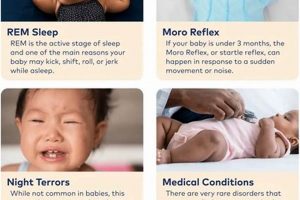
Infant vocalizations during sleep, often characterized by soft, high-pitched sounds of discomfort or complaint, are a common occurrence. These nocturnal noises, frequently unsettling for parents, are typically brief and intermittent. Examples include brief whimpers, sighs, or low-level cries that do not escalate into full-blown distress.
Understanding the potential origins of these sounds offers reassurance and informs appropriate parental responses. While concerning, such sleep vocalizations are generally harmless and a normal part of infant development. Historically, caregivers relied on observing and interpreting these subtle cues to ensure the well-being of their child during periods of rest.
Several factors contribute to such sounds during sleep, ranging from physiological processes to environmental conditions. Addressing potential causes such as mild discomfort, transitional sleep phases, or environmental factors often resolves the issue. A comprehensive understanding of these contributing factors facilitates informed parental interventions.
Addressing Infant Sleep Vocalizations
The following recommendations offer practical guidance for managing situations where an infant exhibits whining sounds during sleep.
Tip 1: Rule out Physical Discomfort: Verify the infant’s diaper is clean and dry. Assess if the infant is appropriately dressed for the room temperature, ensuring neither overheating nor chilling. Gently reposition the infant to alleviate any potential pressure points.
Tip 2: Evaluate Environmental Factors: Ensure the sleep environment is conducive to rest. Optimal conditions include a darkened room, a consistent temperature, and minimal disruptive noises. A white noise machine or a fan can mask external sounds.
Tip 3: Observe Sleep Patterns: Note the frequency and timing of the sleep vocalizations. Transient whimpering during sleep cycles is often benign. Persistent or escalating sounds warrant further investigation.
Tip 4: Consider Feeding Schedules: Ensure the infant is adequately fed before bedtime, but avoid overfeeding. Observe the infant for signs of gas or discomfort related to feeding.
Tip 5: Implement Consistent Bedtime Routines: Establish a predictable and calming bedtime routine. This may involve a bath, reading, or gentle rocking. Consistency promotes relaxation and reduces anxiety.
Tip 6: Monitor for Signs of Illness: Be vigilant for other signs of illness, such as fever, congestion, or changes in feeding patterns. Consult with a healthcare provider if concerns arise.
Implementing these strategies can often mitigate or resolve infant sleep vocalizations. Careful observation and attention to environmental and physiological factors are paramount.
Addressing these factors promotes improved sleep quality for both the infant and caregiver. Should concerns persist, consultation with a pediatrician is advisable.
1. Discomfort

Physical discomfort represents a significant factor contributing to sleep disturbances and the associated vocalizations observed in infants. Various sources of discomfort can disrupt an infant’s sleep, leading to whimpering or other signs of distress.
- Diaper Wetness or Soiling
A wet or soiled diaper causes significant discomfort for infants. Prolonged exposure to moisture irritates the skin, leading to diaper rash and increased sensitivity. This irritation disrupts sleep, manifesting as whimpering or restlessness. Regular diaper changes before sleep and during nighttime awakenings are essential to minimize this source of discomfort.
- Temperature Imbalance
Infants are highly sensitive to temperature fluctuations. Overdressing can lead to overheating, resulting in discomfort and restlessness. Conversely, insufficient clothing can cause chilling, also disturbing sleep. Maintaining a comfortable room temperature and dressing the infant appropriately is crucial for optimal sleep. Signs of overheating include sweating and flushed skin, while signs of chilling include cool extremities.
- Positioning Issues
Inappropriate positioning can lead to musculoskeletal discomfort. Infants unable to reposition themselves independently may experience pressure points or muscle strain. Ensuring the infant is placed in a comfortable and safe sleep position, such as on their back, is vital. Regular repositioning, when the infant is awake and supervised, can also help alleviate potential discomfort.
- Gas and Colic
Gastrointestinal discomfort, such as gas or colic, is a common cause of infant distress. Trapped gas causes abdominal pain, disrupting sleep and leading to crying or whimpering. Techniques such as burping after feedings and gentle abdominal massage can help alleviate gas-related discomfort. Colic, characterized by inconsolable crying, can also significantly disrupt sleep patterns.
Addressing potential sources of physical discomfort is crucial for improving infant sleep quality and reducing associated vocalizations. Consistent attention to diaper hygiene, temperature regulation, positioning, and gastrointestinal health promotes a more restful sleep environment for the infant. When discomfort is minimized, sleep is less likely to be disrupted, reducing instances of whining or whimpering during sleep cycles.
2. Hunger
Hunger serves as a primary physiological drive, triggering various behavioral responses in infants, including sleep disturbances manifesting as whining. Insufficient caloric intake prior to sleep or prolonged intervals between feedings instigate a cascade of hormonal and neurological signals that disrupt sleep cycles. The infant’s body, sensing the absence of nutrients, initiates mechanisms designed to prompt feeding, one of which is the emission of soft, plaintive vocalizations. These sounds represent an attempt to communicate a need for sustenance.
The connection between hunger and sleep vocalizations is particularly pronounced in younger infants with smaller stomach capacities and higher metabolic rates. For instance, a two-month-old infant whose feeding schedule is misaligned with their growth spurt may experience increased nocturnal hunger, leading to frequent periods of sleep disrupted by whimpering. Recognizing these hunger cues and adjusting feeding intervals accordingly can significantly improve sleep quality. Conversely, misinterpreting these signals as mere sleep cycle arousals and neglecting the infants nutritional needs perpetuate the cycle of sleep disturbances. A practical application involves tracking feeding patterns to identify potential discrepancies between the infants intake and their developmental requirements, proactively preventing hunger-related sleep disruptions.
Understanding the role of hunger in infant sleep vocalizations is crucial for informed parental care. Identifying and addressing hunger-related disruptions necessitates attentive observation, consistent feeding routines, and a willingness to adapt to the infant’s changing needs. While other factors contribute to sleep-related whimpering, excluding hunger as a potential cause is a fundamental step. This proactive approach promotes better sleep for the infant and reduced parental anxiety. Failing to address hunger can lead to chronic sleep deprivation for both infant and caregiver.
3. Sleep cycle transitions

Infant sleep cycles differ substantially from those of adults, characterized by shorter durations and a higher proportion of active sleep. These unique sleep architecture attributes frequently contribute to observable behaviors, including vocalizations, during transition periods between sleep stages.
- Active Sleep and Arousal Threshold
Active sleep, also known as rapid eye movement (REM) sleep, features heightened brain activity, resembling wakefulness. During active sleep, an infant’s arousal threshold is lower, making them more susceptible to external stimuli and spontaneous arousals. These arousals may manifest as whimpering, grunting, or other minor vocalizations as the infant momentarily transitions towards wakefulness and back into sleep. The immaturity of the infant’s sleep regulation mechanisms exacerbates these transitional arousals.
- Duration of Sleep Cycles
Infant sleep cycles are considerably shorter than adult sleep cycles, typically lasting 50-60 minutes. The frequent cycling between sleep stages increases the likelihood of an infant experiencing transitional arousals and associated vocalizations. Each cycle presents an opportunity for the infant to shift from deeper, quieter sleep to lighter, more active sleep, accompanied by brief periods of restlessness or whimpering.
- Self-Soothing Abilities
The capacity for self-soothing is underdeveloped in young infants. During transitional arousals, infants may lack the ability to independently return to a deeper sleep state. This lack of self-soothing skills can lead to escalated crying or whimpering as the infant struggles to regulate their arousal level. Parental intervention, such as gentle touch or soothing sounds, may be necessary to facilitate the transition back into a deeper sleep stage.
- Environmental Sensitivity
Environmental factors significantly impact the ease with which an infant navigates sleep cycle transitions. A noisy or brightly lit environment can disrupt the transition from active sleep to quiet sleep, leading to prolonged arousals and vocalizations. Maintaining a consistent and calming sleep environment minimizes external stimuli and facilitates smoother transitions between sleep stages.
The interplay of these factors underscores the prominence of sleep cycle transitions as a contributing element to infant sleep vocalizations. Recognizing these normative developmental characteristics allows caregivers to differentiate between benign transitional whimpering and signs of genuine distress requiring intervention. Understanding these nuances helps caregivers to respond appropriately, fostering healthy sleep habits.
4. Overstimulation

Overstimulation represents a significant antecedent to disrupted sleep patterns and associated vocalizations in infants. The cumulative effect of excessive sensory input, emotional arousal, or activity can impede an infant’s ability to achieve and maintain restful sleep, frequently manifesting as whimpering during sleep cycles.
- Neurological Immaturity and Sensory Overload
Infants possess a limited capacity to process and modulate sensory information due to the immaturity of their neurological systems. Excessive visual, auditory, or tactile stimulation overwhelms these processing capabilities, leading to a state of heightened arousal and dysregulation. This sensory overload impedes the infant’s ability to transition into and sustain sleep. Examples include exposure to loud environments, excessive screen time, or frequent handling by multiple individuals. These stimuli bombard the infant’s developing nervous system, resulting in difficulty self-soothing and an increased propensity for disrupted sleep cycles.
- Emotional Arousal and Cortisol Release
Heightened emotional states, whether positive or negative, trigger the release of cortisol, a stress hormone. Elevated cortisol levels interfere with sleep regulation, promoting alertness and inhibiting the relaxation necessary for restful sleep. Overstimulating activities, such as boisterous play immediately before bedtime or exposure to emotionally charged situations, elevate cortisol levels and disrupt sleep patterns. This can manifest as difficulty falling asleep, frequent awakenings, and whimpering during sleep cycles as the infant struggles to regulate their arousal level.
- Disrupted Circadian Rhythms
Consistent exposure to overstimulating environments disrupts the development of stable circadian rhythms, the internal biological clock regulating sleep-wake cycles. Irregular sleep schedules, exposure to bright lights in the evening, or inconsistent bedtime routines interfere with the natural synchronization of the circadian rhythm. This desynchronization impairs the infant’s ability to anticipate and prepare for sleep, resulting in difficulty falling asleep, fragmented sleep, and increased sleep vocalizations. Establishing consistent daily routines and minimizing exposure to stimulating environments in the hours leading up to bedtime promotes the development of healthy circadian rhythms and improves sleep quality.
- Difficulty Self-Soothing and Arousal Regulation
Overstimulation impairs an infant’s developing ability to self-soothe and regulate their arousal level. The constant influx of sensory input overwhelms their coping mechanisms, rendering them less capable of calming themselves and returning to a state of relaxation. This difficulty self-soothing manifests as increased reliance on external interventions from caregivers, such as rocking or feeding, to fall asleep or return to sleep after an awakening. Without the ability to independently regulate their arousal level, infants are more prone to experiencing disrupted sleep cycles and increased sleep vocalizations.
The interconnectedness of these facets highlights the profound influence of overstimulation on infant sleep quality and the incidence of sleep vocalizations. A proactive approach to minimizing overstimulation involves creating a calming and predictable sleep environment, establishing consistent bedtime routines, and carefully monitoring the infant’s sensory input throughout the day. By mitigating the impact of overstimulation, caregivers can promote improved sleep patterns, reduced sleep vocalizations, and enhanced overall well-being for the infant.
5. Environment

The immediate surroundings significantly influence infant sleep quality, with environmental factors frequently contributing to sleep disturbances manifested as whining. The physical characteristics of the sleep space, including temperature, noise levels, light exposure, and air quality, exert considerable impact on an infant’s ability to achieve and maintain restful sleep. Suboptimal environmental conditions disrupt sleep architecture and trigger behavioral responses, such as whimpering, indicative of discomfort or distress.
Elevated ambient temperatures, for instance, induce restlessness and impede sleep onset. Conversely, excessively low temperatures create discomfort and disrupt sleep cycles. Noise pollution, including traffic sounds or household activity, elevates arousal levels and fragments sleep. Exposure to light, particularly blue light emitted from electronic devices, suppresses melatonin production, further disrupting sleep patterns. Poor air quality, stemming from allergens or pollutants, irritates the respiratory system, leading to discomfort and sleep disturbances. Implementing environmental controls, such as maintaining a consistent room temperature, minimizing noise levels, ensuring darkness, and optimizing air quality, fosters a conducive sleep environment. A real-world example is the use of blackout curtains in a nursery to mitigate external light, thereby promoting melatonin production and improving sleep duration. Likewise, employing a white noise machine masks disruptive sounds, contributing to a more tranquil sleep environment.
Optimizing the sleep environment is a practical and effective strategy for minimizing infant sleep vocalizations and promoting healthy sleep habits. Addressing environmental factors offers a non-pharmacological approach to improving sleep quality, benefiting both infant and caregiver. Ignoring these environmental influences often perpetuates sleep disturbances and contributes to a cycle of disrupted sleep patterns. Understanding the environmental influence helps to explain the reason for infant whining during the sleep. Prioritizing the creation of a safe, comfortable, and conducive sleep environment directly translates to improved sleep outcomes. This understanding underscores the importance of environmental modification as a cornerstone of infant sleep hygiene.
6. Possible illness

Underlying illness represents a critical consideration when evaluating changes in infant sleep patterns, particularly the onset or exacerbation of sleep vocalizations such as whimpering. A compromised physiological state, stemming from infection or other medical conditions, disrupts normal sleep architecture and elicits discomfort, thereby contributing to observable changes in sleep behavior.
- Respiratory Infections and Airway Obstruction
Respiratory infections, such as the common cold, bronchiolitis, or pneumonia, frequently manifest with nasal congestion, cough, and increased mucus production. These symptoms compromise the upper airway, leading to labored breathing and discomfort, especially during sleep. The infant may whine in an attempt to clear the airway or as a response to the physical discomfort of congestion. The supine position often exacerbates these symptoms. Observe for additional signs such as increased respiratory rate, nasal flaring, or retractions to assess potential respiratory distress.
- Ear Infections (Otitis Media) and Pain
Otitis media, or middle ear infection, is a prevalent condition among infants, causing significant pain and discomfort. The inflammation and pressure within the middle ear disrupt sleep patterns and induce whimpering, particularly when lying down, as this position increases pressure on the affected ear. Additional signs include fever, ear pulling, and increased irritability. A healthcare professional should evaluate suspected ear infections to initiate appropriate treatment.
- Gastrointestinal Distress and Reflux
Gastrointestinal issues, such as gastroesophageal reflux (GERD) or food sensitivities, can disrupt sleep and contribute to vocalizations. GERD involves the regurgitation of stomach contents into the esophagus, causing irritation and discomfort. Food sensitivities can trigger abdominal pain, gas, and bloating, all of which disrupt sleep. Infants may whine as a response to the burning sensation of reflux or the discomfort associated with gastrointestinal distress. Observe for signs of frequent spitting up, arching of the back, or drawing the legs up towards the abdomen.
- Teething Discomfort and Irritability
Teething is a normal developmental process that can cause discomfort and irritability in infants, often disrupting sleep patterns. The eruption of teeth through the gums causes inflammation and pain, leading to increased fussiness and sleep disturbances. Infants may whine or cry in response to this discomfort. Additional signs include excessive drooling, gum rubbing, and a desire to chew on objects. Providing safe teething toys and employing gentle gum massage can help alleviate teething-related discomfort.
Recognizing the potential role of underlying illness in infant sleep vocalizations is essential for informed parental care. Differentiating between benign behavioral variations and symptoms indicative of illness guides appropriate interventions. When sleep disturbances are accompanied by other signs of illness, prompt consultation with a healthcare provider is warranted. Addressing underlying medical conditions effectively minimizes sleep disruptions and promotes the infant’s overall well-being.
Frequently Asked Questions
The following section addresses common inquiries related to infant sleep vocalizations, offering factual insights to aid caregivers in understanding and responding to these behaviors.
Question 1: Is infant sleep whining always a cause for concern?
Infant sleep vocalizations are not invariably indicative of a serious issue. Brief periods of whimpering during sleep cycle transitions are often normal. Persistent or escalating vocalizations, accompanied by other signs of distress, warrant further investigation.
Question 2: What environmental factors contribute to sleep vocalizations?
Suboptimal sleep environments, characterized by excessive noise, inappropriate temperature, or inadequate darkness, may disrupt infant sleep and lead to vocalizations. Optimizing the sleep environment can mitigate these disturbances.
Question 3: How does feeding relate to infant sleep whining?
Inadequate caloric intake before sleep or prolonged intervals between feedings may trigger hunger cues, manifesting as vocalizations. Ensuring appropriate feeding schedules can address this issue.
Question 4: Can overstimulation contribute to sleep vocalizations?
Excessive sensory input, emotional arousal, or activity prior to sleep can impede an infant’s ability to achieve restful sleep, often resulting in whimpering. Minimizing stimulation before bedtime promotes relaxation.
Question 5: How can physical discomfort cause sleep disturbances?
Discomfort from a wet diaper, incorrect positioning, or temperature imbalances can disrupt sleep patterns and lead to vocalizations. Addressing these sources of discomfort is crucial.
Question 6: When is medical evaluation warranted for infant sleep vocalizations?
If sleep disturbances are accompanied by other signs of illness, such as fever, congestion, or changes in feeding patterns, consultation with a healthcare provider is advisable. Underlying medical conditions may necessitate intervention.
Understanding the potential causes and appropriate responses to infant sleep vocalizations empowers caregivers to provide informed and effective care, promoting improved sleep quality for both infant and caregiver.
The subsequent section provides a summary of key takeaways from the preceding discussion.
Why Does My Baby Whine In His Sleep
The exploration of “why does my baby whine in his sleep” reveals a multifaceted issue influenced by physiological, environmental, and behavioral factors. Discomfort, hunger, sleep cycle transitions, overstimulation, environmental conditions, and possible illness are prominent contributors to infant sleep vocalizations. Effective management necessitates a comprehensive assessment of these factors, coupled with targeted interventions designed to optimize the infant’s sleep environment and address underlying physiological needs.
A thorough understanding of these elements empowers caregivers to differentiate between benign sleep phenomena and indications of potential distress. Continuous monitoring of the infant’s sleep patterns, coupled with prompt intervention when warranted, remains paramount. Further research is needed to elucidate the complex interplay of factors contributing to infant sleep vocalizations. Consistent, informed care promotes healthy sleep habits and contributes to the infant’s overall well-being.