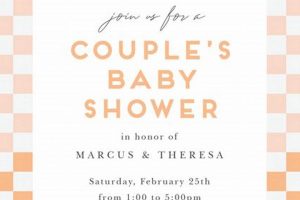
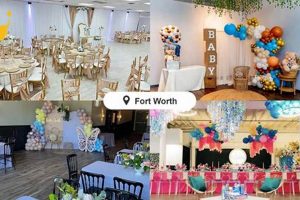
Invitations for a baby shower where both men and women are welcome guests require a specific approach. These announcements typically reflect a more inclusive celebration, moving away from the traditionally female-centric baby shower format. The design and wording often signal this broader welcome, for example, by employing neutral color palettes or explicitly stating that all are welcome to celebrate the parents-to-be.
The significance of these invitations lies in their ability to promote a shared experience. Including male friends and family members in the celebration fosters a sense of community support for the expectant parents. Historically, baby showers were predominantly women’s gatherings. A shift towards coed events acknowledges evolving family dynamics and celebrates the roles of both parents equally. This approach can alleviate some of the pressure on the mother-to-be and involve the father-to-be more directly in the preparations and celebrations surrounding the arrival of their child.
The following sections will explore various design considerations, appropriate wording suggestions, and etiquette tips for creating successful announcements that clearly communicate the inclusive nature of the upcoming celebration.
Tips for Designing Inclusive Baby Shower Announcements
Selecting and crafting announcements that accurately reflect the nature of a baby shower where both men and women are invited requires careful consideration. The following tips provide guidance for creating effective and appropriate announcements.
Tip 1: Employ Gender-Neutral Design Elements: Opt for color palettes and imagery that are not traditionally associated with one gender. Earth tones, geometric patterns, and illustrations of animals or nature are suitable choices. Avoid excessive use of pink or blue unless specifically requested by the parents-to-be.
Tip 2: Use Inclusive Wording: The language should explicitly indicate that all are welcome. Instead of phrasing such as “A Shower for the Mom-to-Be,” consider alternatives like “Celebrating [Parents’ Names] and Baby” or “A Baby Shower for the Whole Family.”
Tip 3: Clearly State the Coed Nature: Include a phrase explicitly mentioning that both men and women are invited. A simple addition like “All friends and family are welcome!” removes any ambiguity.
Tip 4: Reflect the Parents’ Style: The design and wording should align with the parents’ personalities and preferences. If they prefer a casual and lighthearted tone, the announcements can reflect this. If they are more formal, a traditional approach may be more appropriate.
Tip 5: Provide Clear RSVP Information: Ensure that the RSVP information is easily accessible and includes a clear deadline. Provide contact information for both phone and email, if possible, to accommodate various communication preferences.
Tip 6: Consider Digital Announcements: Online invitations offer cost savings and environmental benefits. Numerous platforms offer customizable templates specifically designed for this type of event. These can also facilitate easier tracking of RSVPs.
Tip 7: Proofread Carefully: Before finalizing and distributing the announcements, meticulously proofread all text for errors in spelling, grammar, and punctuation. Inaccuracies can detract from the overall impression.
By adhering to these suggestions, one can create announcements that effectively communicate the welcoming and inclusive atmosphere of the baby shower, ensuring that all guests feel comfortable and excited to celebrate the upcoming arrival.
The next section will address considerations for wording choices and etiquette guidelines to further enhance the impact and appropriateness of the announcements.
1. Inclusive Wording

Inclusive wording is paramount when creating announcements for baby showers that welcome both men and women. The language used shapes the perception of the event and ensures that all invited feel comfortable and valued.
- Neutral Address
Directly addressing both parents-to-be, rather than solely the mother, immediately establishes an inclusive tone. For example, “You’re Invited to Celebrate [Parents’ Names]” signals that the event is not exclusively for female attendees. This approach moves away from traditional baby showers that focused primarily on the mother and her female friends.
- Avoiding Gendered Phrases
Refrain from using phrases and terms traditionally associated with one gender or role. Instead of “A Shower for the Mom-to-Be,” consider “A Celebration of New Life.” This avoids alienating male guests or implying their participation is secondary. The goal is to create an atmosphere where everyone feels welcome and valued.
- Emphasis on Shared Celebration
Wording should emphasize the shared nature of the event. Phrases such as “Join us in celebrating the upcoming arrival” or “Celebrating the growing family” promote a sense of collective joy and support. This reinforces the idea that the baby’s arrival is a community event, not solely a female one.
- Explicit Invitation to All
Consider explicitly stating that all are welcome. A simple statement like “Friends and family of all genders are invited” removes any ambiguity and ensures that everyone feels comfortable attending. This direct approach can be particularly effective in breaking down traditional gender barriers surrounding baby showers.
The strategic use of inclusive wording transforms announcements from a potentially exclusive, gendered invitation into a warm, welcoming invitation to all who wish to celebrate the impending arrival. It reinforces that the joy and support surrounding a new baby are shared responsibilities and experiences for the entire community.
2. Neutral Imagery

The strategic implementation of neutral imagery within announcements for baby showers designed to include both men and women is a critical factor in establishing a welcoming and inclusive atmosphere. Visual cues significantly impact the perceived tone of the event, and the selection of imagery free from gendered stereotypes directly influences the comfort level of all invitees. Traditional baby shower imagery often relies on pastel colors, floral patterns, and depictions of overtly feminine themes, which can inadvertently create a sense of exclusion for male guests. The use of such imagery may imply that the event is primarily intended for women, thus potentially discouraging male participation. Conversely, the incorporation of neutral imagery ensures that announcements appeal to a broader audience.
Examples of neutral imagery include illustrations of animals, particularly baby animals, nature scenes such as trees or landscapes, geometric patterns, or abstract designs. Color palettes incorporating earth tones, muted shades, or primary colors can also contribute to a more inclusive aesthetic. For instance, an announcement featuring a watercolor illustration of woodland creatures or a simple design incorporating green and brown hues conveys a sense of warmth and universality, appealing to a diverse range of guests. Conversely, announcements featuring overly gendered imagery may lead to assumptions about the event’s target audience, potentially resulting in lower attendance rates from male invitees or a feeling of discomfort among those who do attend. The choice of font is also relevant; a clean, modern font is generally more neutral than a script font, which might appear more feminine.
In summary, the careful selection of neutral imagery in announcements for baby showers is not merely an aesthetic consideration but a practical necessity for fostering inclusivity. By avoiding gendered stereotypes and opting for designs that appeal to a broad spectrum of tastes, event planners can create a more welcoming environment for all guests, ensuring that everyone feels comfortable and eager to celebrate the impending arrival of the new child. The application of these principles extends beyond the realm of baby showers, offering valuable lessons in inclusive design for a variety of social events.
3. Clear Indication
The success of baby shower invitations designed for both men and women is inextricably linked to the clarity of the indication regarding the event’s inclusive nature. Without a clear, unambiguous statement explicitly welcoming all genders, invitees may default to the traditional understanding of baby showers as exclusively female gatherings. This lack of clarity can result in lower attendance rates among male friends and family, thereby undermining the intended purpose of a coed celebration. The term “clear indication” refers to the practice of overtly stating that the event is designed for attendees of all genders, typically through explicit language in the invitation’s wording. The absence of such a statement can lead to misinterpretations, as invitees may base their decisions on preconceived notions about baby showers. For example, an invitation that does not mention men are welcome and employs traditionally feminine design elements may inadvertently signal that male attendance is not expected or desired.
The practical significance of clearly indicating the coed nature of the event extends beyond mere attendance rates. It directly impacts the comfort level and overall experience of those who do choose to attend. Men who attend a baby shower under the assumption that it is primarily a female event may feel out of place or unsure of appropriate behavior. A clear indication eliminates this ambiguity, allowing all guests to approach the event with confidence and enthusiasm. Several platforms providing baby shower invitation templates now routinely offer options that include explicit statements welcoming both men and women, reflecting an increasing awareness of the importance of clear communication in this context. This feature allows hosts to easily customize the wording of their announcements to reflect their specific intentions, promoting a more inclusive and welcoming atmosphere from the outset.
In summary, “clear indication” is not simply a matter of stylistic preference, but a critical component of invitations for baby showers intended for both men and women. Its presence mitigates potential misunderstandings, promotes inclusivity, and ultimately enhances the experience for all attendees. Failure to provide such clarity can inadvertently perpetuate gender stereotypes and undermine the efforts to create a welcoming environment. Therefore, hosts should prioritize unambiguous language and design choices that explicitly convey the inclusive nature of the event. This approach ensures that all invitees are aware of their welcome and encourages broader participation in the celebration of the new child.
4. Parents' Style
The parents’ individual and collective style plays a pivotal role in shaping the design and tone of announcements for baby showers welcoming both male and female guests. Reflecting their preferences ensures the celebration genuinely represents them and resonates with their social circle.
- Personal Aesthetic
The parents’ inherent aesthetic preferenceswhether minimalist, bohemian, classic, or modernshould inform the visual elements of the announcement. An invitation mirroring their decorating style, fashion sense, or artistic inclinations feels authentic. For instance, if the couple favors mid-century modern design, clean lines, geometric patterns, and a limited color palette would be appropriate. Incongruent design choices can create a disconnect and dilute the personal touch.
- Level of Formality
The formality, or informality, of the event as reflected in the announcement should align with the parents’ social habits and communication style. A couple known for hosting casual gatherings might opt for a playful, humorous tone and an informal design. Conversely, a more reserved couple may prefer a sophisticated, elegant announcement with traditional wording and classic typography. Mismatched formality can appear disingenuous.
- Shared Interests and Hobbies
Incorporating elements reflecting shared interests or hobbies adds a personal dimension and creates a conversation starter. If the parents are avid travelers, a map-themed design might be suitable. If they share a love of literature, a quote from a beloved book could be incorporated. However, these elements should be subtly integrated to avoid overshadowing the core purpose of the invitation: announcing the baby shower.
- Values and Beliefs
The parents’ core values and beliefs, such as environmental consciousness or support for social causes, can be subtly reflected in the invitation’s design and execution. Choosing recycled paper, using sustainable printing practices, or donating a portion of the proceeds to a relevant charity can demonstrate these values. Overtly political or controversial statements should be avoided to ensure the announcement remains inclusive and celebratory.
Ultimately, the degree to which “Parents’ Style” is embedded within announcements for coed baby showers determines the perceived authenticity and personal connection of the event. Invitations that genuinely reflect the parents’ personalities and preferences are more likely to resonate with invitees, fostering a sense of anticipation and excitement for the upcoming celebration.
5. RSVP Details

The inclusion of comprehensive RSVP details is a critical component of announcements, particularly for events such as baby showers that welcome both men and women. The clarity and accessibility of this information directly influence attendance rates and contribute to the overall success of the gathering. Accurate RSVP responses enable hosts to effectively manage resources, plan activities, and ensure adequate accommodations for all guests, regardless of gender.
- Contact Information Clarity
Providing multiple methods for responding is essential. This includes not only a phone number but also an email address or a designated online platform. Clear instructions on how to RSVP and whom to contact streamline the process and reduce potential confusion. For example, including both a phone number and a dedicated email address allows guests to choose their preferred method of communication, increasing the likelihood of a timely response. The absence of readily available contact information can deter potential attendees, particularly those less familiar with the hosts’ social circle.
- Defined Response Deadline
Establishing a firm RSVP deadline is crucial for accurate headcount and logistical planning. This date should be clearly stated on the announcement and provide ample time for guests to respond while still allowing hosts sufficient time to finalize arrangements. A specific deadline, such as “Please RSVP by [Date],” eliminates ambiguity and encourages prompt responses. Without a deadline, hosts may struggle to determine the number of attendees, leading to potential overspending or underspending on refreshments, favors, and seating arrangements.
- Dietary Restrictions and Special Needs
Including a section on the RSVP to indicate any dietary restrictions or special needs allows hosts to cater to a diverse group of attendees. This is particularly important in coed baby showers, where the guest list may include individuals with varying dietary preferences or physical limitations. Providing options such as “Vegetarian,” “Gluten-Free,” or “Other” enables guests to communicate their needs discreetly and ensures that all attendees feel comfortable and accommodated. Failure to address these needs can result in some guests feeling excluded or unable to fully participate in the celebration.
- Guest Count Confirmation
Specifically requesting guests to indicate the number of individuals attending, including themselves, prevents ambiguity and ensures accurate planning. The invitation should state explicitly, “Please indicate the number of guests attending.” This avoids assumptions and allows hosts to prepare accordingly. A lack of clarity on the number of attendees can lead to miscalculations in food and beverage quantities, seating arrangements, and favor distribution, potentially detracting from the overall experience.
In summary, comprehensive and easily accessible RSVP details are a cornerstone of effective baby shower planning, particularly for coed events. By providing clear contact information, establishing a defined deadline, inquiring about dietary restrictions, and confirming guest counts, hosts can ensure a smooth and inclusive celebration that caters to the needs of all attendees.
Frequently Asked Questions
This section addresses common inquiries regarding announcements for baby showers designed to include both male and female guests. The answers provide guidance on best practices, etiquette considerations, and design principles.
Question 1: What distinguishes invitations for coed baby showers from traditional ones?
Invitations for baby showers welcoming both men and women typically employ more gender-neutral design elements and wording. Traditional announcements often feature overtly feminine colors, imagery, and language, whereas coed announcements aim for broader appeal and inclusivity.
Question 2: Is it necessary to explicitly state that men are invited?
While not always mandatory, explicitly stating that all genders are welcome removes ambiguity and reinforces the inclusive nature of the event. Phrases such as “Friends and family of all genders are invited” clarify the intention.
Question 3: What types of imagery are considered appropriate for coed invitations?
Imagery that is not traditionally associated with a specific gender is preferable. Examples include illustrations of animals, nature scenes, geometric patterns, or abstract designs. Avoiding excessive use of pink or blue is recommended.
Question 4: Should the tone of the announcement be different for a coed baby shower?
The tone should align with the parents’ personalities and preferences. While a lighthearted or humorous approach may be suitable for some, a more formal and sophisticated tone may be more appropriate for others. The key is authenticity and genuine representation.
Question 5: What information is essential to include on coed baby shower invitations?
In addition to standard details such as date, time, and location, clear RSVP instructions, dietary restriction inquiries, and a specific indication of the inclusive nature of the event are crucial.
Question 6: How can digital platforms aid in creating and distributing coed invitations?
Numerous online platforms offer customizable templates specifically designed for baby showers. These platforms often provide features for tracking RSVPs, managing guest lists, and facilitating communication with attendees, streamlining the planning process.
In conclusion, creating effective announcements for baby showers that welcome both men and women requires careful consideration of design, wording, and etiquette. Prioritizing inclusivity, clarity, and authenticity ensures a positive and welcoming experience for all invitees.
The following section will explore common mistakes to avoid when crafting these announcements.
Conclusion
The preceding exploration underscores the importance of deliberate planning and execution in the creation of announcements for events designed to include all genders. Key considerations, such as inclusive language, neutral imagery, unambiguous messaging, and adherence to parental preferences, directly contribute to the effectiveness of such communications. Omission or misapplication of these elements can undermine the intended spirit of inclusivity, potentially discouraging participation and misrepresenting the celebratory event. Careful attention to RSVP logistics is also critical for accurate planning and guest management.
Therefore, it is imperative that individuals responsible for creating announcements acknowledge the nuanced requirements of modern celebrations. Future trends may see further evolution in design and messaging, emphasizing personalized experiences and deeper connections. Adopting a strategic and thoughtful approach ensures that these invitations serve not only as informative communiqus, but also as embodiments of genuine welcome and acceptance.