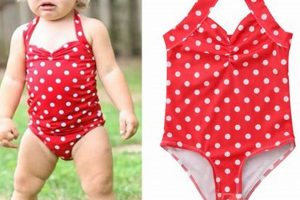
Protective swimwear designed for infants and toddlers, typically featuring long sleeves and high necklines, functions to shield delicate skin from the sun’s harmful rays. An example includes a one-piece garment made from a blend of nylon and spandex, providing both coverage and flexibility for aquatic activities.
The significance of this type of apparel lies in its ability to mitigate the risk of sunburn and associated long-term skin damage. Its popularity has increased with growing awareness of the dangers of prolonged sun exposure, leading to advancements in fabric technology that enhance UV protection and comfort.
The subsequent sections will delve into the selection criteria, care instructions, and styling options associated with this essential item for young children engaging in water-based recreation.
Selection and Care Guidance
Optimal utilization of infant sun-protective swimwear requires careful consideration of various factors. The following points offer guidance to ensure both safety and longevity of the garment.
Tip 1: Material Composition Assessment: Prioritize fabrics with a Ultraviolet Protection Factor (UPF) of 50+ to ensure adequate defense against ultraviolet radiation. Verify the fabric composition; blends of polyester and spandex offer a balance of durability and stretch.
Tip 2: Size and Fit Considerations: Select a size that allows for unrestricted movement. Avoid overly tight garments, which can cause discomfort and restrict circulation, and excessively loose apparel, which may not provide adequate coverage.
Tip 3: Closure Mechanism Examination: Inspect the closure mechanisms, such as zippers or snaps. Ensure these are secure and positioned to prevent chafing or irritation against the skin.
Tip 4: Seam Quality Inspection: Examine the seams for smooth, flat construction to minimize the risk of rubbing or skin irritation, especially in sensitive areas.
Tip 5: Washing Instructions Adherence: Strictly adhere to the manufacturer’s washing instructions to maintain the integrity of the fabric and the UPF rating. Avoid harsh detergents and high heat, which can degrade the material.
Tip 6: Drying Protocol Implementation: Air drying is recommended to prevent shrinkage and damage to the elastic fibers. Avoid direct sunlight, which can fade the colors and weaken the fabric.
Tip 7: Storage Best Practices: Store the clean, dry garment in a cool, dry place away from direct sunlight. Proper storage will help prevent the growth of mold and mildew and maintain the fabric’s elasticity.
By diligently adhering to these guidelines, parents and caregivers can maximize the protective benefits and extend the lifespan of this specialized swimwear. This leads to enhanced comfort and reduced risk during water activities.
The following sections will provide insight into appropriate accessorizing and related safety measures to further safeguard infants during aquatic exposure.
1. UV Protection (UPF 50+)
The designation “UV Protection (UPF 50+)” represents a critical characteristic when evaluating a garment intended to shield infants from solar radiation. Its inclusion in the description of protective swimwear indicates a quantifiable level of effectiveness against ultraviolet A (UVA) and ultraviolet B (UVB) rays, directly impacting the garment’s suitability for use in sunny conditions.
- Definition of UPF 50+
UPF 50+ signifies that the fabric blocks 98% or more of UV radiation. This rating ensures that only a small fraction of harmful rays penetrates the material, thereby significantly reducing the risk of sunburn and long-term skin damage. It does not, however, imply complete immunity, and additional sun protection measures remain necessary.
- Mechanism of Protection
The protective capability stems from the fabric’s inherent properties, achieved through weave density, fiber type, and the application of UV-absorbing chemicals. Tightly woven fabrics restrict the passage of UV radiation, while specific fibers like polyester and nylon inherently offer better UV protection than natural fibers like cotton. Chemical treatments further enhance the material’s ability to block UV rays.
- Importance for Infant Skin
Infant skin is particularly vulnerable to UV radiation due to its thinner epidermal layer and reduced melanin production compared to adult skin. Consequently, infants are more susceptible to sunburn, which can increase the risk of skin cancer later in life. Therefore, garments with a UPF 50+ rating are essential for minimizing this risk.
- Regulatory Standards and Testing
Compliance with recognized standards, such as those established by the American Society for Testing and Materials (ASTM), provides assurance regarding the accuracy of the UPF rating. Manufacturers should provide documentation validating the fabric’s UPF performance through standardized testing procedures, ensuring reliable protection.
The integration of UV Protection (UPF 50+) into infant swimwear serves as a foundational element in mitigating the potential harm from solar exposure. While this feature provides a significant barrier, complementary protective strategies, including the application of sunscreen to exposed areas and the use of shade, remain integral to a comprehensive approach to infant sun safety. The selection of swimwear incorporating this element is a proactive measure towards safeguarding the long-term health of the child.
2. Fabric Composition (Polyester/Spandex)
The constituent materials significantly influence the performance characteristics of infant sun-protective swimwear. The specific combination of polyester and spandex provides a balance of properties essential for the garment’s functionality and suitability.
- Durability and UV Resistance (Polyester)
Polyester fibers are known for their high tensile strength and resistance to degradation from prolonged exposure to sunlight and chlorinated water. This characteristic is crucial for maintaining the garment’s structural integrity and Ultraviolet Protection Factor (UPF) rating over time. For instance, a 100% polyester fabric, tightly woven, inherently blocks a significant portion of UV radiation, contributing directly to the sun-protective function of the swimsuit. This resistance to degradation is essential for repeated use in aquatic environments.
- Flexibility and Comfort (Spandex)
Spandex, also known as elastane or Lycra, imparts exceptional elasticity to the fabric blend. This elasticity allows for a snug yet comfortable fit, enabling a full range of motion for the infant. The presence of spandex ensures that the garment conforms to the body without restricting movement, which is essential for unrestrained play in the water. As an example, a blend containing 15-20% spandex will provide sufficient stretch for easy on and off while maintaining a streamlined profile.
- Moisture Management (Polyester)
Polyester exhibits hydrophobic properties, meaning it repels water. This characteristic contributes to the garment’s ability to dry quickly, enhancing comfort and reducing the risk of hypothermia in cooler conditions. The quick-drying nature also helps prevent the growth of bacteria and fungi, which can lead to skin irritation. For example, a swimsuit made predominantly of polyester will dry significantly faster than one made of cotton, minimizing discomfort for the infant.
- Shape Retention and Wrinkle Resistance (Polyester/Spandex Blend)
The combination of polyester and spandex contributes to the garment’s ability to retain its shape after repeated washings and wearings. The polyester provides structural stability, while the spandex ensures the fabric recovers its original form after stretching. This minimizes wrinkles and maintains a presentable appearance. For instance, a properly constructed blend will resist sagging or bagging, even after being subjected to the stresses of swimming and laundering.
The strategic employment of polyester and spandex in the fabrication of infant sun-protective swimwear leverages the distinct properties of each material. This synergistic combination results in a durable, comfortable, and protective garment suitable for sustained use in aquatic environments. Careful consideration of the blend ratio and fabric construction is crucial to optimizing these performance characteristics.
3. Secure Closures (Snaps/Zippers)

The integration of secure closures, specifically snaps and zippers, constitutes a critical design element in infant swimwear due to its direct impact on both the garment’s functionality and the child’s safety. The presence and type of closure mechanism affect ease of dressing, garment fit, and the prevention of unintended exposure. For instance, a rashguard-style swimsuit incorporating a zipper at the back allows for simplified removal after swimming, preventing discomfort associated with pulling a wet garment over the child’s head. The absence of a secure closure, conversely, can lead to the garment shifting during activity, potentially exposing the child’s skin to harmful solar radiation or causing entanglement hazards. Therefore, the presence and design of closures are directly related to the effectiveness of the protective swimwear.
Practical applications of secure closures extend beyond mere convenience. Consider a scenario where a child requires a diaper change at a public pool. Snaps strategically placed along the inseam of the swimsuit facilitate quick and hygienic diaper access without necessitating complete removal of the garment, thereby minimizing exposure and maintaining a comfortable environment for the child. Furthermore, the quality and durability of these closures directly influence the longevity of the swimsuit. Inferior snaps or zippers can fail prematurely, rendering the garment unusable and potentially creating a safety hazard. Regular inspection and maintenance of these closure mechanisms are thus essential for ensuring the swimsuit continues to function as intended.
In summary, secure closures are not merely ancillary features of infant swimwear; they are integral components that directly impact the garment’s functionality, safety, and convenience. Careful consideration of the type, placement, and quality of these closures is paramount when selecting sun-protective swimwear for infants. The understanding of this connection ensures responsible purchasing decisions, maximizing the garment’s utility and contributing to the child’s well-being during aquatic activities. The challenge lies in manufacturers maintaining rigorous quality control standards to ensure these small but crucial components consistently perform as intended.
4. Comfortable Fit (Freedom of Movement)
The relationship between a comfortable fit that allows freedom of movement and infant sun-protective swimwear is causal and consequential. A garment designed for aquatic activity that restricts an infant’s movement undermines its primary function, introducing potential hazards and discomfort. For example, a too-tight neck opening can impede breathing, while constrictive armholes limit natural limb movement during play, increasing irritability and reducing the child’s enjoyment of the activity. Conversely, an appropriately sized garment with flexible fabric promotes unhindered exploration and safe engagement in water-based recreation.
The importance of freedom of movement directly affects the caregiver’s compliance in using protective swimwear. If an infant resists wearing the garment due to discomfort, the protective benefits are nullified. Fabrics with inherent elasticity, coupled with thoughtful design that avoids restrictive seams or closures, are critical. As an example, a rashguard with flatlock seams and a blend of polyester and spandex offers a smooth, non-chafing fit that allows the fabric to move with the child, minimizing potential irritation. The practical significance lies in the correlation between comfort and consistent use, ensuring continuous protection from solar radiation.
The confluence of comfortable fit and unrestricted movement in infant swimwear is paramount. Challenges exist in balancing protection with flexibility, requiring manufacturers to prioritize fabric selection and design. Achieving this balance is essential, ensuring infants can safely and comfortably enjoy aquatic activities while receiving adequate sun protection. The practical application of this understanding is a proactive step toward promoting the well-being and safety of infants during outdoor exposure.
5. Durable Seams (Flat Construction)

The integrity of seams in infant swimwear is a critical factor in determining the garment’s longevity and comfort. Flat construction, in particular, represents a design choice that directly impacts the durability and functional performance of these essential articles.
- Minimization of Skin Irritation
Conventional seams often feature raised edges that can rub against the skin, leading to chafing and irritation, especially during prolonged aquatic activity. Flat construction, however, creates a smooth, continuous surface that eliminates these raised edges. As an example, a flatlock stitch interlocks the fabric edges, resulting in a seam that lies flush against the skin, reducing the likelihood of discomfort for the infant.
- Enhanced Structural Integrity
Durable seams are essential for withstanding the stresses imposed by stretching, washing, and exposure to chlorinated or saltwater environments. Flat construction techniques, such as the aforementioned flatlock stitch, distribute stress evenly along the seam line, preventing premature failure. This is particularly important in areas subject to high tension, such as the underarms and crotch, where seam failure can compromise the garment’s fit and protective function. A rashguard repeatedly exposed to rigorous activity requires robust seam construction to maintain its integrity.
- Prevention of Water Infiltration
Seams can act as points of water entry, leading to increased drag and reduced thermal comfort. While no seam is entirely waterproof, flat construction techniques minimize the gaps between fabric layers, reducing the rate of water penetration. This is particularly important in cooler water temperatures, where minimizing water infiltration can help maintain the infant’s core body temperature and reduce the risk of hypothermia. Tightly interlocked seams offer a measurable reduction in water absorption.
- Increased Garment Lifespan
The use of durable seams directly correlates with the garment’s overall lifespan. Swimwear subjected to frequent use and laundering requires robust construction to withstand these stresses. Flat construction techniques, combined with high-quality thread, ensure that the seams remain intact and functional over time, extending the useful life of the garment and reducing the need for frequent replacements. Consistent use of flat construction enhances the long-term value of these specialized articles.
The adoption of durable seams utilizing flat construction techniques in infant swimwear represents a significant enhancement in both comfort and longevity. Prioritizing garments with these features ensures that the swimwear will provide reliable protection and performance throughout its intended lifespan, minimizing discomfort and maximizing value for the consumer.
6. Quick Drying (Material Properties)

The attribute of quick-drying material properties in infant sun-protective swimwear is not merely a convenience; it directly impacts hygiene, comfort, and the prevention of potential health risks. Understanding the mechanisms and implications of rapid moisture evaporation is essential for informed selection and use of these garments.
- Reduced Risk of Hypothermia
Prolonged exposure to moisture, particularly in cooler conditions, can lead to a rapid decrease in body temperature, resulting in hypothermia. Quick-drying fabrics minimize this risk by facilitating rapid evaporation of water, reducing the duration of contact between wet material and the infant’s skin. For instance, a swimsuit made of a hydrophobic material like polyester will shed water more effectively than a hydrophilic material like cotton, significantly decreasing the risk of chilling.
- Prevention of Skin Irritation and Microbial Growth
Damp environments foster the proliferation of bacteria and fungi, increasing the likelihood of skin irritation and infection. Quick-drying fabrics inhibit this microbial growth by limiting the availability of moisture. As an example, a swimsuit that dries within minutes of exiting the water reduces the opportunity for bacteria to thrive, minimizing the risk of diaper rash or fungal infections in sensitive areas. Specialized antimicrobial treatments applied to quick-drying fabrics further augment this preventative effect.
- Enhanced Comfort and Mobility
Wet clothing is often heavy and restrictive, impeding freedom of movement and causing discomfort. Quick-drying fabrics minimize this issue by shedding water efficiently and maintaining a lightweight feel even when damp. For instance, a swimsuit made of a blend of polyester and spandex will retain its shape and flexibility better than a saturated cotton garment, allowing the infant to move freely and comfortably during aquatic activities.
- Simplified Care and Maintenance
Garments with quick-drying properties require less time and energy for laundering and drying, simplifying care routines for caregivers. As an example, a swimsuit that air-dries within an hour eliminates the need for machine drying, reducing energy consumption and minimizing the risk of shrinkage or damage to delicate fabrics. The ability to quickly wash and dry the garment also improves hygiene by facilitating frequent cleaning.
The integration of quick-drying materials into infant sun-protective swimwear addresses not only the immediate concerns of comfort and convenience but also the longer-term aspects of hygiene and health. The selection of garments engineered for rapid moisture evaporation represents a proactive approach to safeguarding infant well-being during water-related activities, highlighting the critical intersection of material science and child safety.
Frequently Asked Questions
The following addresses common inquiries concerning the selection, use, and maintenance of specialized swimwear designed to protect infants from solar radiation.
Question 1: What constitutes an adequate Ultraviolet Protection Factor (UPF) rating for infant swimwear?
An Ultraviolet Protection Factor (UPF) of 50+ is generally considered adequate. This rating signifies that the fabric blocks 98% or more of ultraviolet (UV) radiation, minimizing the risk of sunburn and long-term skin damage. Garments with lower UPF ratings offer diminished protection and should be avoided.
Question 2: Is sunscreen still necessary when an infant wears sun-protective swimwear?
Yes, sunscreen remains essential. Sun-protective swimwear typically covers the torso and limbs but may not fully protect the neck, face, hands, and feet. A broad-spectrum, water-resistant sunscreen with a Sun Protection Factor (SPF) of 30 or higher should be applied to all exposed skin.
Question 3: How frequently should sun-protective swimwear be washed?
Sun-protective swimwear should be washed after each use, particularly following exposure to chlorine or saltwater. Residual chemicals and salts can degrade the fabric and reduce its protective capabilities. Adherence to the manufacturer’s washing instructions is crucial for maintaining the garment’s integrity.
Question 4: Can chlorine bleach be used to clean sun-protective swimwear?
Chlorine bleach should be avoided. It can damage the fabric fibers and diminish the Ultraviolet Protection Factor (UPF) rating. Mild detergents specifically designed for delicate fabrics are recommended. Consider detergents labeled as chlorine-free or formulated for use with swimwear.
Question 5: How should sun-protective swimwear be dried to maximize its lifespan?
Air drying is the preferred method. Machine drying, particularly on high heat, can cause shrinkage and damage to the elastic fibers in the fabric. Laying the garment flat or hanging it in a shaded area allows for gradual drying without compromising the material’s integrity.
Question 6: Does the color of sun-protective swimwear affect its level of protection?
Yes, darker colors generally offer greater UV protection than lighter colors. Darker shades absorb more UV radiation, preventing it from reaching the skin. However, the Ultraviolet Protection Factor (UPF) rating is the primary indicator of protection, and a garment with a high UPF rating will provide adequate protection regardless of color.
Accurate understanding and application of the aforementioned information is critical for ensuring the safety and well-being of infants during aquatic activities. Consistent adherence to recommended guidelines maximizes the effectiveness of protective measures.
The subsequent section will provide guidance on accessory selection and complementary strategies for enhancing infant sun protection.
Conclusion
This exploration of the baby girl rashguard swimsuit has underscored its multifaceted role in safeguarding infants from solar radiation during aquatic activities. Key considerations encompass Ultraviolet Protection Factor (UPF) ratings, material composition, seam construction, secure closures, and the imperative for a comfortable fit that facilitates unrestricted movement. Furthermore, appropriate care and maintenance protocols are essential for preserving the garment’s protective integrity and prolonging its lifespan.
The responsible selection and conscientious utilization of a baby girl rashguard swimsuit represent a proactive commitment to infant well-being. The continued advancement in fabric technology and design offers the potential for even greater levels of protection and comfort in the future. Diligence in adhering to recommended guidelines, combined with ongoing vigilance regarding sun safety practices, remains paramount in minimizing the risks associated with solar exposure and promoting the long-term health of young children.