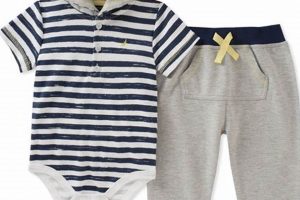
Apparel designed specifically for infants and young children, utilizing fabrics treated to offer protection from ultraviolet radiation, constitutes a specialized segment within the clothing market. These garments can include items such as sunsuits, swimwear, hats, and shirts. For instance, a long-sleeved rash guard manufactured with a UPF (Ultraviolet Protection Factor) of 50+ exemplifies this type of protective wear, effectively blocking a significant percentage of harmful UV rays.
The utilization of such protective attire offers a crucial barrier against sun exposure, particularly vital for infants whose skin is more susceptible to sun damage. This precaution helps mitigate the risk of sunburn, long-term skin damage, and potentially skin cancer later in life. Historically, the awareness of the damaging effects of ultraviolet radiation has led to advancements in textile technology, enabling the production of fabrics capable of providing enhanced sun protection.
Consequently, understanding the various types of materials used, the level of protection offered, and the care instructions associated with these specialized garments becomes paramount for caregivers seeking to safeguard their children from the detrimental effects of the sun. Further considerations include the regulatory standards governing the labeling and testing of these products and the comparative analysis of different brands and styles available to consumers.
Essential Considerations for Ultraviolet Protective Infant Apparel
The following guidance aims to inform caregivers about the selection and maintenance of ultraviolet protective infant apparel, ensuring optimal sun safety for young children.
Tip 1: Verify the Ultraviolet Protection Factor (UPF): Prioritize garments with a UPF rating of 30 or higher. A UPF of 50+ blocks approximately 98% of ultraviolet rays, offering superior protection.
Tip 2: Consider Fabric Composition: Tightly woven fabrics, such as polyester and nylon, generally provide better ultraviolet protection compared to loosely woven materials like cotton. Darker colors also tend to absorb more UV radiation.
Tip 3: Ensure Adequate Coverage: Opt for garments that provide comprehensive coverage of exposed skin. Long-sleeved shirts, pants, and wide-brimmed hats offer enhanced protection compared to smaller, less protective alternatives.
Tip 4: Examine Garment Construction: Assess the garment’s construction for areas of potential weakness. Seams and stretched areas can allow more UV radiation to penetrate the fabric. Reinforce or avoid garments with noticeable weaknesses.
Tip 5: Maintain Proper Garment Care: Follow the manufacturer’s care instructions meticulously. Frequent washing and exposure to chlorine can degrade the ultraviolet protective properties of some fabrics. Consider using a UV protective laundry additive to prolong effectiveness.
Tip 6: Replace Worn or Damaged Items: Regularly inspect garments for signs of wear and tear. Faded colors, stretched fabric, and damaged fibers can compromise the level of ultraviolet protection offered. Replace items as needed to ensure continued efficacy.
Tip 7: Supplement with Sunscreen: While ultraviolet protective apparel provides a physical barrier, it is advisable to supplement protection with a broad-spectrum, water-resistant sunscreen on areas of skin that remain exposed.
Adherence to these guidelines facilitates informed decision-making and promotes the effective utilization of ultraviolet protective infant apparel, contributing to the overall well-being of infants and young children.
This information serves as a foundational element for a comprehensive understanding of sun safety measures related to infant clothing. The subsequent sections will address specific product categories and regulatory considerations.
1. Fabric UPF Rating

The Fabric Ultraviolet Protection Factor (UPF) rating constitutes a critical performance indicator for ultraviolet protective infant apparel. It directly quantifies the degree to which a fabric attenuates ultraviolet radiation, specifically UVA and UVB rays. Higher UPF ratings signify superior protection. For instance, a fabric with a UPF of 50 allows only 1/50th of the available UV radiation to penetrate it, blocking approximately 98% of the radiation. This is a vital attribute, as infant skin is significantly more susceptible to sun damage compared to adult skin. Absent a sufficiently high UPF rating, apparel marketed as ultraviolet protective provides limited shielding from harmful radiation, potentially leading to sunburn, premature aging, and an increased risk of skin cancer later in life.
The determination of a fabric’s UPF rating involves standardized testing methodologies conducted in laboratory settings. These tests simulate real-world exposure conditions and measure the transmission of UV radiation through the fabric. Reputable manufacturers typically display the UPF rating prominently on the garment label, enabling consumers to make informed purchasing decisions. It is essential to note that factors such as fabric weave, color, and composition significantly influence the UPF rating. Tightly woven fabrics, darker colors, and synthetic materials like polyester generally offer higher UPF values than loosely woven, lighter-colored, or natural fibers. The effectiveness of a fabric’s UPF rating can also diminish over time due to wear, washing, and stretching, underscoring the importance of proper garment care.
In summary, the Fabric UPF rating serves as the primary quantitative measure of sun protection provided by infant apparel. Careful consideration of this rating, alongside other factors such as fabric composition and coverage, is paramount for ensuring the safety and well-being of infants exposed to solar radiation. Challenges remain in educating consumers about the significance of UPF ratings and in developing more durable and effective ultraviolet protective fabrics. Understanding this connection is crucial to fully grasp the benefits of specially designed uv baby clothes.
2. Material Composition

The selection of materials in ultraviolet protective infant apparel fundamentally dictates its efficacy in shielding delicate skin from harmful solar radiation. The intrinsic properties of various fabrics influence their capacity to absorb, scatter, or transmit ultraviolet rays, thereby determining the level of protection afforded.
- Fiber Type and Density
The inherent characteristics of different fiber types significantly impact UV protection. Synthetic fibers like polyester and nylon exhibit superior UV absorption compared to natural fibers such as cotton or linen. Furthermore, the density of the fabric weave plays a crucial role; tightly woven fabrics create a denser barrier, reducing UV transmission. For instance, a densely woven polyester sunsuit offers greater protection than a loosely knit cotton t-shirt.
- Dye and Treatment Application
The application of dyes and UV-absorbing treatments can enhance the protective capabilities of fabrics. Darker-colored fabrics generally absorb more UV radiation than lighter shades. Specific chemical treatments designed to impart UV protection can be applied during the manufacturing process. However, the longevity and safety of these treatments require careful consideration, as some may degrade with washing or pose potential skin irritant risks.
- Fabric Blend and Construction
The blending of different fibers can optimize UV protection while maintaining comfort and durability. For example, a blend of polyester and spandex can offer both UV protection and stretchability for active infants. The construction of the fabric, including factors like knit type (e.g., interlock, jersey) and stitch density, also affects its UV blocking potential.
- Testing and Certification Standards
Reputable manufacturers subject their fabrics to rigorous testing according to recognized standards, such as the American Society for Testing and Materials (ASTM) or the Australian/New Zealand Standard AS/NZS 4399. These standards define procedures for measuring the Ultraviolet Protection Factor (UPF) and verifying the fabric’s ability to block UV radiation. Certification by organizations like the Skin Cancer Foundation provides an additional layer of assurance regarding the product’s effectiveness.
In conclusion, the material composition of ultraviolet protective infant apparel is a multifaceted consideration, encompassing fiber type, weave density, dye application, fabric blend, and adherence to testing standards. The selection of appropriate materials is paramount for ensuring the effective mitigation of UV exposure and safeguarding the health of infants. Understanding how these factors contribute to uv baby clothes can empower caregivers to make informed decisions and choose the best protection for their children.
3. Coverage Area

The extent of skin shielded by ultraviolet protective infant apparel, known as coverage area, is a primary determinant of its effectiveness in mitigating sun exposure. Inadequate coverage undermines the protective benefits of specialized fabrics, rendering the garment functionally deficient. A sunsuit encompassing the arms, legs, and torso offers superior protection compared to a short-sleeved shirt and shorts, which leave substantial skin surface vulnerable to harmful radiation. The correlation is direct: increased coverage area corresponds to decreased risk of sunburn and long-term skin damage. A child wearing a UV-protective hat with a wide brim, for example, benefits from shading across the face, ears, and neck, areas frequently neglected by sunscreen application. The practical significance lies in minimizing overall UV exposure, reducing the cumulative risk of adverse health effects.
Real-world scenarios underscore the importance of adequate coverage. Infants dressed in UV-protective swimwear that covers the majority of their bodies demonstrate a significantly reduced incidence of sunburn compared to those wearing standard swimwear. Similarly, the inclusion of integrated hand and foot coverings in sunsuits offers added protection to extremities, which are often exposed and easily burned. Parents and caregivers should prioritize garments designed with comprehensive coverage in mind, especially during extended periods of outdoor activity. Furthermore, the fit of the garment influences effective coverage; loose-fitting clothes may shift during movement, exposing skin, while overly tight clothing can stretch the fabric, diminishing its protective properties. Therefore, the selection of appropriately sized and well-designed apparel is crucial for maximizing coverage area and ensuring consistent protection.
In summary, coverage area is an indispensable factor in assessing the efficacy of ultraviolet protective infant apparel. It directly impacts the extent to which vulnerable skin is shielded from solar radiation. Challenges remain in educating consumers about the importance of selecting garments that offer comprehensive coverage and in designing apparel that balances protective function with comfort and practicality. The effectiveness of specially designed uv baby clothes hinges on the coverage area it provides, so parents must consider this when making a purchase.
4. Garment Fit

The relationship between garment fit and the effectiveness of ultraviolet protective infant apparel is critical. Ill-fitting clothing compromises the intended protective function, regardless of fabric UPF rating. Overly tight garments stretch the material, reducing fabric density and diminishing the Ultraviolet Protection Factor. Consequently, more radiation penetrates the stretched fabric, increasing the risk of sunburn. Conversely, excessively loose garments may shift during activity, exposing skin to direct sunlight. For example, a UV-protective shirt that rides up during play leaves the torso vulnerable.
Appropriate garment fit ensures consistent and reliable coverage. A snug but comfortable fit allows the fabric to maintain its intended UPF rating without restricting movement. This is particularly important for infants and young children who are frequently active outdoors. Real-world applications demonstrate that correctly fitted sunsuits and swimwear offer superior protection compared to ill-fitting alternatives. Furthermore, the design should account for anatomical considerations. For instance, a well-designed hat provides ample shade for the face, ears, and neck, while properly fitted sleeves extend to the wrists, protecting the arms.
In summary, proper garment fit is not merely a matter of comfort; it is an integral component of ultraviolet protection. Challenges remain in educating consumers about the importance of fit and in developing sizing standards that accurately reflect the diverse body shapes of infants and young children. The success of ultraviolet protective infant apparel in safeguarding against sun damage hinges on selecting garments that fit appropriately and provide consistent coverage. This understanding emphasizes the practical significance of considering garment fit as an essential factor when purchasing uv baby clothes.
5. Washing Impact

The longevity and efficacy of ultraviolet protective infant apparel are significantly influenced by laundering practices. Repeated washing can degrade the specialized fabrics and treatments responsible for UV protection, potentially diminishing the garment’s ability to shield against harmful radiation. Understanding the mechanisms by which washing impacts UV protection is crucial for caregivers seeking to maintain the integrity of these garments.
- Detergent Type and Water Temperature
Harsh detergents and high water temperatures can accelerate the breakdown of UV-absorbing finishes applied to fabrics. Abrasive chemicals and excessive heat can disrupt the molecular structure of these finishes, leading to a reduction in their effectiveness. Mild, pH-neutral detergents and cold water washing are generally recommended to minimize this degradation.
- Agitation and Wash Cycle Duration
Aggressive agitation and prolonged wash cycles can cause physical wear and tear on fabric fibers, leading to a decrease in fabric density and an increase in UV transmission. Gentler wash cycles with reduced agitation are preferable. Hand washing, although more labor-intensive, can provide the gentlest cleaning option.
- Drying Methods
High-heat drying can further degrade UV-protective finishes and damage fabric fibers. Air drying or tumble drying on a low-heat setting is recommended to preserve the integrity of the garment. Direct sunlight exposure during air drying, while seemingly counterintuitive, may also contribute to the breakdown of UV-protective treatments.
- UV Protective Laundry Additives
UV protective laundry additives can replenish the UV-absorbing properties of fabrics that have been diminished through repeated washing. These additives typically contain UV absorbers that bind to fabric fibers, providing an additional layer of protection. However, the effectiveness and safety of these additives vary, and careful consideration should be given to their ingredients and application.
In summary, the washing impact on ultraviolet protective infant apparel is a multifaceted concern encompassing detergent selection, water temperature, wash cycle intensity, drying methods, and the potential use of UV protective laundry additives. Caregivers should adhere to manufacturer’s washing instructions and adopt gentle laundering practices to maximize the lifespan and effectiveness of these garments. Understanding these considerations is essential for preserving the protective qualities of uv baby clothes and ensuring the continued safety of infants from harmful UV radiation.
6. Chemical Safety

The chemical safety of ultraviolet protective infant apparel is a paramount concern, necessitating careful consideration of the substances employed in fabric treatment and manufacturing processes. Infants possess heightened vulnerability to chemical exposure due to their developing physiological systems and increased absorption rates. Consequently, the utilization of potentially harmful chemicals in such garments demands rigorous scrutiny and adherence to stringent safety standards.
- Dye Composition and Allergenic Potential
Dyes used in fabric coloration can contain allergenic compounds that elicit adverse reactions in sensitive individuals. Azo dyes, for instance, have been identified as potential allergens and are restricted in many countries. The use of dyes certified as free from harmful substances and compliant with standards such as OEKO-TEX Standard 100 is crucial to minimize the risk of allergic dermatitis and other adverse health effects in infants.
- UV-Absorbing Treatment Chemicals
Chemicals applied to fabrics to enhance their ultraviolet protection capabilities, such as UV absorbers, must undergo thorough safety testing to ensure they do not pose a risk of skin irritation, endocrine disruption, or other toxicological effects. Benzophenones, commonly used as UV absorbers, have raised concerns regarding potential endocrine-disrupting properties. Safer alternatives, such as titanium dioxide and zinc oxide nanoparticles, are increasingly employed, but their safety profile requires continued evaluation, particularly concerning potential inhalation risks from loose particles.
- Flame Retardant Application
While flame retardant treatments are sometimes applied to infant apparel to enhance fire safety, certain flame retardant chemicals, such as brominated flame retardants, have been linked to adverse health effects, including neurodevelopmental problems. The use of flame retardants in infant garments should be carefully weighed against potential health risks, and safer, non-chemical flame-resistant fabric alternatives should be prioritized whenever feasible.
- Formaldehyde Content and Residual Levels
Formaldehyde, a chemical used in textile finishing processes to impart wrinkle resistance and dimensional stability, can cause skin irritation and allergic reactions. Stringent regulations limit the permissible levels of formaldehyde in infant apparel. Manufacturers must implement effective quality control measures to minimize residual formaldehyde levels in finished products and ensure compliance with safety standards. Proper washing before initial use can further reduce formaldehyde content.
The selection of ultraviolet protective infant apparel necessitates a comprehensive assessment of chemical safety, encompassing dye composition, UV-absorbing treatments, flame retardant application, and formaldehyde content. Prioritizing garments manufactured with certified safe chemicals and adhering to stringent safety standards is essential to safeguard the health and well-being of infants. Ongoing research and development efforts are focused on identifying and implementing safer alternatives to potentially harmful chemicals in the production of uv baby clothes.
Frequently Asked Questions
This section addresses common inquiries regarding ultraviolet protective infant apparel, providing clear and concise information to assist caregivers in making informed decisions.
Question 1: What constitutes an appropriate UPF rating for ultraviolet protective infant apparel?
A UPF rating of 30 or higher is generally recommended. A UPF of 50+ blocks approximately 98% of ultraviolet radiation and offers superior protection for infant skin.
Question 2: How frequently should ultraviolet protective infant apparel be replaced?
Ultraviolet protective infant apparel should be replaced when there are noticeable signs of wear and tear, such as faded colors, stretched fabric, or damaged fibers. The protective properties diminish over time and with use.
Question 3: Can ultraviolet protective infant apparel negate the need for sunscreen?
Ultraviolet protective infant apparel significantly reduces UV exposure; however, it is advisable to supplement protection with broad-spectrum sunscreen on areas of skin that remain exposed.
Question 4: What fabric compositions offer the most effective ultraviolet protection?
Tightly woven synthetic fabrics, such as polyester and nylon, generally provide superior ultraviolet protection compared to loosely woven natural fibers like cotton. Darker colors also offer better absorption.
Question 5: How should ultraviolet protective infant apparel be laundered to preserve its protective qualities?
Ultraviolet protective infant apparel should be laundered according to the manufacturer’s instructions. Mild detergents, cold water, and gentle wash cycles are recommended. Avoid high-heat drying and consider using a UV protective laundry additive.
Question 6: Are there any safety concerns associated with the chemicals used in ultraviolet protective infant apparel?
Caregivers should prioritize garments certified as free from harmful substances and compliant with safety standards such as OEKO-TEX Standard 100. Be mindful of potential allergens in dyes and ensure UV-absorbing treatments are non-toxic.
In summary, selecting appropriate ultraviolet protective infant apparel involves careful consideration of UPF ratings, fabric composition, fit, care instructions, and chemical safety. These factors collectively contribute to the effective mitigation of UV exposure and the safeguarding of infant health.
The subsequent section will delve into regulatory standards and certifications pertaining to ultraviolet protective infant apparel, providing further guidance for informed purchasing decisions.
Conclusion
This exploration of ultraviolet protective infant apparel has underscored the multifaceted considerations essential for ensuring the safety of infants from harmful solar radiation. Key factors include the Fabric UPF rating, material composition, coverage area, garment fit, washing impact, and chemical safety. Each element contributes significantly to the overall effectiveness of such apparel in mitigating UV exposure. Prioritizing garments with a high UPF rating, constructed from tightly woven fabrics, and designed for comprehensive coverage is paramount. Furthermore, careful attention to laundering practices and chemical safety protocols is crucial for maintaining the integrity and effectiveness of these protective measures.
The market for “uv baby clothes” continues to evolve, driven by increasing awareness of the dangers of sun exposure and advancements in textile technology. Adherence to established safety standards and certifications remains vital for ensuring product reliability. Caregivers are urged to remain vigilant in their selection and utilization of these garments, recognizing their role as an essential component of a comprehensive sun safety strategy for infants and young children. The ongoing pursuit of safer, more effective materials and designs promises to further enhance the protection afforded by this specialized category of apparel.