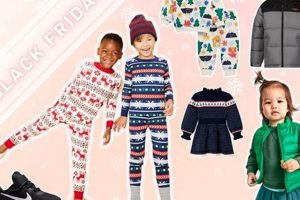
The term references a size designation in infant and toddler apparel, typically designed to fit children around the age of two years. This sizing convention assists caregivers in selecting appropriately sized garments, considering factors like height, weight, and chest circumference. For example, a child who is approximately 32-34 inches tall and weighs between 26-30 pounds might find clothing labeled with this size to be a suitable fit.
Accurate clothing size selection is crucial for comfort and unrestricted movement, enabling proper physical development and facilitating daily activities. Historically, standardized sizing in children’s apparel has evolved, with variations existing across manufacturers. Parents and caregivers often rely on size charts and product specifications provided by retailers to ensure a proper and comfortable fit for their child.
Understanding the parameters associated with toddler clothing sizes is essential for informed purchasing decisions. The following discussion will elaborate on factors influencing garment fit, variations across brands, and practical tips for selecting appropriate apparel for children in this age range. Subsequent sections will address specific garment types and considerations for seasonal attire.
Selecting Apparel in the 24-Month Size
Choosing correctly sized clothing for toddlers is essential for comfort and mobility. Consider the following guidelines when selecting garments designed for children around the 24-month mark.
Tip 1: Prioritize Measurements: Refer to manufacturer-specific size charts. Height, weight, and chest circumference are key indicators. A child might be trending towards a larger size even if they are chronologically 24 months old.
Tip 2: Account for Growth Spurts: Toddlers experience periods of rapid growth. Opt for garments with slightly more room to accommodate these changes. Roll-up sleeves and adjustable waistbands can extend the garment’s lifespan.
Tip 3: Fabric Considerations: Select soft, breathable fabrics such as cotton. Avoid materials that might irritate sensitive skin or restrict movement. Inspect for durable construction to withstand frequent washing.
Tip 4: Garment Construction: Examine seams and closures. Reinforcements at stress points such as knees and elbows enhance durability. Avoid items with small embellishments that could pose a choking hazard.
Tip 5: Consider Layering: Choose versatile pieces that can be layered for varying temperatures. Lightweight jackets, cardigans, and vests provide flexibility without restricting movement.
Tip 6: Footwear Sizing: Ensure shoes offer adequate support and room for growth. Consult shoe size charts and measure the child’s foot accurately. Avoid excessively tight or loose footwear.
Tip 7: Check for Ease of Dressing: Select clothing that is easy to put on and take off. Snaps, zippers, and elastic waistbands facilitate dressing and diaper changes. Avoid overly complicated closures that can cause frustration.
Adherence to these suggestions ensures a comfortable and appropriate fit, promoting unrestricted development and daily comfort.
The following section will explore common sizing discrepancies and strategies for addressing them, ensuring informed and practical purchasing decisions for toddler apparel.
1. Sizing Standardization

Sizing standardization, though seemingly straightforward, presents complexities when applied to apparel for children in the 24-month range. While the label suggests a fit for a two-year-old, considerable variation exists across manufacturers. This discrepancy arises from differing interpretations of average height, weight, and body proportions for this age group. A garment labeled as such from one brand might be noticeably smaller or larger than a comparable item from another. This inconsistency necessitates diligent measurement of the child and comparison with each brand’s specific size chart, moving beyond reliance solely on the numerical age designation. Without such diligence, caregivers may inadvertently purchase ill-fitting garments, impacting the child’s comfort and mobility. For example, a child falling within the average height and weight percentiles for their age could require a larger size in one brand due to differences in cut or overall garment dimensions.
The absence of universal sizing standards creates practical challenges for both consumers and retailers. Online shopping, where physical try-on is impossible, becomes particularly problematic. Caregivers must rely on detailed product descriptions, customer reviews regarding sizing accuracy, and the retailer’s return policies. Moreover, the lack of standardization impacts inventory management for retailers, who must stock a wider range of sizes to accommodate the variability in fit. The result is increased complexity in the supply chain and potentially higher costs passed on to the consumer. Brands attempting to establish more consistent sizing practices often gain a competitive advantage, fostering greater consumer trust and loyalty.
In conclusion, the perceived simplicity of the 24-month clothing size is often misleading due to the ongoing challenges with sizing standardization within the apparel industry. The reliance on age-based labels, without considering brand-specific measurements, poses a risk of ill-fitting garments. Caregivers must actively engage in informed purchasing decisions, utilizing size charts and reviews to mitigate the effects of inconsistent sizing practices, ultimately ensuring the child’s comfort and well-being.
2. Growth Variability

Variations in growth patterns significantly impact the suitability of apparel designated for the “24 months” size range. Chronological age serves as an initial guideline; however, children’s growth trajectories differ widely. Factors such as genetics, nutrition, and overall health contribute to these individual differences. Consequently, a child who is precisely 24 months old might deviate considerably from the average height and weight parameters typically associated with this clothing size. One infant might exhibit accelerated growth, necessitating a larger size, while another, developing at a slower pace, might find apparel labeled as such excessively large. Neglecting growth variability can lead to discomfort, restricted movement, and improperly fitted garments, potentially affecting the child’s physical development and comfort.
The practical significance of understanding growth variability lies in the necessity for adaptable purchasing strategies. Reliance solely on age-based sizing charts proves insufficient. Caregivers should prioritize accurate measurements of the child’s height, weight, chest circumference, and torso length. These measurements should then be compared against brand-specific size charts, recognizing that sizing conventions differ across manufacturers. Consider, for example, a toddler who falls within the 75th percentile for height but the 50th percentile for weight. This individual might require a larger size for adequate torso length, even if the weight parameters align with the standard sizing guide. In such cases, prioritizing adjustability in garment design, such as adjustable waistbands or shoulder straps, becomes crucial for optimizing fit and comfort.
In summary, growth variability represents a critical consideration when selecting apparel for children. The “24 months” designation serves merely as a starting point, requiring further assessment based on individual growth patterns. Prioritizing accurate measurements, consulting brand-specific size charts, and selecting garments with adaptable features are essential for ensuring proper fit and comfort, thereby supporting healthy development and promoting unrestricted movement. Failure to account for these variables can result in ill-fitting clothing and potentially hinder the child’s well-being.
3. Material Comfort

The selection of appropriate materials is paramount when considering apparel for infants and toddlers, particularly those fitting the “24 months” size designation. The intersection of fabric characteristics and a child’s developmental stage directly influences comfort, safety, and overall well-being. Material choice is not merely an aesthetic consideration but a critical determinant of garment suitability.
- Breathability and Thermoregulation
Infants and toddlers possess less developed thermoregulatory systems compared to adults, making them more susceptible to temperature fluctuations. Breathable fabrics, such as cotton, linen, and bamboo, facilitate air circulation and moisture wicking, preventing overheating and discomfort. Synthetic materials, while potentially durable, often lack breathability, increasing the risk of skin irritation and heat rash, particularly during periods of active play or sleep. The choice of breathable materials directly impacts the child’s ability to maintain a stable body temperature, contributing significantly to overall comfort. A child wearing non-breathable fabrics might exhibit restlessness, irritability, or signs of overheating, indicating the need for a material change.
- Skin Sensitivity and Allergen Exposure
Toddlers’ skin is more sensitive and permeable than adult skin, rendering them more vulnerable to irritants and allergens. Certain dyes, chemicals, and synthetic fibers can trigger allergic reactions or exacerbate existing skin conditions such as eczema. Opting for hypoallergenic and natural materials, such as organic cotton or bamboo, minimizes the risk of skin irritation. Look for certifications such as OEKO-TEX Standard 100, which indicates that the fabric has been tested for harmful substances. The selection of hypoallergenic materials is crucial for minimizing the risk of adverse skin reactions and ensuring comfort for children with sensitive skin. Redness, itching, or rashes on the skin in areas where clothing is in direct contact might suggest an allergic reaction to the fabric.
- Texture and Tactile Stimulation
The texture of the fabric directly influences the tactile experience for the child. Rough or scratchy materials can cause discomfort and irritation, potentially leading to fussiness or avoidance of certain garments. Soft and smooth fabrics, such as fleece or finely knit cotton, provide a more pleasant tactile sensation, promoting comfort and acceptance of clothing. Consider the internal seams and closures; ensure they are smooth and do not rub against the skin. Soft textures can contribute to a sense of security and well-being, particularly for young children. A child consistently pulling at or attempting to remove a garment might indicate discomfort due to the fabric’s texture.
- Durability and Maintenance
Apparel intended for toddlers must withstand frequent washing and wear, given the propensity for spills, stains, and active play. Durable materials, such as cotton blends or reinforced knits, maintain their integrity and shape even after multiple washes. Materials that shrink, fade, or lose their shape quickly compromise the garment’s fit and comfort. Choose fabrics that are easy to care for, stain-resistant, and retain their softness over time. Proper care, including following washing instructions and avoiding harsh detergents, extends the lifespan and comfort of the clothing. A garment that becomes stiff or rough after washing indicates a decline in material quality and comfort.
The interplay between these facets underscores the importance of material selection in the context of apparel. Prioritizing breathability, skin sensitivity, texture, and durability ensures that clothing contributes positively to a child’s comfort and well-being. Conversely, neglecting these considerations can lead to discomfort, irritation, and potentially adverse health effects. The choice of appropriate materials represents a fundamental aspect of providing suitable and supportive apparel for children within the “24 months” size range.
4. Garment Durability

Garment durability, when considering apparel designated for the “24 months” size, assumes heightened importance due to the developmental stage and activity levels associated with this age group. Clothing designed for toddlers must withstand frequent wear, washing, and a range of physical stresses that are uncommon in garments intended for older children or adults. The inherent connection between durability and suitability underscores the need for careful evaluation of construction and materials.
- Fabric Strength and Resilience
Fabric strength directly influences a garment’s ability to resist tearing, abrasion, and stretching. Materials with a tighter weave and higher thread count generally exhibit greater resilience. Cotton blends, particularly those incorporating polyester or other synthetic fibers, often provide enhanced durability compared to pure cotton fabrics. Reinforcements at stress points, such as knees and elbows in pants and sleeves, significantly extend the garment’s lifespan. The selection of robust materials minimizes the likelihood of premature wear and tear, reducing the need for frequent replacements, which benefits both economic and environmental considerations.
- Seam Construction and Integrity
Seam construction plays a critical role in garment durability. Well-constructed seams, reinforced with strong thread and appropriate stitching techniques, withstand greater stress and prevent unraveling. Flatlock seams, commonly used in activewear, provide a smooth, durable finish that minimizes chafing and irritation. Overlock or serged seams, which encase the raw edges of the fabric, prevent fraying and enhance seam strength. Poorly constructed seams, characterized by loose stitching or exposed raw edges, are prone to failure, compromising the garment’s overall integrity. Inspection of seam quality is essential when assessing durability.
- Hardware and Fastener Quality
Hardware components, such as zippers, snaps, and buttons, significantly contribute to garment durability. High-quality zippers, constructed with durable metal or robust plastic teeth, withstand repeated use without breaking or jamming. Securely attached snaps and buttons, reinforced with durable thread and appropriate backing, prevent detachment. Inferior hardware, characterized by flimsy materials or weak attachments, can fail prematurely, rendering the garment unusable. The selection of durable hardware ensures functionality and extends the garment’s usable lifespan.
- Colorfastness and Resistance to Fading
Colorfastness, the ability of a fabric to retain its color intensity after repeated washing and exposure to sunlight, is an important aspect of durability. Dyes that are prone to fading can diminish the garment’s aesthetic appeal and indicate inferior fabric quality. Fabrics treated with colorfast dyes and protective finishes exhibit greater resistance to fading, maintaining their vibrancy over time. Assessing colorfastness, through label information or visual inspection, ensures that the garment retains its original appearance and avoids premature degradation.
The interconnectedness of these facets underscores the importance of prioritizing garment durability when selecting apparel. The “24 months” size range demands garments that can withstand the rigorous demands of toddlerhood. By carefully evaluating fabric strength, seam construction, hardware quality, and colorfastness, caregivers can make informed purchasing decisions that prioritize longevity, functionality, and overall value. Garments engineered for durability not only offer economic advantages but also contribute to sustainability by reducing the frequency of replacements.
5. Movement Freedom
Movement freedom constitutes a critical factor in apparel designed for children around the age of two years. Clothing designated with the “24 months” size must facilitate unrestricted physical activity, supporting healthy development and exploration. Garments that impede movement can hinder motor skill development and contribute to discomfort or frustration.
- Garment Design and Range of Motion
The cut and construction of clothing directly affect a child’s range of motion. Restrictive designs, such as tight-fitting sleeves or rigid waistbands, can limit arm and leg movements, hindering activities like crawling, running, and climbing. Garments with gussets, pleats, or elasticized panels provide greater freedom of movement by accommodating a wider range of positions. For example, pants with a crotch gusset allow for deeper squats and lunges, while shirts with raglan sleeves enhance arm mobility. The consideration of garment design in relation to range of motion is paramount for supporting active exploration and play.
- Fabric Properties and Flexibility
The inherent properties of the fabric influence the garment’s flexibility and ability to stretch. Rigid or stiff fabrics can restrict movement, while pliable and elastic materials allow for greater freedom. Knit fabrics, such as jersey or interlock, offer inherent stretch and flexibility, conforming to the body’s movements. Woven fabrics, while potentially durable, often lack the same degree of stretch, potentially restricting activity. The selection of flexible fabrics that move with the child’s body is crucial for maximizing comfort and promoting unrestricted movement.
- Weight and Bulk of Apparel
The weight and bulk of clothing can significantly impact a child’s mobility. Heavy or bulky garments can impede movement, increasing fatigue and potentially leading to overheating. Lightweight fabrics and streamlined designs minimize the burden on the child, facilitating greater freedom of movement. Avoid excessive layering or bulky embellishments that can restrict mobility. Lightweight and unencumbered garments contribute to comfort and unrestricted play, promoting physical activity and exploration.
- Fit and Appropriate Sizing
Appropriate sizing is crucial for ensuring movement freedom. Ill-fitting garments, whether too tight or too loose, can hinder mobility. Overly tight clothing restricts blood circulation and limits range of motion, while excessively loose garments can become tangled or create tripping hazards. Accurate measurements and adherence to size charts are essential for selecting garments that fit comfortably and allow for unrestricted movement. Regular assessment of fit is necessary to accommodate growth spurts and ensure that clothing remains appropriately sized.
The interaction of these facets highlights the necessity of prioritizing movement freedom when selecting apparel. Clothing must be designed and constructed to accommodate the active lifestyle of children in the “24 months” age range. By considering garment design, fabric properties, weight, and fit, caregivers can ensure that clothing supports healthy development and unrestricted exploration. Garments that promote movement freedom contribute to comfort, safety, and overall well-being, facilitating active play and learning.
6. Ease of Dressing

The ability to efficiently and comfortably dress and undress a child is a significant consideration when selecting apparel appropriate for the “24 months” size range. Practicality in design directly impacts caregiver workload and the child’s cooperation during dressing routines, potentially influencing daily interactions and overall well-being.
- Closure Mechanisms and Accessibility
The type and placement of closures influence the ease of dressing. Garments featuring wide neck openings, snap closures along the inseam, or front-facing zippers facilitate swift and uncomplicated dressing. Avoidance of small buttons, intricate ties, or rear-facing zippers minimizes challenges associated with dexterity and visual access. For instance, a romper with snap closures along the legs allows for diaper changes without completely undressing the child, streamlining the process and reducing potential distress. The accessibility of closures for both caregiver and child contributes directly to the efficiency of dressing routines.
- Garment Openings and Limb Accommodation
The size and elasticity of garment openings impact the ease with which limbs can be inserted and removed. Wide leg openings in pants and expandable necklines in shirts prevent resistance and discomfort during dressing. Ribbed cuffs and elasticized waistbands provide flexibility and accommodate varying body shapes. Conversely, narrow openings or rigid cuffs can hinder limb passage, causing frustration for both caregiver and child. The ergonomic design of garment openings significantly influences the smoothness and comfort of the dressing process.
- Fabric Properties and Static Cling
The material composition of apparel affects its propensity for static cling, which can complicate dressing. Fabrics with a high synthetic content tend to generate static electricity, causing the garment to adhere to the skin and resist smooth movement. Natural fibers, such as cotton or bamboo, exhibit lower static cling, facilitating easier dressing. The application of fabric softener during laundering can also reduce static electricity. Selecting fabrics with minimal static cling contributes to a more streamlined and comfortable dressing experience.
- Design Simplicity and Complexity of Layers
The overall design complexity of apparel affects the ease of dressing. Simpler designs, characterized by minimal embellishments, straightforward closures, and a single-layer construction, expedite the process. Conversely, garments with multiple layers, intricate fastenings, or decorative elements require additional time and effort. Prioritizing functional designs that minimize complexity streamlines dressing routines and reduces the likelihood of frustration. For example, a basic t-shirt and elastic-waist pants offer a more efficient dressing solution compared to a multi-layered dress with numerous buttons and ties.
Consideration of these factors underscores the importance of “Ease of Dressing” in the context of the “24 months” size category. Apparel designed with practical closures, accessible openings, appropriate fabrics, and simplified designs contributes significantly to both caregiver efficiency and the child’s comfort during dressing routines. Such considerations translate into more positive daily interactions and a reduced likelihood of resistance or distress during these essential caregiving tasks.
Frequently Asked Questions
The following section addresses common inquiries regarding the 24-month size designation in infant and toddler apparel, providing clarity on sizing conventions and practical considerations.
Question 1: Is the “24 months” size universally standardized across all clothing brands?
No, the “24 months” size is not universally standardized. Manufacturers employ varying sizing scales, leading to discrepancies in garment dimensions. Always consult the specific brand’s size chart, utilizing measurements like height, weight, and chest circumference, for accurate selection.
Question 2: Can a child who is not yet two years old wear “24 months” size clothing?
Yes, a child younger than two years old may wear clothing labeled “24 months.” Growth patterns vary considerably; some children may reach the height and weight parameters associated with this size before their second birthday. Measuring the child and comparing these measurements against the size chart is the determining factor, not chronological age.
Question 3: What types of fabrics are most suitable for apparel in the “24 months” size range?
Breathable and hypoallergenic fabrics, such as cotton, organic cotton, and bamboo, are most suitable. These materials minimize the risk of skin irritation and promote comfort. Avoid synthetic fabrics that may lack breathability and potentially trigger allergic reactions.
Question 4: How should caregivers accommodate for growth spurts when selecting apparel for toddlers?
Anticipate growth spurts by selecting garments with slightly more room or adjustable features, such as elastic waistbands or adjustable shoulder straps. Rolling up sleeves or pant legs can extend the garment’s usability as the child grows.
Question 5: What specific construction features contribute to the durability of toddler clothing?
Reinforced seams, particularly at stress points like knees and elbows, significantly enhance durability. Look for garments with sturdy closures, such as high-quality zippers or secure snaps. Fabric strength, indicated by a tight weave and durable materials, also contributes to longevity.
Question 6: How can caregivers ensure that clothing in the “24 months” size allows for unrestricted movement?
Select garments with a design that allows for a full range of motion, such as raglan sleeves or gusseted crotches. Opt for flexible fabrics that stretch and move with the body. Ensure that the fit is not too tight or restrictive, allowing the child to move freely and comfortably.
Key takeaways from this FAQ section emphasize the importance of individualized sizing, material selection, and design considerations when choosing apparel. Relying solely on the “24 months” label without considering individual growth patterns and garment characteristics can lead to ill-fitting and uncomfortable clothing.
The subsequent section will present a comprehensive checklist designed to assist caregivers in making informed purchasing decisions, ensuring optimal comfort and functionality in apparel for children in this age range.
Conclusion
The preceding exploration of “what is 24 months in baby clothes” elucidates the multifaceted considerations essential for appropriate apparel selection. The designation represents a nominal size category, contingent upon individual growth patterns, brand-specific sizing conventions, material properties, garment construction, and functional design elements. A comprehensive understanding of these factors, beyond the numerical age, is imperative for ensuring optimal comfort, safety, and unrestricted development.
Informed decision-making, predicated upon diligent measurement, critical evaluation of garment attributes, and an awareness of individual child characteristics, remains paramount. Prioritizing these considerations transcends mere aesthetics, impacting the child’s physical well-being and developmental progress. Continued research and enhanced standardization within the apparel industry hold the potential to streamline the selection process, ultimately benefiting both caregivers and children.