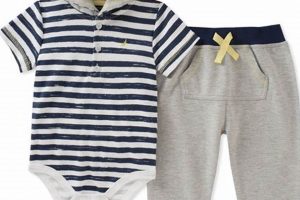
Apparel worn by infants during sleep is specifically designed to regulate their body warmth and prevent overheating or chilling throughout the night. Examples include sleep sacks, wearable blankets, footed pajamas, and bodysuits made from breathable materials like cotton, merino wool, or bamboo. The selection of these items is guided by room temperature and the infant’s individual characteristics.
Maintaining a stable thermal environment for a sleeping infant is crucial for promoting restful sleep, reducing the risk of Sudden Infant Death Syndrome (SIDS), and supporting overall well-being. Historically, heavy blankets were used, but current recommendations emphasize the use of lighter, more breathable sleepwear options to minimize hazards. This approach allows parents to create a safer and more comfortable sleep environment for their child.
The subsequent sections will delve into the factors influencing the appropriate selection of infant nighttime garments, focusing on the relevant temperature ranges, suitable materials, and practical guidelines for parents to ensure their baby’s comfort and safety throughout the night. Proper monitoring techniques and adjustments based on the infant’s individual needs will also be discussed.
Selecting Appropriate Infant Sleepwear
The following provides guidance on choosing garments for infants during sleep to maintain a safe and comfortable temperature.
Tip 1: Monitor Room Temperature: Utilize a room thermometer to accurately assess the sleeping environment. Ideal temperature ranges typically fall between 68-72F (20-22C). Adjust the layering of garments based on this reading.
Tip 2: Choose Breathable Fabrics: Opt for natural fibers such as cotton, merino wool, or bamboo. These materials facilitate air circulation, reducing the risk of overheating. Avoid synthetic fabrics that can trap moisture.
Tip 3: Employ Layering: Dress the infant in multiple thin layers rather than a single heavy garment. This allows for adjustments throughout the night if the temperature fluctuates. A basic onesie can serve as a foundational layer.
Tip 4: Consider Wearable Blankets or Sleep Sacks: These provide warmth without the hazards associated with loose blankets. Ensure the sleep sack is appropriately sized to prevent the infant from slipping inside.
Tip 5: Check for Signs of Overheating: Observe the infant for indicators such as flushed skin, rapid breathing, or sweating. If these signs are present, remove a layer of clothing.
Tip 6: Adjust for Seasonal Variations: During warmer months, lighter fabrics and fewer layers are necessary. Conversely, colder months may require additional layering, but always prioritize breathability.
Tip 7: Avoid Over-Bundling: Resist the urge to overdress the infant, even in colder climates. Overheating poses a greater risk than being slightly cool.
Adhering to these guidelines contributes to a safer and more comfortable sleep environment for the infant, promoting restful sleep and mitigating potential health risks.
The subsequent section will address common parental misconceptions regarding infant sleepwear and provide strategies for addressing specific temperature-related concerns.
1. Breathable Fabrics

Breathable fabrics are a foundational element in the selection of appropriate nighttime apparel for infants. These materials facilitate air circulation, which is crucial for regulating body temperature and minimizing the risk of overheating during sleep.
- Moisture Wicking Properties
Fabrics like merino wool and certain types of cotton possess moisture-wicking capabilities. This means they can absorb and draw away perspiration from the infant’s skin, preventing the build-up of dampness that can lead to chills or skin irritation. For example, an infant wearing a merino wool sleep sack is less likely to become uncomfortably damp during warmer nights compared to one wearing a synthetic material.
- Air Permeability and Ventilation
The weave and structure of a fabric determine its air permeability. Open weaves and loosely knit fabrics allow for greater air flow across the skin’s surface. This ventilation helps dissipate heat, preventing the infant from becoming excessively warm. Cotton muslin, for instance, is a popular choice due to its lightweight and breathable nature.
- Reduced Risk of Overheating
Overheating is a significant concern for infants, as they are less able to regulate their body temperature than adults. Breathable fabrics mitigate this risk by allowing excess heat to escape, thereby maintaining a more stable core temperature. Conversely, non-breathable fabrics can trap heat, leading to discomfort and potentially contributing to Sudden Infant Death Syndrome (SIDS).
- Material Composition and Safety
The inherent properties of a fabric’s composition influence its breathability. Natural fibers such as cotton, bamboo, and wool are generally more breathable than synthetic fibers like polyester or nylon. Additionally, the safety of dyes and finishes used on the fabric is a critical consideration, as some chemicals can irritate sensitive skin or compromise the fabric’s breathability.
The choice of breathable fabrics in infant sleepwear directly impacts thermal comfort and safety. Selecting garments made from natural, breathable materials optimizes air circulation, regulates body temperature, and minimizes the risk of overheating, contributing to a more restful and secure sleep environment.
2. Layering Strategy

The layering strategy constitutes a critical component of infant nighttime attire selection, enabling precise adjustments to accommodate fluctuating ambient temperatures and the infant’s individual thermal needs. Improper layering, conversely, increases the risks of overheating or hypothermia, potentially disrupting sleep patterns and impacting health. For example, a caregiver might initially dress an infant in a long-sleeved bodysuit and a lightweight sleep sack. Should the room temperature increase unexpectedly, removing the sleep sack allows for a prompt reduction in insulation, preventing potential overheating. Conversely, a thin cotton onesie can serve as a base layer under a thicker sleep sack during cooler periods, providing additional warmth that can be easily removed if the infant shows signs of discomfort.
Effective layering is predicated on the understanding of fabric properties and their respective insulating capabilities. Natural fibers, such as merino wool or cotton, facilitate breathability and moisture-wicking, making them suitable for base layers that directly contact the skin. Outer layers, such as sleep sacks, should be chosen based on the season and room temperature, with varying thermal overall grade (TOG) ratings indicating their insulation level. Observational awareness of the infant’s physiological cues is paramount. Clammy skin, rapid breathing, or flushed cheeks necessitate immediate adjustments, such as removing a layer or transitioning to a lighter fabric. Consistent monitoring ensures the layering strategy remains appropriate for the evolving environmental conditions and the infant’s changing metabolic demands.
In summation, the layering strategy is not merely an ancillary consideration but an intrinsic element of safe and effective infant nighttime apparel management. Diligent application of layering principles, combined with keen observation and adaptive responses, promotes optimal thermal comfort, mitigates potential health risks, and contributes to a more secure and restful sleep environment for the infant. Challenges may arise in accurately gauging an infants thermal perception, underscoring the importance of continual education and reliance on objective room temperature measurements as a primary guide.
3. Room Temperature

Room temperature constitutes a primary determinant in selecting appropriate nighttime attire for infants. The ambient temperature of the sleep environment directly influences the infant’s thermal regulation requirements, necessitating a careful matching of garments to prevent overheating or chilling. For instance, a room maintained at 75F (24C) would typically warrant a lightweight cotton onesie or a very thin sleep sack, whereas a room at 65F (18C) may necessitate a warmer sleep sack and a long-sleeved undershirt. Failure to account for room temperature can lead to discomfort, restlessness, and, in extreme cases, contribute to health risks such as Sudden Infant Death Syndrome (SIDS) due to overheating.
Effective management of infant sleepwear relative to room temperature requires a practical understanding of thermal conductivity and insulation. Garments with higher insulation values, such as fleece sleep sacks, are suitable for cooler environments, while those with low insulation values, like muslin wraps, are appropriate for warmer conditions. Parents can employ a room thermometer to monitor temperature accurately and adjust clothing accordingly. Observing the infant for signs of overheating (flushed skin, rapid breathing, sweating) or chilling (shivering, cold extremities) provides crucial feedback for refining the garment selection. Additionally, seasonal variations necessitate adjustments in the layering and fabric choices, reflecting the dynamic relationship between room temperature and the infant’s thermal needs.
In conclusion, room temperature is an indispensable consideration in determining appropriate infant nighttime clothing. A proactive approach, incorporating temperature monitoring, understanding fabric properties, and attentive observation, enables caregivers to create a safe and comfortable sleep environment. Challenges arise from inconsistent heating/cooling systems and individual variations in infant thermal preferences; however, consistent adherence to these principles minimizes risks and promotes restful sleep. The interdependency between the infant’s attire and the surrounding temperature underscores the importance of comprehensive awareness and diligent application of best practices.
4. Overheating Risks

Elevated body temperature due to inappropriate attire presents a significant hazard for infants during sleep. The selection of nighttime garments directly influences the risk of overheating, a factor implicated in Sudden Infant Death Syndrome (SIDS). Infant physiology renders them less capable of regulating body temperature compared to adults, making them susceptible to thermal stress caused by excessive clothing. For instance, an infant swaddled tightly in multiple layers of thick fabric in a room with poor ventilation faces a heightened risk of overheating. Understanding this connection is essential for caregivers to make informed decisions regarding garment choices and sleep environment management. This is crucial to minimize this risk for safe sleep.
The corelation between overheating and night time attire extends beyond the number of layers. Fabric composition also plays a crucial role. Synthetic materials, such as polyester, restrict airflow and impede the dissipation of heat, contributing to increased body temperature. In contrast, natural fibers, including cotton and merino wool, promote breathability and moisture-wicking, mitigating the risk of overheating. Consider a scenario where two infants are sleeping in the same room, one dressed in a synthetic fleece pajama set and the other in a cotton sleep sack. The infant in the synthetic attire is more likely to exhibit signs of overheating, such as flushed skin or rapid breathing, necessitating immediate intervention. This highlights the importance of both material selection and appropriate layering to avoid thermal distress.
Mitigation of overheating risks through thoughtful selection of infant sleepwear necessitates a holistic approach. Monitoring room temperature, employing breathable fabrics, layering garments strategically, and observing the infant for signs of thermal stress constitute key elements of a safe sleep strategy. While factors such as illness or individual metabolic rates can influence body temperature, appropriate attire minimizes the external contribution to overheating. Challenges remain in educating caregivers about the subtle indicators of overheating and the evolving recommendations for infant sleep safety. Ongoing awareness campaigns and accessible educational resources are imperative to reinforce the importance of appropriate nighttime clothing in reducing the risk of overheating and promoting safe infant sleep practices.
5. Seasonal adjustments

The practice of adjusting an infant’s nighttime clothing in accordance with seasonal temperature variations is essential for maintaining a stable and safe thermal environment. As ambient temperatures fluctuate throughout the year, the type and amount of clothing worn during sleep must be adapted to prevent overheating in warmer months and chilling in colder periods. The efficacy of “baby night temperature clothing” is thus intrinsically linked to recognizing and acting upon seasonal shifts. Failure to adjust can lead to significant discomfort for the infant, disrupting sleep patterns and potentially contributing to adverse health outcomes. A real-life example involves transitioning from a thick fleece sleep sack during winter to a lightweight cotton onesie during summer. In the winter months, this sleep sack protects the infant from a cold environment, whilst in summer, the onesie prevents overheating and ensures comfort.
Consideration of seasonal adjustments extends beyond simply changing the thickness of the garments. Fabric selection becomes critical, as certain materials are better suited to particular times of year. Breathable fabrics like cotton and linen are favored during warmer months to facilitate airflow and wick away moisture. Conversely, warmer fabrics such as merino wool or fleece provide insulation during colder months, trapping heat and maintaining a consistent body temperature. Furthermore, the number of layers employed should be adjusted accordingly. A layering system allows for flexibility, enabling caregivers to add or remove layers as needed to respond to changing conditions. The practical significance of this understanding lies in the ability to create a safe and comfortable sleep environment regardless of external temperatures, supporting optimal rest and well-being for the infant. This also requires regular observation of the infant’s condition during each seasonal change.
In summary, seasonal adjustments are not merely an ancillary aspect of “baby night temperature clothing” but an integral component that ensures its effectiveness. Adapting garment choices based on seasonal temperature variations, selecting appropriate fabrics, and employing a dynamic layering system are all essential practices. Challenges persist in accurately gauging an infant’s thermal comfort and in navigating the wide array of available products. However, a commitment to informed decision-making, coupled with careful observation and consistent monitoring, empowers caregivers to effectively manage infant sleepwear and promote safe and restful sleep throughout the year.
6. Sleep sack safety

Sleep sack safety is intrinsically linked to the broader concept of appropriate nighttime attire for infants. The sleep sack, designed as a wearable blanket, aims to provide warmth without the risks associated with loose bedding. However, improper usage negates these advantages and introduces new hazards. Overdressing an infant within a sleep sack, particularly one with a high TOG (Thermal Overall Grade) rating in a warm room, can cause overheating. Conversely, using an inadequately insulated sleep sack in a cold room may lead to hypothermia. The selection of sleep sack must therefore align with room temperature to be safe. For example, a sleep sack with a 2.5 TOG rating is generally suitable for cooler months when room temperatures are between 64-68F (18-20C), whereas a 0.5 TOG sleep sack or a lightweight muslin sleep sack is more appropriate for warmer conditions. An oversized sleep sack poses a suffocation hazard, while an undersized one may restrict movement. Hence, size and TOG rating are directly relevant to sleep sack safety. This direct correlation mandates mindful consideration of all factors when making a selection for optimal comfort and to prevent unsafe conditions from arising.
Beyond the selection of an appropriately sized sleep sack with an appropriate TOG rating is the consideration of correct usage. A correctly sized sleep sack should fit snugly around the infant’s chest and armholes, preventing the infant from slipping down inside. The neck opening should also be appropriately sized to prevent the infant’s head from passing through. Regularly inspecting the sleep sack for signs of wear and tear, such as loose seams or damaged zippers, is also crucial. These defects could potentially lead to entrapment or choking hazards. Furthermore, caregivers need to be cautious of adding extra layers under the sleep sack that could lead to overheating. Sleep sacks are designed to be worn over a single layer of clothing, such as a onesie or lightweight pajamas. Adding additional blankets, even thin ones, increases the risk of thermal dysregulation. By ensuring proper fit, regular maintenance, and appropriate layering, the benefits of a sleep sack can be maximized without compromising safety.
In conclusion, sleep sack safety is an integral component of selecting appropriate nighttime attire for infants. Proper selection of a sleep sack, considering size, TOG rating, and seasonal appropriateness, significantly mitigates risks. Proper usage and regular inspection maintain the intended safety benefits. Challenges include the wide array of sleep sack options available and the need for consistent education for caregivers. However, careful attention to these factors ensures that sleep sacks function as intended a safer alternative to loose blankets contributing to reduced risks during infant sleep. A deep understanding of these factors can ensure restful and safe sleep for infants.
7. Infant monitoring
Infant monitoring is an indispensable component of ensuring the efficacy and safety of baby night temperature clothing. The direct impact of garment selection on an infant’s thermal regulation necessitates vigilant observation for signs of distress, such as overheating or chilling. Without appropriate monitoring, even the most carefully chosen clothing may inadvertently contribute to unsafe sleep conditions. For instance, an infant dressed in a sleep sack appropriate for a 70F room could overheat if the room temperature unexpectedly rises to 75F. Monitoring allows caregivers to detect these subtle shifts and make timely adjustments, such as removing a layer of clothing or adjusting the room temperature. The direct relationship between “baby night temperature clothing” and “infant monitoring” underscores the practical significance of consistent observation.
The practical application of this understanding extends beyond merely observing for obvious signs of discomfort. Effective monitoring includes regularly assessing the infant’s skin temperature, breathing patterns, and overall demeanor. Warm, flushed skin or rapid breathing may indicate overheating, while cold extremities or shivering suggest the infant is too cold. Integrating a room thermometer into the monitoring process provides objective data to guide clothing adjustments. The information gathered through consistent observation allows caregivers to fine-tune the infant’s sleep environment, optimizing thermal comfort. This proactive approach is particularly crucial for infants who are unable to communicate their needs effectively, or when seasonal changes cause the ambient temperature to fluctuate, which might occur with the change of seasons.
In summary, infant monitoring is not simply an adjunct to selecting appropriate nighttime attire, but rather an integral component of safe sleep practices. The ability to detect and respond to changes in the infant’s thermal state is critical to maximizing the benefits of “baby night temperature clothing.” Although challenges exist in consistently maintaining vigilant observation, the potential consequences of neglecting this aspect are significant. Ongoing education and readily available resources on effective monitoring techniques are essential to ensure caregivers can confidently and competently create safe and comfortable sleep environments for their infants. The safety and comfort of the infant depend on the careful and thorough use of monitoring techniques to create a healthy sleep environment.
Frequently Asked Questions
This section addresses common inquiries concerning the selection and use of baby night temperature clothing to ensure infant comfort and safety during sleep.
Question 1: What constitutes appropriate baby night temperature clothing?
Appropriate baby night temperature clothing refers to garments designed to maintain a stable body temperature within the safe range during sleep. This includes considerations for fabric breathability, layering, and suitability for ambient room temperature.
Question 2: How does room temperature influence clothing selection?
Room temperature is a primary determinant in choosing baby night temperature clothing. Warmer rooms necessitate lighter, more breathable fabrics, while cooler rooms may require additional layers or garments with higher insulation.
Question 3: What materials are recommended for infant sleepwear?
Recommended materials for baby night temperature clothing include natural fibers such as cotton, merino wool, and bamboo. These materials facilitate air circulation and reduce the risk of overheating.
Question 4: How can overheating be prevented?
Overheating can be prevented by selecting appropriate fabrics, avoiding excessive layering, and monitoring the infant for signs of thermal distress such as flushed skin or rapid breathing. Ensuring adequate room ventilation is also crucial.
Question 5: What is the role of sleep sacks?
Sleep sacks serve as a safe alternative to loose blankets, providing warmth without the suffocation hazard. Proper sizing and TOG (Thermal Overall Grade) rating are essential for safe and effective use. The sleep sack also helps reduce overstimulation through the restriction of motion.
Question 6: How frequently should clothing be adjusted based on seasonal changes?
Clothing should be adjusted with each seasonal change and whenever significant fluctuations in room temperature occur. Monitoring the infant’s comfort level and making incremental adjustments is key.
Selecting suitable baby night temperature clothing requires careful consideration of various factors to ensure a safe and comfortable sleep environment. Awareness of these principles contributes to reduced risk and improved infant well-being.
The next section will provide a checklist for selecting the right baby night temperature clothing. This checklist is useful for parents.
Baby Night Temperature Clothing
The selection of appropriate “baby night temperature clothing” is a critical aspect of infant care, significantly influencing safety and well-being. This exploration has underscored the importance of breathable fabrics, strategic layering, meticulous monitoring, and seasonal adjustments. Failure to adhere to these principles elevates the risk of thermal dysregulation, potentially contributing to adverse health outcomes, including SIDS.
Continued research and dissemination of best practices are essential to refine and reinforce guidelines for infant sleepwear. The diligent application of these principles represents a commitment to safeguarding vulnerable infants and promoting optimal health during this crucial developmental stage. Prioritizing informed decision-making in this area fosters a safer sleep environment for all infants.