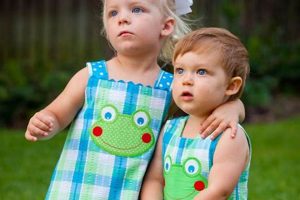
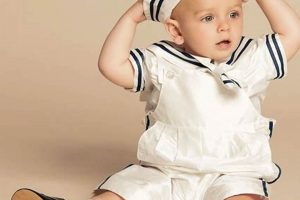
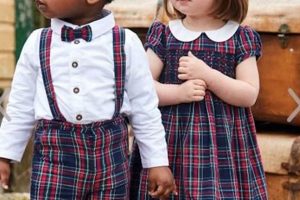
Coordinated attire for parents and their infant creates a visually unified family aesthetic. Examples include similar color palettes, shared patterns, or thematic designs across garments worn by mothers, fathers, and their babies.
This practice can foster a sense of familial connection and belonging, providing visual representation of unity. Historically, coordinated family clothing has been used to signify group identity and solidarity across different cultures and time periods, now evolving into a trend celebrating family bonds. Such choices can also provide photo opportunities to mark important milestones.
The subsequent sections will examine the factors influencing the selection of related garments, the diverse range of styles available, and the occasions where unified outfits prove especially relevant.
Selection Guidance for Coordinated Family Attire
The following recommendations provide direction for selecting unified clothing for parents and infant, emphasizing practicality and aesthetic cohesion.
Tip 1: Prioritize Comfort. Garments should be fabricated from soft, breathable materials, especially for the baby, to ensure comfort and avoid irritation. Natural fibers such as cotton or bamboo are recommended.
Tip 2: Consider Occasion Appropriateness. The setting and formality of the event should guide garment selection. Casual settings allow for playful patterns and relaxed styles; formal occasions require more refined and coordinated choices.
Tip 3: Establish a Color Palette. A limited and harmonious color scheme creates visual unity. Consider complimentary or analogous color combinations for an appealing aesthetic. Neutrals with a pop of color also work well.
Tip 4: Focus on a Common Element. Rather than identical outfits, incorporating a shared design element such as a pattern, texture, or accessory can achieve a coordinated look without being overly uniform.
Tip 5: Account for Seasonal Variations. Garment weight and style should be appropriate for the prevailing weather conditions. Layering options are particularly useful for infants to accommodate fluctuating temperatures.
Tip 6: Evaluate Ease of Care. Select clothing that is machine washable and durable to withstand frequent laundering. Avoid items that require specialized cleaning or ironing.
Tip 7: Mind the Fit. Ensure that all garments fit properly. Ill-fitting clothing can be uncomfortable and detract from the overall appearance. Avoid overly tight or restrictive garments for the baby.
Adhering to these suggestions will facilitate the selection of visually appealing and practical coordinated attire for parents and their infant, promoting both comfort and aesthetic harmony.
The next segment will delve into stylistic variations, including specific trends and design motifs commonly employed in creating unified family ensembles.
1. Fabric Comfort

Fabric comfort is paramount when selecting coordinated attire for parents and infants. The tactile experience of clothing directly impacts well-being, particularly for sensitive infant skin. The choice of materials is therefore not merely aesthetic but fundamental to overall comfort and suitability.
- Irritation Reduction
Certain synthetic fabrics can cause irritation or allergic reactions, particularly in infants. Natural fibers, such as cotton, linen, and bamboo, are generally hypoallergenic and less likely to trigger adverse skin responses. Selecting these fabrics minimizes the risk of discomfort and potential skin conditions.
- Breathability and Temperature Regulation
Fabrics that allow for adequate airflow, such as loosely woven cotton or linen, promote breathability. This is crucial for temperature regulation, particularly in infants who are less able to regulate their body temperature. Proper ventilation prevents overheating and discomfort, especially in warmer climates.
- Moisture Management
Fabrics with moisture-wicking properties, like merino wool or certain synthetic blends, help to draw sweat away from the skin, keeping the wearer dry and comfortable. This is particularly important for active individuals or in humid environments. The avoidance of moisture buildup reduces the risk of chafing and skin irritation.
- Texture and Softness
The texture of the fabric directly impacts its comfort. Soft, smooth fabrics, such as combed cotton or modal, provide a gentle feel against the skin. Conversely, rough or scratchy fabrics can cause irritation and discomfort. Prioritizing soft textures enhances the overall wearing experience.
The cumulative effect of these considerations demonstrates the significance of fabric comfort in coordinated family ensembles. Prioritizing hypoallergenic, breathable, moisture-wicking, and soft fabrics ensures the well-being of all wearers, particularly the infant, and contributes to a positive and comfortable experience. The careful selection of fabric is an investment in the family’s comfort and enjoyment, moving beyond aesthetics.
2. Style Suitability

Style suitability, in the context of unified parent-infant attire, dictates the appropriateness of the chosen aesthetic for a given setting or occasion. Its importance stems from the need to ensure the ensemble aligns with the event’s expected level of formality and inherent social cues. A failure to adequately consider style suitability can result in misaligned presentation and diminished impact of the coordinated appearance. For example, overtly casual attire such as athletic wear might be incongruous for a formal wedding, thereby undermining the intent of creating a polished, unified family image. Conversely, highly structured or elaborate outfits could prove impractical and uncomfortable for a casual outdoor gathering.
Practical application of style suitability involves careful consideration of factors such as the venue, time of day, and overall atmosphere of the event. A daytime picnic, for instance, may be well-suited for light, airy fabrics, pastel colors, and relaxed silhouettes. A formal evening dinner, on the other hand, would typically necessitate richer fabrics, darker hues, and more tailored designs. The key is to strike a balance between aesthetic cohesion and event-appropriate presentation, ensuring the coordinated attire enhances, rather than detracts from, the overall experience. Furthermore, style suitability extends beyond the immediate event to encompass individual comfort and personal expression. While coordination is the objective, the attire should also reflect each individual’s personality and preferences, provided it remains within the established framework of appropriateness.
In summary, style suitability acts as a foundational principle governing the successful execution of coordinated parent-infant attire. It necessitates a discerning evaluation of event-specific factors, personal comfort, and aesthetic considerations. The challenge lies in achieving a harmonious blend of these elements to create a visually appealing and contextually appropriate ensemble. Neglecting style suitability can diminish the effectiveness of the coordinated effort and potentially lead to an undesirable outcome.
3. Color Coordination
Color coordination is a foundational element in achieving visual harmony within coordinated family attire. Its effectiveness directly influences the overall aesthetic impact. Uncoordinated color choices can result in a visually jarring effect, undermining the intended sense of unity, whereas well-planned color palettes enhance the cohesive presentation. For instance, a family wearing outfits predominantly featuring varying shades of blue creates a more visually pleasing and unified appearance than if each individual wore completely disparate and clashing colors.
The strategic application of color coordination extends beyond merely matching hues. It encompasses considering color theory principles, such as complementary, analogous, or monochromatic schemes. A complementary color scheme might involve a mother wearing a dress in a warm tone, while the father and baby wear accents in the corresponding cool tone, creating visual interest and balance. Analogous color schemes, employing adjacent colors on the color wheel, offer a softer, more subtle coordination. Monochromatic schemes, utilizing varying shades and tints of a single color, provide a sophisticated and unified appearance. Real-world examples abound; professional family portraits often showcase the power of carefully chosen color palettes to elevate the visual appeal and reinforce the sense of connection. Understanding these nuances allows for intentional color choices that align with personal preferences and the desired aesthetic.
In conclusion, color coordination is an indispensable component of effective coordinated family attire. Its successful execution hinges on understanding basic color theory and carefully selecting palettes that resonate with the intended aesthetic and occasion. While achieving perfect color matches is not always necessary or desirable, a deliberate and thoughtful approach to color coordination significantly contributes to the overall visual success of unified family ensembles.
4. Pattern Integration

Pattern integration, within the framework of coordinated parent and infant attire, constitutes the deliberate incorporation of repeating visual motifs or designs across garments. This approach serves to enhance the visual cohesion of the ensemble, thereby reinforcing the sense of familial unity.
- Subtle Repetition for Enhanced Unity
Subtle repetition involves utilizing a shared pattern in varying scales or intensities across the outfits. For instance, the father’s shirt might feature a large-scale floral print, while the mother’s dress incorporates a smaller, more delicate version of the same floral pattern. The baby’s outfit could then feature accents with elements from the floral pattern. This technique achieves coordination without being overly uniform, maintaining individual style while reinforcing a connection. Examples can be observed in numerous family portrait collections, where the patterns often complement each other instead of being identical. This subtle approach allows individual expression to remain within a coordinated overall aesthetic.
- Thematic Consistency
Thematic consistency pertains to the adoption of a shared motif or theme across the garments. This could range from nautical themes with stripes and anchors to nature-inspired motifs with leaves and floral elements. Thematic consistency facilitates effortless coordination by creating a visual connection based on a common idea. Examples may include a family participating in a themed event, such as a luau, where each member’s outfit adheres to a Hawaiian or tropical theme. The implication here is that the pattern or theme should be appropriate to the intended context and setting.
- Color-Based Pattern Coordination
Color-based pattern coordination involves selecting patterns that share a common color palette. For instance, the mother’s dress might feature a geometric pattern with blues and greens, while the father’s shirt incorporates stripes in similar hues. The baby’s outfit could then feature a solid color that complements the chosen palette, thus binding them together. This technique ensures visual harmony without necessarily requiring identical patterns. Numerous retail outlets offer coordinated family clothing collections that rely on a unifying color scheme across different patterns. The inherent appeal of color coordination contributes to the overall aesthetic success of the coordinated attire.
- Strategic Placement of Patterns
Strategic placement of patterns dictates how and where the design elements are incorporated into the attire. This could involve using a bold pattern on the baby’s romper while the parents wear solid-colored clothing with patterned accents. Alternatively, all outfits might feature minimal patterns, such as a subtle textured fabric or a small, repeating print. Placement considerations determine how much visual weight a pattern carries and contribute to the overall balance of the ensemble. Fashion editorials commonly demonstrate skillful pattern placement, highlighting certain elements to draw the eye and create visual interest.
The successful integration of patterns in coordinated family attire necessitates a thoughtful approach that considers the specific context, desired aesthetic, and individual preferences. By employing these techniques, a family can achieve a visually appealing and harmonious ensemble that celebrates their unique bond. Pattern choice will impact visual impact and how family unity is conveyed.
5. Occasion relevance
Occasion relevance is a critical determinant in the selection of coordinated attire for parents and infants. The suitability of the chosen outfits is inextricably linked to the specific event or setting. A mismatch between attire and occasion can undermine the intended aesthetic and project an unintended message. Formal events such as weddings or christenings necessitate more sophisticated fabrics, subdued color palettes, and tailored designs, while casual settings like picnics or family outings allow for lighter fabrics, brighter colors, and relaxed silhouettes. Choosing an elaborate, formal ensemble for a casual outdoor gathering would be incongruous, just as selecting informal attire for a black-tie affair would be inappropriate. The occasion dictates the fundamental framework within which coordinated choices are made. The practical significance of this understanding lies in its ability to guide selections that are not only aesthetically pleasing but also contextually appropriate.
Consider several practical examples. A family attending a holiday gathering might choose coordinated outfits featuring seasonal colors like red, green, and gold, incorporating festive patterns like snowflakes or reindeer. Conversely, a family participating in a professional family photograph session might opt for more neutral tones and classic styles, ensuring the photographs remain timeless and versatile. Even within casual settings, occasion relevance holds weight; coordinated swimwear for a beach vacation differs significantly from coordinated play clothes for a park visit. A failure to consider occasion relevance in these scenarios can result in attire that appears out of place or detracts from the overall experience. The selection process should, therefore, begin with a clear understanding of the event’s formality, atmosphere, and any specific dress code requirements.
In summary, occasion relevance serves as a foundational principle in the effective application of coordinated family attire. Understanding the cause-and-effect relationship between the event and the selected outfits ensures that the ensemble enhances, rather than detracts from, the overall presentation. The practical significance of this lies in its ability to guide informed choices that are both aesthetically pleasing and contextually appropriate, ultimately contributing to a positive and harmonious family image. Ignoring this principle poses challenges to creating the desired visual impact and can result in misaligned communication through clothing choices.
6. Sizing accuracy
Sizing accuracy is paramount when selecting coordinated attire for parents and infants. Inaccurate sizing undermines the aesthetic appeal of unified outfits and, more importantly, compromises comfort and safety, particularly for the infant.
- Infant Safety and Comfort
Incorrect sizing poses safety risks for infants. Overly restrictive clothing can impede movement, restrict breathing, and potentially affect circulation. Garments that are too large present entanglement hazards. Prioritizing accurate measurements and consulting size charts specific to each brand is crucial to ensuring infant well-being within coordinated ensembles. Many retailers offer detailed sizing guides to assist with this process.
- Aesthetic Harmony in Photographs
Coordinated family portraits often aim to capture a visually unified image. Ill-fitting garments disrupt this aesthetic. Baggy or overly tight clothing can detract from the intended elegance or casual charm of the outfits, compromising the overall visual impact of the photographs. Achieving size accuracy ensures that the clothing complements each individual’s physique, resulting in a more polished and harmonious photographic representation of the family unit.
- Parental Confidence and Style
Accurate sizing contributes to parental confidence and individual style expression within the coordinated framework. Well-fitting clothing enhances comfort and allows parents to project their personal style while maintaining the overall coordinated theme. Inaccurate sizing, conversely, can lead to self-consciousness and detract from the parents’ enjoyment of the coordinated experience. Retailers offering inclusive sizing options can further enhance this sense of confidence.
- Practicality and Longevity
Selecting accurately sized garments, especially for infants, maximizes the usable lifespan of the clothing. While infants grow rapidly, opting for slightly larger sizes within reasonable limits allows for extended wear without compromising comfort or safety. This approach presents a practical and economical solution for maintaining coordinated family attire over a period of time, reducing the need for frequent replacements. However, significant deviations from accurate sizing are discouraged due to potential safety concerns.
These facets underscore the importance of sizing accuracy in the context of coordinated parent and infant attire. It extends beyond mere aesthetics, encompassing safety, comfort, confidence, and practicality. Diligent attention to size charts, accurate measurements, and brand-specific guidelines is vital for achieving the desired outcome: a visually appealing and comfortable experience for all family members.
7. Photo opportunities

The practice of dressing a mother, father, and infant in coordinated attire directly enhances photographic outcomes. The visual unity created by such ensembles contributes to aesthetically pleasing and emotionally resonant images. A coordinated color palette, shared patterns, or thematic designs provide a sense of harmony and connection that elevates the photographic composition. Numerous families utilize coordinated outfits for milestone photo shoots, such as newborn sessions, holiday portraits, or family vacations, specifically to capture visually unified and memorable images.
The significance of photo opportunities as a component of coordinated family attire extends beyond mere aesthetics. These photographs serve as lasting mementos, documenting a specific time in the family’s history. They provide a tangible representation of family bonds and shared experiences, often becoming treasured heirlooms passed down through generations. For example, families may recreate coordinated outfits worn in childhood photographs to mark special occasions, thereby reinforcing a sense of continuity and tradition. The intentional selection of coordinated attire thus adds a layer of meaning and emotional depth to the photographic outcome.
In summary, coordinated attire for parents and infants is inextricably linked to the pursuit of meaningful and visually compelling photo opportunities. This practice transforms ordinary snapshots into treasured memories, reinforcing family bonds and preserving a sense of shared identity across time. The challenge lies in balancing aesthetic considerations with individual comfort and practicality, ensuring that the coordinated attire enhances, rather than detracts from, the overall photographic experience.
Frequently Asked Questions
The following addresses common inquiries regarding the selection and implementation of coordinated attire for parents and infants.
Question 1: Is it necessary for all garments to be identical in order to achieve a coordinated look?
Identical garments are not required for effective coordination. A shared color palette, common pattern element, or thematic design across different styles of clothing can create a cohesive appearance without resorting to uniformity.
Question 2: What are the key considerations when selecting fabrics for coordinated outfits, especially for the infant?
Prioritizing comfort and safety is paramount. Soft, breathable, and hypoallergenic fabrics, such as cotton, bamboo, or linen, are recommended to minimize the risk of skin irritation and ensure comfort. Avoid fabrics with excessive embellishments or potential choking hazards.
Question 3: How can coordinated family attire be achieved without exceeding a reasonable budget?
Coordination can be achieved through strategic use of accessories, such as scarves, hats, or belts, in matching colors or patterns. Purchasing a few key pieces that can be mixed and matched with existing wardrobe staples offers a cost-effective solution.
Question 4: Are there specific occasions where coordinated family outfits are particularly appropriate?
Coordinated attire is often favored for family photographs, holiday gatherings, and special events such as weddings or christenings. However, the appropriateness ultimately depends on personal preference and the specific context of the occasion.
Question 5: How can individual style preferences be accommodated within a coordinated family ensemble?
Allowing each family member to choose garment styles that reflect their individual preferences while adhering to a shared color palette or thematic design strikes a balance between coordination and personal expression.
Question 6: What are the potential drawbacks of coordinated family attire?
Potential drawbacks include the risk of appearing overly contrived or sacrificing individual comfort in the pursuit of visual uniformity. Furthermore, the expense associated with purchasing new garments for all family members should be considered.
Careful planning and consideration of individual needs and preferences can mitigate potential drawbacks and enhance the overall experience of coordinated family attire.
The subsequent section will provide guidance on locating resources for coordinated family outfits, including retail outlets and online vendors.
Concluding Remarks on Coordinated Family Ensembles
The preceding exploration of “mom dad and baby matching outfits” has illuminated various facets of this practice, from the selection of fabrics and styles to the consideration of occasion relevance and photographic opportunities. Effective implementation hinges on prioritizing comfort, safety, and individual expression, while maintaining a cohesive visual aesthetic. The principles of color coordination, pattern integration, and sizing accuracy play crucial roles in achieving a harmonious and visually appealing outcome.
Ultimately, the decision to embrace coordinated family attire remains a personal one, dictated by individual preferences and values. The significance of this practice lies not merely in its aesthetic appeal but also in its potential to foster a sense of familial unity and create lasting memories. Careful consideration of the outlined principles facilitates informed decision-making and contributes to a positive and meaningful experience. Further exploration of retail options and design trends remains an ongoing endeavor for those seeking to refine their approach to coordinated family ensembles.