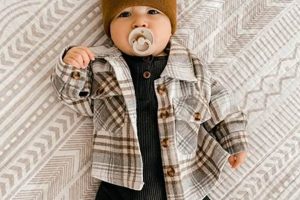
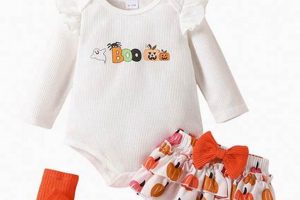
Apparel specifically designed for infant males in their first weeks of life constitutes a distinct category within the broader spectrum of children’s clothing. These items are typically characterized by soft fabrics, secure closures, and designs that accommodate the unique needs and proportions of a very young child. A common example includes a set containing a footed pajama, a wrap-style shirt, and a cap.
The selection of appropriate garments for male newborns is crucial for maintaining the infant’s comfort, regulating body temperature, and facilitating ease of care. Historically, societal norms have influenced the colors, styles, and embellishments found in this sector. The practical aspects, such as ease of diaper changing and accessibility for medical examinations, are paramount considerations for caregivers.
The subsequent discussion will delve into the constituent elements, safety considerations, sizing variations, and purchasing guidelines associated with clothing choices made for newly born male infants. These aspects are vital for informed decision-making and ensuring the well-being of the child.
Essential Considerations for Newborn Male Infant Apparel
This section provides practical guidelines for selecting appropriate and safe clothing for newborn male infants, ensuring comfort and well-being.
Tip 1: Prioritize Soft, Natural Fabrics: Opt for materials like 100% cotton, muslin, or bamboo. These fabrics are gentle on a newborn’s sensitive skin and minimize the risk of irritation or allergic reactions. Avoid synthetic materials that may trap moisture and cause discomfort.
Tip 2: Ensure Proper Sizing: Newborn sizes typically fit infants up to 9 pounds. However, individual baby sizes can vary. Avoid clothing that is too tight, restricting movement, or too loose, posing a potential safety hazard. Refer to size charts provided by manufacturers.
Tip 3: Simplify Fastenings: Choose outfits with easy-to-use closures such as snaps or zippers. Minimize the use of buttons, ribbons, or ties, which can be choking hazards. Ensure all fastenings are securely attached.
Tip 4: Consider Climate and Season: Select clothing appropriate for the prevailing weather conditions. In warmer climates, breathable, lightweight fabrics are ideal. In colder climates, layering is essential, using warm, soft fabrics.
Tip 5: Minimize Embellishments: Avoid outfits with excessive decorations, appliques, or rough seams. These can irritate a newborn’s delicate skin. Prioritize simplicity and comfort.
Tip 6: Wash Before First Use: Always wash new clothing before allowing a newborn to wear it. Use a mild, hypoallergenic detergent to remove any residual chemicals or irritants from the manufacturing process.
Tip 7: Regularly Inspect Outfits: Consistently examine clothing for any signs of wear and tear, such as loose threads or damaged closures. Replace any items that could pose a safety risk.
Adhering to these recommendations ensures that the selected garments are safe, comfortable, and appropriate for a newborn male infant, supporting their healthy development.
The subsequent sections will explore purchasing options and common styles of apparel for newly born male infants.
1. Fabric Composition

The fabric composition of apparel designed for newborn male infants directly impacts the child’s comfort, health, and well-being. Certain fabrics, such as 100% cotton, are inherently breathable, allowing for adequate air circulation and minimizing the risk of overheating. Conversely, synthetic fabrics, like polyester, may trap moisture, creating a humid environment conducive to skin irritation and the development of rashes. The selection of appropriate fabric is therefore not merely an aesthetic choice, but a fundamental determinant of the garment’s suitability for the newborn’s sensitive skin.
Consider, for example, the prevalence of eczema among infants. Garments constructed from rough or irritating fabrics can exacerbate this condition, leading to discomfort and potential secondary infections. In contrast, garments made from organic cotton or bamboo rayon, known for their hypoallergenic properties and smooth textures, can mitigate such risks. Furthermore, the ease of laundering and the fabric’s ability to retain its shape and softness after repeated washing are important considerations for practical childcare. For instance, durable, pre-shrunk cotton reduces the likelihood of size changes that render the garment unusable.
In summary, the choice of fabric composition for clothing intended for newborn male infants is a critical factor in ensuring the child’s comfort and health. Prioritizing natural, breathable, and hypoallergenic materials minimizes the risk of skin irritation and promotes overall well-being. Understanding the properties of various fabrics and their potential effects on the newborn is essential for informed decision-making when selecting appropriate attire.
2. Safety Standards
Adherence to established safety standards is paramount when selecting apparel for newborn male infants. The delicate nature of newborns necessitates stringent regulations governing the design, materials, and construction of their garments to mitigate potential hazards.
- Choking Hazards
Small parts, such as buttons, snaps, and decorative appliques, present a significant choking risk to infants. Safety standards mandate that such elements be securely attached or, preferably, avoided altogether. Seams must be robust to prevent the detachment of threads that could also pose a choking hazard. Garments frequently undergo testing to ensure compliance with these regulations. For example, pull tests assess the force required to detach small parts, ensuring they remain affixed under normal conditions of use.
- Flammability
Infant clothing must meet flammability standards to minimize the risk of burn injuries. Fabrics are tested for their burn rate, and garments are often treated with flame-retardant chemicals. While these chemicals can be effective, some caregivers express concerns about their potential toxicity and opt for naturally flame-resistant materials, such as wool or certain types of cotton, that meet the required standards without chemical treatment.
- Chemical Content
Newborn skin is highly permeable, making infants particularly vulnerable to harmful chemicals present in clothing dyes and finishes. Safety standards restrict the use of substances like formaldehyde, lead, and phthalates, which can cause allergic reactions, skin irritation, or, in some cases, long-term health problems. Certifications, such as Oeko-Tex Standard 100, indicate that a garment has been tested for harmful substances and meets specified limits.
- Design and Construction
The design of infant clothing must prioritize safety. Features like drawstrings or long ribbons around the neck are prohibited due to the risk of strangulation. Garments should be designed to allow for unrestricted movement and comfortable breathing. Closures should be strategically placed to avoid irritation of the infant’s skin, and seams should be flat and smooth to prevent chafing. The overall design should facilitate ease of dressing and undressing, minimizing the risk of accidental injury.
These various safety standards collectively contribute to the reduction of risks associated with apparel for newborn male infants. Vigilance in selecting garments that comply with these standards is critical for ensuring the well-being of the child and providing caregivers with peace of mind. Failure to adhere to these standards can result in preventable injuries or adverse health outcomes.
3. Sizing Accuracy
Sizing accuracy constitutes a critical determinant of the suitability and functionality of apparel designed for newborn male infants. Inaccurate sizing can directly impact the infant’s comfort, safety, and overall well-being. Garments that are too small may constrict movement, impede circulation, and potentially contribute to skin irritation or overheating. Conversely, excessively large garments can pose safety hazards, increasing the risk of entanglement or suffocation, particularly during sleep. Therefore, precise sizing is not merely a matter of aesthetic preference but a fundamental prerequisite for ensuring the garment’s appropriateness for the newborn.
The challenge of achieving sizing accuracy in newborn attire stems from the inherent variability in infant sizes and growth rates during the initial weeks of life. Standardized sizing charts often provide only a general guideline, failing to account for individual differences in body proportions and developmental trajectories. As an example, a newborn weighing 8 pounds might possess a longer torso or wider chest circumference than another infant of the same weight, necessitating a different size garment to ensure a comfortable and safe fit. Caregivers must, therefore, exercise caution when relying solely on standardized size labels and instead consider the infant’s specific measurements and physical characteristics when selecting apparel.
In conclusion, sizing accuracy represents a pivotal consideration in the selection of apparel for newborn male infants. The pursuit of accurate sizing necessitates a nuanced approach that acknowledges the inherent variability in infant sizes and growth rates. While standardized sizing charts offer a useful starting point, caregivers must supplement this information with careful observation and consideration of the infant’s individual measurements. Prioritizing accurate sizing minimizes the risk of discomfort, injury, and potential health complications, thereby promoting the infant’s overall well-being.
4. Seasonal Appropriateness

The selection of suitable attire for newly born male infants necessitates careful consideration of prevailing seasonal conditions. The physiological vulnerability of newborns, particularly regarding thermoregulation, underscores the importance of choosing garments that promote thermal comfort and prevent temperature-related distress.
- Summer Attire: Breathability and Sun Protection
During warmer months, breathability is paramount. Lightweight, loose-fitting garments made from natural fibers, such as cotton or muslin, are recommended. These materials facilitate air circulation, minimizing the risk of overheating and skin irritation. Additionally, providing sun protection through wide-brimmed hats and light-colored clothing is essential, as newborns possess limited capacity for UV radiation defense. Overdressing can lead to heat rash and dehydration, while undressing can lead to sunburn.
- Winter Attire: Insulation and Layering
In colder climates, insulation and layering techniques are critical for maintaining the infant’s core body temperature. Multiple thin layers of clothing, rather than a single bulky garment, allow for better temperature regulation and adaptation to fluctuating environmental conditions. Soft, warm fabrics like fleece or merino wool provide insulation. Care should be taken to avoid overheating, particularly indoors. Signs of overheating include flushed skin, rapid breathing, and restlessness.
- Spring and Autumn Attire: Adaptability and Transition
Transitional seasons necessitate adaptability in clothing choices. Unpredictable weather patterns require versatile garments that can be easily added or removed. Layering remains a useful strategy, allowing for quick adjustments to changing temperatures. Lightweight jackets, sweaters, and long-sleeved onesies provide flexibility. Paying attention to weather forecasts and monitoring the infant’s comfort level are essential during these periods.
- Material Weight and Weave Density
Irrespective of the season, the material’s weight and weave density significantly impacts the infant’s thermal comfort. Densely woven fabrics, though potentially durable, can restrict airflow and increase the risk of overheating. Loosely woven materials, on the other hand, promote breathability but may offer inadequate insulation in colder weather. Consideration must be given to the fabric’s ability to both insulate and ventilate, depending on the specific environmental conditions.
The preceding points underscore the intrinsic relationship between environmental conditions and the selection of appropriate apparel for newborn male infants. Seasonal appropriateness is not merely a matter of aesthetic preference but a critical factor influencing the infant’s health and well-being. Understanding the principles of thermoregulation and the properties of various fabrics empowers caregivers to make informed decisions that prioritize the infant’s thermal comfort and safety across diverse seasonal contexts.
5. Ease of Care

The attribute of “Ease of Care” is intrinsically linked to the selection and design of male infant apparel. Newborns require frequent changes of clothing due to spills, diaper leaks, and regurgitation. Therefore, garments that simplify dressing, undressing, and cleaning procedures directly impact the caregiver’s efficiency and the infant’s comfort. Outfits with complex fastenings or delicate fabrics increase the time and effort required for care, potentially leading to increased stress and reduced hygiene.
Consider the example of a one-piece garment with a snap closure along the inseam and front. This design facilitates quick diaper changes without requiring complete removal of the clothing, minimizing the infant’s exposure to cold temperatures. In contrast, a multi-piece outfit with numerous buttons or ties complicates the changing process, prolonging the time required and increasing the risk of skin irritation from friction. The practical significance lies in reducing the time spent on routine care tasks, allowing caregivers to allocate more attention to other aspects of infant care and development. Moreover, fabrics that are machine washable and dryer-safe reduce the burden of laundry and ensure hygiene maintenance.
In summary, the connection between “Ease of Care” and appropriate apparel for male newborns is undeniable. Prioritizing garments designed for simple and efficient care routines not only alleviates the workload for caregivers but also contributes to the infant’s well-being by minimizing discomfort and exposure to potential irritants. The selection process should emphasize features that simplify dressing, cleaning, and maintenance, ultimately fostering a more positive caregiving experience.
6. Design Simplicity

Design simplicity in apparel for newborn male infants extends beyond mere aesthetic considerations. It encompasses functionality, safety, and the overall well-being of the child. Garments characterized by minimalist designs often prove more practical and comfortable for newborns compared to those with elaborate embellishments.
- Reduced Irritation Risk
Simplified designs minimize the presence of unnecessary seams, tags, and appliqus that can irritate a newborn’s sensitive skin. Examples include flat seams and tagless designs. The absence of rough or protruding elements decreases the likelihood of chafing and discomfort, contributing to the infant’s overall comfort. Garments with minimal embellishments are less likely to trigger allergic reactions or exacerbate existing skin conditions.
- Enhanced Ease of Dressing
Simple designs typically feature straightforward closures, such as snaps or zippers, facilitating ease of dressing and undressing. Overly complex closures, like multiple buttons or intricate ties, can be cumbersome and time-consuming for caregivers. Garments with simple designs streamline the dressing process, reducing the infant’s distress and exposure to cold temperatures during changes. Envelope necks are a good example of simple designs.
- Improved Safety Profile
Minimalist designs often eliminate potential safety hazards associated with extraneous decorative elements. Buttons, ribbons, and other small embellishments can pose choking risks if they become detached from the garment. Simplified designs prioritize safety by reducing the number of detachable components, minimizing the potential for accidental ingestion or entanglement. It also means less toxic components used for additional designs.
- Facilitated Cleaning and Maintenance
Garments with simple designs are generally easier to clean and maintain compared to those with elaborate embellishments. Intricate details, such as ruffles or embroidery, may require special washing instructions or hand-washing, increasing the burden on caregivers. Simplified designs allow for machine washing and drying, streamlining the laundry process and ensuring optimal hygiene. Thus, this benefit make it more efficient in terms of time and energy
The interconnectedness of these facets emphasizes the crucial role of design simplicity in newborn male infant apparel. Simplified designs not only promote comfort and safety but also contribute to the efficiency of caregiving routines. Prioritizing minimalist designs reflects a commitment to the infant’s well-being and the practical needs of caregivers.
7. Durability

Durability, as a characteristic of garments designed for newborn male infants, directly influences both economic and practical considerations for caregivers. The frequent washing necessitated by the nature of infant care subjects these items to considerable wear and tear. Inferior materials or construction will prematurely degrade, resulting in the need for replacement, thereby increasing expenditure. A robust fabric capable of withstanding repeated laundering cycles, along with reinforced seams and secure fastenings, constitutes a durable product. This can be observed when comparing a cheaply produced garment that frays or loses its shape after a few washes with a higher-quality item that retains its integrity over an extended period. The former presents a short-term cost saving that is offset by the need for frequent replacements; the latter offers a more sustainable and cost-effective solution in the long term.
Beyond economic factors, durability impacts safety and comfort. Weakened fabrics can tear, creating potential choking hazards from loose threads or detached embellishments. Compromised seams can expose the infant’s skin to irritating closures or rough fabric edges. Durable garments maintain their structural integrity, minimizing these risks. For instance, a securely stitched snap closure on a durable onesie will be less likely to detach, preventing both a choking hazard and potential skin irritation. Moreover, durable fabrics are less prone to stretching or shrinking, ensuring a consistent and comfortable fit for the infant, which is crucial for unrestrained movement and proper development.
In summary, durability is not merely a desirable attribute but a fundamental requirement for newborn male infant apparel. Its connection to cost-effectiveness, safety, and comfort makes it a primary consideration for informed caregivers. The long-term value of durable garments outweighs the initial cost, providing a safer, more comfortable, and ultimately more economical solution for the essential clothing needs of newborn infants. Assessing the quality of materials and construction, therefore, represents a crucial step in the selection process.
Frequently Asked Questions
This section addresses commonly encountered inquiries regarding the selection, safety, and care of garments designed for newborn male infants.
Question 1: What is the optimal fabric composition for minimizing skin irritation in newborn male infants?
The consensus among pediatric dermatologists favors 100% organic cotton as a primary choice. This material exhibits superior breathability and lacks the chemical residues often associated with conventional cotton production, thereby reducing the likelihood of allergic reactions or skin irritation.
Question 2: How can caregivers ensure the safety of closures on apparel for newborn male infants?
Closures should be securely fastened and of adequate size to prevent accidental ingestion. Garments with small buttons or embellishments should be avoided. Snap closures should undergo rigorous testing to ensure they withstand repeated use without detaching.
Question 3: What sizing considerations are crucial when purchasing garments for a newborn male infant?
Sizing charts provided by manufacturers serve as a general guideline; however, individual variations in infant size necessitate careful attention to specific measurements. Garments should allow for unrestricted movement and comfortable breathing without being excessively loose, which poses a potential safety hazard.
Question 4: How should apparel choices for newborn male infants be adapted to different seasonal conditions?
During warmer months, lightweight, breathable fabrics are essential to prevent overheating. In colder months, layering techniques are recommended, utilizing warm, soft materials such as fleece or merino wool to maintain the infant’s core body temperature. The key is to keep the infant warm, dry, and not too hot, nor too cold.
Question 5: What washing and care practices are recommended for garments intended for newborn male infants?
New garments should be washed prior to initial use with a mild, hypoallergenic detergent to remove any residual chemicals or irritants. Harsh chemicals and strong fragrances are not recommended. Regular inspection of garments for loose threads or damaged closures is imperative.
Question 6: Are there specific design elements to avoid in apparel for newborn male infants?
Garments with drawstrings, ribbons, or other long, loose components around the neck area should be strictly avoided due to the risk of strangulation. Similarly, garments with excessive embellishments or rough seams should be avoided to prevent skin irritation.
In summary, informed decision-making regarding apparel for newborn male infants requires careful consideration of fabric composition, safety features, sizing accuracy, seasonal appropriateness, care practices, and design elements. Adherence to these guidelines promotes the infant’s comfort, safety, and overall well-being.
The subsequent discussion will address common styles and purchasing options of infant apparel.
Newborn Baby Outfits Boy
This exploration has illuminated the multifaceted considerations essential to the selection of appropriate garments for newborn male infants. The assessment encompassed fabric composition, safety standards, sizing accuracy, seasonal appropriateness, ease of care, design simplicity, and durability. These elements coalesce to form a framework for informed decision-making, prioritizing the infant’s safety, comfort, and developmental well-being.
The understanding and diligent application of these principles are critical. Informed choices made in the selection process ensures the infant’s protection and supports optimal development during this vulnerable stage. Furthermore, a commitment to ongoing research and adherence to updated safety guidelines are imperative to safeguard future generations.