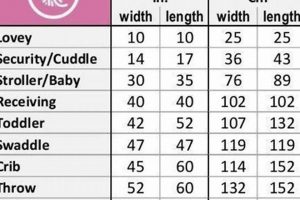
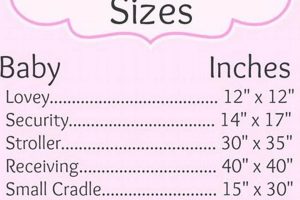
The dimensions of coverings intended for infants vary considerably, reflecting differing purposes and cultural preferences. These textiles, typically made of soft, breathable materials, come in several established measurements, each suited to specific uses such as swaddling, stroller covers, or play mats. For example, a small, square version is frequently used for swaddling newborns, while larger, rectangular versions are more appropriate for older babies or toddlers as crib bedding.
Appropriate measurements are crucial for infant safety and comfort. Blankets that are too large can pose a suffocation risk, particularly for very young infants. Selecting the right dimensions allows for secure swaddling, adequate warmth without overheating, and versatile use in various environments. Historically, handmade items were common, resulting in variations in dimensions based on available materials and individual crafting styles. Standardized measurements emerged with the growth of commercial production, offering consumers more consistent options.
This article will further explore specific measurements of infant coverings, material considerations, and guidance on selecting appropriate dimensions based on the child’s age and intended use. Furthermore, this will discuss safety recommendations and best practices for use to ensure optimal comfort and protection for the child.
Guidance on Dimensions of Infant Coverings
The following guidelines offer important considerations when selecting textiles intended for infants.
Tip 1: Consider the Intended Use: Different sizes are appropriate for different purposes. A smaller size is suited to swaddling, while a larger one is more useful as a stroller cover or play mat.
Tip 2: Prioritize Breathable Materials: The fabric composition is as critical as the size. Opt for natural, breathable materials like cotton, muslin, or bamboo to minimize the risk of overheating and ensure optimal air circulation.
Tip 3: Adhere to Safety Standards: Ensure the chosen item complies with established safety standards for infant bedding. Avoid products with loose threads, ribbons, or embellishments that could pose a choking hazard.
Tip 4: Assess the Child’s Age: Select dimensions appropriate for the child’s developmental stage. Oversized textiles can present a suffocation risk for newborns and young infants.
Tip 5: Regularly Inspect for Wear and Tear: Routinely examine the textile for signs of damage, such as holes or frayed edges. Replace the item if any damage is detected to maintain a safe sleeping environment.
Tip 6: Wash Before First Use: Always launder the new textile before its initial use. This removes any residual chemicals or dyes and softens the fabric for the infant’s delicate skin.
Tip 7: Avoid Overheating: Monitor the infant for signs of overheating, such as sweating or flushed skin. Adjust the amount of covering accordingly to ensure a comfortable temperature.
Selecting appropriately sized textiles and implementing safety precautions will promote a secure and comfortable environment for the infant.
The subsequent sections will explore different material types and care instructions for these coverings.
1. Swaddling blankets

Swaddling blankets represent a specific application within the broader spectrum of textiles used for infants. The dimensions of these blankets are critically important to their functionality. The intention of swaddling is to mimic the secure environment of the womb, promoting a sense of calm and facilitating sleep. To achieve this, a properly sized blanket is essential; a blanket that is too small will not adequately restrain the infant’s movements, negating the calming effect, while a blanket that is too large presents a potential suffocation hazard. Consequently, the selection of appropriate dimensions directly impacts both the efficacy and safety of the swaddling practice. A common example is a square of approximately 40×40 inches, often made of muslin, which provides enough material to securely wrap a newborn without excessive bulk. This specific measurement is not arbitrary; it reflects a balance between ease of use, infant comfort, and safety considerations.
The connection between swaddling and the overall category of dimensions extends beyond a simple inclusion. Swaddling-specific measurements have influenced the design and production of a multitude of infant textiles. Manufacturers have adapted aspects such as material selection (breathable cotton blends) and edge finishing (secure stitching to prevent unraveling) based on the understanding that infants require specialized products with inherent safety features. Furthermore, the evolution of swaddling methods has led to innovative blanket designs, such as those with adjustable closures or pre-shaped pockets, which further demonstrate the need for precise dimensions to ensure correct usage. In essence, the study of swaddling blanket dimensions provides a case study for the importance of size considerations in all infant textiles, setting a precedent for other product categories within this sector.
In summary, the dimensions of swaddling blankets are not merely a matter of convenience; they are intrinsic to the safety and effectiveness of the swaddling process. The careful consideration given to these measurements has influenced the design and manufacturing of a broader range of infant textiles, highlighting the importance of prioritizing safety and functionality. While swaddling blankets represent a specific application, their dimensional characteristics serve as a benchmark for other products designed to protect and comfort infants. Understanding this connection is crucial for caregivers and manufacturers alike, ensuring that all infant textiles are designed with the utmost regard for safety and well-being. Challenges remain in educating consumers about the importance of appropriate dimensions and in developing standardized safety guidelines for all infant products.
2. Crib dimensions
Crib dimensions are intrinsically linked to appropriate textiles intended for infant bedding. The interior space of a crib dictates the maximum permissible blanket size to ensure safety and minimize the risk of suffocation. This relationship underscores the importance of understanding crib measurements and selecting appropriately sized bedding.
- Standard Crib Size and Blanket Dimensions
Standard cribs typically measure approximately 28 inches wide by 52 inches long. Blankets intended for use in these cribs must be significantly smaller to prevent bunching or the potential for covering the infant’s face. Recommended blanket sizes for standard cribs generally range from 36×45 inches to 45×60 inches, depending on the desired coverage and the infant’s age. These measurements allow for tucking the blanket securely beneath the mattress, reducing the risk of it becoming a hazard.
- Mini Cribs and Corresponding Blanket Sizes
Mini cribs, designed for smaller spaces or portability, have reduced dimensions compared to standard cribs. Consequently, the blankets used in mini cribs must be proportionately smaller. Blanket sizes for mini cribs often range from 30×36 inches to 36×45 inches. These compact dimensions prevent excess material from accumulating within the smaller crib space.
- Safety Standards and Dimensional Compliance
Various safety organizations establish standards for crib dimensions and recommend guidelines for bedding sizes to minimize risks. These standards often specify maximum blanket dimensions to prevent entanglement or suffocation hazards. Adherence to these guidelines is crucial for manufacturers and caregivers to ensure the safety of infants.
- Material Thickness and Dimensional Impact
The thickness of the material used for the blanket can influence the appropriate dimensions. Thicker blankets may require smaller measurements to avoid overheating or creating a confined space. Lighter, more breathable materials may allow for slightly larger blanket sizes while still maintaining safety.
The interplay between crib dimensions and appropriate blanket sizes highlights the need for careful consideration when selecting infant bedding. Understanding these dimensional relationships and adhering to safety standards are paramount in providing a secure and comfortable sleep environment for infants.
3. Stroller compatibility

Stroller compatibility, in the context of infant textiles, refers to the seamless integration of such items with various stroller models. The dimensions of coverings intended for infants are critical to achieving this compatibility, impacting safety, functionality, and convenience.
- Universal Fit vs. Model-Specific Dimensions
Some textiles are designed with near-universal dimensions, aiming to fit a broad range of stroller types. Others are tailored to specific models, prioritizing a snug and secure fit. The choice between these approaches dictates the measurements selected during manufacturing. For instance, a large rectangular version might fit a jogging stroller, while smaller models are more suited for umbrella strollers. The aim is to minimize excess fabric that could pose entanglement risks while providing adequate coverage.
- Weather Protection and Coverage Area
The dimensions of a covering also determine its effectiveness in providing weather protection. Larger dimensions afford greater coverage against wind, rain, or sun. However, excessive size can impede stroller maneuverability or create a sail-like effect in windy conditions. Therefore, designers must balance protection with practicality, considering the typical usage scenarios and environmental conditions.
- Folding and Storage Considerations
Textile dimensions impact the ease of folding and storing the stroller. Overly bulky coverings can complicate the folding process or require separate storage, diminishing convenience. Manufacturers often seek to minimize dimensions while maintaining functionality, employing lightweight, compact materials to facilitate easy storage within the stroller’s basket or included compartments.
- Safety Harness Compatibility
The dimensions of infant coverings must accommodate the stroller’s safety harness system. A blanket that obstructs the harness or interferes with its proper function compromises safety. Design considerations include strategically placed openings or adjustable closures to ensure the harness can be securely fastened without obstruction.
In conclusion, the successful integration of infant textiles with strollers hinges on carefully considered dimensions. Balancing universal fit with model-specific tailoring, weather protection with maneuverability, and storage convenience with safety considerations requires meticulous design and testing. Appropriately sized items enhance the stroller’s functionality and contribute to a safer, more comfortable experience for both the infant and caregiver.
4. Receiving blanket

The connection between receiving blankets and textiles intended for infants is primarily defined by size. Receiving blankets are specifically designed for newborns and infants, fulfilling multiple purposes such as swaddling, providing warmth, offering a clean surface, or shielding the infant. The dimensions of a receiving blanket are, therefore, carefully considered to optimize these functions without posing any safety risks. For instance, a standard receiving blanket typically measures approximately 30×30 inches or 40×40 inches. This size allows a caregiver to swaddle a newborn securely, creating a snug environment that mimics the womb. A larger blanket would be unwieldy and potentially dangerous, while a smaller one would be ineffective for swaddling. The direct impact of appropriate dimensions on the receiving blanket’s utility highlights the significance of size considerations in product design.
The receiving blanket’s purpose influences the specific dimensions chosen by manufacturers. A practical example illustrating this lies in the evolution of receiving blankets. Originally, these items were simple squares of flannel, intended primarily for warmth. As swaddling became a more widely recognized practice, manufacturers began to optimize the size and material for this specific application. Furthermore, the receiving blanket serves as a protective layer during initial introductions or “receiving” of the newborn, justifying its name. Thus, understanding the intended usewhether it be swaddling, shading, or providing a clean surfacedirectly informs the selection of appropriate measurements. In a hospital setting, these textiles often accompany the newborn, emphasizing their immediate utility. Failure to adhere to suitable dimensions renders the blanket unsuitable for its intended role, impacting its practical significance.
In conclusion, the receiving blanket exemplifies the criticality of dimensional considerations in infant textiles. Its intended purpose and the need to ensure infant safety dictate the specific measurements employed. The evolution of the receiving blanket from a simple warming cloth to a multi-functional item underscores the direct relationship between its size and its practical application. Challenges remain in consistently educating caregivers about the importance of size and material selection, ensuring the continued safe and effective use of these textiles. The receiving blanket, therefore, serves as a fundamental example when considering the various dimensions of items intended for infants.
5. Security considerations

Security considerations are inextricably linked to the appropriate dimensions of textiles intended for infants. The dimensions directly impact potential hazards such as suffocation, entanglement, and overheating. A blanket exceeding safe dimensions for a crib, for example, increases the risk of the infant becoming entangled during sleep. Similarly, a blanket too thick or made of non-breathable material elevates the risk of overheating, a known factor in Sudden Infant Death Syndrome (SIDS). Real-life instances of infant deaths attributed to unsafe bedding practices underscore the practical significance of adhering to recommended size guidelines. Understanding these correlations is essential for both manufacturers and caregivers, influencing product design, selection, and usage.
Furthermore, the size of the textile affects its proper use and the ability to effectively monitor the infant. A large blanket may obscure the infant from view, hindering the caregiver’s ability to observe breathing or detect signs of distress. Conversely, a blanket sized appropriately allows for easy visual monitoring and facilitates timely intervention if necessary. Practical application of this understanding involves selecting items that comply with established safety standards, regularly inspecting for damage such as loose threads or frayed edges, and avoiding the use of oversized or overly thick coverings. Educational initiatives aimed at disseminating safe sleep practices are also crucial in promoting awareness and preventing avoidable tragedies.
In summary, security considerations are not merely an ancillary factor but rather a fundamental component in determining the appropriate dimensions of infant textiles. The cause-and-effect relationship between size and potential hazards necessitates a rigorous approach to product design, selection, and usage. Challenges remain in ensuring consistent adherence to safety guidelines and in effectively communicating the importance of these practices to all caregivers. The broader theme emphasizes the paramount responsibility of prioritizing infant safety above all other considerations.
6. Play mat
Play mats, designed to provide a safe and sanitary surface for infants and toddlers during playtime, directly relate to dimension considerations for infant textiles. The surface area of a play mat determines the necessary size of blankets or coverings used in conjunction with it. If a blanket is intended to provide additional cushioning or warmth on a play mat, its dimensions must align with or slightly exceed the mat’s surface to prevent gaps or uneven padding. A play mat measuring 4ft x 6ft necessitates a blanket of comparable or larger size to ensure full coverage. Ignoring this dimensional relationship compromises the safety and comfort the play mat is intended to provide. For example, a small blanket on a large play mat leaves significant portions of the surface unprotected, negating the mat’s purpose in preventing contact with a potentially unsanitary floor. The inverse scenario, where a blanket significantly exceeds the play mat’s dimensions, introduces tripping hazards or potential for entanglement, jeopardizing the infant’s safety.
The practical application of this understanding involves selecting or creating blankets that are purposefully sized for specific play mats. Manufacturers often offer sets consisting of a play mat and a corresponding blanket, ensuring dimensional compatibility. Caregivers can also create their own compatible coverings by measuring the play mat and sewing or purchasing a blanket with appropriate dimensions. An awareness of these dimensional relationships also informs the material selection for play mat coverings. Lightweight, breathable materials are preferred to minimize the risk of overheating during active play. Textured surfaces are often incorporated to provide tactile stimulation and prevent the blanket from slipping on the play mat’s surface. Cleanliness is also a major factor; the material should be easy to clean and resistant to stains, given the potential for spills and messes during playtime.
In summary, play mats and dimension considerations are interdependent. The mat’s size dictates the appropriate dimensions of any accompanying textiles, ensuring safety, comfort, and functionality. Challenges remain in promoting awareness among caregivers regarding the importance of this dimensional relationship and in standardizing product offerings to ensure compatibility. The broader theme highlights the necessity of a holistic approach to infant product design, considering the interplay between different items to create a safe and nurturing environment.
7. Toddler dimensions

The transition from infancy to toddlerhood necessitates adjustments in bedding dimensions to accommodate increased mobility, growth, and changing sleep patterns. Consideration of toddler dimensions directly impacts the appropriateness of coverings intended for this age group. Dimensions that are suitable for infants can present safety risks or become functionally inadequate as the child develops.
- Crib Transition and Bed Size
As toddlers outgrow their cribs, they often transition to toddler beds or full-size beds. Toddler beds typically utilize a repurposed crib mattress, maintaining similar dimensions (approximately 28 inches wide by 52 inches long). Full-size beds, however, present a significantly larger surface area. The size of any covering must therefore be appropriate to the bed dimensions, avoiding excess fabric that could pose a tripping or entanglement hazard.
- Mobility and Blanket Coverage
Toddlers exhibit increased mobility during sleep, often shifting positions frequently. A covering that is too small will easily become dislodged, leaving the child uncovered and potentially exposed to colder temperatures. Conversely, an excessively large covering can restrict movement or bunch up, creating discomfort. The ideal size balances coverage with freedom of movement.
- Material Weight and Breathability
Toddler dimensions extend beyond physical size to include physiological considerations. Toddlers generate more body heat than infants, necessitating lighter, more breathable materials to prevent overheating. Thick or heavy coverings can lead to discomfort and disrupt sleep patterns. Appropriate material selection is therefore crucial in conjunction with suitable dimensions.
- Safety Standards and Bedding Regulations
Safety standards for toddler bedding differ from those for infant bedding, reflecting the reduced risk of SIDS and increased physical capabilities of toddlers. Regulations may permit slightly larger coverings, but still emphasize the importance of avoiding loose bedding or decorative elements that could pose a safety hazard. Compliance with these standards is essential in ensuring the safety and well-being of the child.
The appropriate sizing of coverings for toddlers necessitates a comprehensive understanding of their physical development, mobility, and evolving sleep patterns. While the underlying principle of safety remains paramount, the specific dimensional considerations differ significantly from those applied to infant bedding. Selecting coverings that align with toddler bed dimensions, promote freedom of movement, utilize breathable materials, and comply with relevant safety standards is essential in creating a secure and comfortable sleep environment.
Frequently Asked Questions
The following addresses common inquiries concerning the dimensions of coverings intended for infants, providing guidance to ensure safe and appropriate usage.
Question 1: What constitutes a safe dimension for a baby blanket intended for crib use?
A safe dimension for a blanket used in a standard-sized crib (approximately 28 inches wide by 52 inches long) should ideally range from 36 inches by 45 inches to 45 inches by 60 inches. These measurements minimize the risk of entanglement and suffocation, allowing for secure tucking beneath the mattress.
Question 2: How do dimensions of swaddling blankets differ from those intended for general use?
Swaddling blankets typically require larger, square dimensions to effectively secure the infant’s limbs and torso. Common sizes range from 40 inches by 40 inches to 48 inches by 48 inches. These dimensions provide ample material for wrapping while still ensuring a snug fit.
Question 3: Are there recommended maximum dimensions for receiving blankets, and why are they important?
Receiving blankets, designed for multiple purposes including swaddling and providing a clean surface, generally have dimensions between 30 inches by 30 inches and 40 inches by 40 inches. Limiting the size is important to prevent overheating and potential suffocation, especially when used with newborns.
Question 4: How do the dimensions of a play mat influence the appropriate size of a blanket used in conjunction with it?
The blanket’s dimensions should closely match or slightly exceed those of the play mat to provide full coverage and prevent gaps where the infant could come into contact with the floor. Precise measurements are necessary to maximize comfort and hygiene.
Question 5: What are the potential safety hazards associated with using oversized blankets in an infant’s crib?
Oversized blankets pose significant safety risks, including entanglement, suffocation, and reduced visibility for caregivers. Excess material can bunch up, covering the infant’s face and impeding breathing. Therefore, adhering to recommended dimensions is critical.
Question 6: How does the choice of material impact the recommended dimensions of coverings intended for infants?
Thicker materials may necessitate smaller dimensions to prevent overheating, while lighter, breathable materials may allow for slightly larger sizes. The material’s insulating properties directly influence the appropriate blanket size for maintaining a safe and comfortable temperature.
Adhering to recommended dimensions and selecting appropriate materials contribute significantly to infant safety and comfort. Understanding these factors is crucial for informed product selection and usage.
The subsequent sections will address material considerations and specific care instructions for coverings intended for infants.
Size of Baby Blankets
This article has explored the multifaceted importance of the size of baby blankets, underscoring its direct influence on infant safety, comfort, and functionality. From swaddling to crib use and beyond, appropriate dimensions are paramount in mitigating risks such as suffocation, entanglement, and overheating. Adherence to established guidelines and a thorough understanding of the dimensional requirements for various applications are crucial.
The ongoing commitment to rigorous product testing, clear communication of safety standards, and continuous education of caregivers are essential steps. Prioritizing the appropriate dimensions of textiles intended for infants represents a fundamental responsibility in safeguarding the well-being of the most vulnerable members of society. A proactive and informed approach to this critical aspect of infant care is necessary to prevent avoidable tragedies and ensure a safe and nurturing environment.


![Buy Premium Knitted Baby Blanket Wholesale - [Your Brand] | Baby Care 101: Essential Tips for Happy, Healthy Babies](https://singlebabies.com/wp-content/uploads/2026/04/th-522-300x200.jpg "Buy Premium Knitted Baby Blanket Wholesale - [Your Brand] Baby Care 101: Essential Tips for Happy, Healthy Babies")