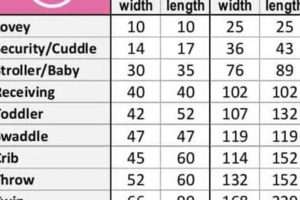
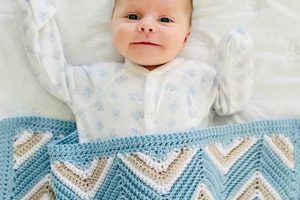
The overall dimensions of a crocheted baby blanket composed of interconnected square motifs are a primary consideration for its suitability and intended use. These dimensions significantly influence the blanket’s warmth, coverage, and portability. For instance, a smaller configuration, around 30×30 inches, might be ideal for swaddling a newborn, while a larger construction, such as 40×40 inches, could serve as a stroller or playtime blanket.
Appropriate sizing ensures both safety and comfort for the infant. A well-sized blanket minimizes the risk of entanglement while providing adequate warmth during colder months. The practice of creating these blankets with individual squares has a long-standing tradition, valued for its versatility, ease of customization, and efficient use of yarn remnants. This method allows for personalized designs and adjustable final measurements.
Therefore, understanding the factors that influence the final measurements, including square size, border width, and overall layout, is essential for crafting a functional and aesthetically pleasing item. Subsequent sections will delve into specific size recommendations, techniques for calculating yarn requirements, and considerations for selecting appropriate yarn weights and hook sizes.
Considerations for Determining Appropriate Dimensions
Selecting the most suitable measurements requires careful planning to ensure a practical and aesthetically pleasing finished product. Attention to detail in the planning phase results in a superior outcome.
Tip 1: Determine the Intended Use: Define the primary purpose. A receiving blanket necessitates different measurements than a crib blanket. The environment in which the blanket will be used informs the size decision.
Tip 2: Calculate Square Size Accurately: Precise measurement of individual squares prior to assembly is crucial. Inconsistent square sizes lead to a distorted final product. Create a sample square to gauge the eventual blanket size.
Tip 3: Factor in Border Dimensions: A border adds to the overall measurements. Account for the width of the border when planning the number of squares needed. Wider borders can significantly alter the final dimensions.
Tip 4: Consider Yarn Weight and Hook Size: Yarn weight and hook size impact the square dimensions. Using different yarn weights or hook sizes changes the size of each square, affecting the overall finished size.
Tip 5: Account for Blocking: Blocking can slightly alter the overall dimensions. The process can stretch or relax the material, which influences final measurement. Measure again after blocking.
Tip 6: Prioritize Safety Standards: Adherence to established safety guidelines for infant bedding is paramount. Overly large blankets pose a potential hazard, so adhering to size recommendations for safety is essential.
Tip 7: Document Your Progress: Keep a detailed record of the square size, yarn used, and hook size to ensure consistency and replicability for future projects.
Understanding these factors and applying them methodically yields a functional and safe item. Accurate planning and execution minimize potential problems and maximize the utility of the finished product.
The subsequent section will discuss specific methodologies for maintaining consistent square sizing throughout the creation process.
1. Square Dimensions

The size of individual squares constitutes a fundamental determinant of the overall dimensions. An increase in square dimensions directly translates to an increased perimeter. Conversely, smaller squares produce a more compact item. The desired final measurement therefore dictates the appropriate size. For example, to create a blanket approximating 36×36 inches, using thirty-six 6-inch squares arranged in a 6×6 grid is a viable approach. Conversely, a configuration utilizing nine 12-inch squares achieves a similar overall measurement. Understanding this relationship is crucial for project planning and yarn quantity estimation.
Variation in square size introduces complexity. Inconsistent square dimensions during creation lead to a skewed or distorted blanket shape. Such inconsistencies often necessitate adjustments during the joining process, impacting the final appearance and potentially requiring additional yarn to compensate for uneven edges. Maintaining consistent tension and adhering to a precise pattern during the creation of each square is vital. A sample square serves as a benchmark, allowing the crocheter to verify gauge and adjust their technique before commencing full-scale production.
In conclusion, the dimensions exert a direct and predictable influence on the finished blanket size. Precise and uniform square creation minimizes discrepancies. By carefully considering these aspects, one can reliably achieve the desired final outcome. Failure to account for this fundamental relationship leads to inefficiencies and an increased likelihood of unsatisfactory results, highlighting the centrality of square measurements to the overarching goal of achieving a well-proportioned blanket.
2. Blanket Perimeter

Blanket perimeter represents the total length of the outer boundary of a granny square baby blanket and is inextricably linked to the overall size of the item. The measurement of the perimeter is a direct consequence of the dimensions of the individual squares and their arrangement. A smaller granny square, replicated across a pre-determined grid, results in a smaller perimeter than a larger square arranged in a similar grid. The size significantly dictates its utility. A blanket with a small perimeter might serve as a security item, whereas one with a larger perimeter could be employed as a crib covering. The careful calculation and consideration of the perimeter are, therefore, crucial during the design and construction phases.
The practical applications stemming from understanding the perimeter’s relationship to final dimension are numerous. Consider a project requiring a blanket suitable for a standard-sized stroller; knowing the ideal perimeter for stroller blankets enables the accurate calculation of the required number of squares, or conversely, the necessary dimensions of each square given a predetermined number. Incorrect perimeter calculation leads to a blanket unsuitable for the intended purpose, underscoring the importance of precision. The addition of a border also influences the perimeter, and this must be factored into the overall design.
In summary, the perimeter is a critical attribute that defines the functionality and application scope. The perimeter of a crocheted blanket is the primary consideration when it comes to determining size. Its precise calculation, guided by the dimensions of the individual components, represents a fundamental step in achieving a final item that aligns with its intended purpose. Failure to attend to this aspect leads to misalignment between product and need, highlighting the importance of understanding the perimeter-size relationship within the context of granny square baby blanket construction.
3. Stroller Usability
Stroller usability is directly affected by the dimensions of a granny square baby blanket. Overly large dimensions can cause the blanket to drag on the ground, creating a potential safety hazard and hygiene concern. Conversely, insufficient dimensions fail to provide adequate coverage, rendering the blanket ineffective for warmth or sun protection. The ideal size maximizes coverage while minimizing excess fabric. A common example includes a blanket measuring approximately 30×36 inches, providing substantial coverage without being unwieldy. Understanding this interplay is vital for ensuring that the blanket serves its intended purpose without compromising safety or convenience.
Practical application of this understanding involves careful measurement and planning. Before commencing the project, the stroller’s dimensions should be considered. The blanket should be sized to fit comfortably within the stroller without excessive overlap or potential for entanglement in the wheels. A blanket that is too short might leave extremities exposed to the elements, while a blanket that is excessively wide risks becoming trapped between the stroller wheels. Modifying the number of squares or their individual dimensions represents a method for achieving an appropriate size, with particular attention given to the ease of folding and storing when not in full use.
In conclusion, stroller usability significantly relies on the appropriate determination of dimensions. The goal is to strike a balance, optimizing for both coverage and practicality. Challenges arise when attempting to use blankets designed for other purposes within a stroller, underscoring the need for purpose-built solutions. By recognizing the fundamental relationship between size and functionality, one can create an item that is both safe and effective. Failure to address these considerations results in a product that is either inconvenient or potentially hazardous, thus reinforcing the importance of informed design choices.
4. Crib Compatibility
The interaction between crib dimensions and granny square baby blanket size warrants careful consideration, particularly within the context of infant safety and well-being. The physical attributes of the blanket directly impact its appropriateness for use within a crib environment. A blanket too large poses suffocation and entanglement risks; one too small provides insufficient warmth and coverage. Therefore, adhering to recommended size guidelines is crucial for safe utilization.
- Size Recommendations and Safety Standards
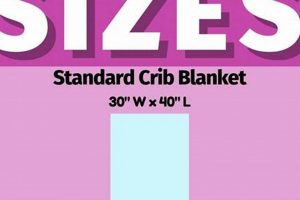
Established safety standards dictate maximum dimensions for crib blankets to minimize hazards. Pediatrician and regulatory body recommendations emphasize that blankets should be small enough to prevent bunching and obstruction of the infants airway. For instance, a common recommendation limits crib blankets to a size no larger than 45×60 inches, and advises against placement near the infant’s face. Non-compliance with these standards exposes the infant to preventable risks.
- Material Considerations
The type of yarn used affects both the weight and dimensions of the finished item, influencing suitability. Heavier yarns create denser blankets that may restrict movement and increase thermal insulation, which risks overheating. Conversely, lightweight yarns might result in a loosely woven blanket that poses entanglement risks. Selecting appropriate yarn weight and fiber content is essential for balancing warmth, breathability, and overall crib compatibility.
- Design and Pattern Density
The density of the granny square pattern contributes to both blanket weight and potential entrapment hazards. Tightly woven patterns offer greater warmth but could restrict infant movement. Conversely, open-weave patterns increase the risk of small fingers or toes becoming caught in the openings. Careful consideration should be given to the tightness of the crochet and the size of any gaps within the design.
- Border Integration and Attachment
The addition of a border affects the overall blanket dimensions and can introduce additional safety concerns. Bulky or loosely attached borders can become detached and present a choking hazard. Secure, low-profile borders are recommended, ensuring no loose ends or embellishments are accessible to the infant. Border construction must prioritize safety without compromising the blanket’s integrity or functionality.
The interplay between crib dimensions and granny square baby blanket size presents a significant factor in infant safety. Compliance with safety standards, consideration of material properties and pattern density, and secure border integration are essential components of responsible blanket design and construction. Ignoring these interconnected aspects undermines the safety profile and compromises the appropriateness of the item for use within a crib environment.
5. Swaddling Needs

The dimensions of a granny square baby blanket, when designated for swaddling, are critically influenced by the physiological requirements of newborn infants. An improperly sized blanket negates the intended therapeutic benefits, presenting potential safety risks. A blanket too small fails to adequately restrain the infant’s Moro reflex, leading to disrupted sleep patterns and heightened anxiety. Conversely, an excessively large blanket increases the risk of overheating, hip dysplasia (if swaddling is too tight around the legs), or suffocation due to loose fabric. Therefore, tailoring dimensions to meet swaddling needs is paramount. As an example, a common square or rectangular blanket intended for swaddling measures approximately 40×40 or 45×45 inches. This measurement permits secure wrapping around the infant’s body, effectively minimizing involuntary movements while maintaining adequate ventilation.
Practical applications of this understanding are evident in the design and production of commercial swaddling blankets. Many manufacturers incorporate specific features, such as labeled edges or pre-formed shapes, to guide caregivers in proper swaddling techniques. The dimensions are deliberately chosen to facilitate a snug, secure wrap without excessive tightness. Furthermore, the fabric selection must prioritize breathability and comfort. Heavy, non-breathable fabrics can elevate the infant’s core temperature, increasing the risk of Sudden Infant Death Syndrome (SIDS). In practice, this translates to the selection of lightweight cotton or muslin materials. The application of granny square construction to swaddling blankets introduces unique considerations related to pattern density and potential for gaps. Inconsistent tension during square creation can lead to uneven wrapping pressure, affecting the overall effectiveness of the swaddle.
In summary, the relationship between swaddling needs and blanket size is central to infant safety and comfort. Challenges arise in consistently achieving optimal tension during granny square construction, necessitating careful attention to gauge and yarn selection. Linking to the broader theme of responsible baby blanket design, the prioritization of safety considerations, informed by an understanding of infant physiology, is of utmost importance. The blanket must be designed with appropriate dimensions, constructed of breathable materials, and carefully assembled to minimize hazards, thereby fulfilling its intended purpose of providing secure and comforting swaddling.
6. Safety Standards

Established safety standards exert a defining influence on granny square baby blanket size. These standards are promulgated by regulatory bodies and pediatric health organizations to minimize risks associated with infant bedding. The dimensions, material composition, and construction techniques are all subject to scrutiny to ensure the safety and well-being of the child. The proper application of these standards directly mitigates potential hazards such as suffocation, entanglement, and overheating.
- Suffocation Risk Mitigation
Excessive blanket size increases the potential for suffocation, particularly in crib environments. Safety guidelines, such as those issued by the American Academy of Pediatrics, recommend limiting blanket dimensions to prevent obstruction of an infant’s airway. For example, blankets exceeding 45×60 inches are generally discouraged for crib use. Adherence to these dimensional restrictions reduces the risk of accidental airway obstruction.
- Entanglement Hazard Reduction
Loose weave patterns or unsecured embellishments can lead to entanglement of fingers and toes, potentially restricting circulation or causing injury. Safety standards mandate that blankets have a tight weave and minimal embellishments. An illustration would be a regulation prohibiting fringe or loosely attached appliques that present an entanglement hazard. Constructing the blanket with a tightly crocheted pattern minimizes the risk.
- Thermal Regulation and Overheating Prevention
Excessive thermal insulation from overly thick or non-breathable blankets can lead to overheating, a known risk factor for Sudden Infant Death Syndrome (SIDS). Standards advocate for the use of breathable materials, such as cotton or muslin, and discourage excessively dense construction. For instance, using a single layer of lightweight yarn rather than multiple layers of heavier yarn helps regulate the infant’s body temperature.
- Yarn and Material Toxicity
Certain dyes or synthetic fibers used in yarn manufacturing may contain toxic substances that can be harmful if ingested. Safety standards stipulate that yarns used for baby blankets must be non-toxic and free from harmful chemicals. An example includes the requirement for yarns to be Oeko-Tex certified, ensuring they have been tested for harmful substances. Choosing certified yarns ensures a safer product.
These multifaceted safety standards, encompassing dimensional restrictions, material composition, and construction techniques, collectively serve to minimize the risks associated with granny square baby blankets. These standards help to assure product safety. While aesthetic considerations remain important, adherence to these safety protocols is paramount in prioritizing infant well-being and mitigating potential hazards. Ignoring these safety-related considerations may inadvertently jeopardize the health and safety of the infant.
Frequently Asked Questions
The following addresses common inquiries regarding the appropriate dimensions for crocheted blankets constructed from interconnected square motifs, particularly when intended for infants and young children.
Question 1: What are the recommended dimensions for a granny square baby blanket intended for crib use?
Crib blanket dimensions should adhere to established safety standards to minimize potential hazards. A common recommendation limits the size to no more than 45×60 inches. Overly large blankets pose a suffocation risk and should be avoided. Consult current guidelines from pediatric health organizations for the most up-to-date recommendations.
Question 2: How does the size of individual squares influence the overall size of the finished blanket?
Individual square dimensions directly correlate with the blanket’s final measurements. Larger squares result in a larger blanket, while smaller squares produce a more compact item. Calculate the total number of squares and their individual dimensions to determine the blanket’s perimeter. Consistent square size is crucial for maintaining a uniform shape.
Question 3: What dimensions are best suited for a granny square baby blanket used in a stroller?
Stroller blankets require a different size than those used in cribs. Common dimensions range from 30×36 inches to 36×40 inches. Such sizes offer adequate coverage without creating excessive bulk or posing entanglement risks. Verify the stroller’s dimensions to ensure a proper fit.
Question 4: Is there a specific size for a granny square baby blanket intended for swaddling?
Swaddling blankets typically require smaller dimensions to ensure a snug and secure wrap. A square blanket measuring approximately 40×40 or 45×45 inches is generally appropriate. The material’s breathability is also of critical importance to prevent overheating.
Question 5: How does the addition of a border affect the final dimensions of a granny square baby blanket?
A border adds to the overall measurements and must be factored into the planning process. The width of the border directly impacts the final dimensions. Account for this additional width when calculating the number of squares needed to achieve the desired size. Consider the safety and security of the border to prevent detachment and potential choking hazards.
Question 6: What are the key safety considerations regarding the size of a granny square baby blanket?
Safety is paramount. Avoid overly large blankets that can pose suffocation risks. Ensure that the weave is tight to prevent entanglement. Choose breathable materials to prevent overheating. Consult with pediatric health guidelines for the most up-to-date recommendations on safe blanket sizes and construction techniques.
Adherence to recommended size guidelines, coupled with careful attention to material selection and construction techniques, contributes to the creation of a safe and functional item. Prioritizing safety promotes the well-being of the infant.
The subsequent section will discuss the various yarn types suitable for baby blankets and their impact on the final product.
Conclusion
The preceding discussion has rigorously examined the critical importance of appropriate granny square baby blanket size. The analysis encompassed diverse factors, including intended use-cases such as crib placement, stroller accommodation, and swaddling applications. The investigation has further emphasized the inextricable link between blanket dimensions and established safety standards designed to mitigate risks of suffocation, entanglement, and thermal dysregulation in infants. The significance of carefully considering both individual square dimensions and overall blanket perimeter has been thoroughly underscored.
Given the demonstrated influence of size on functionality and, most crucially, infant safety, stakeholders engaged in the creation and distribution of these blankets must prioritize adherence to recommended dimensional guidelines. Future research and standards development should focus on refining these recommendations based on evolving understanding of infant physiology and environmental factors. A commitment to informed decision-making regarding blanket size represents a tangible contribution to ensuring the health and well-being of the most vulnerable population.