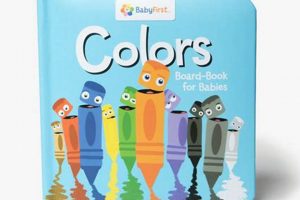
A collection of books curated for infants and very young children, typically encompassing board books, picture books with simple text, and tactile books. These collections aim to introduce foundational literacy skills and foster a love of reading from an early age. As an example, such a collection might include books with high-contrast images, books with textures to explore, and simple stories focused on familiar objects and routines.
The establishment of literary resources for infants provides several advantages. Early exposure to language and storytelling can stimulate cognitive development, enhance vocabulary acquisition, and cultivate pre-literacy skills crucial for future academic success. Historically, access to books in early childhood has been linked to improved reading comprehension and a greater likelihood of becoming lifelong learners. The act of sharing books with a caregiver also strengthens the bond between them, creating positive associations with reading.
The following sections will delve into the specific types of books suitable for infants, strategies for engaging young children with these materials, and the role of parents and caregivers in fostering a positive reading environment. Furthermore, the discussion will encompass tips for creating an enriching literary collection on a budget and highlight the availability of community resources to support early literacy initiatives.
Tips for Building a Foundational Literary Collection for Infants
This section provides guidance on establishing a collection of age-appropriate books for infants, fostering a positive early literacy experience.
Tip 1: Prioritize Board Books. Due to their durability, board books withstand the handling of infants and toddlers. Select board books with thick pages and rounded corners to minimize the risk of injury.
Tip 2: Choose Books with High-Contrast Images. Newborns respond well to visually stimulating images with strong contrasts, such as black and white patterns. These books aid in visual development and focus.
Tip 3: Incorporate Tactile Elements. Books with textures, such as soft fabrics or raised surfaces, engage an infant’s sense of touch, enhancing sensory exploration and learning. Ensure all textures are securely attached and non-toxic.
Tip 4: Select Books with Simple, Repetitive Text. Infants benefit from hearing the same words and phrases repeated. Books with rhythmic language and predictable patterns support language acquisition and memory.
Tip 5: Introduce Books with Familiar Objects and Routines. Books featuring everyday objects, animals, or routines, such as bath time or bedtime, help infants connect reading to their own experiences.
Tip 6: Consider Wordless Picture Books. These books encourage caregivers to create their own narratives, fostering interactive storytelling and language development. They also promote visual literacy skills.
Tip 7: Regularly Rotate the Book Selection. To maintain interest, periodically rotate the available books. This provides infants with new stimuli while also revisiting familiar favorites.
Establishing a collection of well-chosen books contributes significantly to an infant’s cognitive and linguistic development. Early exposure to reading fosters a lifelong appreciation for literature.
The following section will explore strategies for effectively engaging infants with books and creating a supportive reading environment.
1. Early Literacy

Early literacy, the foundation upon which later reading and writing skills are built, is intrinsically linked to the concept of a foundational literary collection for infants. Access to appropriate literary resources and the engagement they foster are pivotal in establishing the necessary pre-reading skills.
- Phonological Awareness
Phonological awareness encompasses the ability to recognize and manipulate the sounds within spoken language. Books designed for infants often incorporate rhyming words and repetitive sounds. Consistent exposure aids in developing the auditory discrimination necessary for decoding written words later in life. For example, books with simple rhymes can help a child recognize that “cat” and “hat” sound similar, strengthening their phonological awareness.
- Vocabulary Development
Infants begin to acquire vocabulary through exposure to spoken language, and books provide a structured and enriching source. Even before understanding specific words, infants absorb the rhythm and intonation of language. Picture books that clearly label objects and actions contribute to vocabulary acquisition. Repeated readings reinforce these associations. For instance, a book that features pictures of various animals, clearly labeled with their names, enhances an infant’s vocabulary.
- Print Awareness
Print awareness refers to the understanding that print carries meaning and the ability to recognize basic features of print, such as letters, words, and the direction of reading. Infants begin to develop print awareness through observation. By observing a caregiver reading, an infant starts to associate print with language. Books with large, clear text and illustrations support the development of print awareness. Over time, repeated observations help in the development of print awareness.
- Narrative Skills
Narrative skills encompass the ability to understand and retell stories. Even simple picture books with minimal text introduce infants to the concept of a narrative. Caregivers can enhance narrative skills by pointing out the sequence of events in a story and asking simple questions about what is happening. For example, discussing the characters and actions in a picture book helps an infant begin to grasp the basic elements of storytelling, which will be important in later life.
The elements of early literacy are not independent but rather are interwoven and mutually reinforcing. A foundational literary collection provides the resources necessary to foster each of these areas, ultimately laying the groundwork for future reading success. The provision of age-appropriate resources, paired with caregiver engagement, forms a critical component of early childhood development.
2. Cognitive Development

Cognitive development, encompassing the progressive advancement of intellectual capabilities, is significantly influenced by early exposure to literary resources. The provision of a thoughtfully curated collection for infants can stimulate neurological pathways and enhance various cognitive functions.
- Memory Formation
Reading to infants, even from a very young age, contributes to the development of memory. Repetitive readings of the same stories create opportunities for infants to recognize patterns and anticipate upcoming events in the narrative. This repetitive exposure strengthens neural connections, facilitating the formation of both short-term and long-term memory. For instance, an infant consistently read a bedtime story with a predictable sequence of events will eventually anticipate those events, demonstrating developing memory skills. Consistent literary exposure strengthens memory recall and retention of information.
- Attention Span
The process of engaging with books, particularly picture books with vibrant illustrations, helps infants to gradually develop their attention span. Although initial engagement may be brief, consistent reading sessions can incrementally extend an infant’s ability to focus. The act of listening to a story and visually tracking images trains the brain to sustain attention. Therefore, even short, regular sessions will help grow attention span.
- Problem-Solving Skills
While infants may not be consciously solving complex problems, exposure to narratives introduces them to cause-and-effect relationships. Picture books often present simple scenarios in which characters face challenges and find solutions. This early exposure to problem-solving, albeit in a simplified context, lays the foundation for more advanced cognitive reasoning later in life. For instance, a book depicting a character who loses a toy and then finds it can implicitly introduce the concept of searching and finding, a rudimentary form of problem-solving.
- Language Processing
Engaging with books provides infants with a rich auditory experience that is critical for language processing. Hearing words read aloud helps infants to discriminate between different sounds and to recognize patterns in language. This early exposure to language fosters the development of phonological awareness, a key component of reading readiness. By listening to the tones and words read from the book, the language processing center is activated.
The facets of cognitive development outlined above are interconnected and mutually reinforcing. A foundational literary collection serves as a valuable tool for stimulating these cognitive processes during a critical period of brain development. The synergistic effect of these benefits underscores the importance of providing infants with consistent access to appropriate reading materials. By implementing consistent and early literary engagement, the child has the opportunity to strengthen their cognitive function.
3. Bonding Opportunity

The establishment of a literary collection for infants presents a distinct opportunity for fostering a secure and enriching bond between the child and caregiver. The act of shared reading transcends the mere transmission of information; it cultivates a shared experience marked by intimacy, focused attention, and emotional connection. This focused interaction strengthens the attachment relationship and lays a foundation for future communication and emotional security.
The selection of materials becomes a crucial factor in facilitating this bonding. Tactile books invite physical interaction, encouraging the caregiver to guide the infant’s hands and explore different textures. Books featuring familiar faces or family photographs can personalize the experience, linking the literary activity to the child’s immediate world and fostering a sense of recognition and belonging. The caregiver’s voice, intonation, and physical closeness during the reading process provide comfort and security, associating the act of reading with positive emotions. Furthermore, repeated reading sessions establish predictable routines, offering the infant a sense of stability and predictability, further solidifying the bond.
The benefits extend beyond the immediate interaction. Infants who experience consistent, positive interactions during reading sessions are more likely to develop secure attachment styles, characterized by trust, empathy, and the ability to form healthy relationships. The act of shared reading also fosters a positive association with learning, encouraging a lifelong love of reading and intellectual curiosity. The synergistic effect of focused attention, physical closeness, and shared emotional experience underscores the profound impact of creating a bonding opportunity within the framework of literary engagement.
4. Sensory Engagement

Sensory engagement constitutes a critical element within a foundational literary collection for infants. The interaction with books should not be solely auditory or visual, but rather encompass a multi-sensory experience, stimulating various sensory pathways and promoting holistic development.
- Tactile Exploration
Tactile exploration involves engaging the sense of touch through varied textures and materials. Books incorporating fabrics, raised surfaces, or crinkling elements provide opportunities for infants to explore different tactile sensations. This tactile stimulation enhances sensory discrimination and fine motor skill development. For example, a board book with patches of different fabrics (e.g., soft fleece, rough corduroy) allows infants to experience diverse tactile inputs, aiding in sensory processing and tactile perception.
- Auditory Stimulation
Auditory stimulation focuses on engaging the sense of hearing through sounds and rhythms. Books with embedded sound effects, musical excerpts, or rhythmic text patterns can capture an infant’s attention and enhance auditory processing skills. Furthermore, the caregiver’s voice, intonation, and pacing during reading contribute significantly to auditory stimulation. An example includes a book that plays animal sounds when pages are turned. The variation in pitch and tone stimulate the infant’s ability to distinguish sound and identify patterns.
- Visual Discrimination
Visual discrimination is the capacity to distinguish between various visual stimuli. Books with high-contrast images, bright colors, and distinct shapes can enhance an infant’s ability to visually discriminate between objects and patterns. The visual system is actively engaged, contributing to visual acuity and spatial awareness. A book featuring bold, simple geometric shapes in contrasting colors facilitates visual tracking and encourages the development of visual discrimination skills. The more simple a picture is, the easier it will be to notice it.
- Olfactory and Gustatory Considerations
While less commonly addressed, olfactory and gustatory considerations acknowledge the role of smell and taste. Certain books incorporate scratch-and-sniff elements to engage the sense of smell, although safety precautions are paramount. The act of mouthing books, a common behavior among infants, necessitates careful selection of non-toxic materials and construction methods to ensure safety. A book with light fruity smells such as banana or apple is a way of introducing them to certain tastes and smells.
The incorporation of diverse sensory elements within a foundational literary collection enhances engagement, stimulates cognitive development, and fosters a multi-sensory learning experience. By carefully considering the sensory properties of books, caregivers can create a richer and more stimulating environment for infants, promoting holistic development through literary interaction. It should be safe to utilize and not toxic in any way.
5. Vocabulary Expansion

Vocabulary expansion, a cornerstone of language development, is intrinsically linked to the establishment of a foundational literary collection for infants. Exposure to a diverse range of words and linguistic structures during infancy lays the groundwork for future communication skills and academic success.
- Early Word Recognition
Early word recognition refers to the ability of infants to identify and comprehend individual words within a given context. A foundational literary collection, featuring books with clear images and corresponding labels, facilitates this process. For instance, books depicting common objects, such as “dog,” “cat,” or “ball,” accompanied by their respective written words, enable infants to associate visual representations with auditory input. This early association of words with tangible concepts is crucial for vocabulary acquisition. Regular reading of labeled picture books will provide examples.
- Contextual Learning
Contextual learning involves acquiring vocabulary through the surrounding linguistic environment. Picture books often present words within simple narratives or scenarios, providing infants with contextual cues to decipher meaning. For example, a book depicting a child eating an apple provides contextual clues, such as the action of eating and the presence of the fruit, which aid in comprehending the word “apple.” The use of storytelling in books helps the infant. This method encourages the use of the surroundings.
- Repetitive Exposure
Repetitive exposure to words and phrases is a critical factor in vocabulary expansion. Infants benefit from hearing the same words and sentences repeated multiple times, as this reinforces neural connections and facilitates memorization. Board books with simple, repetitive text patterns provide ample opportunities for such exposure. Regular reading of these books reinforces word recognition and comprehension. Hearing something more than once is something that aids in comprehension.
- Interactive Reading
Interactive reading involves actively engaging the infant in the reading process through questions, prompts, and discussions. Caregivers can ask simple questions about the pictures or story, encouraging the infant to verbalize and use newly acquired vocabulary. For example, asking “Where is the dog?” or “What is the cat doing?” prompts the infant to recall and articulate relevant words. By interacting during the reading process, the infant is engaged more than hearing them read.
These facets underscore the vital role of a foundational literary collection in facilitating vocabulary expansion during infancy. The strategic selection of age-appropriate books and the implementation of interactive reading techniques can significantly enhance an infant’s language development and lay the foundation for future literacy skills. A large and varied amount of vocabulary increases the potential for early literacy.
6. Future Success
The correlation between early literacy initiatives, exemplified by the establishment of resources for infants, and subsequent achievement across various life domains is substantiated by extensive research. The cultivation of pre-reading skills, vocabulary acquisition, and a general affinity for learning during the formative years establishes a trajectory toward enhanced educational attainment, professional opportunities, and overall well-being. A child exposed to literary resources from infancy is more likely to enter formal schooling with a more comprehensive understanding of language and narrative structures, thereby possessing an advantage over peers lacking similar early enrichment. Longitudinal studies consistently demonstrate that children who are read to regularly in their early years exhibit superior reading comprehension skills, larger vocabularies, and a greater capacity for critical thinking attributes that are highly valued in academic and professional settings. For instance, research indicates a statistically significant correlation between the number of books in a child’s home during their early years and their subsequent academic performance, irrespective of socioeconomic status.
The practical implications of understanding this connection extend to parental guidance, educational policy, and community resource allocation. Parents are empowered to make informed decisions regarding early childhood development, prioritizing access to literary resources and engaging in regular reading activities with their infants. Educators can leverage this knowledge to tailor instructional strategies, identifying and addressing potential learning gaps in children who may not have benefited from early literacy enrichment. Policymakers can advocate for increased funding and support for early literacy programs, recognizing their long-term impact on societal outcomes. Community libraries and early childhood centers can serve as vital hubs for disseminating information and providing resources to families, ensuring equitable access to literary enrichment opportunities. Furthermore, evidence-based interventions, such as home visiting programs that provide families with books and reading guidance, have demonstrated significant positive effects on children’s literacy development and overall cognitive abilities.
In summary, the link between early literacy, as fostered by literary engagement in infancy, and subsequent success is firmly established. This relationship highlights the imperative of prioritizing early literacy initiatives as a means of promoting educational equity, enhancing individual potential, and fostering a more informed and engaged citizenry. The challenges lie in ensuring equitable access to these resources across all socioeconomic strata and in effectively translating research findings into actionable strategies for parents, educators, and policymakers. Recognizing and acting upon this understanding is essential for maximizing the potential of future generations.
Frequently Asked Questions About Infant Literary Resources
This section addresses common inquiries and misconceptions surrounding the establishment and utilization of literary collections for infants, commonly referred to as a foundational resource.
Question 1: At what age should an infant be introduced to books?
Exposure to books can commence as early as infancy. Newborns benefit from hearing the caregiver’s voice while visually tracking high-contrast images. Early exposure to language and visual stimuli contributes to cognitive development.
Question 2: What types of books are most suitable for infants?
Board books, characterized by their durability and resistance to damage, are ideal. Books with tactile elements, high-contrast images, and simple text patterns are also highly recommended. Safety considerations, such as non-toxic materials, are paramount.
Question 3: How long should reading sessions with infants last?
Reading sessions should be brief and responsive to the infant’s attention span. Initial sessions may last only a few minutes, gradually increasing as the infant demonstrates interest. Forced engagement is counterproductive.
Question 4: What if an infant does not appear interested in books?
Infant interest levels vary. Caregivers should experiment with different types of books, reading styles, and interactive techniques to identify what resonates with the infant. Persistence and patience are essential.
Question 5: Is it necessary to purchase new books for an infant literary collection?
New books are not a necessity. Gently used books, obtained from libraries, thrift stores, or donations, can be equally valuable. Focus should be on the content and suitability of the books, rather than their condition.
Question 6: What are the long-term benefits of establishing a literary collection for infants?
Long-term benefits include enhanced cognitive development, increased vocabulary acquisition, improved pre-literacy skills, and a greater likelihood of becoming a lifelong learner. Early exposure to reading fosters a foundation for academic success.
The establishment of a foundational collection provides a tangible avenue for fostering early childhood development and a love of reading.
The subsequent section will delve into the role of community resources in supporting early literacy initiatives and providing families with access to literary materials.
Conclusion
The preceding discussion has explored the multifaceted dimensions of “baby’s first library,” elucidating its significance as a foundational element in early childhood development. From the promotion of cognitive abilities and language acquisition to the cultivation of caregiver-infant bonds, the establishment of a curated literary resource for infants constitutes a strategic investment in future intellectual capital. The documented benefits extend beyond the immediate acquisition of pre-literacy skills, impacting long-term educational attainment and overall life success.
Given the demonstrable impact of early literary exposure, a concerted effort to ensure equitable access to resources and implement evidence-based strategies is imperative. Policymakers, educators, and families must collaborate to prioritize early literacy initiatives, recognizing their profound and enduring effects on individual potential and societal progress. The future hinges on the commitment to cultivating a lifelong love of learning, commencing with “baby’s first library.”