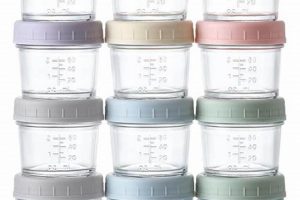
These specialized kitchen tools are designed for portioning and freezing homemade baby food. Typically made of silicone or plastic, they feature individual compartments, often with measurement markings, allowing caregivers to create single-serving portions of pureed fruits, vegetables, or other suitable foods. These trays facilitate convenient storage and thawing, promoting efficient meal preparation for infants.
Using these tools offers several advantages. They enable parents to control the ingredients and nutritional content of their baby’s meals, avoiding preservatives and additives commonly found in commercially prepared options. The ability to freeze individual portions minimizes waste, as only the required amount needs to be thawed at any given time. Historically, caregivers prepared baby food fresh daily; these trays represent a modern adaptation to simplify and streamline the process, reflecting a desire for both quality and convenience.
The subsequent sections will explore various aspects of these tools, including material safety considerations, best practices for freezing and thawing baby food, cleaning and maintenance guidelines, and a comparison of different models available on the market. Furthermore, we will discuss alternative methods for baby food storage and the broader implications of homemade baby food preparation for infant health and parental well-being.
Tips for Using Specialized Food Freezing Containers
Optimizing the utilization of these containers ensures both the safety and quality of homemade baby food. Adhering to the following guidelines will maximize their effectiveness and contribute to efficient meal preparation.
Tip 1: Prioritize Material Safety. Ensure that the containers are constructed from BPA-free, phthalate-free, and food-grade materials. Review manufacturer specifications for compliance with relevant safety standards.
Tip 2: Portion Control for Waste Reduction. Accurately measure portions before freezing to minimize waste. Observe recommended serving sizes for the infant’s age and developmental stage.
Tip 3: Labeling for Organization and Safety. Clearly label each container with the date of preparation and the contents. This practice facilitates inventory management and prevents potential spoilage issues.
Tip 4: Implement Proper Freezing Techniques. Allow food to cool completely before transferring it to the container and placing it in the freezer. Rapid cooling is ideal to preserve freshness and minimize bacterial growth.
Tip 5: Adhere to Recommended Storage Durations. Generally, frozen baby food can be stored safely for one to two months. Discard any food that exhibits signs of freezer burn or discoloration.
Tip 6: Ensure Sanitary Thawing Practices. Thaw frozen portions in the refrigerator overnight or use a warm water bath for quicker thawing. Avoid thawing at room temperature, as this can promote bacterial growth.
Tip 7: Maintain Rigorous Cleaning Protocols. Thoroughly wash and sanitize the containers after each use. Dishwasher-safe options provide added convenience. Pay particular attention to crevices where food particles may accumulate.
Employing these techniques ensures the safe and efficient utilization of freezing containers for infant food. The result is a nutritious, homemade diet for the child, while simultaneously providing cost savings and a reduction in reliance on commercially processed alternatives.
The following section will present information on maintaining, sanitizing and disposing the freezing containers with eco-friendly steps.
1. Material Composition

Material composition is paramount when selecting containers intended for freezing infant food. The choice of material directly influences the safety, durability, and overall suitability of these tools for contact with consumable goods. Selecting appropriate material is paramount to ensure the health of the infant.
- BPA and Phthalate Content
Bisphenol A (BPA) and phthalates are chemical compounds often found in plastics. These substances can leach into food, particularly when exposed to temperature changes. Given the potential endocrine-disrupting effects of BPA and phthalates, selecting containers explicitly labeled as “BPA-free” and “phthalate-free” is crucial for minimizing infant exposure to these potentially harmful chemicals.
- Food-Grade Silicone
Food-grade silicone is a popular alternative to traditional plastics. It is generally considered inert and resistant to temperature fluctuations, making it suitable for both freezing and heating. Silicone containers are flexible, durable, and less likely to crack or break compared to rigid plastic options. However, it is important to verify that the silicone used meets established food safety standards.
- Polypropylene (PP)
Polypropylene is a type of plastic commonly used in food storage containers. PP is considered relatively safe and stable, with a lower risk of leaching compared to some other plastics. However, the quality of PP can vary, so choosing containers from reputable manufacturers is advisable. Look for PP marked with the recycling symbol #5 to ensure it is a commonly recycled material.
- Durability and Resistance to Cracking
Regardless of the specific material, the container should exhibit sufficient durability to withstand repeated freezing and thawing cycles. Materials prone to cracking or breaking can compromise the integrity of the food and pose a safety hazard. Selecting thicker, more robust containers can extend their lifespan and reduce the risk of contamination.
Ultimately, the ideal container for freezing baby food is constructed from a material that is demonstrably safe, durable, and resistant to temperature fluctuations. Careful consideration of the material composition ensures that the food remains free from harmful contaminants and that the container serves its intended purpose effectively throughout the period of use.
2. Portion Size

Precise portion control is intrinsically linked to the utility of baby food freezer trays. The compartmentalized design of these trays directly facilitates the creation of pre-measured, individual servings. This inherent feature addresses the challenges associated with estimating appropriate food quantities for infants, minimizing food waste and promoting informed feeding practices. For example, a caregiver can freeze 1-ounce portions of pureed sweet potatoes, allowing for gradual introduction of this new food and easy adjustment of serving size based on the infant’s acceptance and appetite. Without the controlled portions afforded by these trays, estimating appropriate servings can be more challenging, potentially leading to overfeeding or unnecessary food waste.
The relationship between portion size and these trays also extends to nutritional management. The American Academy of Pediatrics provides guidelines on age-appropriate portion sizes for various food groups. Utilizing freezer trays with clearly marked volume measurements enables caregivers to adhere to these recommendations more accurately. Consider a scenario where a physician advises a specific daily intake of a certain pureed vegetable. By utilizing the freezer trays to create pre-portioned servings aligned with this recommendation, parents can consistently provide the prescribed nutritional content. Furthermore, the ability to create a variety of pre-portioned meals simplifies meal planning and ensures a balanced dietary intake for the infant.
In summary, these trays significantly enhance portion control, a critical element in infant feeding. This control not only minimizes waste and simplifies meal planning, but also promotes adherence to nutritional guidelines and facilitates informed feeding practices. The integration of portion size control into the design of these tools represents a practical solution to the challenges of preparing and storing homemade baby food, contributing to the health and well-being of the infant.
3. Freezing Time

The duration for which baby food is frozen within specialized trays is a crucial factor affecting the food’s safety, nutritional value, and palatability. Proper management of freezing time, in conjunction with the appropriate use of these trays, is essential for providing infants with safe and nutritious homemade meals.
- Optimal Freezing Duration and Nutrient Retention
While freezing effectively preserves food, prolonged storage can lead to degradation of certain nutrients. Water-soluble vitamins, such as vitamin C and some B vitamins, are particularly susceptible to loss over extended freezing periods. Limiting freezing time to the recommended duration, typically one to two months, helps to minimize nutrient degradation and ensure that the baby food retains its nutritional value. For example, a puree of broccoli, if stored for longer than two months, may experience a noticeable decrease in vitamin C content.
- Impact on Texture and Flavor
Freezing can alter the texture and flavor of certain foods. Water within the food forms ice crystals, which can disrupt cellular structures and result in a change in consistency upon thawing. Foods with high water content may become mushy or less palatable after prolonged freezing. Therefore, adhering to recommended freezing times helps preserve the original texture and flavor of the baby food. A fruit puree that undergoes extended freezing may exhibit a less appealing texture and flavor profile, potentially affecting the infant’s acceptance of the food.
- Prevention of Freezer Burn
Freezer burn occurs when the surface of frozen food becomes dehydrated due to sublimation, resulting in dry, discolored patches. While freezer burn does not necessarily render the food unsafe, it can significantly affect the taste and texture. Properly sealing the food within the trays and minimizing the freezing time can help prevent freezer burn. For instance, ensuring that the lid of the freezer tray fits tightly and utilizing the food within a reasonable timeframe will minimize the opportunity for freezer burn to develop on pureed carrots.
- Importance of Labeling and Dating
Accurate labeling and dating are essential for tracking the freezing time of baby food. Clear labels indicating the date of preparation allow caregivers to easily identify which portions to use first and ensure that no food is stored beyond the recommended duration. This practice is crucial for maintaining food safety and optimizing nutritional value. Without proper labeling, caregivers risk inadvertently feeding infants food that has been stored for an excessive period, potentially compromising its safety and nutritional content.
In conclusion, managing freezing time is an integral aspect of using baby food freezer trays effectively. By adhering to recommended storage durations, properly sealing the containers, and implementing accurate labeling practices, caregivers can maximize the safety, nutritional value, and palatability of homemade baby food, ensuring that infants receive wholesome and nourishing meals.
4. Thawing Methods

The selection of appropriate thawing methods for baby food stored in freezer trays directly impacts the safety and nutritional integrity of the food. Improper thawing techniques can foster bacterial growth, compromise texture, and diminish nutrient content, thereby negating the benefits of homemade preparation and proper freezing.
- Refrigeration Thawing
Refrigeration involves transferring frozen portions from the freezer to the refrigerator for gradual thawing. This method maintains a consistently low temperature, inhibiting bacterial proliferation. While slower than other approaches, refrigeration thawing minimizes the risk of foodborne illness. The recommended thawing time varies depending on the portion size, typically requiring several hours or overnight.
- Cold Water Thawing
Cold water thawing accelerates the thawing process compared to refrigeration. The frozen portion, still contained within the freezer tray compartment or a sealed bag, is submerged in cold water. The water should be changed every 30 minutes to maintain a consistently low temperature. This method is suitable for faster thawing needs but requires more active monitoring to prevent prolonged exposure to temperatures conducive to bacterial growth.
- Microwave Thawing
Microwave thawing is the quickest method but carries the highest risk of uneven heating and localized hot spots. These hot spots can facilitate bacterial growth, even if the overall portion remains cold. If microwave thawing is used, it is essential to ensure that the food is heated evenly and consumed immediately. Furthermore, microwaving can degrade certain nutrients more rapidly than other thawing methods.
- Considerations for Food Safety
Regardless of the chosen method, it is crucial to ensure that the thawed baby food reaches a safe internal temperature before feeding. The USDA recommends that thawed food be cooked to a safe minimum internal temperature to destroy harmful bacteria. However, since the intent is to thaw and serve pre-cooked, pureed food, the emphasis should be on minimizing bacterial growth during the thawing process. Discarding any portion that remains at room temperature for more than two hours is imperative.
The careful selection and execution of thawing methods are integral to maximizing the benefits of using specialized food freezing containers. By prioritizing refrigeration or cold water thawing and adhering to strict food safety guidelines, caregivers can ensure that infants receive safe, nutritious, and palatable homemade meals.
5. Cleaning Protocols
Adherence to stringent cleaning protocols is an indispensable aspect of utilizing baby food freezer trays. These protocols are designed to eliminate potential sources of contamination, thereby safeguarding infant health and ensuring the safety of homemade meals.
- Elimination of Bacterial Contamination
Baby food, particularly after thawing, can provide a favorable environment for bacterial growth. Thorough cleaning after each use removes residual food particles that serve as a breeding ground for bacteria. This process minimizes the risk of introducing harmful microorganisms to subsequent batches of food. Failure to adequately clean the trays can result in bacterial proliferation, potentially causing gastrointestinal distress in infants.
- Prevention of Mold and Fungal Growth
Moisture and residual food particles can promote the growth of mold and fungi within the compartments of the trays. These microorganisms can produce toxins that are harmful to infants. Regular cleaning and thorough drying of the trays prevent the accumulation of moisture and the establishment of mold or fungal colonies. This is especially critical in humid environments, where microbial growth is accelerated.
- Removal of Allergenic Residues
For infants with allergies or sensitivities, the complete removal of allergenic residues from the trays is paramount. Even trace amounts of allergens, such as milk proteins or nut particles, can trigger allergic reactions. Meticulous cleaning practices, including the use of appropriate cleaning agents and thorough rinsing, are essential to prevent cross-contamination. Dedicated trays may be considered for preparing and storing foods for infants with severe allergies.
- Maintaining Material Integrity
Aggressive cleaning agents or abrasive scrubbing can damage the surface of the trays, creating microscopic scratches that harbor bacteria. Selecting cleaning products specifically designed for baby food containers and employing gentle cleaning techniques help to maintain the integrity of the tray material, extending its lifespan and preventing the formation of breeding grounds for microorganisms. This ensures the continued safety and hygiene of the trays over prolonged use.
The consistent application of rigorous cleaning protocols is a non-negotiable aspect of using specialized food freezing containers. By eliminating potential sources of contamination, preventing microbial growth, and removing allergenic residues, caregivers can ensure that the trays remain a safe and hygienic means of storing and portioning homemade baby food, contributing to the health and well-being of the infant.
6. Storage Safety

Storage safety, in the context of baby food freezer trays, is paramount to ensuring the health and well-being of infants. The proper storage of homemade baby food within these trays mitigates the risk of bacterial contamination, nutrient degradation, and exposure to harmful substances, thereby preserving the integrity and safety of the food.
- Temperature Control
Maintaining consistent freezer temperatures is crucial for inhibiting microbial growth and preserving the quality of baby food. The recommended freezer temperature is 0F (-18C) or lower. Fluctuations in temperature can promote the formation of ice crystals, which can damage the texture and structure of the food. Inadequate temperature control can also lead to the proliferation of harmful bacteria, increasing the risk of foodborne illness. Baby food freezer trays must be designed to withstand these low temperatures without cracking or becoming brittle, thereby maintaining a secure barrier against external contaminants.
- Airtight Sealing
Airtight sealing is essential for preventing freezer burn and minimizing nutrient loss. Freezer burn occurs when the surface of the food becomes dehydrated due to sublimation. Airtight seals create a barrier against air exposure, preventing dehydration and preserving the moisture content of the food. Furthermore, airtight seals protect the food from absorbing odors and flavors from other items in the freezer. Baby food freezer trays should feature secure-fitting lids that create an airtight seal to ensure optimal storage conditions.
- Material Stability
The materials used in the construction of baby food freezer trays must be stable and inert to prevent the leaching of harmful chemicals into the food. Bisphenol A (BPA) and phthalates, commonly found in some plastics, have been linked to adverse health effects. It is imperative to select trays made from BPA-free and phthalate-free materials. These materials must also be able to withstand repeated freezing and thawing cycles without degrading or releasing harmful substances. Stable and inert materials are essential for ensuring the long-term safety of baby food stored in these trays.
- Protection from Physical Damage
Baby food freezer trays should provide adequate protection against physical damage, such as cracking or breaking, which can compromise the integrity of the food. Trays made from durable materials, such as food-grade silicone or polypropylene, are less susceptible to damage and provide a more secure storage environment. Physical damage can lead to contamination of the food and the introduction of foreign objects, posing a safety hazard to the infant. Robust construction and durable materials are essential for ensuring the safe storage of baby food within freezer trays.
In conclusion, storage safety is an integral consideration in the use of baby food freezer trays. By adhering to proper temperature control, ensuring airtight sealing, selecting materials with demonstrated stability, and providing protection from physical damage, caregivers can maximize the safety and nutritional value of homemade baby food, thereby contributing to the health and well-being of the infant.
7. Labeling Accuracy

Labeling accuracy is an indispensable component of utilizing baby food freezer trays effectively. Precise labeling establishes a system for identifying the contents, preparation date, and any relevant dietary information pertaining to each frozen portion. The absence of accurate labels can lead to misidentification of ingredients, jeopardizing infants with allergies or dietary restrictions. For example, a caregiver might inadvertently feed a fruit blend containing mango to an infant with a known mango allergy if the container is improperly labeled or not labeled at all. This can trigger an adverse reaction, ranging from mild skin irritation to severe anaphylaxis. Accurate labeling, therefore, serves as a primary safeguard against preventable health risks.
The practice of accurate labeling also supports efficient food management and minimizes waste. Clear identification of preparation dates allows for a systematic approach to utilizing the oldest portions first, adhering to recommended freezer storage durations and preventing spoilage. Without accurate dating, caregivers may unknowingly use food that has been stored beyond its recommended timeframe, potentially compromising its nutritional value or safety. Furthermore, accurate labeling facilitates dietary tracking. When an infant is introduced to new foods, labeling each portion with the specific ingredients allows caregivers to monitor the infant’s tolerance and identify potential allergens more easily. This is particularly relevant in the early stages of weaning when new foods are being introduced one at a time.
In summary, labeling accuracy is not merely a cosmetic detail but a fundamental aspect of safe and efficient baby food preparation using freezer trays. It safeguards against allergic reactions, minimizes food waste, and supports informed dietary management. The investment of time and attention in creating and maintaining accurate labels is a critical step in ensuring the health and well-being of infants consuming homemade purees. The implications of neglecting labeling accuracy can range from minor inconveniences to significant health risks, underscoring the necessity of adhering to best practices in this area.
Frequently Asked Questions
The following section addresses common inquiries and concerns regarding the utilization of specialized freezing containers for infant nourishment. The information presented aims to provide clarity and promote safe and effective practices.
Question 1: What materials are considered safe for baby food freezer trays?
Food-grade silicone, polypropylene (PP), and BPA-free plastics are generally considered safe. Verification of adherence to relevant safety standards and certifications is recommended prior to purchase.
Question 2: How long can baby food be safely stored in freezer trays?
Generally, homemade baby food can be stored safely for one to two months. Labeling each portion with the preparation date facilitates proper inventory management.
Question 3: What thawing methods are recommended for frozen baby food?
Refrigeration and cold water thawing are the preferred methods. Microwave thawing is acceptable only if the food is heated evenly and consumed immediately.
Question 4: How should baby food freezer trays be cleaned and sanitized?
Trays should be thoroughly washed with hot, soapy water after each use. Dishwasher-safe options provide added convenience. Sterilization may be achieved using boiling water or a steam sterilizer.
Question 5: How can freezer burn be prevented when storing baby food?
Ensuring an airtight seal and minimizing storage duration can effectively prevent freezer burn. The containers must be appropriately sealed to prevent air exposure.
Question 6: What measures should be taken to prevent allergic reactions when using freezer trays?
Meticulous cleaning is essential to remove allergenic residues. Dedicated trays may be considered for infants with severe allergies. Clear labeling of all ingredients is crucial.
Proper usage and adherence to established safety guidelines are paramount when utilizing these specialized food containers. These measures contribute to the health and well-being of infants by ensuring the safety and nutritional integrity of homemade meals.
The subsequent section will provide information about disposal of these baby food containers.
Conclusion
This article has explored various facets of baby food freezer trays, emphasizing material safety, portion control, freezing time, thawing methods, cleaning protocols, storage safety, and labeling accuracy. Each element plays a critical role in preserving the nutritional value and safety of homemade baby food. The utilization of these trays presents an opportunity to provide infants with wholesome, preservative-free meals, but necessitates a thorough understanding of best practices to mitigate potential risks.
The decision to employ baby food freezer trays requires a commitment to diligent preparation and adherence to established guidelines. Prioritizing the health and well-being of the infant demands informed choices and responsible practices. The future of infant nutrition relies on continuous refinement of preparation methods and a steadfast dedication to safety and quality.