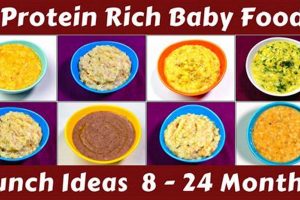
A common introductory solid food for infants, this simple combination offers a blend of protein and carbohydrates, often pureed to a smooth consistency. It is generally considered easily digestible and is designed to be a gentle introduction to textures and flavors beyond breast milk or formula. A typical preparation involves cooked chicken and rice blended together with water or broth to achieve the desired consistency.
The appeal of this food source lies in its perceived hypoallergenic properties and nutritional value. Rice is generally well-tolerated and chicken provides essential amino acids for growth and development. Historically, it has been favored as an early weaning food due to its blandness, which minimizes the risk of digestive upset and allergic reactions. This approach provides developing babies the crucial nutrients they need for a good start.
Understanding the nutritional content, preparation methods, and potential variations of this food are crucial for parents. Further discussion will cover aspects such as homemade versus commercially prepared options, potential additives, and considerations for introducing more complex flavors and textures as the infant develops.
Tips for Selecting and Preparing Chicken and Rice Baby Food
The following recommendations aim to provide guidance on ensuring the safety and nutritional adequacy of this food option for infants.
Tip 1: Source High-Quality Ingredients: Opt for organic, free-range chicken and unbleached rice to minimize exposure to pesticides and additives. Ensure the chicken is thoroughly cooked to an internal temperature of 165F (74C) to eliminate harmful bacteria.
Tip 2: Prioritize Single-Ingredient Introduction: Before combining chicken and rice, introduce each ingredient separately. This allows for easier identification of potential allergic reactions or intolerances. Observe the infant for signs of discomfort, rash, or digestive upset after each new introduction.
Tip 3: Puree to an Appropriate Consistency: Adjust the texture to match the infant’s developmental stage. Initially, a smooth, thin puree is ideal. As the infant progresses, gradually increase the thickness and introduce small, soft lumps.
Tip 4: Avoid Added Salt, Sugar, and Seasonings: Infants’ kidneys are not fully developed, making them sensitive to sodium. Sugar can promote tooth decay and establish unhealthy eating habits. Seasonings can irritate the infant’s digestive system.
Tip 5: Practice Safe Food Handling: Wash hands thoroughly before preparing the food. Use clean utensils and cutting boards. Store prepared food in airtight containers in the refrigerator and consume within 24-48 hours. Discard any leftover food that has been partially consumed.
Tip 6: Consider Iron Fortification: Rice, in particular, lacks iron, a crucial nutrient for infant development. If relying heavily on it, discuss iron supplementation with a pediatrician.
Tip 7: Consult a Pediatrician or Registered Dietitian: Seek professional guidance regarding appropriate portion sizes, introduction timelines, and any specific dietary needs or concerns the infant may have.
Adhering to these guidelines helps ensure that this food source is a safe, nutritious, and beneficial addition to an infant’s diet.
The subsequent section will address potential variations, commercial options, and considerations for transitioning to more complex meals.
1. Simple

The term “Simple,” when applied to the context of the common baby food, refers to its uncomplicated formulation and preparation. This simplicity is a deliberate and vital feature, stemming from the understanding that an infant’s digestive system is still developing. By minimizing the number of ingredients, typically chicken and rice with water or broth, the food reduces the risk of digestive upset or allergic reactions. A complex mixture of ingredients could potentially overwhelm a young infant’s system, making it difficult to identify the source of any adverse reaction.
The cause-and-effect relationship is evident: a simple formulation leads to ease of digestion and reduced allergenicity. The importance of simplicity manifests practically in ease of preparation for caregivers. The food can be prepared quickly with minimal ingredients, reducing the burden on caregivers. A further practical example is the ease with which parents can identify potential allergens. If an infant reacts negatively, it is easily attributed to one of the two main ingredients, chicken or rice, allowing for swift adjustments to the feeding plan.
In conclusion, the inherent simplicity of the infant food contributes directly to its safety, digestibility, and practicality. This simplicity, however, should not be mistaken for a lack of nutritional value. While basic, the combination provides essential nutrients. The primary challenge associated with simplicity is ensuring complete nutritional adequacy as the infant grows and their needs evolve. Careful consideration of other food sources and potential supplementation is required to maintain optimal health.
2. Digestible

The characteristic of being easily digestible is a cornerstone of the selection of chicken and rice as an early food for infants. This attribute stems from the physiological immaturity of the infant digestive system and the need for foods that minimize gastrointestinal distress.
- Immature Digestive Enzymes
Infants possess limited production of digestive enzymes necessary for breaking down complex carbohydrates, proteins, and fats. Rice, particularly white rice, is composed primarily of easily digestible carbohydrates. Chicken provides protein in a relatively simple form, easily broken down by the available enzymes. The lower fat content of lean chicken also contributes to ease of digestion. The minimal processing required further aids in the digestive process.
- Low Fiber Content
High-fiber foods can be challenging for infants to digest, potentially leading to gas, bloating, and abdominal discomfort. Both white rice and lean chicken have relatively low fiber content, minimizing the risk of such issues. Brown rice, while more nutritious, is higher in fiber and generally introduced later in the infant feeding process due to its increased digestive demands.
- Bland Flavor Profile
The mild flavor profile of this food minimizes stimulation of the digestive system. Strong flavors or spices can irritate the infant’s gut. The blandness of chicken and rice reduces the likelihood of adverse reactions and promotes acceptance by the infant.
- Reduced Allergenicity
Chicken and rice are considered relatively low-allergen foods compared to others like wheat, soy, or dairy. This is crucial in the initial stages of solid food introduction to minimize the risk of allergic reactions. Introducing single-ingredient foods allows for the easy identification of potential allergens, aiding in the safe expansion of the infant’s diet. If there’s a negative reaction, identifying the cause is straightforward due to the limited ingredients.
In conclusion, the easy digestibility of chicken and rice as a baby food is a direct result of its simple composition, low fiber content, bland flavor, and reduced allergenicity. These factors contribute to the suitability of this combination as a gentle and well-tolerated first food for infants, supporting their nutritional needs while minimizing digestive stress. It facilitates a gradual transition from breast milk or formula to solid foods, paving the way for a diverse and balanced diet as the infant grows.
3. Nutritious

The term “Nutritious,” when applied to the context of chicken and rice for infant consumption, signifies its capacity to provide essential nutrients crucial for infant growth and development. While simple, this combination offers a baseline of protein and carbohydrates, forming a foundation for subsequent dietary expansion. The nutritional contribution, however, is not absolute and requires careful consideration of its limitations.
Chicken contributes protein, essential for tissue building and repair, as well as various vitamins and minerals, including iron. Iron is vital for cognitive development and oxygen transport. Rice provides carbohydrates, the primary energy source for the infant. However, rice, particularly white rice, is low in micronutrients. Therefore, while chicken and rice provide fundamental nutrients, they must be complemented with other food sources to ensure a balanced nutrient intake. A diet exclusively relying on this preparation is not sufficient to meet the infant’s evolving nutritional demands.
The practicality of this lies in the simplicity of introducing essential nutrients early in the infant’s life, paving the way for a more diverse dietary pattern. However, the challenge is to recognize the incomplete nutritional profile and to introduce other nutrient-dense foods, such as vegetables, fruits, and iron-fortified cereals, at appropriate stages. Therefore, while it possesses nutritional value, it is best understood as a starting point rather than a complete solution for infant nutrition.
4. Versatile
The adaptability inherent in chicken and rice preparations extends its utility across various stages of infant feeding. This versatility is not merely about different flavors but encompasses texture, consistency, and incorporation with other food groups, making it a practical choice for caregivers navigating the evolving needs of a growing infant.
- Texture Modification
The foundational preparation can be easily altered from a smooth, liquid puree suitable for initial introduction to chunkier consistencies as the infant develops oral motor skills. Pureeing, mashing, or finely chopping the chicken and rice enables the caregiver to adjust the texture to meet the infant’s current stage of development. Such adaptation facilitates acceptance and minimizes the risk of choking as the infant learns to manage different food textures.
- Flavor Integration
While the base combination is mild, it serves as a neutral canvas for the introduction of other flavors. Pureed vegetables, such as carrots, sweet potatoes, or peas, can be seamlessly blended into the chicken and rice, expanding the infant’s palate and nutritional intake. This adaptability allows for gradual flavor introduction, helping to identify potential allergies or intolerances and promoting acceptance of a wider range of foods.
- Dietary Incorporation
Chicken and rice can be easily incorporated into a broader dietary plan as the infant transitions to more complex meals. It can be served as a component of a balanced meal alongside other food groups, such as vegetables and fruits. This flexibility allows for the creation of varied and nutritionally complete meals, ensuring the infant receives the necessary nutrients for optimal growth and development.
- Preparation Method Variation
The core ingredients can be prepared using various methods, accommodating different caregiver preferences and time constraints. Chicken can be boiled, baked, or steamed, and rice can be cooked on the stovetop, in a rice cooker, or even using pre-cooked varieties. Such options offer convenience and flexibility, allowing caregivers to prepare the food in a way that suits their individual circumstances.
In summation, the multifaceted adaptability of chicken and rice makes it a pragmatic option for infant feeding. Its capacity for texture modification, flavor integration, dietary incorporation, and preparation method variation empowers caregivers to tailor the food to the specific needs and preferences of the infant, ensuring optimal acceptance and nutritional benefit as the infant progresses through various stages of development.
5. Affordable

The aspect of affordability significantly contributes to the widespread use of this food combination as an introductory solid food for infants. Cost considerations often play a substantial role in parental decision-making regarding infant nutrition.
- Low Ingredient Cost
The primary components, chicken and rice, are generally less expensive compared to many commercially prepared infant foods or other protein sources. Rice, in particular, is a staple grain in many cultures and is readily available at a low cost. Chicken, while more expensive than rice, is still a relatively affordable protein source, especially when purchased in bulk or as bone-in cuts. This low cost enables families to provide a nutritious meal option without straining their financial resources.
- Homemade Preparation Cost-Effectiveness
Preparing the food at home allows caregivers to control ingredient quality and portion sizes, often resulting in cost savings compared to purchasing pre-made versions. Homemade preparation eliminates the added costs associated with processing, packaging, and marketing that are factored into the price of commercially available options. The ability to prepare larger batches and freeze portions for later use further enhances the cost-effectiveness of homemade preparation.
- Reduced Reliance on Specialized Products
Opting for chicken and rice as an early food can minimize the need for specialized or fortified infant food products, which often carry a premium price. The simplicity of the ingredients allows caregivers to focus on providing a balanced diet through a combination of homemade and commercially available options, rather than relying solely on expensive, pre-made infant foods. This approach can significantly reduce the overall cost of infant feeding.
- Accessibility Across Socioeconomic Strata
The affordability of chicken and rice makes it accessible to families across various socioeconomic backgrounds. This accessibility is particularly important in ensuring that infants from lower-income households receive adequate nutrition during a critical period of growth and development. The combination offers a viable and affordable option for providing essential nutrients to infants, regardless of their family’s financial circumstances.
In conclusion, the affordability of this commonly used food for babies stems from a combination of low ingredient costs, the cost-effectiveness of homemade preparation, reduced reliance on specialized products, and its accessibility across socioeconomic strata. These factors collectively contribute to its widespread use as a practical and economical option for introducing solid foods to infants.
6. Convenient
The convenience associated with this simple meal significantly contributes to its appeal for caregivers. Time constraints and the demands of modern lifestyles often prioritize efficiency in meal preparation, making readily available and quickly prepared options highly desirable. This food, whether prepared at home or purchased commercially, offers a degree of convenience that addresses these practical needs.
The cause is the pressing requirements of caregiver schedules. The effect is the valuation of food options that minimize preparation time. For example, a caregiver may opt for a commercially prepared jar, eliminating cooking entirely. Alternatively, a quick homemade batch requires minimal ingredients and straightforward blending. Another illustration is the flexibility to prepare large quantities in advance, portioning and freezing for later use. This pre-planning further streamlines mealtime routines, demonstrating a tangible benefit. The ease of portability also contributes to its convenience. Whether in a jar or a container, this food can be easily transported for meals away from home. This ensures that caregivers have a reliable feeding option regardless of location.
In conclusion, the convenience offered by this food combination is a direct consequence of its simplicity, availability, and adaptability. It reduces the burden on caregivers, simplifies mealtime routines, and provides a reliable feeding option in various circumstances. While convenience is a key driver of its adoption, it is essential to consider the nutritional adequacy of this food within the broader context of infant feeding practices, as well as the potential trade-offs between convenience and the benefits of homemade preparation.
Frequently Asked Questions
The following addresses common inquiries regarding the use of this common food as an introductory solid food for infants. The information aims to provide clarity and evidence-based guidance for caregivers.
Question 1: Is it nutritionally complete for an infant?
No, it is not a nutritionally complete meal on its own. While it provides a source of protein and carbohydrates, it lacks sufficient quantities of essential micronutrients, such as iron, zinc, and certain vitamins. It should be part of a balanced diet that includes a variety of fruits, vegetables, and other nutrient-rich foods.
Question 2: At what age can it be introduced?
This food can generally be introduced around six months of age, which aligns with the recommended timeframe for introducing solid foods. However, the infant should exhibit signs of readiness, such as the ability to sit upright with support, good head control, and an interest in food. It is advisable to consult with a pediatrician to determine the appropriate timing for each individual infant.
Question 3: Can it cause allergic reactions?
Although considered relatively low-allergen, allergic reactions are still possible. Rice allergies are rare, but chicken allergies are more common. Introduce each ingredient separately before combining them to monitor for any adverse reactions. Observe the infant for signs of allergies, such as rash, hives, vomiting, or diarrhea, after each introduction.
Question 4: How should it be prepared to minimize choking hazards?
It should be pureed to a smooth consistency to minimize the risk of choking, especially when first introduced. Ensure that the chicken is finely shredded or ground and that the rice is thoroughly cooked and mashed. As the infant develops, gradually increase the texture to encourage oral motor development.
Question 5: Is homemade preparation better than commercially prepared versions?
Both homemade and commercially prepared options have their advantages and disadvantages. Homemade preparation allows for control over ingredients and the avoidance of additives and preservatives. Commercial versions offer convenience and are often fortified with essential nutrients, such as iron. Choose whichever option best suits the caregiver’s needs and priorities, ensuring that the food is prepared and stored safely.
Question 6: How should it be stored?
Prepared food should be stored in an airtight container in the refrigerator and consumed within 24-48 hours. Frozen portions can be stored for up to one month. Ensure that the food is properly reheated before serving, and discard any leftovers that have been partially consumed due to the risk of bacterial contamination.
The information presented serves as a general guide and should not substitute professional medical advice. Always consult with a pediatrician or registered dietitian for individualized recommendations regarding infant feeding.
The subsequent section will delve into potential recipe variations and considerations for transitioning to more complex dietary patterns.
Conclusion
This exploration has detailed various facets of “chicken and rice baby food”, ranging from nutritional considerations and preparation techniques to addressing common concerns and acknowledging both its benefits and limitations. The analysis underscores its value as a readily digestible and generally well-tolerated introductory food. The assessment also emphasizes that, while convenient and affordable, this dietary staple must be strategically integrated into a broader nutritional framework to ensure optimal infant development.
Caregivers are encouraged to view this food as a foundational element, not a comprehensive solution. Continued diligence in monitoring infant response, diversifying food choices, and seeking professional guidance remains paramount. Prioritizing informed decision-making contributes to the healthy development of infants, paving the way for lifelong nutritional well-being.
![Top-Rated Best Baby Food Makers: [Year] Guide & Reviews | Baby Care 101: Essential Tips for Happy, Healthy Babies](https://singlebabies.com/wp-content/uploads/2026/04/th-35-300x200.jpg "Top-Rated Best Baby Food Makers: [Year] Guide & Reviews Baby Care 101: Essential Tips for Happy, Healthy Babies")