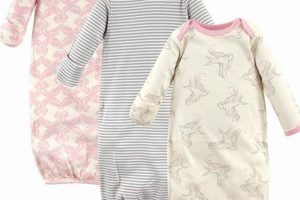
This product provides a safe and comfortable sleep environment for infants and young children. It is a wearable blanket designed to keep a child warm throughout the night, replacing loose blankets in the crib which are discouraged due to safety concerns. It commonly features a zipper closure for ease of use and often incorporates design elements to allow for natural leg movement.
These sacks offer several advantages, including maintaining a consistent temperature for the child, which contributes to improved sleep quality. Historically, parental practices involved swaddling or using blankets, but advancements in understanding infant safety have led to increased adoption of this safer alternative. Consequently, this product type promotes safer sleep habits and gives parents peace of mind.
The following sections will further detail key features, proper usage guidelines, material composition and care, and factors to consider when selecting an appropriate option for a child.
Optimal Use Guidelines
These recommendations are designed to maximize the benefits and safety associated with utilizing a sleeping sack. Adherence to these guidelines promotes restful sleep and minimizes potential risks.
Tip 1: Size Appropriateness. Ensure the sleeping sack is appropriately sized for the child’s height and weight. Overly large sacks can pose a suffocation hazard, while undersized sacks can restrict movement and cause discomfort. Consult the manufacturer’s size chart before purchase.
Tip 2: Temperature Regulation. Select a sleeping sack with a suitable TOG (Thermal Overall Grade) rating for the ambient room temperature. Overheating can increase the risk of Sudden Infant Death Syndrome (SIDS); therefore, lighter TOG ratings are recommended for warmer environments.
Tip 3: Secure Fastening. Verify that all zippers, snaps, or closures are securely fastened before placing the child in the sleeping sack. This prevents accidental opening during sleep, reducing the risk of entanglement.
Tip 4: Layering Considerations. Adjust the child’s clothing worn under the sleeping sack according to the room temperature. Avoid overdressing, opting for lightweight, breathable fabrics. Monitor the child for signs of overheating, such as sweating or flushed skin.
Tip 5: Regular Inspection. Routinely inspect the sleeping sack for any signs of wear and tear, such as loose seams, broken zippers, or damaged fabric. Discontinue use if any damage is detected.
Tip 6: Proper Washing and Care. Follow the manufacturer’s instructions for washing and drying the sleeping sack. Harsh detergents or high heat can damage the fabric and compromise its performance.
Tip 7: Gradual Introduction. If a child is accustomed to swaddling or using loose blankets, gradually introduce the sleeping sack to allow for adjustment. Start by using it for naps and then transition to overnight sleep.
By following these guidelines, parents and caregivers can utilize sleeping sacks effectively and safely, contributing to improved sleep quality and reduced safety concerns.
The final section will encompass material considerations and safety standards of the sleeping sacks to help choosing the right product.
1. Safe Sleep

The principles of safe sleep are fundamentally intertwined with the design and utilization of infant sleepwear. The proper selection and use of a sleeping sack are crucial elements in mitigating risks associated with infant sleep environments, aligning directly with established safe sleep recommendations.
- Elimination of Loose Bedding
Traditional blankets and loose bedding in a crib are discouraged due to the potential for suffocation or entanglement. A sleeping sack replaces these items, providing warmth without the hazard of loose fabric covering the infant’s face. This design addresses a primary risk factor identified in safe sleep guidelines.
- Maintaining Supine Position
While a sleeping sack does not guarantee a supine (back-sleeping) position, it can subtly discourage rolling onto the stomach, a position associated with increased SIDS risk. The design allows for movement while gently limiting the ability to easily transition to a prone position, especially for younger infants.
- Temperature Regulation and Overheating Prevention
Overheating is a recognized risk factor for SIDS. Sleeping sacks are available in varying Thermal Overall Grade (TOG) ratings, allowing caregivers to select an appropriate level of insulation based on the room temperature. This careful selection helps prevent the infant from becoming excessively warm during sleep, a key element of safe sleep practices.
- Proper Sizing and Fit
A properly sized sleeping sack is essential for safety. An overly large sack can create a risk of the infant slipping down inside, potentially obstructing breathing. A sack that is too small can restrict movement and cause discomfort. Adhering to manufacturer size charts ensures a secure and appropriate fit, minimizing potential hazards.
In summary, a sleeping sack, when used correctly and in accordance with safe sleep guidelines, offers a valuable tool for creating a safer sleep environment for infants. By addressing the risks associated with loose bedding, promoting supine positioning, facilitating temperature regulation, and ensuring a proper fit, this type of infant sleepwear contributes significantly to reducing the potential for sleep-related incidents.
2. Temperature Regulation

The crucial element of temperature regulation is intrinsic to the design and functionality of a baby sleeping bag. Infants are less able to regulate their body temperature compared to adults, making them vulnerable to overheating or becoming too cold during sleep. The primary function of this sleeping sack is to maintain a consistent thermal environment, mitigating these risks. This is achieved through careful selection of materials and construction techniques that allow for breathability and insulation.
Variations in ambient room temperature necessitate differing levels of insulation. Baby sleeping sacks address this requirement through the use of Thermal Overall Grade (TOG) ratings. A higher TOG rating indicates greater insulation, suitable for colder environments, while a lower TOG rating signifies less insulation, appropriate for warmer conditions. For instance, a 2.5 TOG-rated sack may be appropriate for a room temperature of 16-18C, while a 0.5 TOG-rated sack would be more suitable for a room temperature of 24-27C. The consequences of improper TOG selection can be significant. Overheating is linked to an increased risk of Sudden Infant Death Syndrome (SIDS), and being too cold can disrupt sleep and compromise the infant’s comfort.
Therefore, the relationship between baby sleeping sacks and temperature regulation is a critical safety consideration. The product’s design allows parents to proactively manage the infant’s thermal environment, reducing the risks associated with temperature fluctuations. Choosing the correct TOG rating based on room temperature and appropriately layering clothing beneath the sack are essential for ensuring the infant’s safety and comfort during sleep. Understanding this connection allows for the informed and responsible use of these products, contributing to a safer and more restful sleep experience for the child.
3. Appropriate Sizing

Appropriate sizing is a crucial determinant in the safe and effective use of infant sleeping bags. The dimensions of the sack directly impact the comfort, safety, and overall utility of the product for the child. Ill-fitting sacks can negate the intended benefits and introduce potential hazards.
- Suffocation Risk Mitigation
An oversized sleeping bag presents a suffocation hazard. An infant may slip down inside the sack, potentially obstructing the airway. Correct sizing ensures the neck and head remain positioned outside the opening, preventing this risk. For example, a 6-month-old in a 12-month-old’s sleeping bag is at greater risk.
- Restriction of Movement
An undersized sleeping bag can restrict movement, causing discomfort and potentially hindering healthy development. Infants require some freedom of movement to reposition themselves and explore their surroundings, even during sleep. Proper sizing accommodates natural movement while maintaining a secure fit. The legs should be able to move freely within the bag. Lack of movement for longer hours can hurt the baby.
- Thermal Regulation Impairment
An improperly sized sleeping bag can compromise thermal regulation. An overly large sack may create excessive air pockets, leading to uneven temperature distribution and potential chilling. A too-small sack may restrict airflow and contribute to overheating. Correct sizing allows for consistent and appropriate temperature maintenance. The air pockets helps maintain baby’s body temperature.
- Secure Closure Functionality
The efficacy of the sleeping bag’s closure system depends on appropriate sizing. If the sack is too large, the closures may not function as intended, potentially allowing the infant to wriggle free or become entangled. If the sack is too small, the closures may be strained, increasing the risk of failure. Correct sizing ensures secure and reliable closure operation. Sleeping bags will fail during the most vulnerable time if its does not fit correctly.
In summary, the selection of an appropriately sized sleeping bag is paramount for infant safety and comfort. By mitigating suffocation risks, allowing for natural movement, maintaining consistent temperature, and ensuring secure closure functionality, proper sizing directly contributes to the intended benefits of this product. Size charts and manufacturer guidelines should be consulted to ensure the correct size is selected based on the infant’s weight and height.
4. Secure Closure

A secure closure mechanism is a fundamental design element of any infant sleeping bag, directly influencing its safety and functionality. The closure’s primary role is to maintain the bag’s integrity during use, preventing unintended openings that could compromise the infant’s well-being.
- Prevention of Entanglement
A secure closure minimizes the risk of the infant becoming entangled within the sleeping bag. If the closure fails or is easily opened, the infant could potentially slip partially out of the bag, leading to limbs becoming trapped or the fabric obstructing breathing. Robust zippers with secure locking mechanisms or strategically placed snaps mitigate this risk. For instance, a zipper pull tab with a fabric cover prevents accidental opening by the infant.
- Maintenance of Consistent Thermal Environment
An unsecured or poorly designed closure can disrupt the intended thermal environment within the sleeping bag. Gaps or openings caused by a faulty closure allow warm air to escape, potentially causing the infant to become cold and disrupting sleep. A well-designed closure ensures a snug fit around the neck and shoulders, minimizing heat loss and maintaining a consistent temperature. For example, some bags feature adjustable shoulder snaps to customize the fit and prevent heat from escaping around the neck.
- Reduction of Suffocation Hazards
While the sleeping bag itself is designed to eliminate loose bedding, a faulty closure can inadvertently create a suffocation hazard. If the closure allows the fabric to bunch up around the infant’s face, it could potentially obstruct breathing. Secure zippers with a backing flap that prevents the fabric from contacting the infant’s skin are essential. Furthermore, design standards often mandate that closures be positioned away from the infant’s face to minimize this risk.
- Ensuring Parental Peace of Mind
A reliably secure closure provides parents with peace of mind, knowing that their child is safely contained within the sleeping bag. This confidence allows for more restful sleep for both the infant and the caregivers. Visual cues, such as reinforced stitching around the closure or audible clicks indicating a secure fastening, contribute to this sense of security. Reviews or ratings that emphasize the reliability and durability of the closure system also enhance parental confidence.
The significance of a secure closure extends beyond mere convenience; it is a critical safety feature integral to the design and function of infant sleeping bags. Selecting a sleeping bag with a robust and well-engineered closure system is paramount for ensuring a safe and comfortable sleep environment for the infant.
5. Fabric Composition

The fabric composition of an infant sleeping bag directly influences its safety, comfort, and performance. The selection of materials determines breathability, thermal regulation, durability, and hypoallergenic properties, all critical for infant well-being. For instance, a sleeping bag constructed from 100% organic cotton offers enhanced breathability and reduces the risk of allergic reactions compared to synthetic materials. Conversely, a bag utilizing a blend of cotton and polyester might exhibit increased durability and resistance to shrinkage.
Different fabric types impact the sleeping environment in distinct ways. Natural fibers like merino wool possess excellent temperature-regulating properties, wicking away moisture and maintaining a consistent body temperature, crucial in preventing overheating or chilling. Synthetic fabrics, while often more affordable and easy to care for, may lack the breathability of natural fibers, potentially leading to discomfort or skin irritation. The weight and weave of the fabric also affect its insulation capabilities, dictating the appropriate TOG (Thermal Overall Grade) rating of the sleeping bag for various room temperatures. For example, a tightly woven fleece fabric provides greater insulation than a loosely woven muslin, requiring careful consideration of the ambient temperature when selecting the appropriate sleeping bag.
Understanding the interplay between fabric composition and infant sleeping bag functionality is essential for making informed purchasing decisions. Challenges include accurately assessing the breathability and hypoallergenic properties of various materials, as well as balancing cost considerations with performance requirements. Prioritizing natural, breathable fabrics and carefully evaluating TOG ratings based on room temperature promotes a safer and more comfortable sleep environment for the infant.
6. Ease of cleaning

The characteristic of ease of cleaning directly influences the practicality and hygiene of a baby sleeping bag. Infants are prone to spills, regurgitation, and diaper leaks. As a consequence, frequent washing of sleepwear becomes necessary. The ability to easily clean a sleeping bag contributes significantly to maintaining a hygienic sleep environment, reducing the risk of bacterial growth and skin irritation. A difficult-to-clean sleeping bag increases the burden on caregivers and may lead to infrequent cleaning, potentially compromising the infant’s health. For instance, a sleeping bag with complex closures or delicate embellishments may require hand-washing, making routine cleaning impractical.
The material composition and design of the sleeping bag are key determinants of its cleanability. Machine-washable fabrics, such as cotton or durable synthetic blends, facilitate easy cleaning. Features like simple closures and minimal embellishments streamline the washing and drying process. Conversely, fabrics that require special care or intricate designs with hard-to-reach areas can impede effective cleaning. Consider a scenario where an infant soils a sleeping bag with regurgitated milk; a machine-washable, quick-drying fabric allows for prompt cleaning and minimizes disruption to the infant’s sleep schedule. Conversely, a sleeping bag requiring specialized cleaning might remain soiled for an extended period, increasing the risk of bacterial growth.
In summary, ease of cleaning is a critical attribute of an infant sleeping bag, directly impacting hygiene and caregiver convenience. The material composition and design features should prioritize machine washability and simple maintenance. Neglecting this aspect can lead to increased risk of infection and added burden for parents. Therefore, selecting a sleeping bag that balances comfort, safety, and ease of cleaning is paramount for ensuring a healthy and manageable sleep environment for the infant.
7. Durable construction

Durable construction is a vital attribute of a quality baby sleeping bag, impacting safety, longevity, and overall value. The structural integrity of the product directly influences its ability to withstand regular use and frequent washing, conditions inherent to infant care. Compromised seams, weakened zippers, or deteriorating fabric diminish the product’s effectiveness, potentially creating hazardous situations. For example, a seam failure could lead to loose filling or exposed edges, posing a choking hazard. Similarly, a malfunctioning zipper might allow the bag to open unexpectedly, disrupting the infant’s sleep and potentially exposing them to temperature fluctuations.
The quality of materials and the manufacturing processes employed are primary determinants of durability. Reinforced stitching, robust zippers, and high-grade fabrics contribute to a more resilient product. Specific examples include the use of double-stitched seams to prevent fraying and the incorporation of YKK zippers, known for their reliability. Furthermore, durable construction extends beyond the primary fabric, encompassing elements such as zipper guards and reinforced shoulder straps. These features are designed to withstand stress and prevent premature wear and tear. Selecting a sleeping bag constructed from durable materials such as quilted cotton or tightly woven polyester significantly enhances the product’s lifespan.
In conclusion, durable construction is not merely an aesthetic consideration but a fundamental safety and performance requirement of a baby sleeping bag. Parents should prioritize products featuring high-quality materials, reinforced stitching, and robust closures. By investing in a well-constructed sleeping bag, caregivers can ensure a safer, more comfortable, and ultimately more cost-effective sleep environment for their child. This understanding allows for informed purchase decisions, mitigating risks associated with inferior products and maximizing the value of the investment.
Frequently Asked Questions
This section addresses common inquiries regarding the use, safety, and selection of infant sleeping sacks.
Question 1: At what age is it appropriate to transition an infant to a sleeping bag?
Most infants can safely transition to a sleeping bag once they outgrow swaddling, typically around two to three months of age, or when they begin to show signs of rolling over.
Question 2: How should the TOG rating of an infant sleeping bag be determined?
The TOG rating should be selected based on the ambient room temperature. Lower TOG ratings are suitable for warmer temperatures, while higher ratings are appropriate for cooler environments. Guidelines are typically provided by the manufacturer.
Question 3: Is it safe for an infant to sleep on their stomach while using a sleeping bag?
No, infants should always be placed on their backs to sleep, regardless of whether they are using a sleeping bag. While the sleeping bag itself is safe, the supine position is recommended to reduce the risk of SIDS.
Question 4: How frequently should an infant sleeping bag be washed?
Sleeping bags should be washed regularly, ideally after each incident of soiling and at least once per week, to maintain hygiene and prevent the buildup of allergens.
Question 5: What are the potential dangers of using an improperly sized sleeping bag?
An oversized sleeping bag can pose a suffocation risk, while an undersized bag may restrict movement and cause discomfort.
Question 6: Can an infant overheat while using a sleeping bag?
Yes, overheating is a risk if the TOG rating is too high for the room temperature or if the infant is overdressed. Caregivers should monitor the infant for signs of overheating, such as sweating or flushed skin.
Proper selection and usage of an infant sleeping bag are crucial for ensuring a safe and comfortable sleep environment. Always adhere to manufacturer guidelines and safe sleep recommendations.
The next section provides a conclusion.
Conclusion
This examination of the morrison baby sleeping bag has underscored its critical role in promoting infant sleep safety and comfort. Considerations of appropriate sizing, secure closures, suitable fabric, and ease of cleaning are paramount. Selection necessitates a thorough understanding of individual infant needs and prevailing environmental conditions.
Responsible utilization of this product, informed by current best practices in infant care, yields significant benefits. Prioritizing safety and well-being through conscientious selection and application of this essential item contributes to improved outcomes for infants and peace of mind for caregivers. Continuous awareness and adherence to evolving safety standards remain crucial.


![No Nap? Secrets of Babies Who Sleep All Night [Tips] | Baby Care 101: Essential Tips for Happy, Healthy Babies](https://singlebabies.com/wp-content/uploads/2026/05/th-55-300x200.jpg "No Nap? Secrets of Babies Who Sleep All Night [Tips] Baby Care 101: Essential Tips for Happy, Healthy Babies")